 Inglés
 Español
Ceramic Pressure Sensors: Advantages, Applications
Introduction: Reliable Pressure Measurement in Harsh Industrial Environments
In modern process industries, pressure measurement must remain accurate and stable even under the most challenging conditions—such as corrosive media, hygienic applications, explosion-proof zones, extreme temperatures, condensation, and high-pressure environments.
When selecting a pressure transmitter, the sensing element plays a critical role. Compared to traditional metal-based elements, sensores de presión cerámicos have become the preferred choice for demanding applications requiring high overload resistance, chemical stability, and long-term reliability.
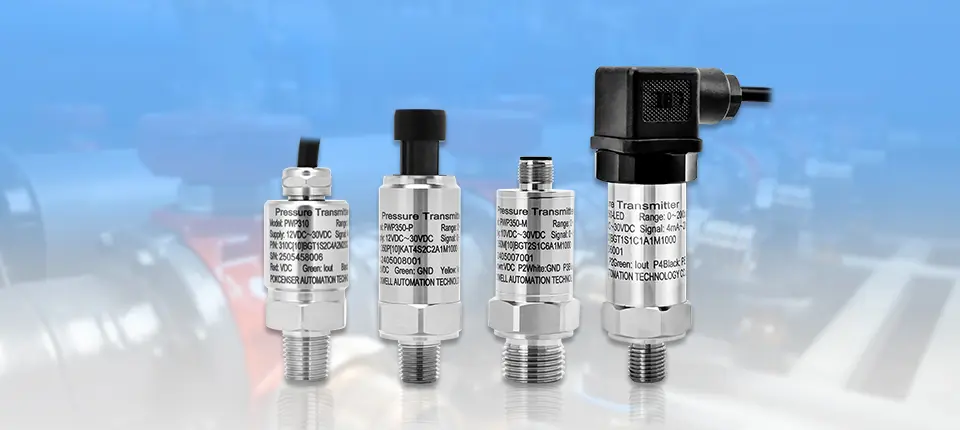
Why Choose Ceramic Pressure Sensors?
1. Excellent Corrosion Resistance
Ceramic materials are chemically inert and highly stable in aggressive environments such as:
- Acidic solutions
- Saltwater
- Corrosive industrial fluids
Additionally, ceramic diaphragms resist hydrogen permeation and hydrogen embrittlement, making them ideal for applications involving hydrogen-containing media.
👉 Perfect for:
- Tratamiento químico
- Corrosive media measurement
- Pharmaceutical production
2. Superior Performance in Harsh Conditions
Ceramic is extremely hard—up to 10 times harder than stainless steel—which provides:
- Outstanding wear resistance
- Suitability for fluids with solid particles
- High durability in abrasive environments
Even more importantly, ceramic sensors offer exceptional overload resistance, with some models capable of withstanding up to 200× overload pressure.
👉 Ideal for:
- Applications with pressure spikes
- Harsh industrial environments
- Slurry or particle-containing fluids
3. Ultra-Low Zero Drift for Long-Term Stability
Over time, traditional pressure sensors may experience diaphragm deformation, leading to zero drift and reduced accuracy.
Ceramic diaphragms, due to their high rigidity, minimize deformation, resulting in:
- Extremely low zero drift
- Improved measurement accuracy
- Long-term operational stability
👉 Best for:
- Continuous industrial processes
- High-precision monitoring systems
4. Oil-Free Design (Dry Measurement Technology)
Unlike metal sensors that rely on silicone oil as a pressure transmission medium, ceramic pressure sensors are dry-type:
- No risk of oil leakage
- No contamination of the measured medium
- Direct contact measurement
This makes them especially suitable for:
- Hygienic industries
- Food & beverage
- Pharmaceutical applications
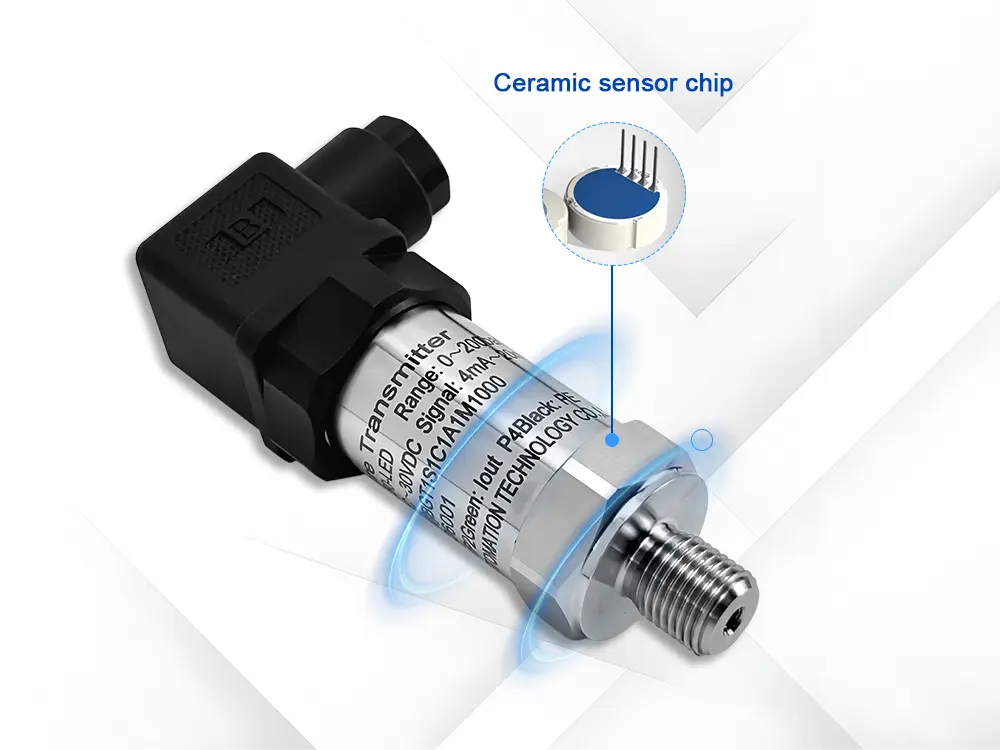
Why Choose Pokcenser Ceramic Pressure Sensors?
Pokcenser specializes in high-performance pressure sensing solutions tailored for global industrial applications.
We provide:
- Ceramic piezoresistive pressure sensors
- Ceramic capacitive pressure sensors
- Customized solutions for specific industries
Typical Applications:
- Ceramic pressure sensor for pharmaceutical industry
- Ceramic pressure sensor for corrosive media
- Ceramic pressure transmitter for chemical industry
👉 With Pokcenser, you get:
- Alta fiabilidad
- Larga vida útil
- Stable performance in extreme environments
- Customizable solutions for OEM/ODM
PREGUNTAS FRECUENTES
1. What is a ceramic pressure sensor?
A ceramic pressure sensor uses a ceramic diaphragm as the sensing element to measure pressure directly without using transmission fluids like oil.
2. What are the advantages of ceramic over metal pressure sensors?
Ceramic sensors offer better corrosion resistance, higher overload capability, lower zero drift, and contamination-free measurement.
3. Why choose Pokcenser for ceramic pressure sensors?
Pokcenser provides reliable, customizable, and high-performance ceramic sensing solutions tailored for industrial applications worldwide.

