 Inglés
 Español
Submersible Level Sensors for Wastewater Systems A Technical Guide
We rely on precise, reliable level data to keep complex wastewater systems under control. These environments shift constantly, with corrosive media and suspended solids that can punish ordinary hardware, so the sensing approach has to be specialized. The measurements they deliver drive process control automation, regulatory compliance, and plant stability in wastewater treatment plants. Here is a technical overview of submersible level sensing in these demanding applications.
Understanding Wastewater System Dynamics and Level Measurement Needs
Wastewater systems present a challenging environment for instrumentation. The fluid composition varies significantly, containing suspended solids, corrosive chemicals, and abrasive particles. These factors directly impact sensor performance and longevity. Accurate level measurement underpins effective wastewater treatment plants, enabling efficient effluent monitoring, sludge level detection, and overall process control automation. Without precise data, operators risk overflows, inefficient chemical dosing, and potential equipment damage. For instance, monitoring sludge levels in clarifiers ensures optimal removal rates, preventing carryover into subsequent treatment stages. Similarly, accurate influent and effluent monitoring are vital for regulatory reporting and process optimization.
Core Principles of Submersible Level Sensor Technology
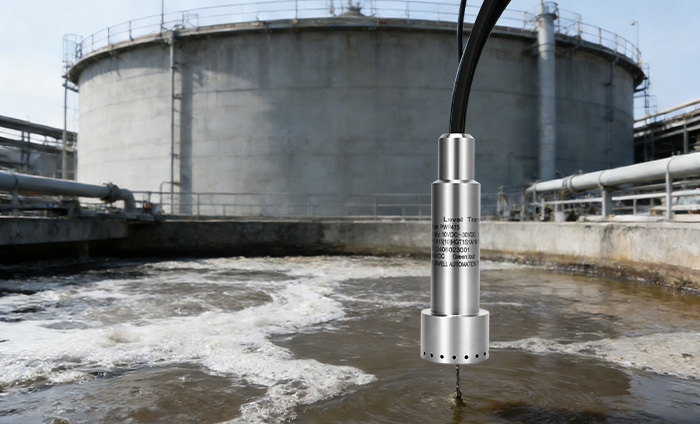
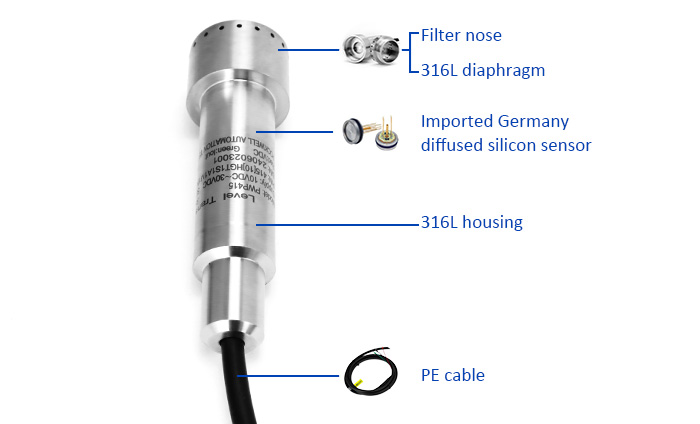
Submersible level sensors operate on various principles, each offering distinct advantages in wastewater applications. Hydrostatic level sensors, such as Pokcenser Automation’s PWP415, measure the pressure exerted by the liquid column above the sensor. This pressure is directly proportional to the liquid level. These sensors typically employ diffused piezoresistive silicon sensors or ceramic pressure sensors, encapsulated within a robust, corrosion-resistant housing made from materials that withstand harsh media.
Challenges of Using Submersible Level Sensors in Wastewater
Despite their utility, submersible level sensors in wastewater encounter significant challenges. Fouling from suspended solids and biological growth frequently obstructs sensor diaphragms or transducers, leading to inaccurate readings. Corrosion from aggressive chemicals, including acids and alkalis, can degrade sensor materials over time. Abrasive particles contribute to wear, reducing sensor lifespan. These factors necessitate robust sensor design, often involving specialized materials and features for clogging prevention and enhanced chemical resistance. Regular sensor maintenance is crucial to mitigate these issues and ensure consistent performance.
For a deeper look at technology selection, see 《Sensores de nivel por radar frente a ultrasonidos: Guía de selección》.
| Technology Type | Principio de medición | Key Advantages in Wastewater | Limitations in Wastewater |
|---|---|---|---|
| Hidrostático | Presión | High accuracy, robust | Susceptible to clogging |
| Ultrasonidos | Sound waves | Non-contact, no moving parts | Affected by foam, vapor |
| Radar | Microwave pulses | Unaffected by foam/vapor | Higher cost, complex |
Ensuring Accuracy and Reliability in Harsh Wastewater Environments
Achieving consistent accuracy and long-term stability in harsh wastewater environments requires advanced engineering. Sensors must withstand corrosive chemicals, abrasive solids, and temperature fluctuations. We utilize materials like SUS304 or SS316L stainless steel for housing, as seen in our PWP415, to ensure chemical resistance. Integrated temperature compensation mechanisms correct for density changes in the fluid, maintaining measurement precision. Some advanced submersible level sensors incorporate self-cleaning sensor features or remote monitoring capabilities to minimize manual intervention. For applications in potentially explosive atmospheres, hazardous area certification (e.g., ATEX) is required for safety.
How Submersible Level Sensors Ensure Accuracy and Reliability
Submersible level sensors achieve accuracy and reliability through sophisticated design and advanced compensation techniques. For instance, hydrostatic sensors often employ pressure transducer technology with diffused piezoresistive silicon sensors. These are highly stable and provide precise readings. Automatic temperature compensation corrects for changes in liquid density and sensor material properties. Advanced signal processing algorithms filter out noise and compensate for environmental disturbances. The integration of data analytics allows for predictive maintenance and anomaly detection, further enhancing operational reliability.
Installation Best Practices and Maintenance for Optimal Performance
Proper installation and preventative maintenance are paramount for maximizing the lifespan and data integrity of submersible level sensors in wastewater applications. Sensor installation guidelines recommend positioning the sensor away from direct inflows or turbulence to avoid inaccurate readings. Secure mounting prevents physical damage. Regular sensor calibration ensures continued accuracy against a known reference. Implementing a well-planned preventative maintenance schedule, including routine cleaning and inspection of cables and housing, significantly extends operational life. Pokcenser Automation offers field service support to assist clients with these critical procedures.
Critical Maintenance Considerations for Wastewater Applications
Critical maintenance considerations for wastewater applications focus on mitigating the impact of harsh conditions. Regular sensor cleaning protocols are essential to prevent fouling from sludge and debris. This maintains sensor sensitivity and accuracy. Periodic inspection routines should check for cable integrity, housing damage, and signs of corrosion. Predictive maintenance strategies, often supported by remote monitoring and data analytics, help anticipate potential failures. This allows for proactive spare parts management and scheduled interventions, minimizing downtime and operational disruptions.
Advanced Applications and Future Trends in Wastewater Level Sensing
The field of wastewater level sensing is evolving rapidly, driven by the demand for smart wastewater systems and sustainable water management. Future trends include enhanced IoT sensors for real-time data transmission and remote diagnostics. These enable more responsive process control and predictive maintenance. Integration with broader digital transformation initiatives will allow for comprehensive data analysis, optimizing resource allocation and improving overall plant efficiency. We anticipate further developments in self-cleaning technologies and advanced communication protocols to enhance autonomy and reduce operational costs.
For over a decade, Pokcenser Automation Technology Company Limited has been at the forefront of industrial process control. Our CE, ATEX, ISO, RoHS certified submersible level sensors are engineered for the most demanding wastewater environments, ensuring precision, reliability, and long-term value. Partner with us for tailored solutions, expert pre sales and after sales support, and a commitment to your operational success. Contact Pokcenser Automation today for a consultation: Phone +86 181 7515 5326 or Email en**@*******er.com. Let’s build a smarter, more efficient future together.
What are the common challenges of using submersible level sensors in wastewater?
Submersible level sensors in wastewater face challenges such as fouling from suspended solids, corrosion from aggressive chemicals, and potential damage from abrasive materials. These factors can lead to inaccurate readings, frequent maintenance, and reduced sensor lifespan. Pokcenser Automation addresses these with robust materials and intelligent design.
How do submersible level sensors ensure accuracy and reliability in harsh wastewater conditions?
Ensuring accuracy and reliability in harsh wastewater conditions involves several design considerations. This includes using corrosion resistant materials like stainless steel or specialized plastics, incorporating self cleaning mechanisms, advanced temperature compensation, and robust protective housings. Pokcenser’s sensors are rigorously tested and certified for extreme environments.
What maintenance considerations are critical for submersible level sensors in wastewater applications?
Critical maintenance considerations for submersible level sensors in wastewater applications include regular cleaning to prevent fouling, periodic calibration checks to maintain accuracy, and inspecting cables and housing for damage. Implementing a preventative maintenance schedule, as recommended by Pokcenser Automation, significantly extends sensor life and ensures consistent performance.

