 Inglés
 Español
What is a Conductivity Sensor?
In modern industry and daily life, accurate monitoring of water quality and solution composition is essential.
From drinking water safety a industrial process control, from marine research a battery optimization, conductivity sensors act as invisible guardians, delivering reliable data that ensures safety, efficiency, and performance.
Whether you’re managing water treatment systems or high-precision manufacturing, choosing the right conductivity sensor is critical.
Definition
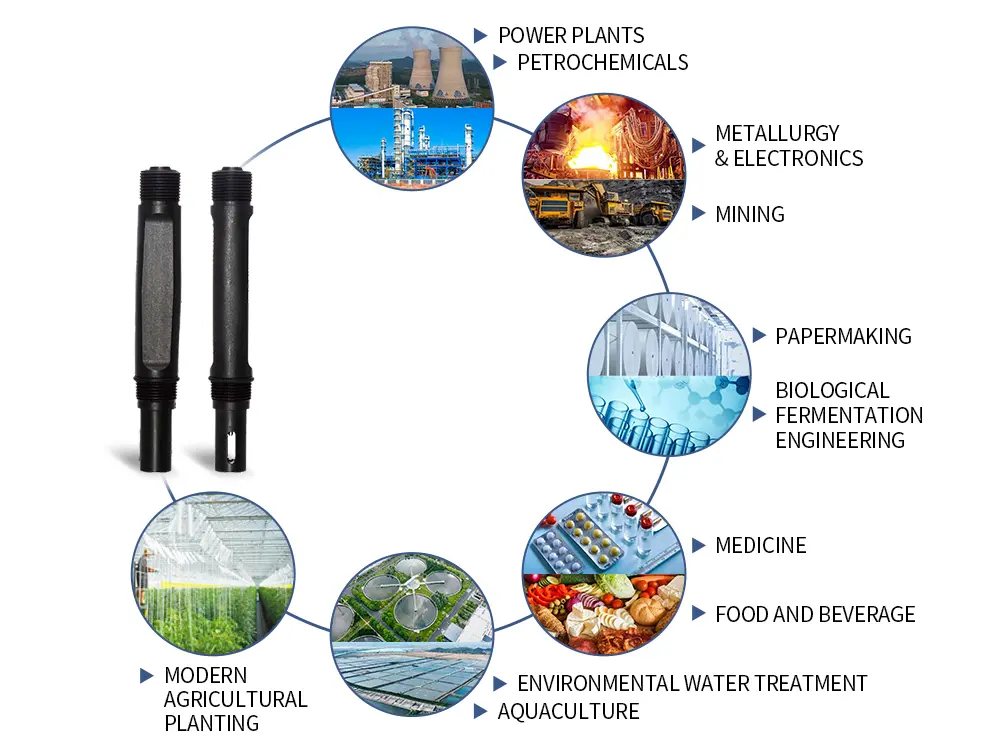
A conductivity sensor is a device used to measure the electrical conductivity of a solution, which reflects the concentration of ions in the liquid.
Conductivity is a key parameter in water quality monitoring because it directly affects:
- Water purity
- Chemical concentration
- Process safety
It is widely used in:
- Industrial water systems (cooling water, boiler water)
- Drinking water & swimming pools
- Seawater and environmental monitoring
Why Conductivity Sensors Matter in Industry
Conductivity sensing technology is an essential engineering field and is widely applied in:
- Generación de energía
- Tratamiento químico
- Protección del medio ambiente
- Food & beverage
- Semiconductor manufacturing
- Marine research
It plays a crucial role in monitoring:
- Industrial process water
- Domestic water quality
- Seawater salinity
- Battery electrolytes
Types of Conductivity Sensors
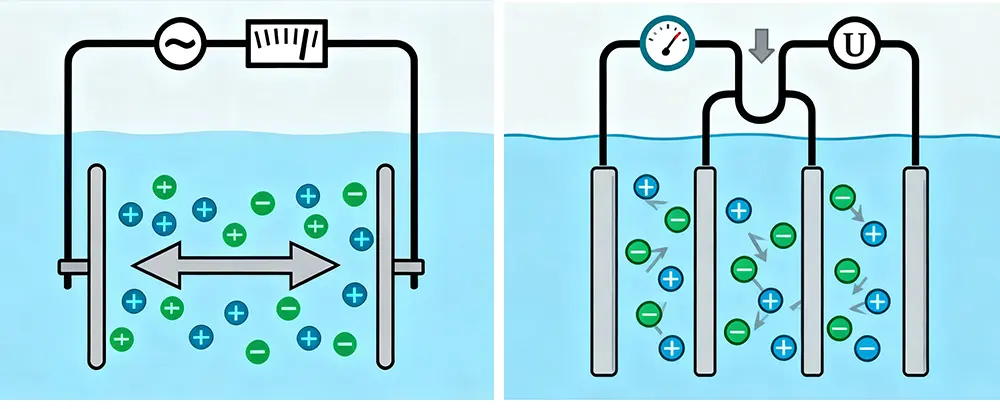
1. Electrode-Type Conductivity Sensor
Working Principle:
Measures conductivity based on voltage or current changes between electrodes.
Types:
- Two-electrode sensor
- Simple structure
- Suitable for low to medium conductivity (0–20,000 μS/cm)
- Common in laboratory pure water testing
- Four-electrode sensor
- Higher accuracy
- Reduces polarization effects
- Ideal for industrial precision control
- Example accuracy: ±0.007 mS/cm (seawater)
Ventajas:
- Rentable
- Simple design
Limitaciones:
- Requires regular calibration
- Sensitive to contamination
2. Inductive Conductivity Sensor (Non-Contact Type)
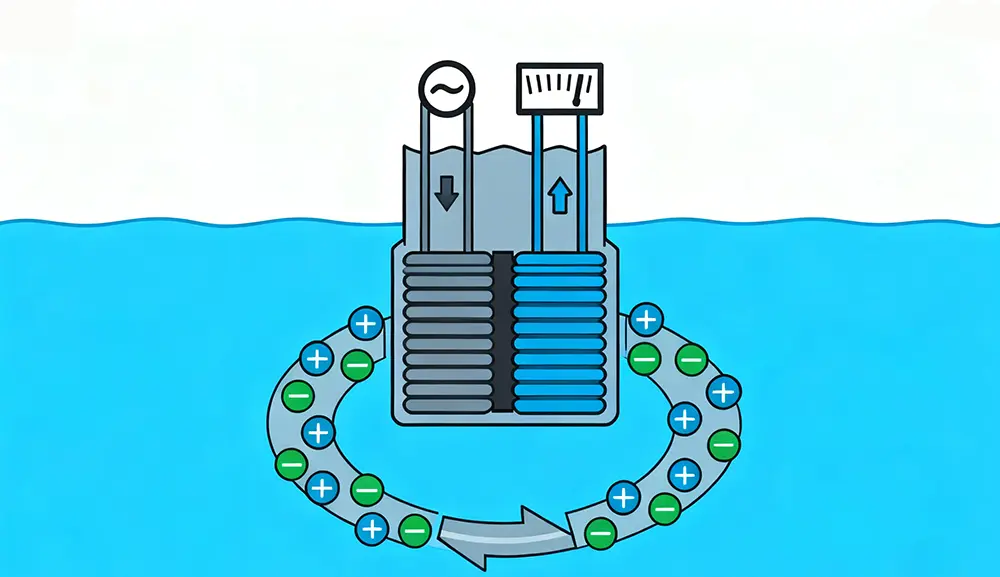
Working Principle:
Uses electromagnetic induction to measure conductivity without direct contact with the liquid.
Características:
- No polarization effect
- Strong anti-contamination capability
- Excellent corrosion resistance (PEEK/PFA materials)
- Bajo mantenimiento
Best For:
- High conductivity liquids (1000–2,000,000 μS/cm)
- Strong acids and alkalis
- Wastewater treatment
- Seawater salinity measurement
3. Ultrasonic Conductivity Sensor
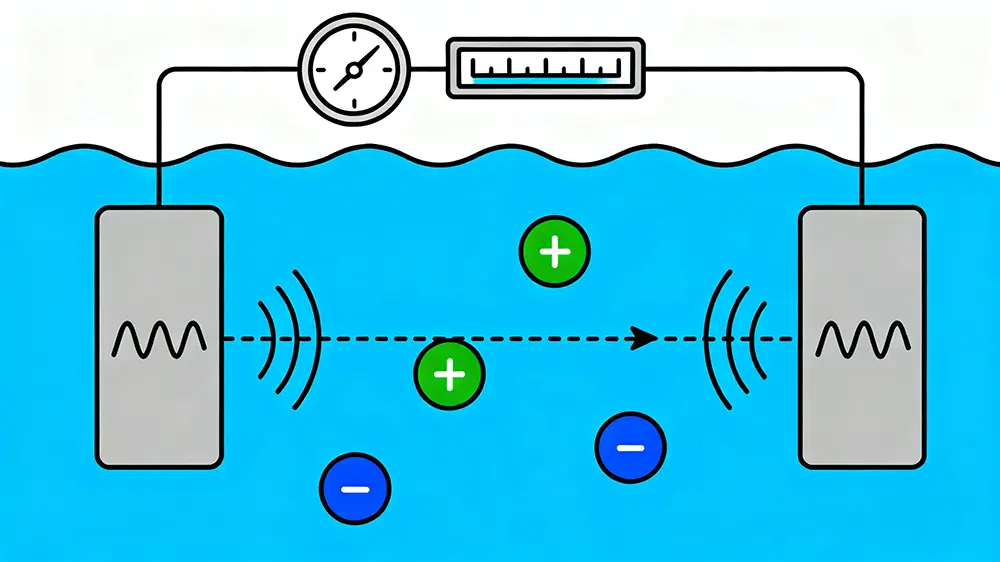
Working Principle:
Determines conductivity indirectly through ultrasonic wave propagation changes.
Características:
- Used in specialized scenarios
- Less common in industrial applications
Applications of Conductivity Sensors
1. Environmental Monitoring & Water Treatment
- Surface water & groundwater pollution detection
- Drinking water purification monitoring
- Reverse osmosis (RO) system control
- Seawater salinity analysis
2. Industrial Process Control
- Chemical & pharmaceutical concentration monitoring
- Food & beverage quality control
- Semiconductor ultrapure water (UPW < 0.1 μS/cm)
3. Agriculture & Aquaculture
- Soil salinity monitoring
- Aquaculture water quality control (e.g., shrimp farming 15–30 mS/cm)
4. Energy & Power Industry
- Boiler and cooling water monitoring
- Prevent scaling and improve efficiency
- Battery electrolyte conductivity testing
5. Medical & Biotechnology
- Hemodialysis fluid monitoring (13–14 mS/cm)
- Bioreactor ion concentration control
6. Scientific Research
- Chemical analysis (conductivity titration)
- Nanomaterial conductivity testing
Why Choose Pokcenser Conductivity Sensors?
Pokcenser is a professional manufacturer specializing in industrial sensing solutions for global markets.
Our Advantages:
- High accuracy and stability
- Strong anti-interference performance
- Wide measurement range
- OEM / ODM customization available
Get a Quote from Pokcenser
Looking for a reliable conductivity sensor supplier?
👉 Contact Pokcenser today for:
- Technical consultation
- Product selection support
- Custom solutions
Conductivity sensors are essential tools for modern water quality monitoring and industrial process control. By delivering accurate and real-time conductivity data, they support industries in improving efficiency, safety, and sustainability.
With advanced technology and global service capability, Pokcenser is your trusted partner in conductivity measurement solutions.
PREGUNTAS FRECUENTES
1. What does a conductivity sensor measure?
It measures the ability of a solution to conduct electricity, which reflects ion concentration.
2. What is the difference between electrode and inductive conductivity sensors?
Electrode sensors contact the liquid directly, while inductive sensors are non-contact and more resistant to contamination.
3. Which conductivity sensor is best for corrosive liquids?
Inductive conductivity sensors are ideal due to their non-contact and corrosion-resistant design.
4. What industries use conductivity sensors?
Water treatment, chemical processing, food & beverage, semiconductor, energy, and healthcare industries.
5. Why choose Pokcenser conductivity sensors?
Pokcenser offers reliable, customizable, and high-performance solutions tailored for industrial applications worldwide.

