 English
 Spanish
Choosing the Best Handheld Flow Meters for On-Site Measurements
Getting flow measurements right – really right – is just non-negotiable if you want industrial processes to hum along and everything to stay in one piece. Out there in the real world, whether you’re knee-deep in a chemical plant or overseeing a water treatment setup, those little handheld flow meters are lifesavers, giving you instant data and incredible flexibility. We totally get that you need reliable, portable tools for checking things on the spot, getting new systems up and running, or just double-checking what’s going on. So, let’s talk about what really matters when you’re picking out the perfect handheld flow meter for whatever specific job you’ve got.
Why Accurate On-Site Flow Measurement is Crucial for Industrial Efficiency
Precise flow measurement directly impacts operational efficiency, resource management, and compliance with environmental and safety regulations. In industrial settings, even minor inaccuracies can lead to significant financial losses, compromised product quality, or environmental hazards. Handheld flow meters provide the agility to obtain critical data exactly where and when it is needed, empowering technicians and engineers with real-time insights.
1. Understanding the Challenges of Field Measurements
Field measurements present unique challenges compared to controlled laboratory environments. Technicians often encounter varying pipe materials, sizes, and conditions, including corroded or insulated pipes. Environmental factors like extreme temperatures, humidity, and potential exposure to hazardous substances further complicate data collection. Additionally, the need for non-invasive techniques is paramount in many industrial applications to avoid process interruptions or safety risks. These conditions necessitate robust, versatile, and user-friendly instruments.
2. The Impact of Inaccurate Data on Operations
Inaccurate flow data can have cascading negative effects. It can lead to incorrect chemical dosing in water treatment, inefficient energy consumption in HVAC systems, or improper material balance in chemical processing. Such errors result in increased operational costs, reduced product quality, and potential regulatory non-compliance. Furthermore, unreliable data hinders effective troubleshooting and preventive maintenance, increasing the likelihood of unexpected downtime and equipment failure. Investing in high-quality handheld flow meters ensures data integrity, which underpins sound operational decisions.
Exploring Different Types of Handheld Flow Meters for Diverse Applications
The market offers several types of handheld flow meters, each with distinct operating principles and ideal applications. Understanding these differences is crucial for selecting the most appropriate device for specific on-site measurement needs.
1. How Ultrasonic Clamp-On Flow Meters Provide Non-Invasive Solutions
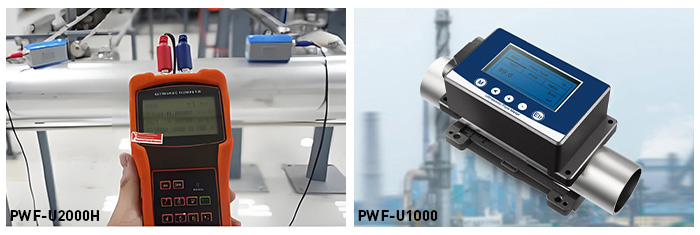
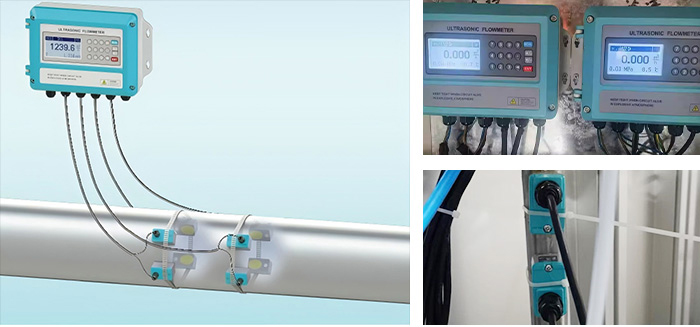
Ultrasonic Clamp-On Flow Meters operate by transmitting ultrasonic signals through the pipe wall and measuring the time difference or frequency shift of these signals. This non-invasive method means no contact with the fluid, no pressure drop, and no need to cut into the pipeline. They are highly versatile, suitable for a wide range of pipe materials and liquids, including corrosive or high-purity fluids. Their ease of installation and portability make them ideal for temporary measurements, troubleshooting, and commissioning tasks. For example, Pokcenser’s PWF-U2000MCC and PWF-U1000 models offer high accuracy and multi-channel support for various industrial and municipal applications.
2. The Advantages of Portable Insertion Ultrasonic Flow Meters
Portable insertion ultrasonic flow meters offer an alternative for applications where clamp-on meters may not be suitable, such as pipes with heavy scale buildup or very thick walls. These meters involve inserting transducers directly into the flow stream through a small tap in the pipe. While still offering portability, they provide a more direct measurement of the fluid velocity. This method ensures high accuracy, particularly in applications requiring precise flow profiling. Pokcenser’s PWF-U2000MCI is an excellent example, designed for pipeline measurement without requiring a complete shutdown of the system.
3. Other Portable Flow Measurement Technologies and Their Uses
Beyond ultrasonic technology, other portable flow measurement devices serve niche applications.
1. Turbine Flow Meters: These meters use a rotor that spins with the fluid flow, and the rotational speed is proportional to the flow rate. They offer high accuracy for clean liquids and gases but require direct contact with the fluid.
2. Electromagnetic Flow Meters: Often referred to as electromagnetic flow meter (magmeter), these meters are suitable for conductive liquids. They operate based on Faraday’s law of electromagnetic induction, measuring voltage induced by fluid moving through a magnetic field. Portable versions are available for spot-checking in applications like Water and Wastewater Treatment or chemical processing.
3. Thermal Mass Flow Meters: These devices measure the mass flow rate of gases by detecting heat transfer. Portable thermal mass flow meters are valuable for gas leak detection and process optimization in various industries.
4. Coriolis Meters: While less common in handheld form due to size and weight, some compact Coriolis meters exist for highly accurate mass flow measurement, especially for viscous or non-Newtonian fluids.
Key Features to Consider When Selecting a Handheld Flow Meter
Selecting the optimal handheld flow meter involves evaluating several critical features to ensure it meets the specific demands of your application. These considerations directly impact the instrument’s performance, usability, and overall value.
1. Evaluating Accuracy, Repeatability, and Measurement Range
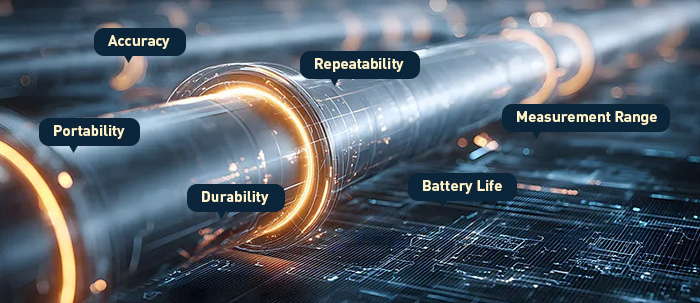
Accuracy and repeatability are paramount for reliable flow measurements. Accuracy refers to how close a measurement is to the true value, while repeatability indicates the consistency of measurements under the same conditions. For critical applications, look for meters with an accuracy of ±0.5% or better. The measurement range must also align with your expected flow rates and pipe diameters. A meter designed for small pipes (e.g., DN15-DN40) will differ significantly from one suitable for large industrial pipelines (e.g., DN50-DN6000). Always verify the meter’s specifications against your operational parameters.
2. Assessing Portability, Durability, and Battery Life for Field Use
Handheld flow meters must be genuinely portable, lightweight, and easy to carry across various field sites. Durability is equally important, as these devices often operate in harsh industrial environments. Look for robust construction materials and high IP ratings (e.g., IP65 or IP67) for protection against dust and water. Extended battery life is crucial for uninterrupted work during long shifts, minimizing the need for frequent recharging. Features like quick-swap battery packs or low-power consumption modes enhance field efficiency.
3. Understanding Data Logging, Communication, and User Interface Capabilities
Modern handheld flow meters offer advanced data logging capabilities, allowing users to store thousands of measurement points for later analysis. Effective communication interfaces, such as USB, RS485, or wireless options, facilitate easy data transfer to computers or control systems. A clear, intuitive user interface with a high-resolution display simplifies operation and reduces the learning curve for field technicians. Some models may also offer multilingual support, enhancing usability in diverse operational teams.
4. Considering Application-Specific Requirements and Environmental Factors
The specific application dictates many selection criteria. For instance, measuring flow in a chemical sector requires chemical-resistant transducers and potentially explosion-proof sensors. For Environmental Monitoring, data logging and GPS capabilities might be essential. Temperature and pressure ratings must match the process conditions. Consider the liquid type (e.g., clean water, wastewater, slurries, or gases), as this significantly influences the choice of flow measurement technology.
Maximizing the Benefits of Handheld Flow Meters in Your Operations
Integrating handheld flow meters effectively into your operations can yield substantial benefits, from improved maintenance practices to enhanced resource utilization and regulatory compliance.
1. Enhancing Troubleshooting and Maintenance with Portable Devices
Handheld flow meters are indispensable tools for troubleshooting system anomalies. Technicians can quickly diagnose issues such as pump inefficiencies, valve leakages, or blockages by taking spot measurements at various points in a pipeline. This rapid diagnostic capability minimizes downtime and allows for proactive maintenance, preventing minor issues from escalating into major operational disruptions. Their portability enables swift deployment to any location requiring immediate attention.
2. Optimizing Process Control and Resource Management
Accurate on-site flow data supports better process control and resource management. By regularly verifying flow rates, operators can ensure that processes run at optimal parameters, reducing waste and improving efficiency. For example, in water and wastewater treatment, precise flow data helps manage chemical consumption and optimize aeration processes. In manufacturing, it ensures consistent ingredient delivery, leading to higher product quality and reduced material costs.
3. Ensuring Compliance and Safety in Various Industrial Settings
Many industries operate under strict regulatory frameworks concerning fluid discharge, emissions, and resource consumption. Handheld flow meters provide verifiable data necessary for compliance reporting and auditing. In industries dealing with hazardous materials, non-invasive measurement techniques offered by clamp-on meters enhance safety by minimizing direct contact with dangerous substances. Regular on-site checks contribute to a safer working environment by identifying potential risks early.
Pokcenser’s Advanced Handheld Flow Meter Solutions for Precision
At Pokcenser Automation, we specialize in providing high-precision flow measurement solutions tailored for demanding industrial and environmental applications. Our handheld flow meters combine advanced technology with robust design, ensuring reliability and accuracy in the field.
1. Discovering Pokcenser’s Clamp-On Ultrasonic Flowmeters for Versatility
Our clamp-on ultrasonic flowmeters, such as the PWF-U2000MCC and PWF-U1000, exemplify versatility and ease of use. The PWF-U2000MCC offers multi-channel support and high accuracy (±0.5% FS for two-channel and four-channel models) for a broad range of pipe diameters (DN50-DN6000) and liquids, including water, sewage, acids, and oils. Its robust cast aluminum converter and 4-line LCD display make it suitable for harsh industrial environments. For smaller pipe applications, the PWF-U1000 provides non-invasive measurement for DN15-DN40 pipes, ideal for water and building services. Both models feature industrial-grade ARM CPUs for strong computing power and anti-interference capabilities, ensuring reliable data acquisition.
2. Leveraging Insertion Ultrasonic Flowmeters for Specific Needs
For situations demanding high precision without process interruption, our PWF-U2000MCI multi-channel insertion ultrasonic flowmeter is an optimal choice. This meter allows installation without shutting off water, making it ideal for continuous monitoring and process control. It supports pipe diameters from DN50 to DN6000 and measures various homogeneous liquids. The intelligent, integrative mixed-signal processing technology ensures stable and accurate readings, even in complex environments. Optional integrated temperature and pressure measurement further enhance its functionality for comprehensive data collection.
3. Why Pokcenser Automation is a Trusted Partner for Flow Measurement
Pokcenser Automation has over 10 years of experience in industrial process control automation. We are committed to delivering high-quality, reliable, and accurate flow meters. Our products are CE, ATEX, ISO, and RoHS approved, reflecting our adherence to international standards. With a dedicated 6-person pre-sales and after-sales team, we provide comprehensive support, from initial application evaluation to recommending suitable solutions and ongoing after-sales service. We aim to build long-term partnerships and contribute to industrial automation worldwide.
Get in Touch for Your Flow Measurement Needs
Selecting the right handheld flow meter is a critical decision that impacts operational efficiency and data integrity. Our team of experts is ready to assist you in finding the perfect solution for your specific requirements. Contact us today to discuss your application and explore our range of advanced flow measurement technologies.
Phone: +86 181 7515 5326
Email: in**@*******er.com
About the Author
Li Chengxuan is a senior industrial automation expert at Pokcenser Automation, specializing in the research and application of flow, level, pressure and temperature sensors and industrial process control solutions.
FAQs
1. What are the primary benefits of using handheld flow meters for on-site measurements?
Handheld flow meters offer portability, enabling quick and flexible measurements across various locations without disrupting processes. They provide real-time data for immediate troubleshooting, commissioning, and verification, which enhances operational efficiency, reduces downtime, and ensures data accuracy for critical decisions.
2. How do clamp-on ultrasonic flow meters work and what are their main advantages?
Clamp-on ultrasonic flow meters work by attaching transducers to the exterior of a pipe. They transmit and receive ultrasonic signals to measure fluid velocity and flow rate non-invasively. Their main advantages include easy installation, no pressure drop, suitability for corrosive or hazardous liquids, and no need to stop the process or cut the pipe.
3. Can handheld flow meters be used for hazardous liquids or in harsh industrial environments?
Yes, many handheld flow meters, particularly clamp-on ultrasonic models, are specifically designed for hazardous liquids and harsh environments. They avoid direct contact with the fluid, enhancing safety. Additionally, robust construction and high IP ratings ensure durability and reliable operation in challenging conditions.
4. What factors should be considered when calibrating a handheld flow meter?
When calibrating a handheld flow meter, consider the fluid type, pipe material and diameter, temperature, and pressure. Regular calibration against a known standard is essential to maintain accuracy. Environmental factors and potential interferences should also be accounted for during the calibration process.
5. How does Pokcenser Automation ensure the accuracy and reliability of its handheld flow meters?
Pokcenser Automation ensures accuracy and reliability through stringent manufacturing processes, adherence to international standards (CE, ATEX, ISO, RoHS), and rigorous testing. Our meters feature industrial-grade components and advanced signal processing, backed by extensive experience and a dedicated support team for optimal performance.

