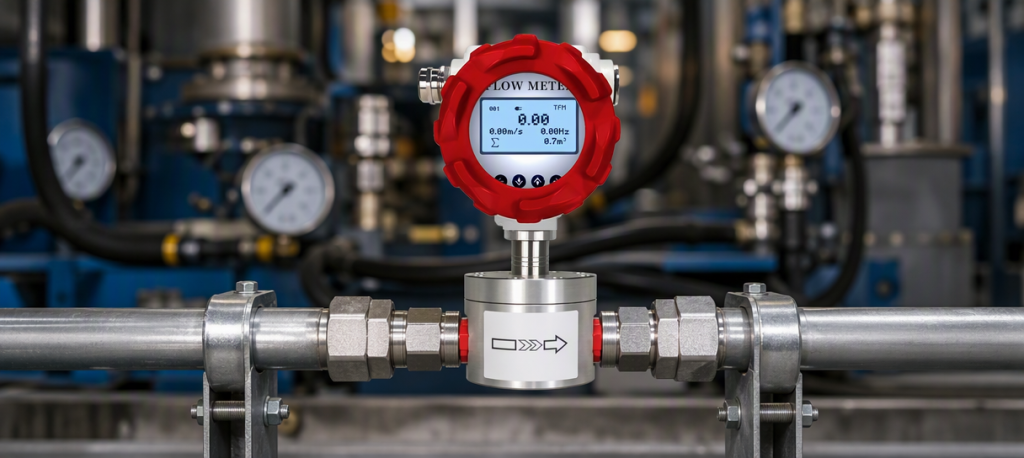
When a process involves thick, viscous liquids — hydraulic oil, lube oil, fuel oil, syrups, or polymer additives — most flow meter technologies struggle. Velocity-based meters such as turbine and vortex designs assume a clean, well-behaved flow profile, which high-viscosity fluids simply do not provide. This is where the gear flow meter earns its place: it is a positive displacement (PD) meter that physically traps and counts fixed volumes of liquid, making it the natural choice for high-viscosity metering across hydraulics, petroleum, chemicals, and pharmaceuticals. This guide explains how gear flow meters work, where they perform best, where they do...
 English
 Spanish