 English
 Spanish
Choosing the Right Flow Meter: A Guide to Fluid and Conditions
Choosing the right flow meter for an industrial process can feel like navigating a minefield. Believe me, I’ve seen firsthand how a seemingly small misstep in selection can snowball into a cascade of problems: inaccurate readings, processes hobbling along inefficiently, and maintenance costs spiraling out of control. It really boils down to understanding your fluid inside and out, and knowing the conditions it’ll be operating under. That’s the secret sauce for a successful setup. This guide, then, is my attempt to arm engineers and specialists with the insights they need to make smart, informed decisions, ensuring their flow measurements are not just reliable, but spot-on precise.
Understanding the Challenges in Flow Meter Selection for Industrial Processes
1. Recognizing common pitfalls in flow measurement
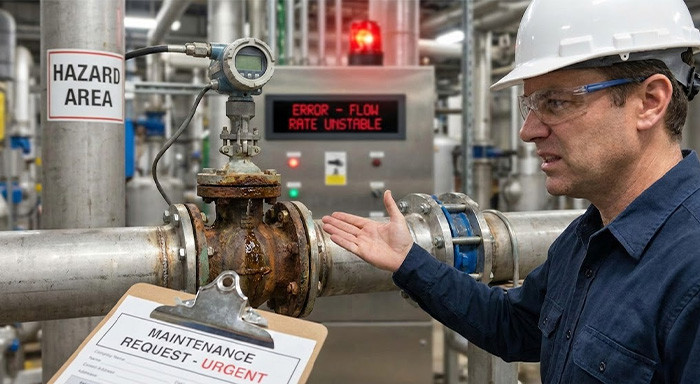
It’s astonishing how often the wrong flow meter choice can throw a wrench into an entire operation. Take, for instance, picking a meter that simply can’t handle the fluid’s viscosity – you’re practically guaranteeing inaccurate readings, which in turn throws your whole process off kilter. Or, just as bad, overlooking the corrosive nature of a fluid; I’ve seen sensors practically dissolve before their time, leading to constant, costly replacements. And don’t even get me started on inadequate pressure ratings – that’s a recipe for catastrophic equipment failure, plain and simple. Then there’s the sneaky problem of entrained solids or gases. Ignore those, and you’ll find your sensitive measurement mechanisms clogged or damaged, making your data about as reliable as a politician’s promise.
2. Identifying the impact of incorrect flow meter choices on operational efficiency
The ripple effects of a poor flow meter choice go far beyond just a wonky reading. We’re talking about a significant hit to operational efficiency. You might see energy consumption shoot up because pumps or heating cycles are working harder than they need to. Product quality can take a nosedive if ingredient ratios are off or process control is inconsistent. And let’s not forget the constant downtime for repairs or recalibrations – that’s a direct punch to productivity and profitability. In hazardous environments, the stakes are even higher; inaccurate monitoring of critical process flows can quickly escalate into serious safety risks. It’s a domino effect, really.
Key Fluid Characteristics Influencing Flow Meter Selection
1. Analyzing fluid type and its implications for measurement technologies
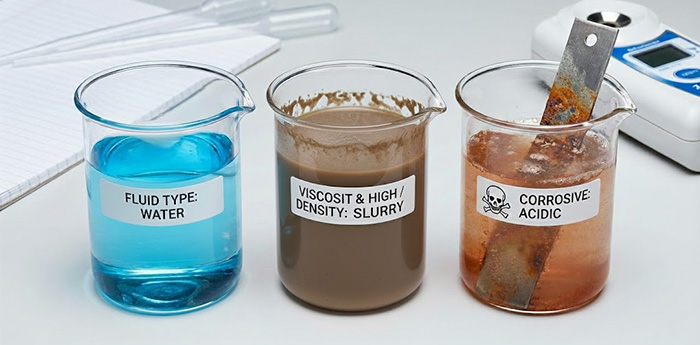
When it comes to picking a flow meter, the fluid itself is king. Seriously, whether you’re dealing with liquids, gases, steam, or slurries, each demands a specific measurement approach. Think about it: an electromagnetic flow meter (or magmeter) is brilliant for conductive liquids, but utterly useless for non-conductive fluids or gases. On the flip side, ultrasonic flow meters can handle both liquids and gases, assuming the fluid plays nice and transmits sound waves effectively. And if you’ve got suspended solids or bubbles floating around, that’s another big factor that will narrow down your viable technology options considerably.
2. Evaluating fluid viscosity and density in different industrial applications
Fluid viscosity and density aren’t just abstract scientific terms; they profoundly impact how a fluid behaves and how well a meter performs. Imagine trying to measure something thick and syrupy, like heavy oils – their high viscosity can create a laminar flow profile that throws some meter types for a loop. In those cases, positive displacement or Coriolis meters often shine. Then there are density variations, especially tricky with gases or mixed-phase flows. For those, you absolutely need meters that can measure mass flow, like thermal mass flow meters or Coriolis meters, if you want any hope of accuracy.
3. Considering fluid temperature and pressure ranges for optimal performance
Temperature and pressure aren’t just minor details; they’re critical parameters that affect both the fluid’s characteristics and the flow meter’s very structure. Extreme temperatures can literally ruin sensor materials or cause thermal expansion, which, you guessed it, messes with accuracy. High-pressure applications? Those demand meters with beefy housings and connections to prevent leaks and, more importantly, ensure safety. Every manufacturer provides operating ranges for their meters, and trust me, pushing beyond those limits is just asking for a breakdown or a significantly shortened lifespan. Take Pokcenser’s LZ Metal Tube Flow Meter, for example – it’s specifically engineered to shrug off high-temperature and high-pressure environments.
4. Assessing the corrosiveness and abrasiveness of process fluids
Corrosive and abrasive fluids are the arch-nemeses of flow meter durability. Acids, alkalis, slurries packed with hard particles – they can all eat away at or physically attack the wetted parts of a meter. Material compatibility isn’t just important; it’s absolutely crucial. Meters built from stainless steel, Hastelloy, or those with PTFE liners offer a much better fighting chance. For the truly nasty stuff, plastic tube flow meters like our LZS Series can be a cost-effective and surprisingly tough solution. Choosing the right materials here isn’t just about preventing early wear; it’s about ensuring long-term reliability.
Essential Operating Conditions for Accurate Flow Meter Deployment
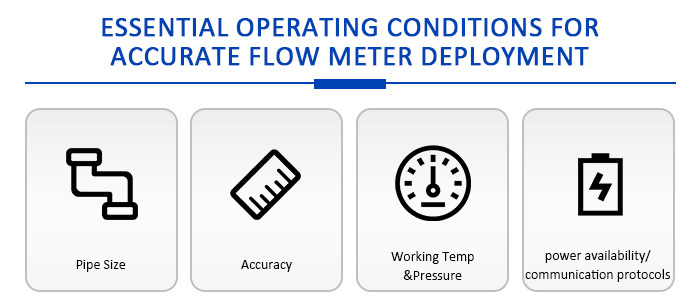
1. Understanding pipe size and material for compatible flow meter installation
The size of your pipe isn’t just a number; it directly dictates the flow range you need and the physical dimensions of your meter. Get it wrong, and you’re looking at flow disturbances, irritating pressure drops, and, naturally, inaccurate readings. The pipe material matters too – clamp-on ultrasonic meters, for instance, are fantastic for non-invasive measurements across a variety of pipe materials. And here’s a crucial tip: always, always adhere to the upstream and downstream straight pipe run requirements. It ensures you get a fully developed flow profile, which is essential for accurate measurement.
2. Determining required accuracy and repeatability for specific processes
How accurate do you really need to be? That’s a fundamental question. For high-stakes applications like chemical dosing or custody transfer, you’re going to demand meters with incredibly low measurement uncertainty. But for something less critical, like general monitoring, you might be able to live with a bit more wiggle room. Repeatability, though, is non-negotiable. It means getting consistent measurements under the exact same conditions, which is absolutely vital for process control and quality assurance. Our Pokcenser PWF-U2000MCC Multi-channel Clamp-on Ultrasonic Flowmeter, for example, boasts a high accuracy of ±0.5% FS for both two-channel and four-channel setups. If you’re keen to dive deeper, you might want to check out our article, “Flow Meter Selection: Turbine vs. Electromagnetic vs. Ultrasonic Flow Meters.”
3. Addressing environmental factors such as ambient temperature and vibration
The world outside your pipe can have a surprisingly big impact on your flow meter. Extreme ambient temperatures might mean you need insulated or heated enclosures to keep the electronics happy and stable. And excessive vibration, say from a nearby pump or machinery, can introduce noise into your signal or even cause mechanical stress. The trick is to pick meters with robust construction and the right mounting solutions to head these issues off at the pass. For those truly brutal industrial environments, the all-metal construction of the LZ Metal Tube Flow Meter is a real workhorse.
4. Considering power availability and communication protocols for integration
These are the practical, nitty-gritty details that often get overlooked. Does your meter need a dedicated power supply, or can it run on batteries for a remote application? And how will it talk to your control systems? Standard industrial communication protocols like 4-20mA, HART, or Modbus RTU are your friends here. Making sure everything is compatible upfront simplifies installation, configuration, and, crucially, long-term data management. Trust me, you don’t want to be wrestling with communication issues when you’re trying to get a new system online.
Different Flow Meter Technologies and Their Suitability for Various Applications
1. Exploring ultrasonic flow meters for non-invasive and high-accuracy measurements
Ultrasonic flow meters are pretty cool, really. They use sound waves to figure out how fast your fluid is moving. Their big selling point? They’re non-invasive, meaning they don’t get in the way of the flow at all. This makes them perfect for corrosive, abrasive, or even super-hygienic fluids. They really shine when you need high accuracy, like in water distribution or when you’re trying to sniff out leaks. Here at Pokcenser, we’ve got a whole range, including the PWF-U2000MCC Multi-channel Clamp-on Ultrasonic Flowmeter and the PWF-U2000MCI Multi-channel Insertion Ultrasonic Flowmeter, both offering top-notch accuracy and multi-channel capabilities. And for those smaller pipes, our PWF-U1000 Small Pipe Clamp-on Ultrasonic Flowmeter is a compact, non-invasive gem for pipes from DN15–DN40.
2. Detailing metal tube flow meters for harsh high-temperature and high-pressure environments
Now, if you’re dealing with truly brutal industrial conditions, metal tube flow meters – often rotameters – are your go-to. Their all-metal construction makes them incredibly tough, shrugging off high temperatures, intense pressures, and even corrosive media. You’ll find them everywhere from petrochemical plants to power generation and metallurgical processes, precisely because they offer unwavering reliability in severe environments. The LZ Metal Tube Flow Meter from Pokcenser is a prime example, available in a wide array of designs and sizes for both liquids and gases.
3. Examining plastic tube flow meters for corrosive and low-pressure applications
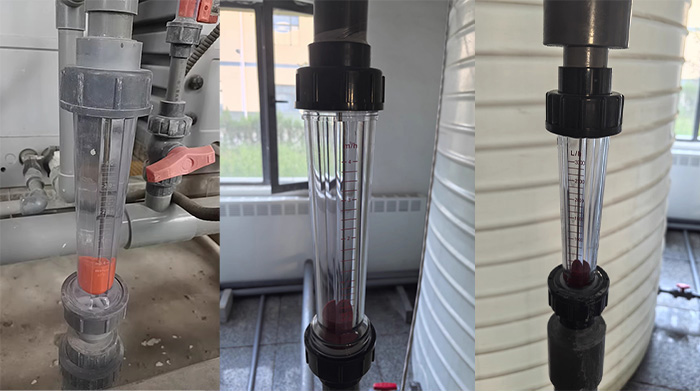
For applications involving corrosive fluids or low-pressure systems, plastic tube flow meters, like our LZS Series, are a fantastic choice. Built from materials like AS or PC, they offer superb chemical resistance and simply won’t corrode. Plus, they’re lightweight, surprisingly tough, and often transparent, which is great for a quick visual check of the flow rate. You’ll see them widely used in the chemical industry, water treatment, and pharmaceuticals, where chemical inertness is a top priority.
4. Comparing other flow meter types for specialized industrial needs
Beyond the ultrasonic, metal tube, and plastic meters, there’s a whole universe of other technologies tailored for specific industrial quirks.
- Electromagnetic Flow Meters: These clever devices measure the speed of conductive liquids by picking up the voltage generated as the fluid moves through a magnetic field. They’re incredibly accurate and ideal for wastewater treatment and slurries.
- Thermal Mass Flow Meters: These guys directly measure mass flow by sensing how much heat is transferred from a heated sensor to the flowing fluid. They’re particularly brilliant for gas measurement, especially at low flow rates, offering excellent accuracy and repeatability. If this piques your interest, definitely check out our article “13 Reasons Why High-Accuracy Gas Measurement with Thermal Mass Flow Meters Matters in Modern Industry.”
- Coriolis Mass Flow Meters: These meters are a marvel, measuring mass flow directly by observing the Coriolis effect on a vibrating tube as fluid passes through it. They offer high accuracy for both liquids and gases, and impressively, they don’t care about the fluid’s properties.
- Turbine Flow Meters: These work by measuring the spin speed of a turbine rotor placed in the flow path. They’re a good fit for clean, low-viscosity fluids, providing decent accuracy and repeatability.
A Step-by-Step Approach to Selecting the Optimal Flow Meter
1. Defining application requirements and fluid specifications
First things first: get absolutely granular about your application’s needs. This means detailing the fluid type (is it a liquid, gas, steam, or slurry?), its chemical makeup, viscosity, density, and the expected operating temperature and pressure ranges. Don’t forget to specify the flow range you need (both minimum and maximum), your desired accuracy, and repeatability. And if there are any regulatory requirements or certifications, especially for hazardous areas, make sure those are on your list too.
2. Matching fluid and condition parameters with appropriate flow meter technologies
Once you’ve got your specifications ironed out, it’s time to play matchmaker. If you’re dealing with a highly corrosive liquid at low pressure, for instance, a plastic tube flow meter might be your best bet. For high-temperature, high-pressure scenarios where accuracy is paramount, you might lean towards a metal tube or a Coriolis meter. And for non-invasive measurements across various liquids, Ultrasonic Flow Meters are often the ideal choice. It’s about finding the right tool for the job.
3. Evaluating cost-effectiveness and long-term maintenance considerations
Beyond the sticker price, you really need to think about the total cost of ownership. This includes the initial installation, any calibration needs, power consumption, and what you expect to spend on maintenance down the line. Sometimes, a meter that costs more upfront can actually save you money in the long run through reduced maintenance or superior accuracy. Don’t forget to consider the availability of spare parts and technical support – those can be lifesavers.
4. Consulting with experts for customized flow measurement solutions
For those really complex or truly unique applications, honestly, just pick up the phone and talk to some flow measurement experts. Here at Pokcenser Automation, we’re always ready to offer specialized guidance and tailor-made solutions for specific industrial needs. Our team can help you dissect your application, recommend the perfect products from our range of main products, and ensure everything integrates seamlessly.
Partner with Pokcenser Automation for Your Flow Measurement Needs
Look, getting the right flow meter isn’t just about making a purchase; it’s absolutely critical for your operational success, efficiency, and most importantly, safety. At Pokcenser Automation, we’re proud to offer a comprehensive array of flow meters, backed by expert support to guide you through the selection maze. Our solutions are built for reliability and precision across a huge spectrum of industrial applications. So, why not reach out today? Let’s chat about your specific requirements and explore how our advanced flow measurement technologies can genuinely boost your operations.
Phone: +86 181 7515 5326
Email: in**@*******er.com
About the Author
Li Chengxuan is a senior industrial automation expert at Pokcenser Automation, specializing in the research and application of flow, level, pressure and temperature sensors and industrial process control solutions.
FAQs
1. What are the most critical factors to consider when selecting a flow meter?
Honestly, it boils down to a few key things: the fluid type (liquid, gas, steam, or slurry), its specific properties (think viscosity, density, how corrosive or abrasive it is), and the operating conditions (temperature, pressure, and the flow range you’re expecting). Accuracy, repeatability, pipe size, and even the environment around the meter all play a huge part in making the right choice.
2. How does fluid viscosity affect the choice of flow meter technology?
Fluid viscosity is a big deal because it directly impacts how the fluid flows and how well a meter can read it. If you’ve got a really thick, viscous fluid, it can create a laminar flow that some meter types just can’t measure accurately. In those cases, you’re usually better off with positive displacement meters or Coriolis meters, while something like an orifice plate or a turbine meter might struggle.
3. Can a single flow meter type be used for both liquids and gases?
It’s a good question! While some flow meter technologies, like Coriolis and ultrasonic meters, can measure both liquids and gases, their performance and accuracy might not be the same for each. Often, you’ll find that specialized meters offer much better results for a specific fluid type. For instance, thermal mass flow meter are incredibly optimized for measuring gas.
4. What is the importance of temperature and pressure ratings in flow meter selection?
Temperature and pressure ratings aren’t just technical specs; they’re absolutely vital for keeping your flow meter safe and ensuring it lasts. Push past those limits, and you risk material degradation, measurement drift, or even a complete, catastrophic failure. Choosing a meter that can comfortably handle your process conditions is key to maintaining accuracy and operational integrity.
5. How often should industrial flow meters be calibrated for accuracy?
The calibration frequency really depends on a few things: how accurate your application needs to be, how stable the meter itself is, and any regulatory standards you need to meet. For super critical applications, you might be looking at annual or even semi-annual calibrations. For less demanding tasks, you could stretch those intervals a bit. But regular calibration is non-negotiable if you want to maintain consistent measurement accuracy and stay compliant.

