 English
 Spanish
Choosing the Right Industrial Water Tank Level Sensor
Choosing the right level sensor for an industrial water tank is one of those quiet decisions that determines whether a plant runs like clockwork or spends nights chasing nuisance alarms. I’ve watched teams wrestle with mismatched sensors, tricky tank geometries, and liquids that don’t behave—and I’ve also seen how pairing the right technology with the actual conditions makes the data calm, consistent, and dependable. What follows distills the key selection criteria and available technologies, then ties them to real applications so you can match sensor capability to demand and keep measurements reliable, accurate, and safe.
Understanding the Critical Role of Level Sensors in Industrial Water Tanks
1. Why Accurate Water Level Monitoring is Essential for Industrial Operations
Accurate level monitoring underpins process control, prevents costly overflows and dry-runs, and safeguards people and equipment. Reliable readings support resource optimization, minimize waste, and help maintain regulatory compliance. In manufacturing, for example, stable water levels in cooling loops and chemical mixing directly affect product quality and uptime. When level data drifts or drops out, the result can be unplanned downtime, equipment damage, or environmental incidents.
2. Common Challenges in Industrial Water Tank Level Measurement
Industrial tanks introduce tough variables: corrosive media, temperature extremes, high pressure, and interference from foam or vapor. Geometry matters too—conical bottoms, baffles, or mixers can disrupt mounting and echo paths. Keeping accuracy stable over years in these environments calls for robust, application-appropriate technology. That’s why every selection should start with a clear picture of the application’s demands before choosing a sensing method.
Key Factors to Consider When Selecting an Industrial Water Tank Level Sensor
1. Evaluating Water Tank Characteristics and Environmental Conditions
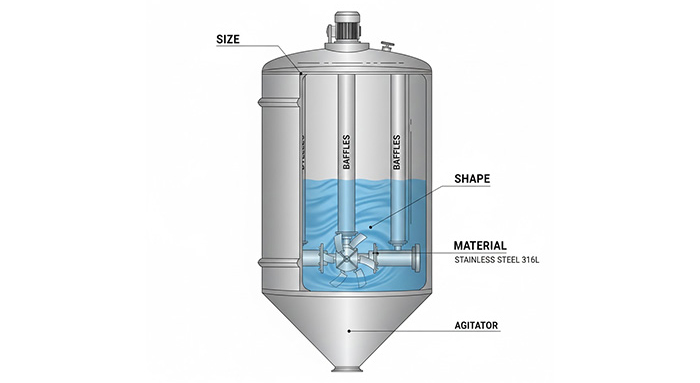
Tank construction and surroundings strongly influence sensor fit. Size, shape, material, and internals (baffles, agitators) dictate mounting options and how signals propagate. Ambient factors—temperature swings, humidity, vibration, or hazardous areas—further narrow the choices. An outdoor tank in a freezing climate demands low-temperature resilience, while a chemical process tank pushes corrosion resistance and sealing to the forefront.
2. Analyzing Liquid Properties and Their Impact on Sensor Performance
Start with the liquid: density, viscosity, conductivity, dielectric constant, temperature, and chemistry. High viscosity and foaming can degrade ultrasonic or even some radar signals. Corrosive media call for wetted materials like stainless steel or engineered polymers. Matching sensor construction and measurement principle to the liquid’s properties ensures accuracy without premature wear or drift.
3. Determining Required Accuracy, Range, and Response Time
Clarify how precise the measurement must be, whether you need continuous level or simple point detection, and the full operating span of the tank. The measuring range should cover minimum to maximum levels with room for overfill/underfill margins. Response time needs to be fast enough for the control strategy—slow updates can allow deviations that affect quality or safety.
4. Assessing Installation Requirements and Maintenance Considerations
Physical constraints shape your options: mounting availability, tank access, and existing nozzles or piping. Some devices require tank penetration; others are non-invasive. Consider lifecycle factors—calibration intervals, cleaning, and replacement ease. Designs with few moving parts or self-cleaning features typically reduce maintenance and downtime.
5. Understanding Output Signals and Integration with Control Systems
Interface compatibility is critical. Ensure the sensor’s outputs work with your PLC, DCS, or SCADA. Common outputs include 4-20mA analog signals, digital protocols like RS485 Modbus RTU, HART, or SDI-12. Output type influences resolution, cable length, diagnostics, and integration effort. Many modern sensors provide multiple output options for flexibility.
If you’re interested, check 《Submersible Level Transmitters: Key Specs to Check First》.
Exploring Different Types of Industrial Water Tank Level Sensors
1. How Ultrasonic Level Sensors Provide Non-Contact Measurement
Ultrasonic sensors send high-frequency sound toward the liquid and time the returning echo. Because they don’t touch the medium, they work well with corrosive or hazardous liquids and in applications where contact is undesirable. Their Achilles’ heel is interference from foam, heavy vapor, or strong agitation. Our ultrasonic level sensors such as the PWL-U201 and PWL-U202 are engineered with small blind zones and high accuracy to suit a wide range of tank sizes.
2. The Advantages of Hydrostatic Level Transmitters for Submerged Applications
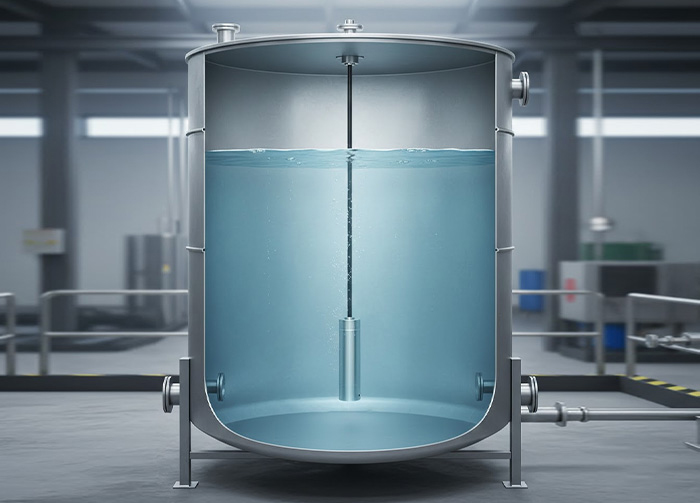
Hydrostatic level transmitters infer level from the pressure of the liquid column above the sensor. Submerged in the tank, they deliver continuous, highly accurate readings and remain stable in the presence of foam, vapor, or agitation. The PWP412-T3 exemplifies submersible level transmitters with SDI-12 output and IP68 protection for long-term reliability.
3. Understanding Radar Level Sensors for Challenging Environments
Radar sensors emit electromagnetic waves toward the surface and calculate distance via time-of-flight. They thrive in extreme temperatures and pressures and handle liquids with changing density or viscosity. Foam, vapor, and dust typically don’t faze radar, making it a top choice for harsh conditions. Like Ultrasonic sensors, radar is non-contact, but it generally outperforms in difficult environments.
If you’re interested, check 《Radar vs. Ultrasonic Level Sensors: A Selection Guide》.
4. When to Use Float Level Switches and Magnetic Level Gauges
Float level switches offer simple, economical point-level control: a float rides the surface and trips a switch at set high/low points. They require contact with the liquid. Magnetic level gauges provide a clear visual reading via a magnetic float that flips external indicators and excel in high-pressure or high-temperature services where sight verification is needed. Both are types of Float Sensors and are well-suited for straightforward on/off control rather than continuous measurement.
5. Considering Other Level Measurement Technologies for Specific Needs
Other methods address specialized needs. Capacitive sensors track changes in capacitance and shine with non-conductive liquids. Conductivity probes sense presence/absence of conductive media at set points. Radiation-based systems serve extreme environments or solids, while magnetostrictive sensors deliver high precision and can detect interfaces. Each brings strengths for particular challenges.
You may find this article interesting: 《Capacitive Level Sensors: Principles & Best Use Cases》.
Selecting the Optimal Level Sensor for Diverse Industrial Applications
1. Water Treatment Plants and Wastewater Management
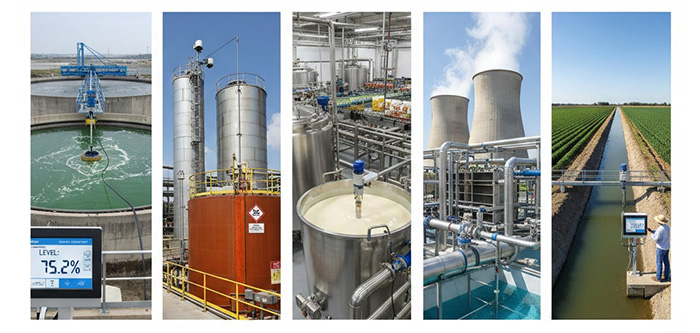
In Water and Wastewater Treatment, level devices monitor clarifiers, settling basins, and chemical dosing tanks. Hydrostatic transmitters and ultrasonic sensors are popular for continuous measurement thanks to their reliability and fouling resistance. The PWP412-T3, with IP68 sealing and corrosion-resistant construction, is a solid fit for demanding wastewater duty.
2. Chemical and Petrochemical Storage Tanks
Chemical Tanks often hold corrosive, volatile, or hot liquids. Radar is typically favored for its non-contact operation and resilience to harsh chemistries and extreme process conditions. Where hazardous materials are present, ensure the chosen device carries the required explosion-proof certifications.
3. Food and Beverage Processing Facilities
Food and beverage processes need hygienic, precise level control to protect quality and safety. Sensors should meet strict sanitary requirements with smooth, cleanable surfaces and FDA-compliant materials. Ultrasonic devices are common for non-contact measurement of milk, juices, and syrups, while hydrostatic sensors are used where in-tank accuracy is paramount.
4. Power Generation and Cooling Systems
Power plants rely on dependable level monitoring for boiler feed, cooling towers, and condensate storage. Hydrostatic and radar sensors handle the elevated temperatures and pressures typical of these systems, enabling efficient operation and preventing critical failures.
5. Agricultural Irrigation and Water Resource Management
For irrigation and broader water resource work, sensors track reservoirs, canals, and groundwater. Remote sites benefit from rugged, low-power devices. Submersible hydrostatic units like the PWP412-T3 are frequently deployed for their long-term stability and direct SDI-12 output, simplifying distributed data collection.
Enhancing Reliability and Performance with Pokcenser Automation Technology
1. Pokcenser’s Advanced Hydrostatic and Ultrasonic Level Sensing Solutions
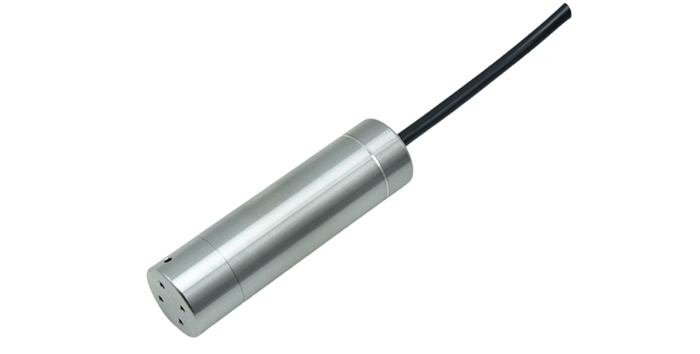
Pokcenser Automation delivers a portfolio of high-performance level sensors for diverse industrial needs. Our PWP412-T3 is a submersible pressure sensor offering precise water level and temperature measurements with SDI-12 output and IP68 protection. For non-contact applications, our PWL-U201 and PWL-U202 ultrasonic level sensors provide exceptionally small blind zones and high accuracy—ideal for compact tanks and challenging liquids. These exemplify our focus on advanced, application-driven sensing.
| Model | Technology | Measuring Range | Accuracy | Output Signal | Protection | Key Feature |
|---|---|---|---|---|---|---|
| PWP412-T3 | Hydrostatic | 0-200m H₂O | ±0.5% FS, ±0.05% FS | SDI-12 | IP68 | Submersible, temperature measurement |
| PWL-U201 | Ultrasonic | 1m, 2m, 3m | ±1mm, ±1.5mm | 4-20mA, RS485, NPN | IP65 | Small blind zone, temperature compensation |
| PWL-U202 | Ultrasonic | 1m, 2m, 3m | ±1mm, ±1.5mm | 4-20mA, RS485, NPN, Wireless | IP65 | Small blind zone, anti-condensation function |
2. Ensuring Accuracy and Durability in Harsh Industrial Settings
We build for accuracy and longevity in demanding environments. The PWP412-T3’s all-stainless-steel construction resists corrosion and moisture. Our ultrasonic line uses digital filtering and echo recognition to stay precise despite changing liquid conditions. All main products undergo rigorous testing for extreme temperature, pressure, and chemical exposure to ensure long-term reliability.
3. Seamless Integration with Existing Automation Systems
Pokcenser sensors integrate cleanly into existing automation. With industry-standard outputs such as 4-20mA and RS485 Modbus RTU, they connect easily to common control platforms. This simplifies data acquisition and supports efficient monitoring and control. Open, widely used protocols also make system upgrades and expansions more straightforward.
Connect with Pokcenser Automation for Your Level Sensing Needs
Choosing the right level sensor is a critical decision that impacts operational efficiency and safety. We invite you to leverage our expertise to find the optimal solution for your specific industrial water tank application. Our team is ready to provide tailored recommendations and support.
Contact us today to discuss your requirements:
Email: in**@*******er.com
Phone: +86 181 7515 5326
About the Author
Li Chengxuan is a senior industrial automation expert at Pokcenser Automation, specializing in the research and application of flow, level, pressure and temperature sensors and industrial process control solutions.
FAQs
1. What is the most common type of level sensor used in industrial water tanks?
Ultrasonic and hydrostatic sensors are the most common choices. Ultrasonic devices provide versatile, non-contact measurement for many liquids, while hydrostatic sensors deliver accurate, continuous readings in submerged applications and remain stable in the presence of foam or agitation.
2. How do I determine the correct measuring range for my level sensor?
Identify the tank’s minimum and maximum operating levels, then select a sensor range that spans that window with headroom for overfill and underfill scenarios. Choosing a slightly larger range than day-to-day needs provides margin for unexpected fluctuations.
3. Can a single level sensor be used for different types of liquids?
It depends on the technology and the liquids involved. Radar, for example, is broadly adaptable across many media. Capacitive sensors, by contrast, are more specific and suit non-conductive liquids. Always confirm compatibility with chemistry, density, viscosity, and temperature before reusing a sensor.
4. What are the benefits of using a digital output level sensor?
Digital outputs can improve accuracy, resist noise, and support longer cable runs. Protocols such as RS485 Modbus RTU allow multi-drop networks and deliver diagnostic data, easing integration with modern control systems and enabling remote monitoring.
5. How often should industrial water tank level sensors be calibrated or maintained?
Intervals vary by sensor type, criticality, and environment. Harsher or high-consequence applications merit more frequent checks. Routine calibration preserves accuracy, and periodic cleaning or inspection helps prevent buildup, drift, and premature failure.

