 English
 Spanish
Dissolved Oxygen Sensors for Environmental Applications: A Comprehensive Guide
Maintaining optimal water quality is crucial for environmental health and industrial processes. Dissolved oxygen (DO) levels serve as a primary indicator of aquatic ecosystem vitality and treatment efficiency. Accurate and reliable DO measurement is essential for effective management and compliance. We will explore the critical role of DO sensors, their underlying scientific principles, and how to select the most suitable technology for diverse environmental applications.
Understanding the Critical Role of Dissolved Oxygen in Environmental Health
1. Why Dissolved Oxygen Levels are Paramount for Aquatic Ecosystems
Dissolved oxygen is a fundamental parameter for assessing the health and biological activity of aquatic environments. Fish and other aquatic organisms rely on adequate DO concentrations for respiration and survival. Low DO levels, known as hypoxia, can stress or kill aquatic life, leading to ecosystem collapse. Conversely, excessively high DO can also be detrimental, causing gas bubble disease in fish. Therefore, maintaining a balanced DO range is vital for biodiversity and ecological stability.
DO levels directly influence the decomposition rates of organic matter. Aerobic bacteria, which require oxygen, efficiently break down pollutants. When oxygen is scarce, anaerobic processes take over, producing noxious gases like hydrogen sulfide and methane. These gases further degrade water quality and create unpleasant odors. Monitoring DO helps assess the capacity of a water body to assimilate waste and support natural purification processes.
2. The Impact of DO Fluctuations on Water Quality and Regulatory Compliance
Fluctuations in dissolved oxygen levels often indicate significant changes in water quality. For instance, sudden drops can signal pollution events, excessive algal blooms (which consume oxygen during decomposition), or high organic loads from industrial discharges. Conversely, diurnal variations are natural, with higher DO during daylight hours due to photosynthesis and lower levels at night due to respiration. Understanding these patterns requires continuous monitoring.
Regulatory bodies worldwide establish strict limits for dissolved oxygen in various water bodies. Compliance with these regulations is mandatory for industries, municipalities, and agricultural operations that discharge into natural waters. Real-time DO monitoring with reliable sensors helps operators maintain compliance, avoid penalties, and ensure responsible environmental stewardship. Accurate data supports informed decision-making for water quality management.
If you’re interested, check 《Water and Wastewater Treatment》.

Exploring the Scientific Principles Behind Dissolved Oxygen Measurement
Accurate dissolved oxygen measurement relies on various sensor technologies, each with distinct principles of operation. Understanding these mechanisms is crucial for selecting the appropriate sensor for specific applications and ensuring reliable data. Two primary methods dominate the field: polarographic (diaphragm electrode) and optical (fluorescence).
1. Diaphragm Electrode Method: Polarographic Sensor Technology Explained
Polarographic dissolved oxygen sensors, often called Clark-type sensors, operate based on electrochemical principles. These sensors typically consist of two electrodes—a noble metal cathode (e.g., gold or platinum) and a silver anode—immersed in an electrolyte solution. A gas-permeable membrane separates the electrodes and electrolyte from the sample water. Oxygen from the sample diffuses across this membrane and is reduced at the cathode, generating an electrical current proportional to the partial pressure of oxygen.
The reaction at the cathode consumes oxygen, creating a concentration gradient that drives more oxygen across the membrane. This continuous diffusion and reduction process generates a steady current. The sensor measures this current to determine the dissolved oxygen concentration. Temperature significantly affects oxygen solubility and diffusion rates, so polarographic sensors always incorporate temperature compensation to ensure accurate readings. Regular calibration and membrane maintenance are essential for optimal performance.
2. Optical Fluorescence Method: Advanced DO Sensing Without Membranes
Optical dissolved oxygen sensors, also known as luminescence-based or fluorescence-based sensors, represent a newer and often more robust technology. These sensors utilize a luminescent material, typically a dye embedded in a gas-permeable layer. When blue light illuminates this material, it emits red light (fluorescence). Oxygen molecules quench this fluorescence, meaning they absorb some of the emitted light.
The sensor measures the intensity or decay time of the emitted red light. A higher concentration of dissolved oxygen leads to more quenching and thus a weaker or shorter-lived fluorescence signal. Conversely, lower oxygen levels result in a stronger or longer-lived signal. The relationship between oxygen concentration and fluorescence quenching is precisely calibrated. Optical sensors offer several advantages, including reduced maintenance (no membranes to replace or electrolyte to replenish) and immunity to hydrogen sulfide interference.
3. Key Factors Influencing Sensor Accuracy and Reliability
Several factors critically influence the accuracy and reliability of dissolved oxygen sensors. Temperature is paramount; oxygen solubility decreases as temperature rises, so effective temperature compensation is non-negotiable for accurate readings. Salinity also affects oxygen solubility, with higher salinity reducing DO capacity. Therefore, sensors used in saline environments must account for this parameter.
Pressure variations, especially in deep water applications or at high altitudes, impact the partial pressure of oxygen, necessitating pressure compensation for precise measurements. Fouling, the accumulation of biological or chemical deposits on the sensor’s surface, can impede oxygen diffusion or light transmission, leading to inaccurate readings. Regular cleaning and anti-fouling coatings are crucial. Finally, sensor drift, a gradual change in calibration over time, requires periodic recalibration to maintain accuracy.
Selecting the Right Dissolved Oxygen Sensor for Diverse Environmental Needs
Choosing the appropriate dissolved oxygen sensor involves a careful evaluation of application-specific requirements and sensor characteristics. The decision directly impacts measurement accuracy, operational efficiency, and long-term cost-effectiveness. We consider several key aspects during sensor selection.
1. Matching Sensor Type to Specific Application Requirements
The choice between polarographic and optical sensors often depends on the application’s specific demands. Polarographic sensors are generally more cost-effective upfront and perform well in applications with consistent flow and minimal fouling. They are suitable for many industrial processes and routine environmental monitoring. However, they require more frequent maintenance, including membrane and electrolyte replacement.
Optical sensors excel in environments prone to fouling, such as wastewater treatment plants or aquaculture, due to their membrane-free design. They offer greater stability, longer calibration intervals, and faster response times. While their initial cost may be higher, reduced maintenance often translates to lower long-term operating expenses. We recommend optical sensors for demanding applications requiring high reliability and minimal intervention.
2. Evaluating Technical Parameters: Range, Accuracy, and Temperature Compensation
When selecting a DO sensor, scrutinize its technical specifications. The measurement range must encompass the expected DO concentrations in your application. Accuracy, typically expressed as a percentage of full scale (F.S.) or a fixed value (e.g., ±0.1 mg/L), indicates the sensor’s precision. For critical applications, higher accuracy is essential.
Temperature compensation is a vital feature for any DO sensor. Water temperature significantly impacts oxygen solubility. Therefore, an integrated temperature sensor and automatic compensation algorithm ensure that the reported DO values are accurate regardless of temperature fluctuations. Ensure the sensor’s compensation range covers your operating temperatures. Without proper temperature compensation, DO readings will be unreliable.
3. Considering Durability and Connectivity for Harsh Environments
Environmental applications often present harsh conditions, including corrosive chemicals, abrasive particles, and extreme temperatures. Sensor durability is paramount. Look for robust housing materials like POM (Polyoxymethylene) or 316 stainless steel, which offer excellent chemical resistance and mechanical strength. An IP68 waterproof rating is essential for submerged or frequently wet installations, ensuring long-term reliability.
Connectivity options are also crucial for seamless integration into existing monitoring systems. Modern DO sensors often feature digital outputs like RS485 Modbus RTU, enabling remote monitoring, data logging, and integration with SCADA or PLC systems. This digital communication minimizes signal interference and allows for longer transmission distances, enhancing system flexibility and data integrity.
For more information on robust sensors, see 《hazardous area sensors》.
Practical Applications of Dissolved Oxygen Sensors in Environmental Monitoring
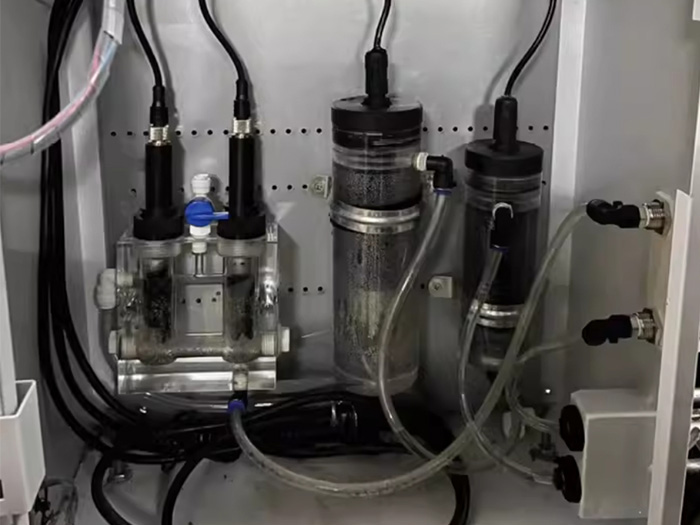
Dissolved oxygen sensors are indispensable tools across a wide spectrum of environmental monitoring and control applications. Their ability to provide real-time, accurate data enables effective management of water resources and biological processes.
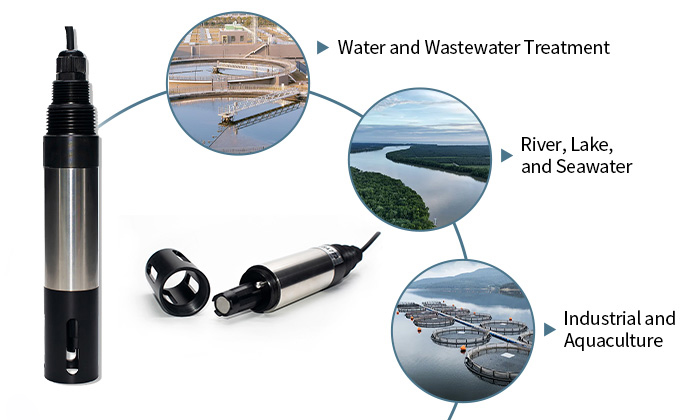
1. Monitoring Drinking Water and Wastewater Treatment Processes
In drinking water treatment, maintaining adequate DO levels is important for aeration processes and preventing anaerobic conditions that can lead to taste and odor issues. DO sensors monitor aeration basins to ensure efficient removal of contaminants. In wastewater treatment, DO is a critical parameter for optimizing activated sludge processes. Insufficient oxygen starves aerobic bacteria, hindering organic matter degradation, while excessive aeration wastes energy.
Precise DO control optimizes biological treatment efficiency, reduces energy consumption, and ensures effluent quality meets regulatory standards. Sensors provide continuous feedback to aeration systems, allowing for dynamic adjustment of air supply. This optimization is crucial for cost-effective and compliant wastewater treatment.
2. Assessing River, Lake, and Seawater Quality for Ecosystem Health
Dissolved oxygen levels are key indicators of aquatic ecosystem health in natural water bodies. Environmental monitoring programs use DO sensors to track seasonal changes, assess the impact of pollution, and evaluate restoration efforts in rivers, lakes, and coastal waters. Low DO in these environments often signals eutrophication or organic pollution, which can devastate fish populations and aquatic flora.
Continuous monitoring helps identify problem areas, inform conservation strategies, and support regulatory compliance. In marine environments, DO sensors are vital for monitoring ocean deoxygenation zones and assessing the health of coral reefs and other sensitive ecosystems. The data collected helps scientists understand long-term environmental trends.
For more insights into water quality, read 《Environmental Monitoring and Rivers》.
3. Industrial and Aquaculture Applications Requiring Precise DO Control
Many industrial processes, particularly in the food and beverage, pharmaceutical, and chemical sectors, require precise control of dissolved oxygen. For example, fermentation processes demand specific DO ranges for optimal microbial growth and product yield. DO sensors enable real-time monitoring and control, ensuring product consistency and quality.
In aquaculture, maintaining optimal DO levels is critical for fish health, growth rates, and feed conversion efficiency. Insufficient oxygen leads to stress, disease, and mortality, resulting in significant economic losses. DO sensors provide continuous data to aeration systems in fish farms, allowing farmers to maintain stable and healthy conditions for their aquatic stock. This proactive management minimizes risks and maximizes productivity.
Pokcenser Automation’s Advanced Dissolved Oxygen Sensor Solutions
Pokcenser Automation offers a range of high-precision dissolved oxygen sensors designed to meet the rigorous demands of environmental and industrial applications. Our solutions combine advanced technology with robust construction, ensuring reliable and accurate DO measurements. We leverage over 10 years of experience in industrial process control automation to deliver superior products.
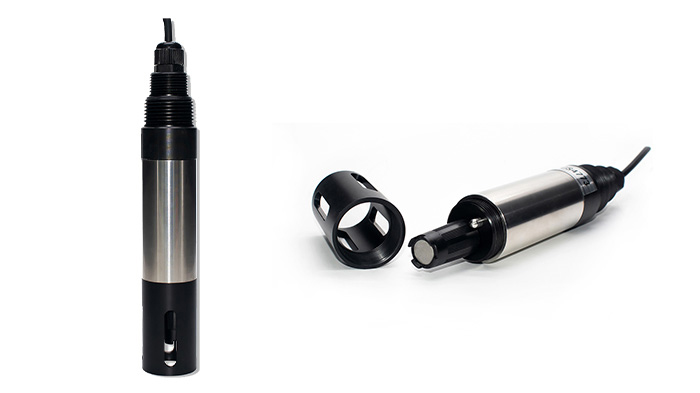
1. The PCS4773D Digital Dissolved Oxygen Sensor (Diaphragm Electrode Method)
The PCS4773D is a high-precision digital dissolved oxygen sensor utilizing the polarographic (diaphragm electrode) method. It features a robust POM + 316 stainless steel housing, ensuring durability in demanding environments. This sensor is ideal for applications requiring continuous, accurate DO monitoring in industrial and environmental settings. Its IP68 waterproof rating allows for long-term submersion.
The PCS4773D includes built-in temperature measurement and compensation, providing accurate readings across a temperature range of 0–50°C. It offers a measurement range of 0–20 mg/L and 0–200%, with an accuracy of ±1% F.S. The sensor communicates via RS485 Modbus RTU, enabling seamless integration into existing control systems for remote monitoring and data acquisition. Calibration is straightforward, supporting both oxygen-free water and air calibration.
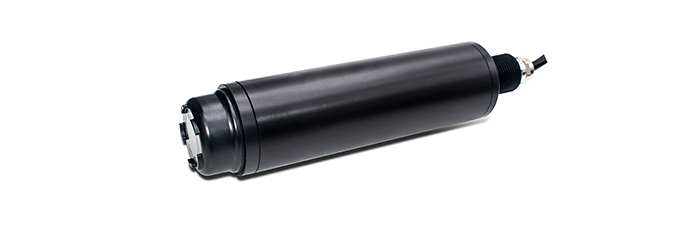
2. The PCS4760PD Digital Dissolved Oxygen Sensor (Optical/Fluorescence Method)
The PCS4760PD is our advanced digital dissolved oxygen sensor, employing the optical (fluorescence) method. This membrane-free design significantly reduces maintenance requirements and enhances long-term stability. Its durable POM housing and IP68 waterproof rating make it suitable for harsh conditions, including seawater monitoring and wastewater treatment.
This sensor provides a measurement range of 0–20 mg/L and 0–200%, with an accuracy of ±1% F.S. It incorporates integrated temperature measurement and compensation (0–50°C) for precise readings. The PCS4760PD also features RS485 Modbus RTU output, facilitating easy integration with control systems for remote monitoring and data logging. Its robust design and minimal maintenance make it a cost-effective solution for critical DO monitoring.
3. Ensuring Reliable and Accurate DO Measurement with Pokcenser Technology
At Pokcenser Automation, we prioritize reliability and accuracy in all our water analysis instruments. Our dissolved oxygen sensors are engineered with high-quality materials and advanced measurement principles to ensure consistent performance. We understand that environmental and industrial applications demand robust solutions that can withstand challenging conditions.
Our sensors feature strong anti-interference capabilities and stable digital outputs, ensuring data integrity over long transmission distances. With over 150,000 solutions provided to clients in more than 100 countries, our expertise in industrial automation is well-established. We are committed to delivering precise, durable, and easy-to-integrate DO sensing technology that helps our clients achieve their monitoring and control objectives efficiently.
Partner with Pokcenser Automation for Your DO Monitoring Needs
Accurate and reliable dissolved oxygen measurement is foundational for environmental protection, water treatment, and industrial process control. Pokcenser Automation offers advanced DO sensor solutions tailored to meet these critical demands. Our PCS4773D (diaphragm electrode) and PCS4760PD (optical) sensors provide high precision, durability, and seamless integration capabilities. Contact us today to discuss your specific application requirements and discover how our expertise can enhance your operations.
Phone: +86 181 7515 5326
Email: in**@*******er.com
About the Author
Li Chengxuan is a senior industrial automation expert at Pokcenser Automation, specializing in the research and application of flow, level, pressure and temperature sensors and industrial process control solutions.
FAQs
1. What is dissolved oxygen and why is it important in environmental applications?
Dissolved oxygen (DO) refers to the amount of gaseous oxygen dissolved in water. It is crucial for aquatic life, as most fish and invertebrates require oxygen to survive. In environmental applications, DO levels indicate water quality and the health of aquatic ecosystems. Low DO can lead to anaerobic conditions, harming biological processes and causing pollution.
2. What are the main types of dissolved oxygen sensors and how do they differ?
The two main types are polarographic (diaphragm electrode) and optical (fluorescence) sensors. Polarographic sensors use an electrochemical reaction, requiring a membrane and electrolyte, which necessitates regular maintenance. Optical sensors use fluorescence quenching, are membrane-free, and generally require less maintenance and offer faster response times.
3. How often should dissolved oxygen sensors be calibrated?
Calibration frequency depends on the sensor type, application, and environmental conditions. Polarographic sensors typically require more frequent calibration, often weekly or bi-weekly, due to membrane fouling and electrolyte depletion. Optical sensors generally offer longer calibration intervals, sometimes monthly or quarterly, due to their more stable design.
4. What factors can affect the accuracy of a dissolved oxygen sensor?
Several factors influence DO sensor accuracy, including temperature, salinity, and pressure. Temperature affects oxygen solubility, so sensors need compensation. Salinity reduces oxygen solubility. Pressure variations, especially at different depths or altitudes, also impact readings. Fouling of the sensor surface can also lead to inaccurate measurements.
5. Can dissolved oxygen sensors be used in saltwater and freshwater environments?
Yes, dissolved oxygen sensors are designed for use in both saltwater and freshwater environments. However, it is essential to select a sensor that can compensate for salinity variations if used in brackish or marine waters. Many modern sensors incorporate features to account for these differences, ensuring accurate measurements across diverse aquatic settings.

