 English
 Spanish
Electromagnetic vs. Turbine Flow Meters in Chemical Plants
Selecting the optimal flow meter for chemical plants presents a complex challenge. Engineers must consider various factors, including fluid properties, operational conditions, and cost-effectiveness. Our experience shows that the choice between electromagnetic and turbine flow meters significantly impacts process efficiency and reliability. We aim to clarify these differences, assisting you in making an informed decision for your specific application.
Understanding Electromagnetic Flow Meters for Chemical Plant Applications
Electromagnetic flow meters, often referred to as magmeters, are volumetric flow devices. They measure fluid velocity using Faraday’s Law of Electromagnetic Induction. These meters are particularly well-suited for conductive liquids.
1. The fundamental operating principles of electromagnetic flow meters
An electromagnetic flow meter operates by generating a magnetic field across the flow tube. As a conductive liquid flows through this field, it induces a voltage proportional to its velocity. Electrodes mounted on the pipe wall detect this induced voltage. A transmitter then converts this voltage into a standard output signal, indicating the flow rate. The linearity of this relationship ensures accurate measurement.
2. Key advantages of electromagnetic flow meters in corrosive environments
Electromagnetic flow meters excel in challenging chemical plant conditions. They feature no moving parts, which minimizes wear and tear from abrasive fluids. The lining materials, such as PTFE or PFA, offer excellent resistance to corrosive chemicals. This design also eliminates pressure drop, reducing energy consumption and pump wear. Their suitability for slurries and liquids with suspended solids makes them versatile.
3. Limitations and considerations for using electromagnetic flow meters
Despite their advantages, electromagnetic flow meters have specific limitations. They require the measured fluid to be electrically conductive; non-conductive liquids like hydrocarbons cannot be measured. The meter’s accuracy can also be affected by magnetic interference or gas bubbles in the fluid. Proper grounding is crucial for reliable operation.
Exploring Turbine Flow Meters in Chemical Processing Industries
Turbine flow meters are another common choice in chemical processing. They measure volumetric flow by detecting the rotational speed of a turbine within the flow path. These meters are known for their high accuracy in clean, low-viscosity liquids.
1. How turbine flow meters measure fluid velocity and volume
A turbine flow meter consists of a rotor with blades mounted within the flow stream. The fluid’s kinetic energy causes the rotor to spin. The rotational speed of the turbine is directly proportional to the fluid velocity. A pick-off sensor detects the passage of each blade, generating a series of pulses. The frequency of these pulses corresponds to the flow rate.
2. Benefits of turbine flow meters for high-accuracy liquid measurement
Turbine flow meters offer high accuracy and repeatability, especially with low-viscosity fluids. Their compact design and fast response time make them suitable for dynamic flow measurement. They are often more cost-effective for clean liquid applications compared to some other meter types. Their pulse output is easily integrated into digital control systems.
3. Challenges and specific applications for turbine flow meters
Turbine meters face challenges with dirty or corrosive fluids. Abrasive particles can cause wear on the rotor bearings, leading to decreased accuracy and increased maintenance. High-viscosity fluids can also impede rotor movement, leading to measurement errors. They are generally not recommended for slurries or non-lubricating liquids.
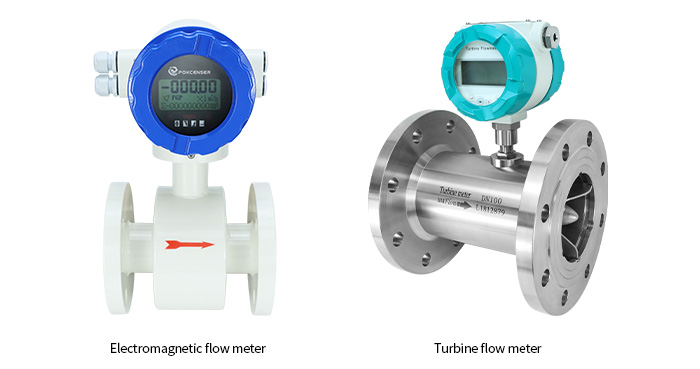
A Detailed Comparison of Electromagnetic and Turbine Flow Meters
Choosing between electromagnetic and turbine flow meters requires a thorough understanding of their comparative performance. We evaluate their differences across several critical parameters. This comparison helps engineers select the most appropriate technology for specific chemical plant requirements.
1. Comparing measurement accuracy and repeatability
Electromagnetic flow meters typically offer high accuracy (e.g., ±0.5% of reading) and excellent repeatability across a wide flow range. Their accuracy remains consistent even with changes in fluid density or viscosity. Turbine flow meters also provide high accuracy (e.g., ±0.25% to ±1% of reading) and good repeatability, particularly in their optimal flow range. However, their accuracy can degrade with changes in fluid viscosity or if the fluid contains entrained gases.
2. Evaluating suitability for various fluid properties and conditions
| Feature | Electromagnetic Flow Meters | Turbine Flow Meters |
|---|---|---|
| Fluid Type | Conductive liquids, slurries, corrosive chemicals | Clean, low-viscosity liquids, non-corrosive |
| Conductivity | Required | Not required |
| Viscosity | Unaffected | Affected; best for low viscosity |
| Solids/Abrasives | Excellent resistance | Poor resistance; prone to wear |
| Pressure Drop | Negligible | Moderate to high |
| Temperature Range | Wide, depends on liner material | Moderate, depends on bearing materials |
| Corrosion | Excellent resistance due to liner materials | Susceptible to corrosion; material selection is critical |
| Bi-directional Flow | Yes | Typically unidirectional |
Electromagnetic flow meters are ideal for highly corrosive chemicals and abrasive slurries due to their non-intrusive design. This makes them a preferred choice in the chemical sector. Turbine meters are better suited for clean, low-viscosity fluids where high accuracy is paramount.
3. Analyzing installation requirements and maintenance considerations
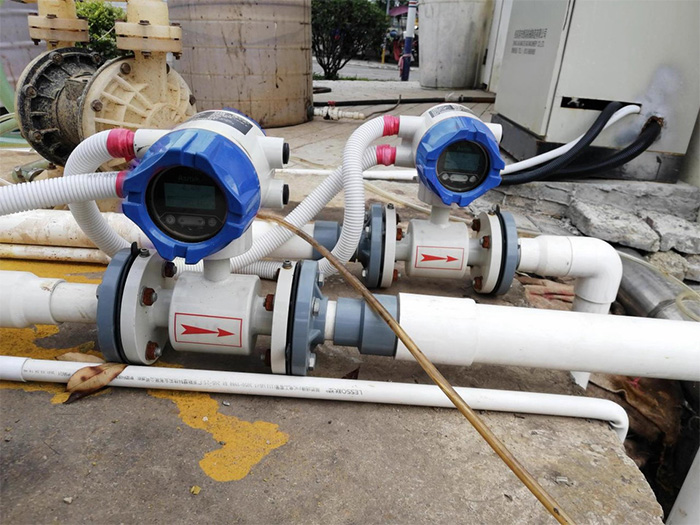
Electromagnetic flow meters require a fully wetted pipe for accurate measurements. They need sufficient upstream and downstream straight pipe runs to ensure stable flow profiles. Installation typically involves flange connections. Maintenance is generally low due to no moving parts. Regular calibration checks ensure continued accuracy.
Turbine flow meters also require straight pipe runs to minimize turbulence. They are installed inline, usually with threaded or flanged connections. Maintenance involves periodic inspection and replacement of worn bearings, especially in applications with less clean fluids. Filtration may be necessary to protect the turbine rotor.
4. Cost implications and long-term operational expenses
The initial cost of electromagnetic flow meters can be higher, particularly for larger pipe sizes or specialized liner materials. However, their low maintenance requirements and long operational life often result in lower total cost of ownership. Turbine flow meters generally have a lower initial cost, especially for smaller sizes. Their operational costs can increase due to maintenance and potential replacement of internal components, particularly in demanding applications.
Selecting the Optimal Flow Meter for Your Chemical Plant Needs
Choosing the correct flow meter is critical for process control and operational efficiency in chemical plants. We consider several factors to guide this decision, ensuring optimal performance and longevity.
1. Factors influencing the choice between electromagnetic and turbine meters
The primary factors include the fluid’s electrical conductivity, viscosity, and presence of solids. For conductive, corrosive, or abrasive fluids, electromagnetic flow meters are generally superior. For clean, low-viscosity liquids requiring high accuracy, turbine meters can be a suitable option. Pressure drop tolerance, temperature, and pressure ratings also play a significant role. Budget constraints and long-term maintenance costs must also be weighed.
2. Real-world application scenarios for each flow meter type
Electromagnetic flow meters are widely used in chemical processing for measuring acids, bases, and other corrosive liquids. They are also effective in wastewater treatment plants and food processing where hygiene and non-intrusive measurement are important.
Turbine flow meters find applications in measuring fuels, solvents, and other clean hydrocarbons. They are common in custody transfer applications where high accuracy is required for billing purposes. Their use is prevalent in industries like oil and gas, and certain aspects of the Pharmaceutical sector.
3. Future trends and advancements in flow measurement technology
Advancements in materials science are leading to more durable and chemically resistant liners for electromagnetic flow meters. Enhanced signal processing improves accuracy and reduces sensitivity to noise. For turbine meters, improved bearing materials and designs extend lifespan and reduce maintenance. The integration of smart features and IoT connectivity is also becoming standard, offering remote monitoring and predictive maintenance capabilities for both types.
Partner with Pokcenser Automation for Your Flow Measurement Needs
Choosing the ideal flow meter for your chemical plant is a crucial decision impacting efficiency, safety, and cost. At Pokcenser Automation, we specialize in providing tailored industrial process control solutions. Our team of experts offers comprehensive support, from evaluating your specific application to recommending the most suitable flow meters. We are committed to fostering long-term partnerships and delivering value through our reliable products and services. Contact us today to discuss your requirements.
Phone: +86 181 7515 5326
Email: in**@*******er.com
About the Author
Li Chengxuan is a senior industrial automation expert at Pokcenser Automation, specializing in the research and application of flow, level, pressure and temperature sensors and industrial process control solutions.
FAQs
1. Which type of flow meter is better for highly corrosive chemicals?
Electromagnetic flow meters are generally superior for highly corrosive chemicals. Their non-intrusive design and chemically resistant liner materials, such as PTFE or PFA, prevent direct contact between the corrosive fluid and the meter’s internal components. This minimizes wear, corrosion, and the need for frequent maintenance, ensuring long-term reliability in harsh chemical environments.
2. Can turbine flow meters be used with non-conductive liquids?
Yes, turbine flow meters can measure non-conductive liquids. Unlike electromagnetic flow meters, which rely on the fluid’s electrical conductivity, turbine meters measure flow based on mechanical rotation. This makes them suitable for hydrocarbons, oils, and other non-conductive fluids. However, fluid viscosity and lubrication properties remain critical considerations for optimal performance and lifespan.
3. What are the typical maintenance requirements for each flow meter type?
Electromagnetic flow meters typically require minimal maintenance due to their lack of moving parts. Periodic calibration checks and electrode cleaning are usually sufficient. Turbine flow meters, however, require more frequent maintenance. Their moving parts, especially bearings, are susceptible to wear from abrasive particles or non-lubricating fluids, necessitating regular inspection, cleaning, and potential replacement to maintain accuracy.
4. How does fluid viscosity affect the performance of these flow meters?
Fluid viscosity significantly affects turbine flow meter performance. High viscosity can impede the turbine’s rotation, leading to measurement inaccuracies and reduced rangeability. Conversely, electromagnetic flow meters are largely unaffected by changes in fluid viscosity. Their measurement principle relies on electromagnetic induction, which is independent of the fluid’s mechanical properties, making them suitable for a wider range of viscous liquids.
5. Are there any specific calibration procedures for electromagnetic and turbine flow meters?
Both electromagnetic and turbine flow meters require calibration to ensure accuracy. Electromagnetic flow meters often undergo wet calibration using water or a process fluid with known conductivity. Turbine flow meters are typically calibrated using a known volume of fluid over a set time, or by comparing their output against a master meter. Regular calibration, as per manufacturer guidelines, is essential for maintaining measurement integrity.

