 English
 Spanish
Ensuring Industrial Temperature Sensor Stability and Maintenance
I’ve spent enough time around boilers, fermenters, and turbine halls to see how a “quiet” temperature sensor can decide whether a shift runs smoothly or spirals into downtime. When sensors stay stable and accurate, process control tightens up, safety margins hold, and energy isn’t squandered. Let a reading drift by even a fraction, though, and you’ll notice it in scrap, alarms, and maintenance calls. The key is understanding what drives sensor performance—and putting proactive maintenance in place—so temperature monitoring stays consistent, dependable, and cost-effective.
Understanding the Critical Role of Stable Industrial Temperature Sensors
Temperature underpins nearly every industrial process, and the precision with which we measure and control it shows up directly in product quality, plant safety, and energy efficiency. Unstable or inaccurate readings don’t just nudge setpoints—they trigger real issues, from subtle process deviations to serious safety incidents and financial losses.
1. Why Accurate Temperature Measurement is Essential for Industrial Processes
Accurate temperature measurement keeps processes within their specified windows. In chemical production, tight temperature control governs reaction kinetics and product purity. In food and beverage, reliable monitoring prevents spoilage and ensures regulatory compliance. Power generation depends on accurate data to optimize turbine efficiency and avoid overheating. Without stable sensors, the risk of defects, downtime, and non-compliance rises sharply.
2. Common Challenges Affecting Temperature Sensor Performance
Industrial environments are tough on sensors. Extreme temperatures, corrosive chemicals, high vibration, and electromagnetic interference can all erode performance. Over time, drift can slowly pull readings away from the true value. Physical damage, contamination, and electrical noise add to the degradation. Addressing these issues calls for solid knowledge of sensor technology and disciplined maintenance practices.
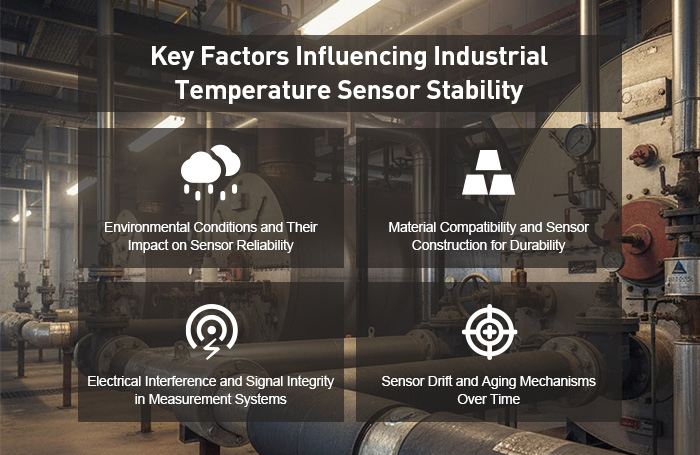
Key Factors Influencing Industrial Temperature Sensor Stability
A handful of factors largely determine long-term stability and accuracy. Knowing these helps you choose the right sensors and maintain them effectively.
1. Environmental Conditions and Their Impact on Sensor Reliability
Operating conditions can make or break a sensor’s lifespan. High humidity invites moisture ingress, which can cause shorts or corrosion. Extreme heat or cold stresses materials, leading to mechanical damage or shifted electrical properties. Vibration and mechanical shock can harm internal components or disrupt signals. Sensor selection and installation should anticipate these stressors to maintain reliability. If you’re interested, check 《Safety in Hazardous Areas: Using Explosion-Proof Sensors》.
2. Material Compatibility and Sensor Construction for Durability
Construction materials govern durability and resistance to process media. Stainless steel is a common choice for corrosion resistance, but aggressive chemistries may demand special alloys or coatings. Housing and probe materials must fit both the process fluid and the ambient environment to avoid premature failures. Robust sealing and insulation protect sensitive internals from moisture, chemicals, and thermal cycling.
3. Electrical Interference and Signal Integrity in Measurement Systems
EMI and RFI can corrupt measurement signals, leading to inaccurate or unstable readings. Good practice—proper shielding, grounding, and signal conditioning—preserves signal integrity. Shielded cables and correct wiring minimize external noise pickup, while sensor designs that incorporate noise-reduction features further harden the system.
4. Sensor Drift and Aging Mechanisms Over Time
Drift is the gradual shift of a sensor’s output from the true value, even in steady conditions. It often stems from material aging, chemical contamination, or mechanical stress. For example, RTDs can see changes in their resistance element over time; thermocouples can decalibrate due to metallurgical changes at the junction. Regular calibration detects and compensates for this drift to keep accuracy on target.
Best Practices for Maintaining Industrial Temperature Sensors
To extend life and preserve accuracy, lean on a few fundamentals: calibration, cleaning, environmental protection, systematic troubleshooting, and predictive maintenance.
1. Establishing a Regular Calibration Schedule for Optimal Accuracy
Calibration is the bedrock of accuracy. Compare sensor output to a traceable standard and adjust to minimize error. Set frequency based on sensor type, criticality, and drift history—critical processes often merit annual or bi-annual calibration, while less critical services can go longer. Documenting results supports trend analysis and feeds predictive maintenance decisions.
2. Implementing Effective Cleaning Procedures for Sensor Probes
Deposits—scale, dirt, and process residues—act like insulation, slowing heat transfer and skewing readings. Match cleaning methods to both the contaminant and the sensor materials. Mechanical cleaning (gentle brushing or wiping) works for many residues; chemical cleaning calls for compatible solvents or detergents. Always follow the manufacturer’s guidance to avoid damage.
3. Strategies for Protecting Sensors from Harsh Operating Environments
Protection pays for itself. Thermowells shield against high pressure, corrosive media, and abrasive flow. Protective coatings like Teflon or ceramic resist chemical attack. Vibration dampeners and sturdy mounting hardware reduce mechanical stress. Select appropriate ingress protection (IP) ratings to keep out dust and moisture.
4. Troubleshooting Common Issues and Diagnosing Sensor Malfunctions
A structured approach shortens downtime. Check for loose connections, damaged wiring, contamination, or failed electronics. Use a multimeter for continuity and resistance checks and compare to a known good reference sensor when possible. Diagnostic tools and manufacturer software can further isolate faults quickly.
5. Leveraging Predictive Maintenance Techniques for Proactive Care
Predictive maintenance uses data to foresee failures. Continuously track indicators like response time, drift rate, and signal noise. Advanced analytics and machine learning can surface subtle patterns that precede issues. This approach cuts unplanned downtime and aligns maintenance with actual sensor condition.
Selecting the Right Temperature Sensors for Long-Term Stability
Getting the selection right up front sets you up for stable performance over the long haul—sensor type, specifications, and vendor support all matter.
1. Evaluating Sensor Types and Their Suitability for Specific Applications
- Thermocouples: wide temperature range and fast response—great for high-temperature service.
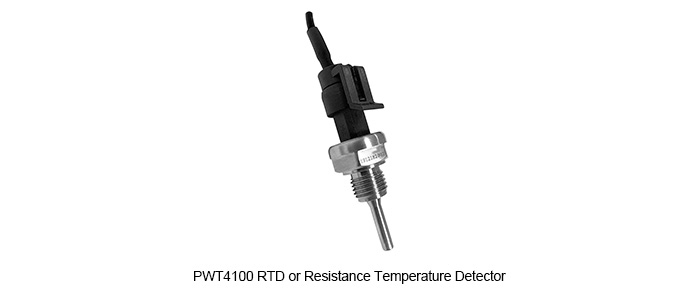
- RTDs: higher accuracy and stability over a narrower range—ideal for precision work.
- Thermistors: very sensitive but limited in temperature range.
- Infrared sensors: non-contact measurement for moving targets or hazardous materials.
2. Considering Sensor Specifications and Performance Metrics
Focus on core specs: accuracy (closeness to true value), repeatability (consistency under identical conditions), response time (speed to reflect temperature changes), and operating temperature range (must align with the process).
3. The Importance of Manufacturer Reputation and Support
Choose manufacturers known for quality, reliable performance, rigorous testing, and adherence to industry standards. Strong technical support—selection advice, installation help, troubleshooting, and calibration services—keeps sensors performing throughout their lifecycle.
4. Customization and OEM/ODM Options for Unique Industrial Needs
Standard products don’t fit every application. OEM/ODM options allow tailoring probe lengths, materials, connections, and output signals. Pokcenser Automation provides flexible OEM/ODM services to match unique requirements and ensure clean integration and stable performance.
Enhancing Operational Efficiency Through Reliable Temperature Monitoring
When temperature monitoring is dependable, operations run tighter: less downtime, better quality, stronger safety.
1. Reducing Downtime and Preventing Production Losses
Stable, accurate sensors help catch anomalies early, enabling timely corrections before they cascade. Proactive maintenance guided by trustworthy data reduces emergency interventions and extends equipment life—savings you’ll see directly in production output.
2. Improving Product Quality and Process Control
Consistent temperature control is central to quality. Variability shows up as inconsistent characteristics, waste, and rework. High-quality sensors keep critical parameters within tight limits, elevating quality while lowering material costs.
3. Ensuring Safety and Compliance in Industrial Settings
Temperature is a frontline safety variable. Overheating equipment or runaway reactions endanger people and assets. Reliable sensors provide early warnings so teams can respond in time. Many regulations—especially in chemicals and oil & gas—require precise temperature monitoring to stay compliant.
4. The Value Proposition of Pokcenser Automation’s Temperature Sensor Solutions
Pokcenser Automation delivers robust, accurate sensors engineered for stability and long service in demanding environments. We offer comprehensive and customizable solutions to fit specific applications, backed by a commitment to quality and responsive support—so customers can count on dependable performance. We offer a wide range of main products for various applications.
Contact Us
For expert advice on industrial temperature sensor selection, maintenance, or customized solutions, please contact Pokcenser Automation. Our team of senior industrial automation experts is ready to assist you.
Email: in**@*******er.com
Phone: +86 181 7515 5326
About the Author
Li Chengxuan is a senior industrial automation expert at Pokcenser Automation. He specializes in the research and application of flow, level, pressure, and temperature sensors and industrial process control solutions. With over a decade of experience, Li Chengxuan provides valuable insights into optimizing industrial processes through reliable sensor technology.
FAQs
1. What are the most common causes of industrial temperature sensor instability?
Sensor instability typically arises from environmental stressors—extreme temperatures, vibration, and corrosive media—combined with material aging (drift). Electrical interference and installation errors can further erode accuracy and reliability.
2. How often should industrial temperature sensors be calibrated?
It depends on criticality, conditions, and drift history. For high-precision or safety-critical services, annual or bi-annual calibration is common. Less critical applications can extend intervals, but periodic checks are always worthwhile.
3. What is sensor drift and how can it be mitigated?
Drift is the slow departure of readings from the true value due to aging, contamination, or mechanical stress. Mitigation involves selecting high-quality sensors, shielding them from harsh conditions, and following a regular calibration schedule to correct deviations.
4. Can environmental factors significantly impact sensor lifespan?
Yes. High humidity, thermal extremes, corrosive chemicals, and vibration can dramatically shorten service life. Proper sensor choice, compatible materials and protections, and correct installation reduce these impacts.
5. What are the benefits of using Pokcenser Automation’s temperature sensors?
Pokcenser’s sensors offer high accuracy, rugged construction for harsh environments, and long-term stability. They strengthen process control, cut downtime, enhance safety, and come with expert technical support and flexible OEM/ODM options.

