 Inglés
 Español
Level Sensors for Wastewater Process Control: A Comprehensive Guide
Effective wastewater management runs on trustworthy measurements and tight control. Level sensors sit at the center of that effort, supplying the data that keeps processes tuned, compliance on track, and infrastructure protected. They help catch issues early and keep operations steady. Here, we look at the role these sensors play, how they operate in tough conditions, and what to weigh when selecting devices for different wastewater tasks.
The Role of Level Measurement in Wastewater Systems
Level measurement underpins efficient and safe wastewater treatment. With accurate readings, operators can watch pump health, spot blockages, and manage filtration with confidence. That visibility prevents expensive downtime and stabilizes water quality. Without reliable level monitoring, small deviations can slip by and turn into larger problems.
Treatment plants depend on continuous, precise measurements. Level sensors feed real-time feedback on system conditions so teams can adjust and maintain proactively. For broader context on process control sensing, see 《8 cosas que debe saber sobre los sensores piezorresistivos difusos de silicio》.
How Level Transmitters Function in Harsh Environments
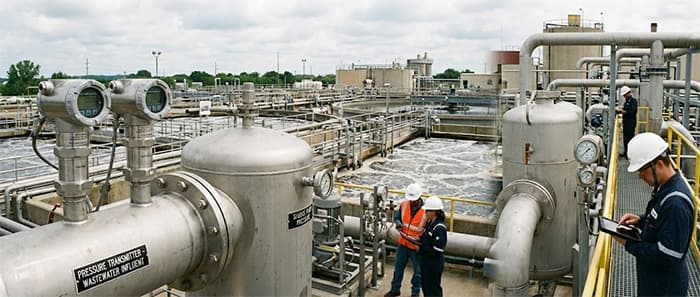
Wastewater environments bring corrosive chemicals, temperature swings, and suspended solids. Level transmitters built for these conditions need sturdy construction and dependable performance. Many use 316L stainless steel or specialized plastics to resist chemical attack. Diaphragm seals often isolate the sensing element from the medium to prevent clogging and corrosion.
Key Applications of Level Sensors in Wastewater Treatment
Level sensors anchor several core processes across a treatment facility. Their flexibility supports everything from straightforward monitoring to advanced control. We use them to raise efficiency and reliability across the full treatment chain.
Control del rendimiento de las bombas y prevención de la cavitación
Tracking inlet and outlet level reveals pump efficiency and flags issues like cavitation. Cavitation forms vapor bubbles that collapse and damage components. Catching the level fluctuations early helps prevent equipment damage and lower maintenance costs. Our level transmitters deliver the sensitivity needed for these diagnostics.
Optimización de los procesos de filtración y membranas
In filtration and membrane systems, differential level across filters signals loading. A high differential points to clogging and the need for backwashing or replacement. Precise monitoring helps time filtration cycles, extend membrane life, and keep water purification consistent. The payoff shows up in both efficiency and treatment quality.
Medición de nivel en tanques, sumideros y clarificadores
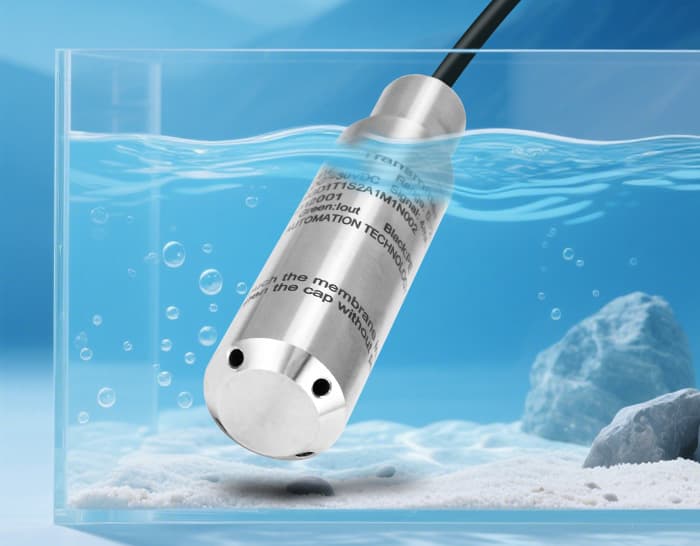
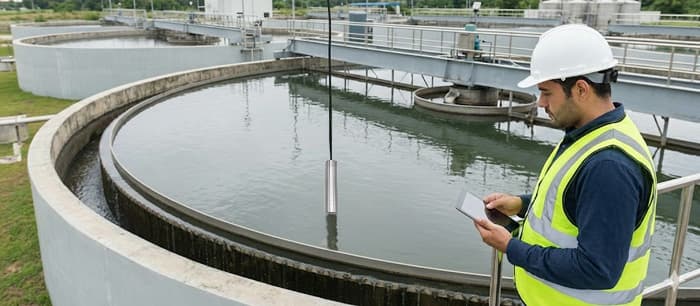
Level sensors provide continuous level measurement in tanks, sumps, and clarifiers by reading hydrostatic level from the liquid column. That converts to an accurate level value, preventing overflows, supporting inventory management, and controlling pumps. transmisores de nivel sumergibles encajan bien en estos trabajos.
Selecting the Right Level Sensor for Wastewater Challenges
Choosing a level sensor for wastewater calls for careful review of application details. We center on long-term reliability and accuracy in harsh conditions. That means checking material compatibility, measurement range, and the environmental profile.
Compatibilidad de materiales y resistencia a la corrosión
Service life and accuracy depend on how well materials handle the medium. Any wetted component must resist corrosion and chemical attack.
Precisión, alcance y consideraciones medioambientales
Accuracy and range drive effective control. Sensors need to stay within their stated tolerance across the operating span. Temperature extremes, humidity, and strong magnetic interference also influence selection.
Advanced Level Sensing for Enhanced Wastewater Control
Modern facilities are adopting more advanced control strategies. Level sensors supply the data those systems depend on, enabling smarter control and maintenance. The result is higher efficiency and better environmental protection.
Integración con sistemas SCADA y de automatización
Tight integration of level sensors with SCADA (Supervisory Control and Data Acquisition) and other automation platforms enables centralized monitoring and control. Operators can visualize real-time trends, set alarms, and automate responses to deviations. This capability is important for large-scale wastewater infrastructure. To learn more about how these systems work, read 《Seguridad en zonas peligrosas: Uso de sensores a prueba de explosiones》.
Sensores inteligentes y mantenimiento predictivo
Smart level sensors with digital communication such as RS485 Modbus RTU add capabilities beyond level values. They can transmit diagnostics that support predictive maintenance. By analyzing sensor outputs, teams can anticipate failures, limit unplanned downtime, and reduce costs. Our sensor de nivel sumergible y transmisor de nivel sumergible son ejemplos de estos dispositivos avanzados.
Póngase en contacto con nosotros para obtener soluciones avanzadas para aguas residuales
Optimizing your wastewater treatment processes starts with reliable, accurate instrumentation. Pokcenser Automation Technology Company Limited offers a wide range of level sensors and water analysis instruments built for demanding applications. Our experts are ready to help you select solutions tailored to your needs.
Póngase en contacto con nosotros hoy mismo para hablar de los requisitos de su proyecto:
Tel: +86 181 7515 5326
Email: en**@*******er.com
Preguntas frecuentes
What types of level sensors are best for wastewater applications?
For wastewater applications, we recommend sensors made from corrosion-resistant materials like 316L stainless steel or specialized plastics. Submersible hydrostatic level transmitters are ideal for level measurement in tanks, while differential level transmitters are vital for monitoring filtration systems. Sensors with IP68 ratings are a must for submerged or high-humidity environments.
How do level sensors help optimize wastewater treatment efficiency?
Level sensors boost efficiency by providing real-time data on critical parameters. This supports precise control of pumps, filters, and chemical dosing systems. By preventing cavitation, identifying clogged filters, and maintaining accurate level control, sensors cut energy use, lower chemical consumption, and extend equipment life.
What are the main challenges for level sensors in wastewater environments?
Los principales retos son la corrosión por productos químicos agresivos, la obstrucción por sólidos en suspensión y las bioincrustaciones. Las oscilaciones de temperatura y los gases peligrosos también añaden riesgo. Para afrontarlos, los sensores necesitan una construcción robusta, materiales adecuados y, en muchos casos, juntas de diafragma o diseños autolimpiables.
Can level sensors be integrated with existing wastewater control systems?
Yes, most modern level sensors are designed for straightforward integration with existing control systems, including SCADA and PLCs. They commonly provide standard industrial outputs such as 4–20 mA current loops and RS485 Modbus RTU communication. This supports centralized data acquisition, remote monitoring, and automated process control.
What certifications should level sensors for wastewater have?
Para las aplicaciones de aguas residuales, especialmente en zonas potencialmente peligrosas, suelen exigirse certificaciones como ATEX o IECEx para seguridad intrínseca o diseño a prueba de explosiones. También son importantes los grados de protección IP (por ejemplo, IP68 para inmersión). El cumplimiento de las normas industriales sobre precisión y resistencia ambiental contribuye a garantizar un funcionamiento fiable y seguro.

