 English
 Spanish
Explosion-Proof Pressure Transmitters for Hazardous Zones
Industrial environments often present inherent dangers, particularly those involving flammable gases, vapors, dusts, or fibers. In these hazardous zones, the risk of explosion necessitates specialized equipment. We understand the critical importance of reliable pressure measurement in such settings, where a single spark or overheat can trigger catastrophic events. Our expertise focuses on providing robust solutions that ensure both safety and operational continuity.
Understanding the Critical Need for Explosion-Proof Pressure Transmitters
1. Defining Hazardous Zones and Their Classifications
Hazardous zones are areas where flammable substances exist in sufficient quantities to create an explosive atmosphere. International standards classify these zones based on the likelihood and duration of the presence of such substances. For example, ATEX directives in Europe and the National Electrical Code (NEC) in North America define different zones and divisions. Zone 0/Division 1 areas have continuous or frequent presence of explosive atmospheres, while Zone 2/Division 2 areas have infrequent or short-term presence. Understanding these classifications is fundamental to specifying appropriate equipment.
2. The Inherent Risks of Standard Equipment in Volatile Environments
Standard industrial equipment, including conventional pressure transmitters, can generate heat, sparks, or electromagnetic radiation. In a volatile environment, these seemingly minor energy sources can ignite flammable gases, vapors, or dust clouds. The consequences range from severe equipment damage and production halts to serious injuries or fatalities. Therefore, using non-certified equipment in hazardous zones poses unacceptable risks to personnel, assets, and the environment.
3. Why Explosion-Proof Design is Essential for Safety and Compliance
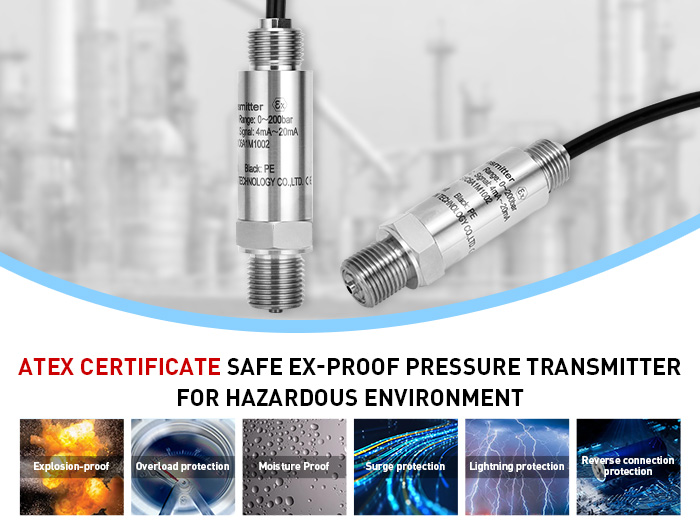
Explosion-proof design mitigates these risks by preventing ignition sources from interacting with flammable atmospheres. This involves encapsulating potential ignition sources, limiting energy levels, or employing intrinsic safety barriers. Compliance with international standards like ATEX and IECEx is not merely a recommendation; it is a legal and ethical imperative. These certifications confirm that equipment has undergone rigorous testing and meets stringent safety requirements for operation in specific hazardous environments. Ensuring safety in hazardous areas demands certified equipment. If you’re interested, check 《Safety in Hazardous Areas: Using Explosion-Proof Sensors》.
Key Features and Technologies of Explosion-Proof Pressure Transmitters
1. Exploring the Different Explosion Protection Methods and Standards (ATEX, IECEx, etc.)
Several protection methods ensure the safe operation of electrical equipment in hazardous areas.
1. Flameproof Enclosures (Ex d): This method contains an explosion within the enclosure, preventing flame propagation to the outside atmosphere. The enclosure must withstand the internal explosion pressure and cool the hot gases sufficiently.
2. Intrinsic Safety (Ex i): This method limits the electrical and thermal energy to a level too low to ignite a flammable atmosphere. Intrinsically safe circuits are designed with barriers that restrict current and voltage.
3. Increased Safety (Ex e): This method prevents sparks and excessive temperatures in electrical equipment that does not produce sparks or hot surfaces in normal operation. It focuses on robust construction and increased creepage distances.
4. Pressurization (Ex p): This method maintains a protective gas (e.g., air or inert gas) inside the enclosure at a pressure higher than the surrounding hazardous atmosphere, preventing ingress of flammable substances.
5. Oil Immersion (Ex o) and Powder Filling (Ex q): These methods isolate potential ignition sources by immersing them in oil or embedding them in granular material.
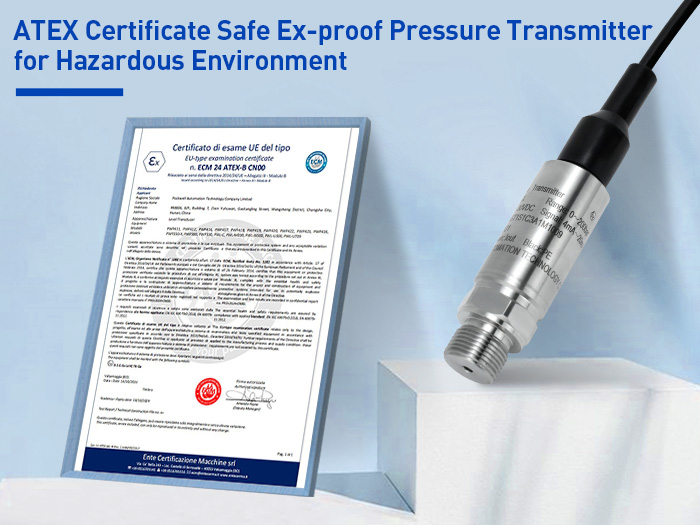
Key international standards include ATEX (Atmosphères Explosibles) for the European Union and IECEx (International Electrotechnical Commission System for Certification to Standards Relating to Equipment for Use in Explosive Atmospheres), which is globally recognized. Both provide a framework for certifying equipment used in hazardous locations.
2. How Robust Construction Materials Ensure Durability and Safety
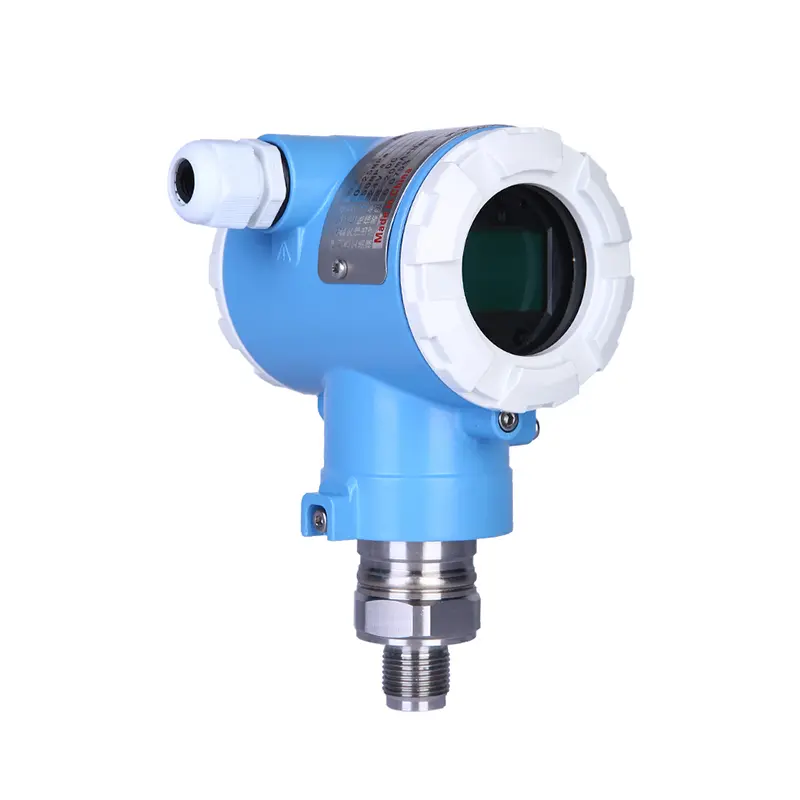
The materials used in explosion-proof pressure transmitters are crucial for both safety and longevity. We utilize high-grade stainless steel (e.g., 316L) for housings and wetted parts, offering superior corrosion resistance against aggressive chemicals and harsh environmental conditions. The design often incorporates hermetically sealed enclosures, reinforced glass, and robust cable glands to prevent ingress of hazardous substances and contain any internal ignition. These materials ensure structural integrity and maintain the explosion protection concept over the device’s operational life.
3. Understanding Measurement Principles for Accurate and Reliable Data
Explosion-proof pressure transmitters employ various measurement principles to ensure accuracy and reliability.
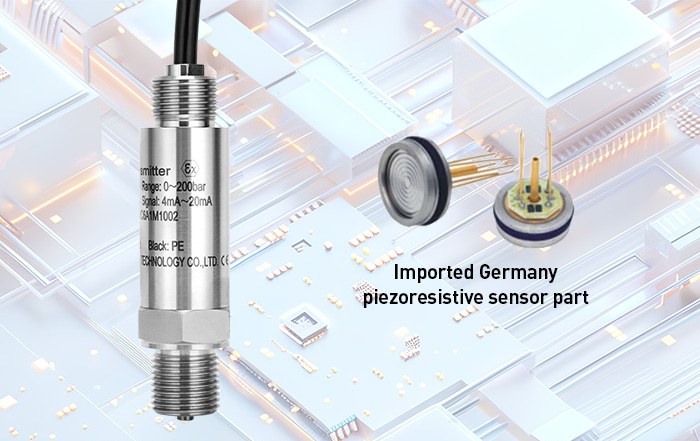
1. Piezoresistive: These sensors use a diaphragm with strain gauges that change resistance under pressure. Our Piezoresistive Pressure Sensors offer high accuracy and stability.
2. Capacitive: These sensors measure pressure by detecting changes in capacitance between a diaphragm and a fixed electrode.
3. Thin-Film: A thin film of material is deposited onto a substrate, and its resistance changes with applied pressure.
4. Ceramic: Ceramic diaphragms provide excellent chemical resistance and stability, making them suitable for corrosive media. Consider our Ceramic Pressure Sensors for specific applications.
These principles, combined with advanced signal processing, provide precise and stable pressure readings, critical for safe process control in hazardous environments.
4. Advanced Communication Protocols for Seamless System Integration
Modern explosion-proof pressure transmitters support various communication protocols for efficient integration into industrial control systems.
1. 4-20 mA: This analog current loop is a long-standing industry standard, providing reliable signal transmission over long distances and intrinsic safety benefits.
2. HART (Highway Addressable Remote Transducer): HART combines analog 4-20 mA signaling with digital communication, allowing for simultaneous transmission of process variables and diagnostic information.
3. Modbus: This serial communication protocol enables robust data exchange between devices and control systems, often used in conjunction with RS485.
4. Fieldbus (e.g., Foundation Fieldbus, Profibus): These digital communication protocols offer advanced control capabilities, reduced wiring, and enhanced diagnostics for complex process automation.
These protocols ensure that critical pressure data is accurately and securely transmitted to control rooms, enabling real-time monitoring and rapid response to process deviations.
Selecting the Right Explosion-Proof Pressure Transmitter for Your Application
1. Evaluating Environmental Conditions and Process Requirements
Selecting the correct explosion-proof pressure transmitter requires a thorough evaluation of the specific environmental conditions and process requirements.
1. Hazardous Zone Classification: Determine the precise zone (e.g., Zone 0, 1, 2) or division (e.g., Division 1, 2) and gas/dust group where the transmitter will operate.
2. Process Medium: Consider the chemical compatibility of the wetted parts with the process fluid, including its corrosiveness, temperature, and pressure range.
3. Temperature and Pressure Limits: Ensure the transmitter’s operating temperature and pressure ranges match or exceed the process conditions, including potential excursions.
4. Vibration and Shock: Assess the level of mechanical stress the transmitter will experience and select a device with appropriate robustness.
5. Accuracy and Response Time: Define the required measurement accuracy and response speed for effective process control.
This comprehensive assessment ensures the chosen transmitter performs reliably and safely within its intended application.
2. Matching Transmitter Specifications with Specific Hazardous Zone Classifications
Matching transmitter specifications to hazardous zone classifications is paramount for safety. Each hazardous zone classification (e.g., Ex d, Ex ia, Ex ib) dictates specific design and construction requirements for the equipment. For instance, a transmitter for Zone 0 (continuous presence of explosive atmosphere) must meet the most stringent intrinsic safety requirements (Ex ia), which ensures that even in fault conditions, the energy is too low to cause ignition. For Zone 1 or Zone 2, flameproof (Ex d) or increased safety (Ex e) protection might be suitable, depending on the specific risk assessment. We offer a range of explosion-proof sensors designed to meet diverse hazardous area requirements.
3. Considering Certifications and Regulatory Compliance for Global Operations
For global operations, understanding and complying with various regional and international certifications is crucial.
1. ATEX: Mandatory for equipment used in hazardous areas within the European Union.
2. IECEx: An international scheme facilitating trade in equipment and services for use in explosive atmospheres.
3. UL/CSA: Certifications required for North American markets.
4. EAC (TR CU): Required for the Eurasian Economic Union.
These certifications ensure that the equipment meets local safety regulations and can be legally installed and operated. Our products are approved with CE, ATEX, ISO, and RoHS certificates, demonstrating our commitment to global compliance and safety standards.
4. The Importance of Installation and Maintenance Best Practices
Proper installation and ongoing maintenance are as vital as the explosion-proof design itself.
1. Qualified Personnel: Only certified and experienced technicians should install and maintain explosion-proof equipment.
2. Adherence to Standards: Follow manufacturer guidelines and relevant national/international codes (e.g., IEC 60079 series) for wiring, grounding, and mounting.
3. Regular Inspections: Conduct routine visual and functional inspections to identify any damage, corrosion, or unauthorized modifications.
4. Calibration: Periodically recalibrate transmitters to maintain measurement accuracy.
5. Documentation: Keep detailed records of installation, maintenance, and inspection activities.
These practices ensure the continued integrity of the explosion protection and extend the operational life of the equipment.
Applications of Explosion-Proof Pressure Transmitters Across Industries
1. Enhancing Safety and Efficiency in Oil and Gas Operations
The oil and gas industry inherently involves highly flammable hydrocarbons, making explosion-proof equipment indispensable. Pressure transmitters monitor critical parameters in drilling, refining, and transportation processes. They ensure safe operation of pipelines, storage tanks, and processing units, preventing overpressure situations that could lead to leaks or explosions. Their reliable performance contributes to both safety and operational efficiency in these demanding environments.
2. Ensuring Reliable Process Control in Chemical and Petrochemical Plants
Chemical and petrochemical plants handle a wide array of volatile and corrosive substances. Explosion-proof pressure transmitters are essential for monitoring pressure in reactors, distillation columns, and storage vessels. They provide accurate data for precise process control, preventing hazardous conditions such as runaway reactions or equipment failures. Their robust construction and certified safety features are critical for maintaining continuous and safe operations in the chemical sector.
3. Critical Monitoring in Pharmaceutical Manufacturing and Storage
Pharmaceutical manufacturing often involves flammable solvents and fine powders, creating potentially explosive dust and vapor atmospheres. Explosion-proof pressure transmitters are used in various stages, including solvent recovery, reactor monitoring, and sterile processing areas. They ensure precise control of pressure-sensitive processes, safeguarding both product quality and personnel safety. This is particularly important in Pharmaceutical Industries, where strict regulatory compliance is mandatory.
4. Other Industrial Sectors Benefiting from Explosion-Proof Technology
Beyond the aforementioned industries, several other sectors rely on explosion-proof pressure transmitters:
* Food and Beverage: Processing plants handling alcohol or fine powders (e.g., flour, sugar) require explosion protection.
* Mining: Underground mines often contain methane gas and coal dust, necessitating intrinsically safe equipment.
* Power Generation: Facilities dealing with natural gas or coal dust in fuel handling systems utilize these transmitters.
* Wastewater Treatment: Digesters and gas storage areas in wastewater treatment plants can produce flammable gases like methane.
These diverse applications highlight the universal need for specialized pressure measurement solutions in environments with explosion risks.
Pokcenser Automation’s Expertise in Industrial Process Control Solutions
1. Our Commitment to Quality and Safety with International Certifications
Pokcenser Automation has over 10 years of experience as a sensor manufacturer and solution provider for industrial process control automation. Our commitment to quality and safety is demonstrated by our international certifications, including CE, ATEX, ISO, and RoHS. These certifications ensure that our products, including pressure transmitters, meet the highest global standards for performance and safety in hazardous environments. We continuously strive to innovate and maintain these rigorous standards.
2. Custom OEM and ODM Solutions for Unique Industrial Challenges
We understand that every industrial application presents unique challenges. Therefore, we offer custom OEM and ODM solutions tailored to specific customer requirements. Our engineering team collaborates closely with clients to design and manufacture pressure transmitters that precisely fit their needs, whether it involves specialized materials, unique communication protocols, or specific hazardous zone ratings. This flexibility allows us to provide optimal solutions for complex industrial setups.
3. The Value of Our Comprehensive Pre-Sales and After-Sales Support
Our dedication to client satisfaction extends beyond product delivery. We provide comprehensive pre-sales and after-sales support, ensuring a seamless experience from initial consultation to long-term operation. Our 6-person pre-sales and after-sales team assists with evaluating application needs, recommending suitable solutions, and providing prompt technical support. This one-stop, worry-free service aims to build lasting relationships with our clients.
4. Our Vision for Long-Term Partnerships and Global Contributions
Pokcenser Automation seeks long-term cooperation, aiming to create significant value for our clients. We are proud to have provided over 150,000 solutions to clients in more than 100 countries. Our vision is to contribute significantly to industrial automation worldwide by delivering reliable, high-quality, and safe products. We believe in fostering partnerships that drive mutual growth and technological advancement.
Contact Us for Your Explosion-Proof Pressure Transmitter Needs
Ensuring safety and precision in hazardous environments is non-negotiable. Contact Pokcenser Automation today to discuss your specific requirements for explosion-proof pressure transmitters. Our expert team is ready to provide tailored solutions that meet the most stringent safety standards and optimize your operational efficiency. Reach out to us via email at in**@*******er.com or call us at +86 181 7515 5326.
About the Author
Li Chengxuan is a senior industrial automation expert at Pokcenser Automation, specializing in the research and application of flow, level, pressure and temperature sensors and industrial process control solutions.
FAQs
1. What makes a pressure transmitter ‘explosion-proof’?
An explosion-proof pressure transmitter is specifically designed and constructed to prevent it from causing an explosion in hazardous environments. This involves methods like containing any internal explosion, limiting energy to prevent ignition, or using a protective enclosure to keep flammable substances out. These designs adhere to strict international safety standards.
2. Which certifications are most important for explosion-proof equipment?
The most important certifications depend on the geographical region of operation. ATEX is crucial for the European Union, while IECEx is widely recognized globally. For North America, UL and CSA certifications are typically required. These certifications verify that the equipment meets specific safety criteria for hazardous locations.
3. How do I choose the correct explosion-proof pressure transmitter for my specific hazardous area?
First, identify the hazardous zone classification (e.g., Zone 0, 1, 2) of your operating environment. Then, consider the process medium’s properties, temperature, and pressure range. Finally, match these requirements with a transmitter that holds the appropriate explosion protection method and certifications for that specific zone.
4. Can explosion-proof pressure transmitters be used for both liquid and gas measurements?
Yes, explosion-proof pressure transmitters are versatile and can measure pressure in both liquid and gas applications. The specific design and wetted materials must be compatible with the process medium to ensure accurate and reliable operation. This versatility makes them suitable for a wide range of industrial processes.
5. What maintenance is required for explosion-proof pressure transmitters?
Regular maintenance for explosion-proof pressure transmitters includes visual inspections for damage or corrosion, functional checks, and periodic calibration. Adhering to manufacturer guidelines and relevant safety standards for inspection intervals is crucial. Only qualified personnel should perform maintenance to ensure the integrity of the explosion protection.

