 English
 Spanish
High-Accuracy DO Sensors: Balancing Performance and Cost
Selecting the optimal Dissolved Oxygen (DO) sensor for industrial applications is a balancing act I’ve faced many times: accuracy is non-negotiable, yet budgets and lifecycle costs are always in the room. I’ve seen miscalibrated probes drive up aeration energy by double digits in wastewater plants, and I’ve also seen a well-chosen sensor pay for itself in maintenance savings. Below, we break down how to weigh measurement performance against economic realities, compare electrochemical and optical technologies, and map these choices to real-world needs—right down to models, specs, and total cost of ownership.
Understanding the Criticality of Dissolved Oxygen Measurement
1. Why Dissolved Oxygen Levels are Crucial Across Industries
Dissolved oxygen (DO) underpins a wide span of industrial and environmental processes. Tight DO control keeps biology on track in wastewater treatment, safeguards aquatic life in aquaculture, and helps mitigate corrosion in power generation. In food and beverage, dependable DO measurement protects product quality and extends shelf life. In pharmaceuticals, it’s central to fermentation control and process validation. When DO drifts off target, the consequences can include process inefficiency, product spoilage, environmental harm, and higher operating costs.
2. The Impact of Accurate DO Measurement on Process Efficiency
Accurate DO readings translate directly into better control and efficiency. In biological Water and Wastewater Treatment, precise DO lets you tune aeration to the actual oxygen demand—cutting energy usage while preserving effluent quality. In aquaculture, steady monitoring reduces mortality and supports growth rates. Poor accuracy can push you into over-aeration (wasting energy) or under-aeration (incomplete treatment and potential non-compliance). Over time, a high-accuracy DO sensor pays back through stability, fewer upsets, and measurable cost savings.
Exploring Different Technologies for High-Accuracy DO Sensors
High-accuracy DO sensors largely fall into two camps: electrochemical and optical. Each comes with distinct strengths and trade-offs in performance, maintenance, and cost. Grasping these differences is key to matching a sensor to its intended role.
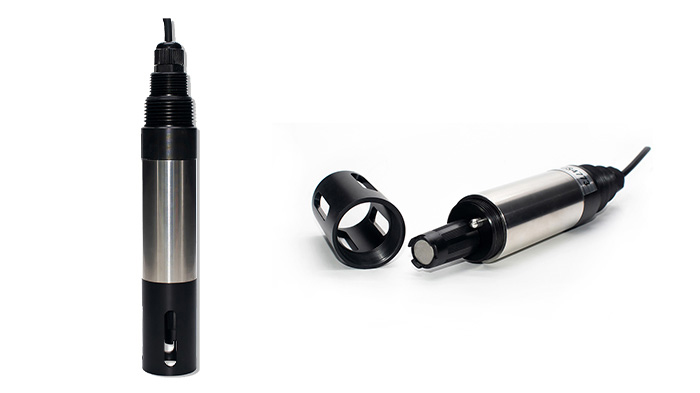
1. Electrochemical DO Sensors: Principles and Performance Characteristics
Electrochemical DO sensors (Clark-type) operate via polarographic or galvanic mechanisms. They use an anode and cathode in an electrolyte behind a gas-permeable membrane. Oxygen diffuses across the membrane and is reduced at the cathode, producing a current proportional to DO concentration.
Performance Characteristics:
* Accuracy: Typically ±1% to ±2% of full scale.
* Response Time: From about 30 seconds to several minutes, depending on design and membrane condition.
* Stability: Needs frequent calibration due to membrane fouling and electrolyte depletion.
* Interference: Sensitive to gases like H₂S and CO₂ and other contaminants that pass through the membrane.
* Maintenance: Routine membrane and electrolyte replacement increases operating cost.
Pokcenser Automation’s PCS4773D is a high-precision digital dissolved oxygen sensor using the polarographic/diaphragm electrode method, with a 0–20 mg/L and 0–200% range at ±1% F.S. accuracy. It includes built-in temperature compensation and a rugged POM + 316 stainless steel body with IP68 waterproofing.
2. Optical DO Sensors: Principles and Performance Characteristics
Optical (fluorescence-based) DO sensors rely on luminescence quenching. An LED excites a dye in a sensing foil; oxygen in the sample quenches the luminescence, changing intensity and phase shift. The sensor measures these changes to determine DO concentration.
Performance Characteristics:
* Accuracy: Generally high, typically ±1% F.S., often matching or exceeding electrochemical performance.
* Response Time: Usually within seconds—well-suited to dynamic conditions.
* Stability: Excellent long-term stability without membranes/electrolytes, reducing drift and extending calibration intervals.
* Interference: Less cross-sensitivity, since oxygen interacts directly with the dye.
* Maintenance: Minimal—primarily periodic cleaning of the sensing foil.
Pokcenser Automation’s PCS4760PD is a high-precision digital optical DO sensor with a 0–20 mg/L and 0–200% range at ±1% F.S. accuracy. It integrates temperature compensation and uses a durable POM housing with IP68 waterproof rating, suitable for demanding environments.
3. Key Differences Between Diaphragm Electrode and Optical Methods
| Feature | Electrochemical (Diaphragm Electrode) DO Sensors | Optical DO Sensors |
|---|---|---|
| Principle | Oxygen diffuses through a membrane, reacts at electrodes, generating current. | Luminescence quenching by oxygen molecules. |
| Accuracy | Good (e.g., ±1% F.S. for PCS4773D) | High (e.g., ±1% F.S. for PCS4760PD) |
| Response Time | Slower (30 seconds to several minutes) | Faster (typically within seconds) |
| Stability | Requires frequent calibration due to membrane fouling and electrolyte depletion. | Superior long-term stability; less drift; extended calibration intervals. |
| Maintenance | Regular membrane and electrolyte replacement. | Periodic cleaning of sensing foil. |
| Interference | Susceptible to chemical interference (e.g., H₂S, CO₂). | Less prone to chemical interference. |
| Cost (Initial) | Generally lower | Generally higher |
| Cost (TCO) | Higher due to consumables and labor for maintenance. | Lower due to reduced maintenance and longer lifespan. |
| Applications | Wastewater treatment, general water quality monitoring. | Aquaculture, Environmental Monitoring, industrial processes, drinking water systems. |
Comparing High-Accuracy DO Sensors on Performance Metrics
1. Analyzing Accuracy and Resolution Across Sensor Types
Accuracy is closeness to the true value; resolution is the smallest detectable change. Both electrochemical and optical sensors typically deliver ±1% F.S. accuracy—for instance, Pokcenser’s PCS4773D (electrochemical) and PCS4760PD (optical) are both rated ±1% F.S. Optical designs often edge ahead in resolution and long-term stability thanks to their measurement principle, which is valuable where consistent, precise data is critical.
2. Evaluating Response Time and Stability for Dynamic Environments
When DO shifts quickly, response time matters. Optical sensors usually react within seconds because they’re not limited by membrane diffusion. Electrochemical units, constrained by diffusion through a membrane, tend to respond in 30 seconds to several minutes. Stability—how well a sensor holds calibration—typically favors optical sensors, which reduces recalibration frequency and downtime. For continuous monitoring, that stability is a practical advantage.
3. Assessing Calibration Requirements and Maintenance Needs
Calibration and upkeep drive reliability and cost. Electrochemical sensors often need more frequent calibration and routine membrane/electrolyte replacement due to fouling and depletion. Optical sensors cut this burden dramatically; maintenance is often just periodic foil cleaning with much longer calibration intervals. The difference shows up directly in labor cost and uptime.
4. Understanding the Influence of Temperature and Pressure Compensation
Temperature and pressure shift oxygen solubility, so solid compensation is essential. Most high-accuracy DO sensors include built-in temperature compensation—commonly NTC10K thermistors—to correct readings. Pressure compensation is also important wherever barometric pressure or depth varies. Pokcenser’s PCS4773D and PCS4760PD both integrate temperature compensation to ensure reliable readings from 0–50°C.
If you’re interested, check Submersible Level Transmitters: Key Specs to Check First
Deconstructing the Cost Factors of High-Accuracy DO Sensors
1. Initial Purchase Price: A Comparative Look at Sensor Technologies
Upfront, optical DO sensors typically cost more than electrochemical models due to their components and manufacturing complexity. That premium, however, can be offset over time by lower operating costs. Electrochemical sensors start cheaper but often cost more over their lifetime.
2. Total Cost of Ownership: Beyond the Sticker Price
Total Cost of Ownership (TCO) paints the truer picture—combining purchase price, consumables, calibration, maintenance, and downtime. Optical sensors usually deliver a lower TCO because they require fewer interventions and have longer calibration intervals, despite the higher initial price. Electrochemical designs, with recurring membrane and electrolyte replacement, tend to carry higher lifetime costs.
3. Considering Consumables and Replacement Parts for Long-Term Operation
Consumables add up. Electrochemical sensors need ongoing membranes and electrolytes to maintain performance as these degrade. Optical sensors eliminate those consumables; their main wear item is the sensing foil, which lasts longer and is replaced less frequently. That difference is a major driver of optical technology’s cost-effectiveness.
4. Evaluating Installation and Integration Expenses
Installation and integration are typically straightforward for both types. Common industrial outputs like RS485 Modbus RTU simplify system integration, and mechanical installation often uses threaded fittings (e.g., NPT 3/4″ or G3/4″) or submersion hardware. Complexity is similar, though optical sensors can be advantageous in remote or hard-to-access sites because they require fewer service visits.
Selecting the Optimal High-Accuracy DO Sensor for Your Application
1. Matching Sensor Performance to Specific Industry Requirements
Map sensor traits to your process. Where rapid response and low maintenance matter—think aquaculture or critical industrial loops—optical sensors often lead. If upfront budget is tight and routine maintenance is acceptable, electrochemical sensors can be a smart fit. Always line up required accuracy, stability, and response time with your operating realities.
2. Budgetary Considerations and Return on Investment Analysis
Budgets matter, but so does payback. Optical sensors command a higher upfront price, yet lower maintenance and longer life frequently yield stronger ROI. Build a TCO model that includes purchase, consumables, maintenance labor, and downtime. The full view makes the economic trade-off clear.
3. Environmental Factors Influencing Sensor Choice and Durability
Process conditions shape longevity and performance. Turbidity, chemical contaminants, and biological fouling all play a role. Optical sensors usually handle high-fouling scenarios better because they lack membranes. Electrochemical units may need more frequent cleaning and membrane swaps in those environments. Robust IP68 construction across Pokcenser’s portfolio supports reliable operation in harsh submerged settings.
If you’re interested, check Safety in Hazardous Areas: Using Explosion-Proof Sensors
4. Pokcenser Automation’s PCS4773D and PCS4760PD: A Comparative Overview
Pokcenser offers two high-accuracy options: the PCS4773D (electrochemical) and the PCS4760PD (optical). Both deliver ±1% F.S. accuracy and IP68 waterproofing. PCS4773D’s polarographic approach provides a lower entry cost and suits general water quality monitoring. PCS4760PD’s fluorescence method offers standout stability with reduced maintenance—ideal for continuous monitoring in aquaculture and Environmental Monitoring. Choose based on your balance of upfront cost, long-term efficiency, and application criticality.
| Feature | PCS4773D (Electrochemical) | PCS4760PD (Optical) |
|---|---|---|
| Method | Polarography (diaphragm electrode) | Fluorescence (optical) |
| Accuracy | ±1% F.S. | ±1% F.S. |
| Measurement Range | 0–20 mg/L, 0–200% | 0–20 mg/L, 0–200% |
| Temperature Comp. | Built-in NTC10K (0–50°C) | Built-in NTC10K (0–50°C) |
| Shell Material | POM + 316 stainless steel | POM |
| Waterproof Grade | IP68 | IP68 |
| Output | RS485 Modbus RTU | RS485 Modbus RTU |
| Maintenance | Requires membrane and electrolyte replacement. | Requires periodic cleaning of sensing foil. |
| Key Advantage | Lower initial cost, robust construction. | Lower long-term maintenance, superior stability. |
| Best For | General water quality, drinking water treatment. | Aquaculture, Environmental Monitoring, industrial processes. |
Make an Informed Decision for Your DO Measurement Needs
The DO sensor you choose will shape both your process efficiency and your long-term costs. Explore Pokcenser Automation’s dissolved oxygen lineup and speak with our specialists to pinpoint the best fit for your application. We support you end-to-end—from evaluation to after-sales service.
Contact us today to discuss your requirements.
Phone: +86 181 7515 5326
Email: in**@*******er.com
About the Author
Li Chengxuan is a senior industrial automation expert at Pokcenser Automation, specializing in the research and application of flow, level, pressure and temperature sensors and industrial process control solutions.
FAQs
1. What is the primary difference between optical and electrochemical DO sensors?
Optical sensors use luminescence quenching, don’t consume oxygen, and require less maintenance. Electrochemical sensors rely on a membrane and electrolyte that participate in a chemical reaction, so those components need periodic replacement. Optical designs also tend to respond faster and hold calibration longer.
2. How often do high-accuracy DO sensors need calibration?
It depends on sensor type and service conditions. Electrochemical sensors often need calibration every few weeks to months due to membrane wear and electrolyte depletion. Optical sensors typically maintain stability for longer, stretching calibration intervals to several months or even a year.
3. Can temperature fluctuations affect the accuracy of DO measurements?
Yes. Temperature strongly affects oxygen solubility—warmer water holds less oxygen. High-accuracy sensors, including Pokcenser models, integrate temperature compensation (e.g., NTC10K thermistors) to correct readings across temperature swings.
4. What factors contribute to the total cost of ownership for a DO sensor?
TCO includes the purchase price, consumables (membranes, electrolytes), labor for maintenance and calibration, and downtime-related costs. Optical sensors often start higher but end lower on TCO thanks to reduced maintenance and longer service intervals.
5. Which type of DO sensor is best suited for wastewater treatment applications?
Both types are used. Optical sensors are often preferred in challenging wastewater conditions due to fouling resistance and lower maintenance. Electrochemical sensors remain a cost-effective choice where conditions are less aggressive and regular maintenance is practical.

