 English
 Spanish
Industrial Pressure Sensor Selection Guide for Optimal Performance
Selecting the right industrial pressure sensor can make the difference between a line that hums along and one that keeps tripping alarms. I’ve seen teams wrestle with choices—technology, ranges, materials—only to discover that one overlooked detail, like the wrong reference type or an incompatible diaphragm, was the culprit behind recurring downtime. Here, we bring those considerations into focus so engineers and procurement specialists can move with confidence: from core principles and sensor types to selection criteria, installation practices, and how modern data and automation turn pressure readings into real operational gains.
Understanding the Fundamentals of Industrial Pressure Measurement
1. Defining Industrial Pressure Sensors and Their Role
Industrial pressure sensors detect pressure in gases or liquids and translate it into an electrical signal. They’re central to process control, safety interlocks, and performance monitoring across industries. With real-time feedback, systems can self-correct, optimize performance, and avoid hazardous conditions.
2. Key Principles of Pressure Measurement Technologies
Different technologies sense pressure through distinct physical effects: elastic elements that deform, electrical resistance that shifts under strain, or capacitance that changes as a sensing element moves. Each approach shines in specific environments and load profiles, and each carries trade-offs in accuracy, stability, and robustness.
3. The Importance of Accurate Pressure Sensing in Industrial Processes
Precision in pressure measurement touches everything—safety, yield, energy use, and equipment health. Poor accuracy invites drift, quality issues, or, in the worst case, equipment damage and critical failures. Choosing appropriately keeps processes stable and predictable.
Exploring Diverse Types of Industrial Pressure Sensors
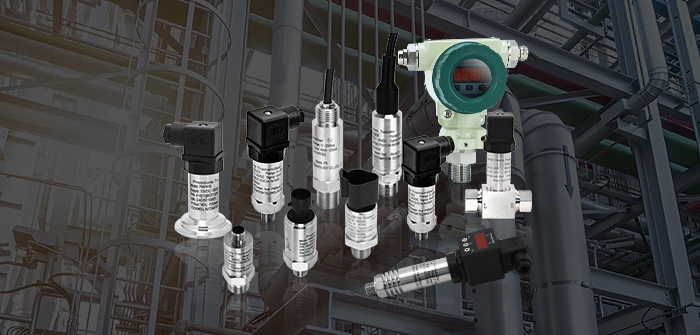
1. Diaphragm and Strain Gauge Pressure Sensors
Diaphragm designs rely on a flexible membrane that deflects with pressure. That deflection is commonly captured by bonded strain gauges. Strain gauge pressure sensors convert mechanical strain into a clean electrical output and are widely valued for accuracy, toughness, and applicability across demanding industrial duties.
2. Capacitive Pressure Transducers and Their Applications
Capacitive pressure transducers sense the change in capacitance between two plates as one plate flexes under load. They deliver excellent stability and high resolution, especially suited to low-pressure ranges and applications that demand fine precision.
For more information on capacitive technology, consider reading Capacitive Level Sensors: Principles & Best Use Cases.
3. Piezoelectric and Piezoresistive Pressure Sensors
Piezoelectric sensors produce charge when stressed, which makes them ideal for dynamic or rapidly changing pressures. Piezoresistive Pressure Sensors shift their electrical resistance under strain, providing dependable, accurate outputs for both static and dynamic conditions. These typically use silicon or ceramic sensing elements.
A comparison of these technologies is available in Piezoresistive Pressure Sensors vs. Ceramic Pressure Sensors: A Comprehensive Comparison.
4. Resonant Frequency and Optical Pressure Sensors
Resonant frequency sensors infer pressure from shifts in the resonance of a vibrating element. Optical pressure sensors use light-based measurement, bringing natural immunity to electromagnetic interference and strong suitability for hazardous areas. Both offer high precision and notable long-term stability.
5. Differentiating Between Absolute, Gauge, and Differential Pressure Sensors
Understanding the reference point is crucial for pressure measurement.
* Absolute pressure sensors measure pressure relative to a perfect vacuum. They are essential for applications unaffected by atmospheric pressure variations.
* Gauge pressure sensors measure pressure relative to the ambient atmospheric pressure. They are commonly used in tire pressure monitoring or tank level measurements.
* Differential Pressure Meters measure the difference between two input pressures. These are vital for flow measurement, filter monitoring, and level measurement in sealed tanks.
| Sensor Type | Reference Point | Common Applications | Key Advantage |
|---|---|---|---|
| Absolute | Perfect vacuum | Altitude, vacuum systems, sealed processes | Unaffected by atmospheric changes |
| Gauge | Ambient atmosphere | Tire pressure, hydraulic systems, tank levels | Simple, cost-effective for relative pressure |
| Differential | Two input pressures | Flow rate, filter blockage, tank level (sealed) | Measures pressure drop or level difference |
Critical Factors for Selecting the Right Pressure Sensor
1. Analyzing Process Media Compatibility and Temperature Ranges
Choose materials that stand up to the process media to avoid corrosion, swelling, or contamination. Account for chemical composition, viscosity, abrasiveness, and any solids. Temperature limits can be decisive—elevated temperatures demand appropriate wetted materials, fill fluids, and mechanical design.
2. Evaluating Pressure Range, Accuracy, and Response Time Requirements
Define the minimum and maximum pressures with a comfortable margin. A properly sized range protects against overpressure and preserves accuracy where you need it most. Specify accuracy to your tolerance stack-up, and consider response time for fast transients or control loops that need tight, rapid feedback.
3. Considering Environmental Conditions and Ingress Protection (IP) Ratings
Dust, washdown, vibration, and thermal extremes all influence sensor choice. Match the Ingress Protection (IP) rating to real-world exposure—wet or splash-prone environments typically require higher IP ratings. In atmospheres with explosive gases or dust, explosion-proof sensors are mandatory.
For detailed information on safety in such areas, refer to Safety in Hazardous Areas: Using Explosion-Proof Sensors.
4. Assessing Output Signals, Communication Protocols, and Power Supply Options
Select outputs that align with your control layer: 4-20 mA and 0-10 V remain workhorses, while digital protocols such as HART or Modbus RTU add diagnostics and richer data. Confirm power requirements—commonly 24 VDC or 220 VAC—fit your panel standards.
5. Understanding Mounting Options and Physical Dimensions for Integration
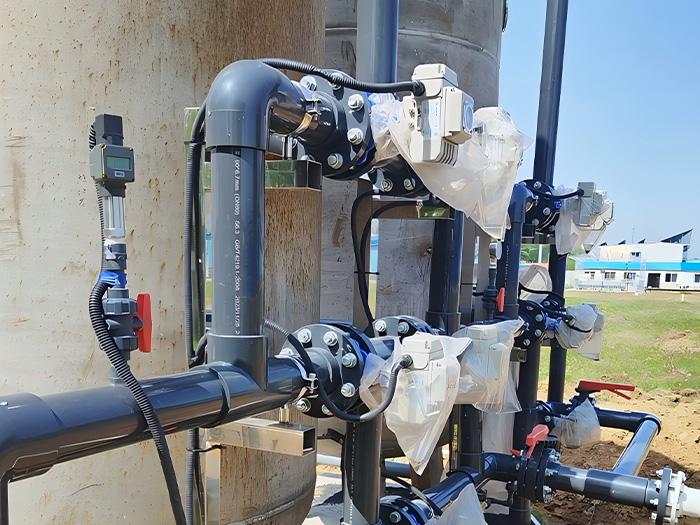
Check available space, process connections (threaded, flanged, hygienic), and orientation. Good mechanical installation minimizes vibration, thermal stress, and impulse line traps, helping ensure stable, representative readings.
Best Practices for Pressure Sensor Installation and Maintenance
1. Proper Installation Techniques to Ensure Measurement Integrity
Secure mounting and sensible placement are non-negotiable. Position sensors where pressure is truly representative, and avoid locations that invite air entrapment or clogging in impulse lines. Decouple from vibration where possible.
2. Calibration and Verification Procedures for Sustained Accuracy
Use a known reference to verify accuracy at defined intervals. Build your calibration schedule around process criticality, regulatory requirements, and expected drift. Document results to track trends over the sensor’s lifecycle.
3. Troubleshooting Common Issues in Pressure Sensor Applications
Symptoms like zero drift, span error, noisy signals, or loss of output often trace back to wiring, power, process blockages, or mechanical damage. Work methodically: confirm power and connections, inspect process conditions, and refer to the manufacturer’s manual for model-specific checks.
4. Strategies for Extending Sensor Lifespan and Reducing Downtime
Preventive care goes a long way: keep connections clean, inspect seals and impulse lines, shield devices from impact and heat, and select sensors built for the environment they face. Many “lifetime” gains begin with sound selection and installation.
Enhancing Industrial Process Control with Advanced Pressure Sensors
1. Integrating Pressure Sensors into Automation Systems
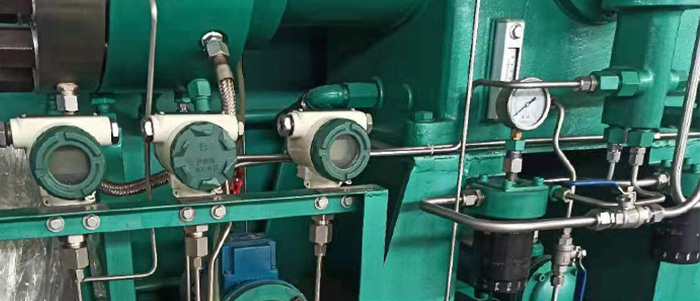
Tightly integrated sensors feed PLCs and DCS platforms with dependable process variables. That enables closed-loop control, alarms, and optimization routines that trim variability, reduce operator workload, and improve throughput.
2. Leveraging Data from Pressure Sensors for Predictive Maintenance
Pressure trends often whisper before equipment fails—subtle increases across a filter, erratic pulsations from a pump, or creeping baseline shifts. By analyzing those patterns, teams can time maintenance proactively, reduce unplanned outages, and cut lifecycle costs.
3. Future Trends and Innovations in Pressure Sensing Technology
Expect smaller footprints, wireless connectivity, and more intelligence at the edge. Self-calibration, onboard diagnostics, and advanced materials tailored to extremes will further enhance reliability and broaden where pressure sensors can deliver value.
Partner with Pokcenser Automation for Your Pressure Sensing Needs
Choosing the right industrial pressure sensor takes careful, context-aware evaluation. At Pokcenser Automation, we draw on 10+ years in industrial process control to tailor solutions that fit your application. From requirements review and sensor selection to commissioning support and worry-free after-sales service, our team is here to help you protect uptime and performance. Let’s talk about what you need.
Email: in**@*******er.com
Phone: +86 181 7515 5326
About the Author
Li Chengxuan is a senior industrial automation expert at Pokcenser Automation, specializing in the research and application of flow, level, pressure and temperature sensors and industrial process control solutions.
FAQs
1. What is the primary difference between absolute and gauge pressure sensors?
Absolute sensors reference a perfect vacuum, so their readings remain stable regardless of weather or altitude. Gauge sensors reference ambient atmospheric pressure, meaning their readings shift with atmospheric changes. Choose based on whether you need true pressure or pressure relative to the local atmosphere.
2. How often should industrial pressure sensors be calibrated?
Calibration intervals depend on accuracy needs, environmental severity, and any regulatory constraints. Critical duties or harsh conditions often justify 6–12 month intervals; less demanding applications may allow longer. Regular calibration protects accuracy and reliability over time.
3. Can a single pressure sensor be used for multiple types of media?
Sometimes—but it requires care. Different media bring different chemistries, temperatures, viscosities, and abrasiveness, all of which affect compatibility, accuracy, and service life. Always verify media compatibility against the manufacturer’s specifications before reassigning a sensor.
4. What communication protocols are commonly used with industrial pressure sensors?
Common options include 4-20 mA analog output for simplicity and robustness, HART for layered diagnostics over analog, and digital buses such as Modbus RTU and Foundation Fieldbus for deeper integration and richer data exchange with control systems.
5. How do environmental factors like temperature and humidity affect sensor performance?
Heat can induce thermal drift and stress components; cold can slow response or freeze lines. Humidity and condensation risk shorts and corrosion. Selecting sensors with appropriate temperature compensation, protective materials, and suitable IP ratings helps maintain performance in real conditions.

