 English
 Spanish
Portable Ultrasonic Flow Meters: Applications and Benefits
Accurate flow measurement underpins reliable industrial operations, and portable ultrasonic flow meters make it attainable without touching the process line. They bring a flexible, non-invasive approach that suits a wide range of applications. Once the operating principles and use cases are understood, it’s straightforward to improve system efficiency while keeping pipelines intact. The technology delivers precise data without disruption, which is why it’s valued across many sectors. Below, we highlight the benefits and how to select the right meter for specific requirements.
Understanding Portable Ultrasonic Flow Meters
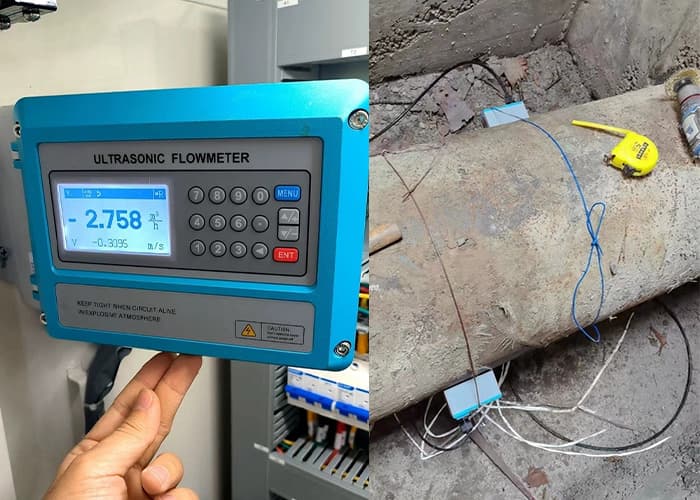
Portable ultrasonic flow meters mark a meaningful step forward in industrial measurement technology. These devices use sound waves to determine fluid velocity and, in turn, flow rate. Unlike traditional inline meters, they clamp onto the outside of a pipe, avoiding process shutdowns or pipe modifications. This non-invasive setup keeps installation costs down and reduces the risk of contamination.
1. Addressing Traditional Flow Measurement Challenges
Traditional approaches often force a cut into the pipe, bringing downtime, the chance of leaks, and higher maintenance. Inline devices can introduce pressure drops and suffer from fouling that drifts accuracy over time. Portable ultrasonic meters sidestep these issues by offering a temporary yet precise way to measure flow. They fit well for troubleshooting, spot checks, and verifying how permanent meters are performing.
2. How Clamp-On Technology Works
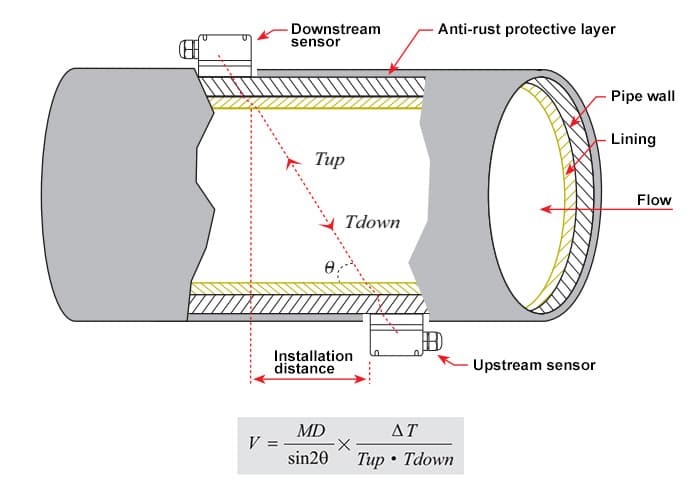
Clamp-on ultrasonic flow meters work on the transit-time principle. Two transducers mount on the pipe exterior. One transducer sends an ultrasonic signal through the fluid to the other transducer, which receives it. At the same time, the second transducer sends a signal back to the first. With flow present, the upstream signal takes longer than the downstream signal. The meter derives fluid velocity from this time difference. That velocity, combined with the pipe’s cross-sectional area, yields the volumetric flow rate. The method is highly repeatable and accurate for homogeneous liquids.
Key Applications of Portable Ultrasonic Flow Meters
Portable ultrasonic flow meters serve many industries because they are flexible and non-invasive. Quick, accurate data makes them go-to tools for temporary monitoring and diagnostics.
1. Water and Wastewater Management
In Water and Wastewater Treatment facilities, portable ultrasonic flow meters monitor multiple stages of the process. They measure raw water intake, treated water distribution, and effluent discharge. Non-invasive installation is especially helpful when assessing existing infrastructure without service interruptions. These meters help find leaks, verify pump performance, and audit water usage. For example, the PWF-U2000MCC Multi-channel Clamp-on Ultrasonic Flowmeter provides high accuracy (±0.5% FS) for pipe diameters from DN50 to DN6000, making it suitable for large-scale municipal applications. Its data logging capabilities support long-term trend analysis.
2. Chemical and Petrochemical Industries
The chemical sector often handles corrosive or hazardous fluids where opening a line is not desirable. Portable ultrasonic flow meters offer a safe and efficient way to measure flow in these conditions. They can monitor chemical dosing, verify process flows, and support compliance with environmental regulations. The PWF-U2000MCI Multi-channel Insertion Ultrasonic Flowmeter, for instance, allows installation without shutting off water, which is important in continuous chemical processes. Its stainless steel transducers provide durability in aggressive media.
3. HVAC and Building Management
HVAC systems depend on precise flow for efficient heating and cooling. Portable ultrasonic flow meters assist with commissioning, troubleshooting, and energy audits. They verify chiller and boiler performance, balance water loops, and help optimize energy use. The compact PWF-U1000 Small Pipe Clamp-on Ultrasonic Flowmeter suits small-diameter pipes (DN15–DN40) common in building services. It supports BTU measurement with optional PT1000 sensors, supplying useful data for energy management.
Significant Benefits of Portable Ultrasonic Flow Meters
Adoption is driven by clear advantages over traditional technologies. These gains translate into smoother operations and lower costs across many use cases.
1. Non-Invasive Measurement Advantages
The standout benefit is non-invasive operation. The meter clamps to the pipe exterior, removing the need for cutting, welding, or shutting down the process. Installation time and labor drop substantially. Keeping the meter outside the fluid also avoids contamination risks, important in food and beverage or pharmaceuticals. There is no added pressure drop or energy loss typical of some inline designs. With no moving parts, wear is limited, which reduces maintenance and extends service life.
2. Cost-Effectiveness and Return on Investment
Portable ultrasonic flow meters can cut costs in several ways. Fast installation minimizes downtime and protects productivity. A single unit can move among measurement points, reducing the need to install many dedicated inline meters. That flexibility makes them a smart choice for temporary monitoring, troubleshooting, and verification. The upfront spend often pays back quickly through lower installation expenses, fewer operational interruptions, and better process efficiency. For example, the PWF-U2000MCC’s ability to monitor multiple channels with high accuracy provides comprehensive data for optimizing processes, leading to long-term savings.
| Feature | Portable Ultrasonic Flow Meter | Traditional Inline Flow Meter |
|---|---|---|
| Installation | Clamp-on, non-invasive | Inline, invasive |
| Downtime | Minimal/None | Significant |
| Cost (Installation) | Low | High |
| Flexibility | High (movable) | Low (fixed) |
| Pressure Drop | None | Possible |
| Contamination Risk | None | Possible |
Choosing the Right Portable Ultrasonic Flow Meter
Good selection depends on matching the meter to the application so performance and accuracy hold up in the field.
1. Factors to Consider for Selection
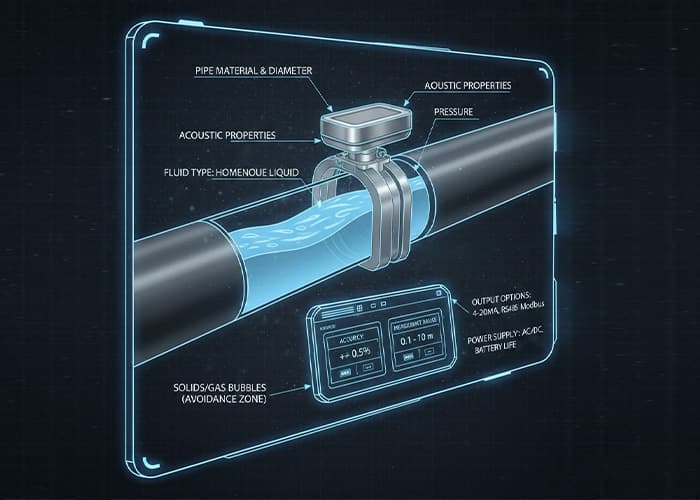
Start with pipe material and diameter, as the meter must suit the pipe’s acoustic properties. Consider the fluid type; ultrasonic meters perform best with homogeneous liquids. Temperature range, pressure, and the presence of solids or gas bubbles matter. Required accuracy and measurement range should align with the task. Also review output options (e.g., 4-20mA, RS485 Modbus) and power supply needs (e.g., battery life, AC/DC). For diverse applications, Pokcenser offers models like the PWF-U2000MCC and PWF-U1000, each designed for specific pipe sizes and fluid conditions.
2. Installation and Calibration Best Practices
Accurate results depend on correct setup and calibration. Clean the pipe surface where the transducers mount, removing rust or coatings. Apply acoustic coupling gel generously to remove air gaps between transducers and pipe. Position transducers precisely per the manufacturer’s instructions, often using the Z-method or V-method. Regular calibration against known flow standards or other accurate meters helps maintain measurement integrity. Pokcenser provides detailed guides and support for optimal setup and calibration.
Why Choose Pokcenser for Your Flow Measurement Needs
Pokcenser Automation Technology brings over a decade of experience in industrial process control automation. We provide reliable, high-quality flow meters, level sensors, pressure transmitters, temperature sensors, and water analysis instruments. A focus on innovation and customer satisfaction drives solutions tailored to specific needs. We hold CE, ATEX, ISO, and RoHS certifications, underscoring alignment with international quality and safety standards. Our portfolio, including clamp-on and insertion ultrasonic flow meters, supports varied applications from Water and Wastewater to the chemical sector. We offer thorough pre-sales and after-sales support, from initial application evaluation to smooth integration and ongoing maintenance. The aim is long-term partnership and steady contribution to the global industrial automation landscape.
FAQs
1. How accurate are portable ultrasonic flow meters compared to inline meters?
Portable ultrasonic flow meters, especially clamp-on types, can deliver high accuracy (around ±1-2% of reading) comparable to many inline meters, provided installation is correct and the unit is calibrated for the specific fluid and pipe material. Their non-invasive design eliminates pressure drop and contamination risks that can affect some inline meters.
2. Can portable ultrasonic flow meters measure all types of fluids?
They work best with homogeneous fluids containing minimal suspended solids or gas bubbles. Highly aerated liquids or slurries can attenuate the ultrasonic signal and impact accuracy. Pokcenser offers various technologies to match different fluid characteristics; consult our experts for specific applications.
3. What is the typical battery life of a Pokcenser portable ultrasonic flow meter?
Pokcenser portable ultrasonic flow meters are built for extended field use. Depending on the model and operational settings (e.g., backlight usage, data logging frequency), battery life ranges from 10 to 20 hours of continuous operation. Many models also support external power for longer-term monitoring.
4. Is special training required to operate these devices?
Pokcenser’s portable ultrasonic flow meters feature intuitive interfaces. Basic training on installation, parameter setup, and data retrieval is recommended, which our pre-sales team can provide. The clamp-on design simplifies setup compared to traditional inline meters.
5. What certifications do Pokcenser’s portable ultrasonic flow meters hold?
Pokcenser Automation Technology’s products, including our portable ultrasonic flow meters, are approved with CE, ATEX, ISO, and RoHS certificates, ensuring compliance with international quality, safety, and environmental standards. This commitment to quality supports reliable, trustworthy solutions.
Ready to Enhance Your Flow Measurement?
Ready to optimize your flow measurement with a reliable portable ultrasonic flow meter? Contact Pokcenser Automation Technology today for a personalized consultation and discover how our 10+ years of expertise and certified solutions can meet your specific industrial needs. Our dedicated pre-sales and after-sales team is here to provide one-stop, worry-free service, ensuring long-term value and efficiency for your operations. Email us at in**@*******er.com or call +86 181 7515 5326.

