 English
 Spanish
Pressure Sensor Signal Types for Seamless System Integration
Selecting the appropriate pressure sensor signal type can make or break reliable industrial process control. We’ve seen that clean integration into existing systems depends on compatibility and performance. This piece looks at the signal types, what defines them, and how to choose the best match for your application. The aim is practical insight that raises system efficiency and tightens data accuracy.
Understanding Pressure Sensor Signal Fundamentals
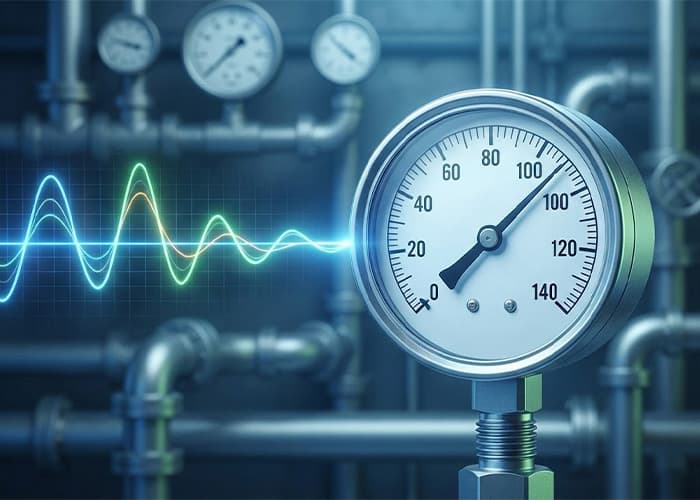
Pressure sensors turn physical pressure into electrical signals, either analog or digital. The choice of signal type affects data transmission, accuracy, and system compatibility. Understanding these fundamentals supports effective system design and integration.
1. Analog vs Digital Signals Explained
Analog signals represent continuous physical quantities, varying smoothly over time. For instance, a 0-10V signal directly reflects pressure changes. Digital signals, conversely, transmit discrete values, typically as binary code. These signals offer enhanced noise immunity and data integrity.
2. Key Characteristics of Pressure Sensor Outputs
Sensor output characteristics determine suitability for different applications. Resolution defines the smallest detectable change. Noise immunity indicates resistance to electrical interference. Bandwidth refers to the range of frequencies a signal can accurately transmit. These factors are critical for maintaining measurement accuracy and system stability.
| Characteristic | Analog Signals (e.g., 4-20mA, 0-10V) | Digital Signals (e.g., Modbus, HART) |
|---|---|---|
| Resolution | Limited by ADC and noise | High, defined by bit depth |
| Noise Immunity | Moderate (4-20mA better than voltage) | High |
| Cable Length | Moderate (4-20mA is superior) | Long, depending on protocol |
| Data Content | Single process variable | Multiple variables, diagnostics |
Common Analog Signal Types for Pressure Sensors
Analog signals remain prevalent due to their simplicity and direct representation of measured values. They are particularly useful in applications where continuous, real-time feedback is prioritized over complex data exchange. We offer a range of sensors with robust analog outputs.
1. 4-20mA Current Loop Advantages and Disadvantages
The 4-20mA current loop is a widely adopted standard in industrial automation. It transmits signals as a current proportional to the measured pressure. This method is robust against electrical noise and voltage drops over long cable runs. The live zero (4mA) allows for fault detection, distinguishing between zero pressure and a broken wire. However, it only transmits one process variable.
2. Voltage Outputs 0-10V and 0-5V Considerations
Voltage outputs like 0-10V and 0-5V are common for short-distance transmissions. They are easy to implement and interface with many control systems. However, these signals are more susceptible to noise and voltage drops over longer distances, which can affect accuracy. Proper shielding and signal conditioning are important for reliable operation.
3. Ratiometric Voltage Outputs for Low Power Applications
Ratiometric voltage outputs scale the output signal as a proportion of the supply voltage. This design is beneficial in battery-powered or low-power applications, as it compensates for fluctuations in the power supply. The output voltage directly correlates to the measured pressure, making it a cost-effective solution for specific scenarios.
Digital Communication Protocols for Pressure Sensors
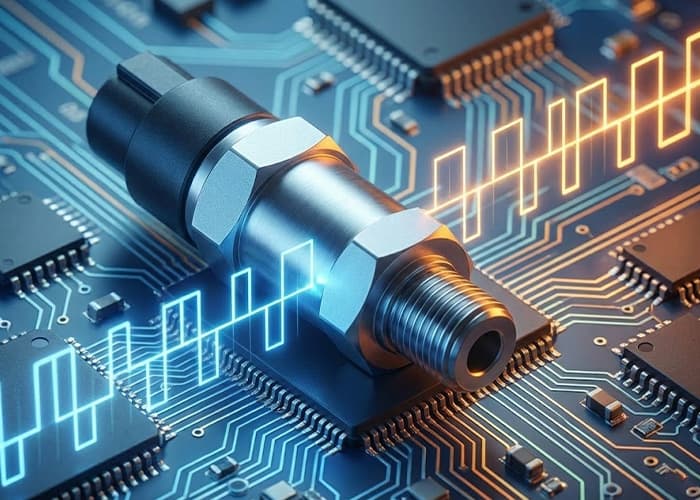
Digital communication protocols offer advanced capabilities for data transmission and device management. They provide higher accuracy, improved noise immunity, and the ability to convey more information than analog signals. This makes them ideal for complex industrial systems.
1. Modbus RTU for Multi-Drop Systems
Modbus RTU is a serial communication protocol widely used for connecting multiple devices to a single master. It enables efficient data exchange between sensors and control systems over long distances. Its simplicity and widespread adoption make it a popular choice for multi-drop networks, reducing wiring complexity.
2. HART Protocol for Smart Instrumentation
The HART (Highway Addressable Remote Transducer) protocol overlays digital communication on top of the traditional 4-20mA analog signal. This allows for simultaneous transmission of analog process values and digital diagnostic information. HART-enabled sensors provide enhanced capabilities for configuration, calibration, and troubleshooting without interrupting the 4-20mA signal.
3. IO-Link for Point-to-Point Digital Communication
IO-Link is a standardized point-to-point communication technology for connecting sensors and actuators to a master device. It offers digital signal transmission, parameterization capabilities, and diagnostic functions. IO-Link simplifies wiring, reduces installation costs, and provides comprehensive device data for predictive maintenance and enhanced process control.
Selecting the Right Signal Type for System Integration
Choosing the correct signal type helps optimize system performance and ensures reliable data acquisition. Several factors influence this decision, including environmental conditions, transmission distance, and data requirements. We analyze these factors to recommend suitable solutions.
1. Factors Influencing Signal Type Selection
When selecting a signal type, consider the transmission distance. Analog signals like 4-20mA are effective over long distances, while voltage signals are better for shorter runs. Environmental noise levels also play a role; digital signals generally offer superior noise immunity. The amount and type of data required, such as diagnostic information, may necessitate a digital protocol. Power availability and cost constraints are additional considerations.
2. Signal Conditioning and Conversion Techniques
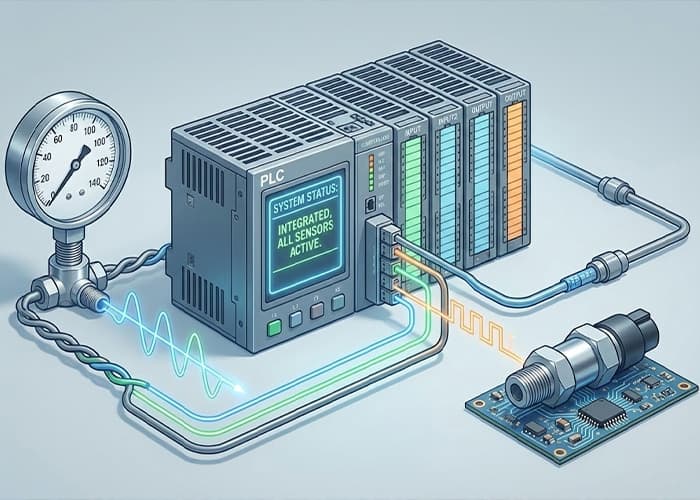
Signal conditioning involves modifying a sensor’s output to make it compatible with a control system. This may include amplification, filtering, or conversion from analog to digital (ADC) or digital to analog (DAC). Proper signal conditioning ensures accuracy and reliability in data transmission. For instance, a 4-20mA signal might be converted to a voltage input for a PLC.
Pokcenser Automation Solutions for Pressure Sensor Integration
Pokcenser Automation provides robust and accurate solutions for pressure measurement. Our products are designed for integration into diverse industrial environments, ensuring reliable performance and data integrity. We prioritize quality and customer satisfaction in all our offerings.
1. Pokcenser’s Range of Pressure Transmitters and Outputs
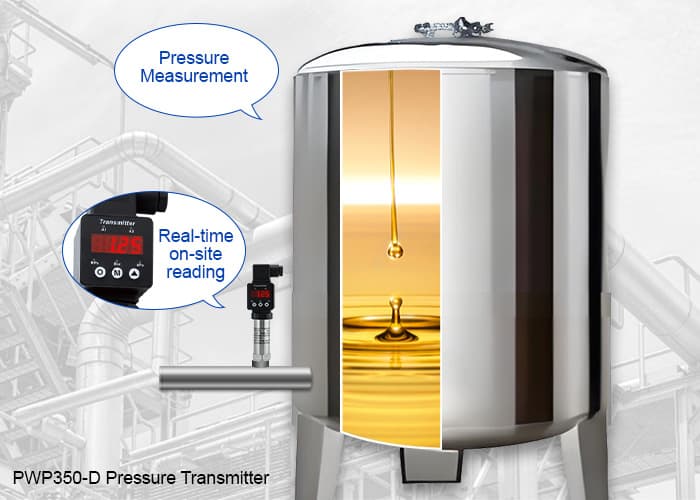
We offer a wide range of pressure transmitters with various output options. For instance, the PWP350-D Pressure Transmitter with Display provides a clear local indication and standard electrical outputs. Our PWP3051P Intelligent Monocrystalline Silicon Pressure Transmitter ensures high accuracy for demanding applications. We also feature the PWP3051P-CF Smart Cylinder Flange Pressure Transmitter for specialized installations.
Our PWP350-X Intrinsically Safe Pressure Transmitters with ATEX are ideal for hazardous area sensors. Additionally, the PWP124 High Temperature Melt Pressure Sensor & Transducer is designed for extreme conditions. For applications requiring precise differential pressure measurements, consider our PWP301 Micro Air Differential Pressure Transmitter.
2. Custom Solutions and Technical Support for Integration
Pokcenser Automation excels in providing custom solutions tailored to unique industrial requirements. Our team of experts offers full technical support, from initial evaluation to post-installation assistance. We ensure that our pressure sensors integrate perfectly with your existing systems, providing optimal performance. Our commitment extends to OEM/ODM services, reflecting our dedication to client value.
Contact Us
Ready to optimize your industrial process control with reliable pressure sensor solutions? Explore Pokcenser Automation’s extensive range of pressure transmitters, offering various signal types to meet your specific integration needs. Contact our expert team today for personalized consultation and support, or to discuss OEM/ODM opportunities.
Phone: +86 181 7515 5326
Email: in**@*******er.com
FAQs
What is the most common signal type for industrial pressure sensors?
The 4-20mA current loop is the most common and robust signal type for industrial pressure sensors due to its excellent noise immunity and ability to transmit signals over long distances, making it ideal for harsh industrial environments.
Why would I choose a digital signal over an analog signal for a pressure sensor?
Digital signals offer higher accuracy, reduced noise susceptibility, and the ability to transmit more diagnostic and configuration data from the sensor. Protocols like Modbus and HART allow for multi-drop connections and remote device management, simplifying system wiring and maintenance.
Are Pokcenser’s pressure sensors compatible with different PLC/DCS systems?
Yes, Pokcenser Automation’s pressure transmitters are designed with standard industrial signal outputs (e.g., 4-20mA, 0-10V, Modbus RTU) to ensure broad compatibility with most common Programmable Logic Controllers (PLCs) and Distributed Control Systems (DCS) used in industrial automation. Our technical team can assist with specific integration requirements.

