 English
 Spanish
Pressure Transmitter Selection: Balancing Performance and Cost
Choosing the right pressure transmitter shapes how smoothly your process runs and how predictable your costs stay. The decision reaches beyond sticker price into performance, durability, and the value that holds up over years of service. Our aim is to walk you through the key considerations so your selection meets technical demands while fitting your budget and larger operational goals.
Understanding Pressure Transmitters
Pressure transmitters are fundamental instruments in industrial automation. They convert pressure measurements into an electrical signal, enabling monitoring and control of various processes.
What is a Pressure Transmitter?
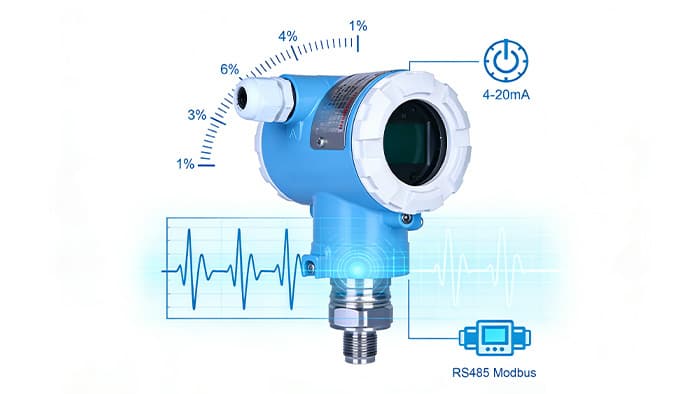
A pressure transmitter is an instrument that measures pressure and converts it into an analog or digital output signal. This signal is typically 4-20 mA or RS485 Modbus RTU, which can be transmitted to a control system. Basic components include a pressure sensor, a signal conditioner, and an output stage. The sensor detects the pressure, and the signal conditioner processes it into a usable output. This allows for continuous monitoring and regulation of pressure within industrial systems.
Key Performance Parameters
Key performance parameters determine a pressure transmitter’s suitability for an application. These include accuracy, measuring range, output signal type, and long-term stability. Understanding these metrics ensures the selected device meets specific process requirements. We consider these parameters foundational for effective process control.
Performance Considerations
This section examines the critical performance metrics influencing a pressure transmitter’s effectiveness and reliability across various applications. We explain why specific performance levels are necessary.
Accuracy, Repeatability, and Hysteresis
Accuracy defines how close the measured value is to the true value, often expressed as a percentage of the full scale (F.S.). Repeatability refers to the ability of a transmitter to produce the same output under identical conditions. Hysteresis is the difference in output for a given pressure when approached from increasing versus decreasing pressure. These factors directly impact the precision and reliability of process control. For instance, the PWP412-T3 hydrostatic water level and temperature transmitter offers an accuracy of ±0.5% F.S., with an optional ±0.05% F.S. at 25 ℃, ensuring precise measurements.
Stability and Drift
Long-term stability is key for maintaining measurement integrity over time. Drift refers to the change in a transmitter’s output over time under constant conditions. Factors like temperature fluctuations, vibration, and aging can cause drift. Regular calibration intervals are essential to counteract drift and maintain accuracy. The PWP412-T3, for example, features a temperature drift of 0.02% F.S./°C, indicating its robust stability.
Response Time and Update Rate
Response time is the speed at which a transmitter reacts to a change in pressure. The update rate refers to how frequently the measurement is refreshed. These parameters are vital for dynamic processes where rapid changes in pressure need immediate detection and control. A fast response time prevents process excursions and ensures tight control loops.
Environmental Factors and Durability
The operating environment significantly impacts a pressure transmitter’s performance and lifespan. Factors include ambient temperature, humidity, vibration, and exposure to corrosive media. Ingress Protection (IP) ratings, such as IP65 or IP68, indicate protection against dust and water. Material compatibility, like SUS304 or SS316L stainless steel for the PWP412-T3, ensures durability in harsh conditions. Our PWP412-T3 has an IP68 rating, ensuring long-term stability and reliable performance in harsh environments.
Cost Implications
This section details the various cost components associated with pressure transmitters, extending beyond the initial purchase price to cover the total cost of ownership.
Initial Purchase Price
The initial purchase price varies significantly based on the transmitter’s features, accuracy, and material construction. Basic models are more affordable, while advanced models with higher accuracy, specialized materials, or additional communication protocols incur higher upfront costs. For instance, a transmitter with explosion-proof certification will naturally cost more.
Installation and Calibration Costs
Installation costs include labor, specialized tools, and integration into existing control systems. Initial calibration is often required to ensure accurate readings. Regulatory compliance, particularly in industries like pharmaceuticals or oil and gas, can also add to these costs. Proper installation and calibration are critical for optimal performance.
Maintenance and Lifetime Costs (TCO)
Total Cost of Ownership (TCO) encompasses all expenses over the product’s lifespan. This includes routine maintenance, replacement of wear parts, recalibration, and energy consumption. A well-chosen transmitter with high durability and stability can reduce TCO by minimizing maintenance frequency and extending operational life. Conversely, frequent failures or recalibrations increase lifetime costs. For further reading on this topic, consider our article on 《Hydrostatic vs. Float Sensors: A Cost vs. Accuracy Guide》.
Impact of Downtime and Failure
Sensor failure can lead to significant financial consequences due to production downtime, material loss, and potential safety hazards. In critical applications, even a brief interruption can result in substantial losses. Therefore, investing in reliable, high-quality pressure transmitters is a strategic decision to mitigate these risks.
Balancing Performance and Cost
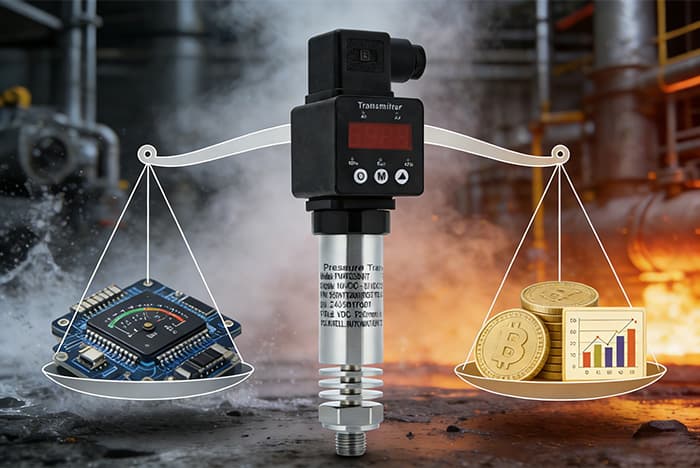
This section provides a framework for informed decision-making, emphasizing the need to align technical requirements with budgetary constraints and long-term value.
Defining Application Requirements
Clearly defining application requirements is the first step in selecting a pressure transmitter. This involves identifying the process media, required pressure range, operating temperature, and any hazardous area classifications. The necessary output signal (e.g., 4-20 mA, RS485 Modbus RTU) and communication protocols must also be specified. These details ensure the chosen device is fit for purpose. For example, our PWP3051P Intelligent Monocrystalline Silicon Pressure Transmitter is designed for high-precision applications.
Risk Assessment and Criticality
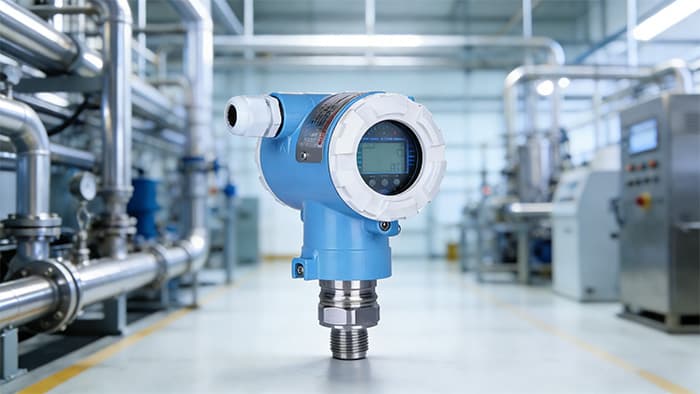
Conducting a risk assessment helps identify critical applications where high performance and reliability justify a higher investment. In less critical areas, cost-effectiveness might be prioritized, balancing acceptable performance with a lower budget. This strategic approach optimizes resource allocation and minimizes unnecessary expenditure.
Future-Proofing and Scalability
Consider future expansion plans and potential technology upgrades when selecting a pressure transmitter. Choosing devices with flexible communication options or modular designs can ensure scalability and ease of integration with evolving systems. This approach protects your investment and extends the useful life of your instrumentation.
Making the Right Selection
This section offers practical advice and considerations for choosing a supplier and ensuring the selected pressure transmitter meets all requirements.
Manufacturer Reputation and Support
Partnering with a reputable manufacturer like Pokcenser Automation is essential. We have over 10 years of experience in industrial process control automation and offer robust after-sales service and technical assistance. Our commitment ensures reliable products and full support throughout the product lifecycle. We are proud that 150,000+ solutions are provided to our clients in 100+ countries.
Certifications and Compliance
Verify that the pressure transmitter holds relevant certifications for your industry and region. Common certifications include CE for European markets, ISO for quality management, and RoHS for environmental compliance. For hazardous environments, ATEX certification is mandatory. Pokcenser Automation’s products are approved with CE, ATEX, ISO, and RoHS certificates, ensuring compliance and safety. For more information on safety, read our article on 《Safety in Hazardous Areas: Using Explosion-Proof Sensors》.
Customization and OEM/ODM Options
Customization options are valuable for unique applications. Pokcenser Automation offers OEM and ODM services, allowing for tailored solutions to meet specific requirements. This flexibility ensures optimal integration and performance, even in specialized industrial settings. Our team can adapt designs and functionalities to your exact needs.
Ready to optimize your industrial process control?
Contact Pokcenser Automation Technology Company Limited today for expert consultation on selecting the ideal pressure transmitter for your specific application, balancing top-tier performance with cost-effectiveness. Our 10+ years of experience and dedicated support team are here to create value for you.
Phone: +86 181 7515 5326
Email: in**@*******er.com
FAQs
What is the most critical factor when selecting a pressure transmitter?
The most critical factor is the specific application requirements. While accuracy and cost are important, the operating environment, process media, pressure range, and safety considerations must align perfectly with the transmitter’s specifications to ensure reliable and safe operation.
How does Total Cost of Ownership (TCO) apply to pressure transmitter selection?
TCO goes beyond the initial purchase price to include installation, calibration, maintenance, energy consumption, and potential costs from downtime or failure over the transmitter’s lifespan. A cheaper initial unit might have higher TCO due to frequent maintenance or lower durability.
Can Pokcenser Automation provide customized pressure transmitter solutions?
Yes, Pokcenser Automation offers OEM and ODM services. With over 10 years of experience and a strong R&D team, we can tailor pressure transmitters to meet unique application requirements, ensuring optimal performance and integration into your existing systems.
What certifications should I look for in a pressure transmitter?
Key certifications include CE for European conformity, ISO for quality management, and RoHS for hazardous substance restriction. For hazardous environments, ATEX certification is required. Pokcenser’s products are approved with CE, ATEX, ISO, and RoHS certificates, ensuring compliance and safety.
How can I ensure the long-term reliability of my pressure transmitter?
Long-term reliability is ensured by selecting a transmitter with appropriate durability for its environment, adhering to proper installation and regular calibration schedules, and choosing a reputable manufacturer like Pokcenser Automation that provides excellent after-sales support and quality products.

