 English
 Spanish
RTD Temperature Sensors in Process Automation Explained
Temperature measurement underpins process integrity and efficiency in industrial automation. Resistance Temperature Detectors deliver the precision and stability operations depend on, from routine control to safety-critical work. We value reliable sensing because tight control and safe operation hinge on trustworthy data. This piece walks through RTD technology, where it is used, and the innovations on the horizon, highlighting why these sensors remain central in industrial settings.
Foundational Concepts of RTD Temperature Sensors
Resistance Temperature Detectors (RTDs) are temperature sensors that exploit the predictable change in electrical resistance of certain metals with temperature. This principle allows for highly accurate and repeatable temperature measurements. Platinum is the most common material for RTD elements due to its linear resistance-temperature relationship, chemical inertness, and stability over a wide temperature range. Common types include Pt100 and Pt1000, referring to their resistance at 0°C (100 ohms and 1000 ohms, respectively).
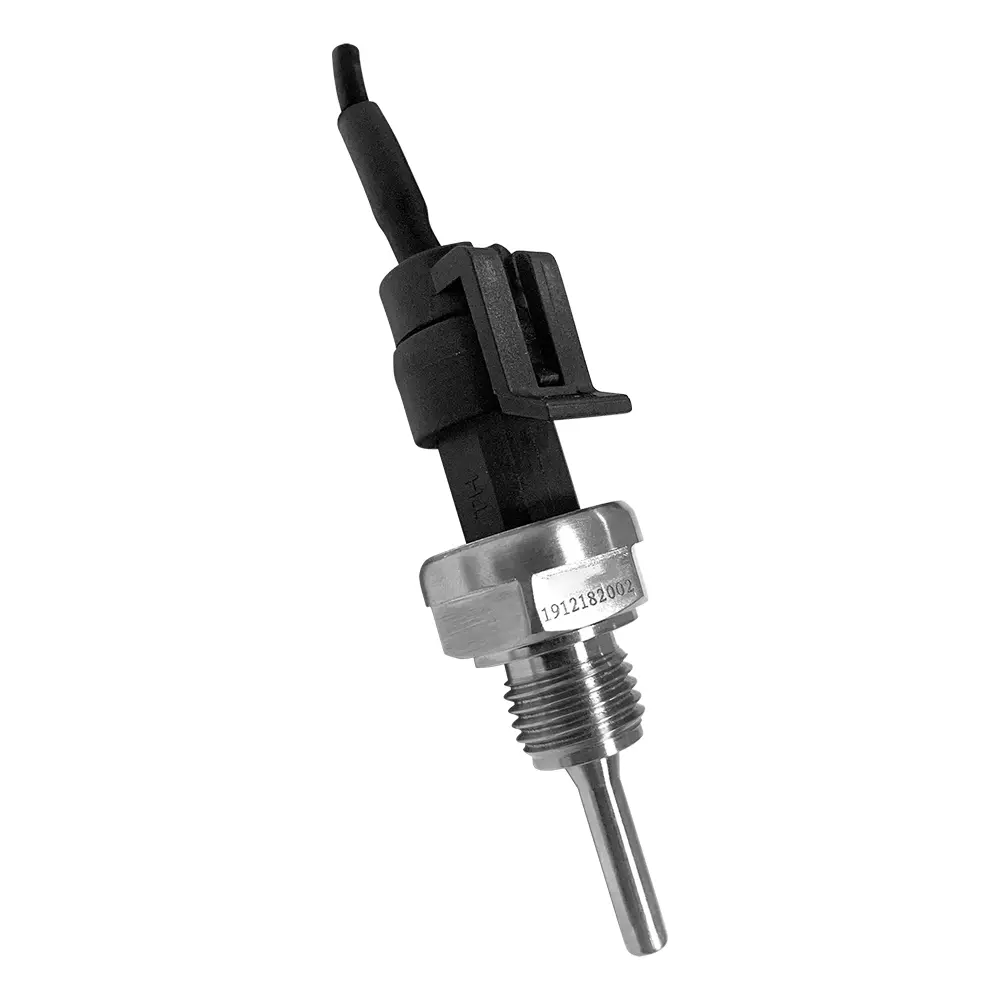
RTD construction types vary to suit different industrial demands. Wire-wound RTDs use a platinum wire coiled around a ceramic or glass former, offering high accuracy and stability. Thin-film RTDs, by contrast, deposit a thin layer of platinum onto a ceramic substrate. These are more compact, cost-effective, and robust against vibration. Each construction method provides specific advantages depending on the application’s environmental and performance requirements. Understanding these basics helps with selecting the appropriate RTD for any given process.
The temperature coefficient of resistance (TCR) defines how much an RTD’s resistance changes per degree Celsius. For platinum RTDs, the standard TCR is 0.00385 Ω/Ω/°C, as defined by IEC 60751. This consistent coefficient ensures interchangeability and predictable performance across different manufacturers. The precise and linear nature of platinum’s resistance change makes RTDs highly suitable for applications requiring stringent temperature control.
Technical Principles and Performance in Automation
RTD performance in process automation is characterized by several technical principles. Accuracy classes, such as Class A, B, and AA, define the permissible deviation from the actual temperature. Class A RTDs offer the highest accuracy, with ±(0.15 + 0.002 |t|)°C, making them suitable for critical applications. Calibration procedures ensure these sensors maintain their specified accuracy over time, often involving comparison against a reference standard. Sensor drift compensation techniques help sustain long-term reliability by accounting for gradual changes in resistance.
Noise reduction in RTD circuits is critical for signal integrity. Using 3-wire or 4-wire configurations minimizes the impact of lead wire resistance on measurements. A 2-wire configuration is the simplest but most susceptible to lead wire errors. A 3-wire setup compensates for lead wire resistance by measuring the resistance of two wires and subtracting it from the total. The 4-wire configuration offers the most accurate measurement by completely eliminating lead wire resistance effects. This is achieved by using one pair of wires for current excitation and another pair for voltage measurement.
Response time, the speed at which an RTD reacts to temperature changes, is another vital performance parameter. Factors like sensor mass, sheath material, and process fluid properties influence this. Faster response times are important in dynamic processes where rapid temperature fluctuations occur. Industrial temperature measurement standards, such as IEC 60751, dictate the construction, tolerance, and performance of RTDs, ensuring global compatibility and reliability.
Accuracy Stability and Environmental Robustness
RTD long-term stability is a key advantage in industrial settings. Platinum’s inherent stability ensures minimal drift over extended periods, reducing the frequency of recalibration. This characteristic is vital for continuous operation and maintaining product quality. Environmental robustness is equally important, with RTDs designed to withstand harsh conditions.
Vibration resistant RTDs are engineered with robust internal construction to prevent damage in high-vibration environments. Corrosion resistant temperature sensors feature protective sheaths made from materials like stainless steel or Inconel, safeguarding the sensing element from corrosive media. These design considerations ensure reliable performance even in challenging industrial applications.
Harsh environment RTDs are often hermetically sealed and filled with inert gas to prevent moisture ingress. This protects the sensing element from contamination and extends its operational life. The ability of RTDs to maintain accuracy and stability under such conditions makes them indispensable for critical process control.
Diverse Applications of RTD Sensors in Industry
RTD sensors are integral to a multitude of industrial sectors due to their precision and reliability. In oil and gas operations, RTDs monitor temperatures in pipelines, storage tanks, and refining processes, ensuring safety and optimizing efficiency. Their robust construction allows them to withstand the extreme pressures and corrosive substances common in this industry.
Chemical process temperature control relies heavily on RTDs for accurate reaction monitoring. Maintaining precise temperatures is critical for product quality, yield, and preventing hazardous conditions. We utilize RTDs in various chemical applications, ensuring stable and reliable data. For instance, our PT6500 Online TDS Meter Controller supports automatic temperature compensation over a range of 0-150°C, vital for accurate TDS measurements in chemical solutions.
In the food and beverage industry, RTDs ensure compliance with strict hygiene and temperature control standards. They monitor pasteurization, cooking, and storage temperatures, safeguarding product quality and consumer safety. HVAC RTD applications include monitoring air and water temperatures in large-scale climate control systems, optimizing energy consumption and comfort. Pharmaceutical temperature sensing demands the highest accuracy and stability, which RTDs provide for drug manufacturing, storage, and research.
Optimizing Control in Critical Industrial Processes
RTD data directly contributes to process optimization, enhancing efficiency, safety, and product quality. In many industrial applications, precise temperature control is paramount. For example, in power plants, RTDs monitor steam and turbine temperatures, enabling efficient energy generation and preventing equipment damage.
Energy efficiency temperature sensors, like RTDs, help minimize waste by providing accurate feedback for heating and cooling systems. This allows for tighter control loops, reducing energy consumption. Quality control temperature measurement ensures that products meet specifications, preventing costly rework or scrap. This is particularly important in industries such as food processing and pharmaceuticals.
Safety critical temperature monitoring applications use RTDs to detect abnormal temperature conditions that could lead to equipment failure or dangerous incidents. Their reliability is vital in preventing catastrophic events. For instance, the PWL-U201 ultrasonic level transmitter features integrated temperature compensation, ensuring accurate level measurements in chemical tanks and soap bins, which is crucial for preventing overflows and maintaining safety.
Future Trends and Innovations in RTD Technology
The field of RTD technology continues to evolve, driven by demands for greater connectivity, intelligence, and miniaturization. Wireless RTD sensors are emerging as a significant trend, offering flexible deployment and reduced installation costs by eliminating complex wiring. These sensors facilitate remote monitoring in hard-to-reach or hazardous locations.
Smart RTD technology integrates advanced electronics directly into the sensor head. This allows for on-board signal processing, diagnostic capabilities, and digital communication protocols like Modbus RTU. Such integration enhances data accuracy, reduces noise, and simplifies system integration. For example, our PCS1753CD Plastic pH Sensor and PCS2700CD Digital ORP Sensor both feature RS485 Modbus RTU output for reliable digital communication.
The Industrial Internet of Things (IIoT) is profoundly impacting temperature sensing. IIoT temperature sensors enable real-time data collection and analysis, supporting predictive maintenance RTD strategies. By continuously monitoring temperature trends, operators can anticipate equipment failures and schedule maintenance proactively, minimizing downtime and operational costs. This proactive approach is important for maintaining continuous production in automated environments.
Miniaturized RTD sensors are also gaining traction, allowing for temperature measurement in confined spaces or within small components. These compact sensors are crucial for applications requiring minimal intrusion or high spatial resolution. Advancements in materials science and manufacturing techniques continue to push the boundaries of RTD capabilities, leading to more durable, precise, and versatile sensors for future industrial automation needs.
Partner with Pokcenser Automation for Advanced Sensing Solutions
For over a decade, Pokcenser Automation Technology Company Limited has been at the forefront of industrial process control, delivering robust and reliable temperature sensing solutions. Our RTD temperature sensors are engineered to meet the stringent demands of diverse industries, backed by CE, ATEX, ISO, and RoHS certifications. With 150,000+ solutions deployed globally and a dedicated pre-sales and after-sales team, we offer unparalleled expertise from application evaluation to ongoing support. Partner with Pokcenser Automation for precise, durable, and integrated RTD solutions that drive efficiency and value in your process automation. Contact us today to discuss your specific requirements and achieve long-term operational excellence. Email: in**@*******er.com | Phone: +86 181 7515 5326
FAQs
What are the primary advantages of RTD temperature sensors in process automation?
RTD temperature sensors offer exceptional accuracy, high linearity, and long-term stability, making them ideal for critical process automation applications. Their predictable resistance-temperature relationship allows for precise temperature control and measurement, vital for maintaining product quality and operational efficiency. They are also highly repeatable and less susceptible to noise compared to other temperature sensing technologies.
How does an RTD sensor contribute to industrial process control?
In industrial process control, RTD sensors provide real-time, highly accurate temperature data that is fed into control systems. This data enables precise regulation of heating, cooling, and reaction processes, preventing deviations that could lead to product defects, energy waste, or safety hazards. Their reliability ensures consistent process performance across various demanding environments.
What factors should be considered when selecting an RTD for a specific application?
Selecting the right RTD temperature sensor involves considering several factors: the required accuracy (e.g., Pt100, Pt1000, and their respective classes), temperature range, environmental conditions (vibration, corrosion, moisture), response time, and integration with existing process automation systems (e.g., 2-wire, 3-wire, or 4-wire configurations). Consulting with a sensor specialist like Pokcenser Automation can ensure optimal selection.
Can RTD temperature sensors be used in hazardous industrial environments?
Yes, many RTD temperature sensors are specifically designed and certified for use in hazardous industrial environments. Pokcenser Automation provides RTDs with ATEX certifications, ensuring they meet strict safety standards for deployment in areas with potentially explosive atmospheres, such as those found in the oil & gas and chemical industries. Proper selection and installation are crucial for safety and performance.

