 English
 Spanish
Seamlessly Integrating Liquid Analysis Sensors in Automation Systems
In industrial automation, I have watched precise liquid analysis turn chaotic nights into steady shifts. When advanced sensors feed clean, real-time data into the control loop, the plant stops guessing and starts governing itself. The result is fewer human slipups, stable output, and verifiable compliance across everything from small-batch pharma to municipal wastewater.
Why Accurate Liquid Analysis is Crucial for Industrial Automation Success
1. Understanding the Challenges in Manual Liquid Monitoring Processes
Hand sampling looks easy on paper until it derails a production run. In the field, inconsistent collection and interpretation invite errors that ripple into decisions and setpoints. Manual pulls also slow everything down, so vital adjustments happen late. On top of that, you are sending people near hazardous liquids, which raises risk for the team and the site.
2. The Impact of Inaccurate Data on Production Quality and Operational Costs
Bad liquid data shows up as off-spec product and wasted effort. When control drifts, you get rework or scrappage, more chemical use, and higher energy draw. Missed signals can also chew up pumps, lines, and tanks, leading to repairs you did not plan and downtime you cannot afford.
3. Meeting Stringent Regulatory Compliance with Reliable Liquid Analysis
Reliable analysis underpins compliance in pharmaceuticals, food and beverage, and water treatment. Automated, accurate monitoring creates a defensible record for discharge limits and product specs. With that record in place, you avoid penalties, protect your license to operate, and keep auditors satisfied.
If you’re interested, check 《Deep Well Monitoring with Submersible Pressure Transmitters》.
How Liquid Analysis Sensors Enhance Industrial Process Control
1. Real-time Data Acquisition for Optimized Decision-Making
Real-time sensing gives operators and control systems immediate visibility into the process. With a continuous stream of data, you can act at the first sign of drift, so small deviations never turn into big problems. That kind of responsiveness keeps operations steady and efficient.
2. Automating Chemical Dosing and Process Adjustments
Tie pH, ORP, or conductivity sensors into a PLC or DCS and dosing becomes hands-off and consistent. The sensors report conditions, the control system trims feed rates, and the process stays in its sweet spot. You cut chemical use, avoid waste, and hold quality tight.
3. Preventing Equipment Damage and Ensuring System Longevity
Continuous monitoring protects assets. Keeping pH where it belongs reduces corrosion and scaling in lines and vessels. When anomalies appear, early alerts give maintenance time to intervene, which saves parts, extends service life, and lowers total operating cost.
We often recommend exploring how Safety in Hazardous Areas: Using Explosion-Proof Sensors can further protect your investments.
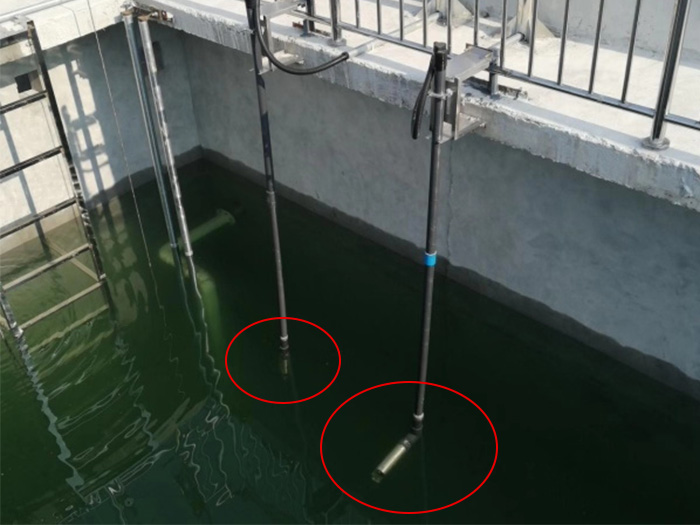
Key Types of Liquid Analysis Sensors for Automation Integration
Integrating sensors into control systems works best when each device fits the job. We match sensor technologies to the application so coverage is broad, accuracy is tight, and communications are straightforward in tough industrial conditions.
1. Online TDS Meter Controllers for Total Dissolved Solids Monitoring
Online TDS meter controllers track total dissolved solids continuously. The PT6500 Online TDS Meter Controller delivers high-precision readings with a full-color display and data logging. It supports 4–20 mA and RS485 Modbus RTU, so it drops cleanly into modern or legacy systems. Use it for drinking water monitoring, environmental sewage, and aquaculture systems.
| Feature | Specification A. The PT6500 provides precise and reliable TDS readings, crucial for optimizing water treatment processes. This precision ensures that chemical additions are accurate, preventing both under-dosing and over-dosing. Accurate dosing minimizes chemical consumption and reduces the generation of harmful byproducts, making the process more cost-effective and environmentally friendly.
B. The PT6500’s data logging and trend chart display features offer comprehensive insights into system performance. Operators can track TDS levels over time, identify patterns, and predict potential issues before they impact operations. This predictive capability enables proactive maintenance and process adjustments, reducing the likelihood of unexpected downtime and ensuring continuous operation.
C. The PT6500 offers flexible integration into existing automation systems through 4–20 mA current output and RS485 Modbus RTU communication. These standard industrial protocols ensure compatibility with a wide range of PLCs, DCS, and SCADA systems. This seamless communication allows for centralized control and monitoring, enhancing overall system efficiency and responsiveness.
A. The PT6500 provides precise and reliable TDS readings, crucial for optimizing water treatment processes. This precision ensures that chemical additions are accurate, preventing both under-dosing and over-dosing. Accurate dosing minimizes chemical consumption and reduces the generation of harmful byproducts, making the process more cost-effective and environmentally friendly.
B. The PT6500’s data logging and trend chart display features offer comprehensive insights into system performance. Operators can track TDS levels over time, identify patterns, and predict potential issues before they impact operations. This predictive capability enables proactive maintenance and process adjustments, reducing the likelihood of unexpected downtime and ensuring continuous operation.
C. The PT6500 offers flexible integration into existing automation systems through 4–20 mA current output and RS485 Modbus RTU communication. These standard industrial protocols ensure compatibility with a wide range of PLCs, DCS, and SCADA systems. This seamless communication allows for centralized control and monitoring, enhancing overall system efficiency and responsiveness.
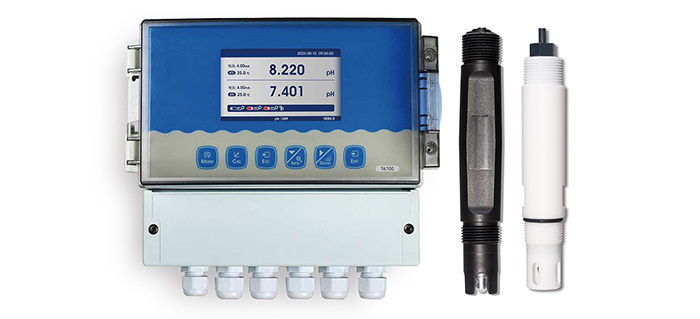
2. Residual Chlorine Electrodes and Meters for Disinfection Control
Residual chlorine is the heartbeat of disinfection control in water treatment. The CS5530C Residual Chlorine Electrode and Meter provides continuous, accurate online readings, keeping disinfectant levels inside regulatory limits to protect public health and block microbial growth. The build is robust for a range of water applications.
| Feature | Electrode (PCS5530C) |
|---|---|
| Measurement Method | Constant pressure method, 3 electrodes |
| Measurement Range | 0–5.0 mg/L, 0–20 mg/L |
| Temperature Range | 0–50 ℃ |
| Housing Material | Glass |
| Protection Level | IP65 (Chlorine Meter) |
| Communication | 4–20 mA, RS485 Modbus RTU |
| Applications | Drinking water, environmental sewage, food/tap water control |
3. Digital pH and ORP Sensors for Acidity and Redox Potential Measurement
Managing acidity and redox potential is non-negotiable for stable chemistry and asset health. The PCS1753CD Plastic pH Sensor and PT4000 ORP Controller deliver precise readings that keep reactions on track, limit corrosion, and support biological processes. Their digital outputs make integration simpler and keep data quality high.
| Model | Parameter | Measurement Range | Accuracy | Output | Material (Body) | Waterproof |
|---|---|---|---|---|---|---|
| PCS1753CD | pH | 0–14 pH | ±0.05 pH | RS485 Modbus RTU | PP | IP68 |
| PT4000 | pH/ORP | 0–14 pH, ±2000 mV | ±0.01 pH, ±2 mV | 4–20mA, RS485 | Not specified | IP65 |
| PCS2701C | ORP | ±1000 mV | High accuracy | Analog (via meter) | PP | Not specified |
| PCS2700CD | ORP | ±1000 mV | ±3 mV | RS485 Modbus RTU | PP | IP68 |
4. Digital Conductivity, TDS, and Salinity Sensors for Water Quality Assessment
For a clear read on water quality, conductivity, TDS, and salinity tell the story fast. The PCS3740PCD Digital Conductivity TDS Salinity Sensor measures all three with accuracy, using 2 or 4 electrode designs that resist interference. It fits aquaculture, purified water, and industrial wastewater treatment.
5. Digital Dissolved Oxygen Sensors (Optical and Diaphragm) for Aeration Control
DO control makes or breaks aeration costs and biology. We offer optical (PCS4760PD) and diaphragm (PCS4773D) digital sensors, both with RS485 Modbus RTU. They hold tight accuracy for wastewater aeration and keep fish and shrimp happy in aquaculture.
| Model | Method | Measurement Range | Accuracy | Output | Material (Body) | Waterproof |
|---|---|---|---|---|---|---|
| PCS4773D | Polarographic/Diaphragm | 0–20 mg/L, 0–200% | ±1% F.S. | RS485 Modbus RTU | POM + 316 SS | IP68 |
| PCS4760PD | Optical/Fluorescence | 0–20 mg/L, 0–200% | ±1% F.S. | RS485 Modbus RTU | POM | IP68 |
6. Digital Turbidity Sensors for Water Clarity and Particulate Monitoring
Turbidity sensing keeps an eye on clarity and particulates where it matters. The PCS7820D Digital Turbidity Sensor uses a 90° infrared method and holds accuracy from 0.01–400 NTU. With an IP68 rating and a rugged build, it handles submerged and threaded installs in demanding spots. It is a go-to for drinking water, environmental sewage, and food processing.
The PT6000 Online Turbidity Meter offers similar capability plus an advanced display and data logging. It supports 4–20 mA and RS485, which makes integration with industrial control systems straightforward. You get tighter process control for applications such as paper making and electroplating.
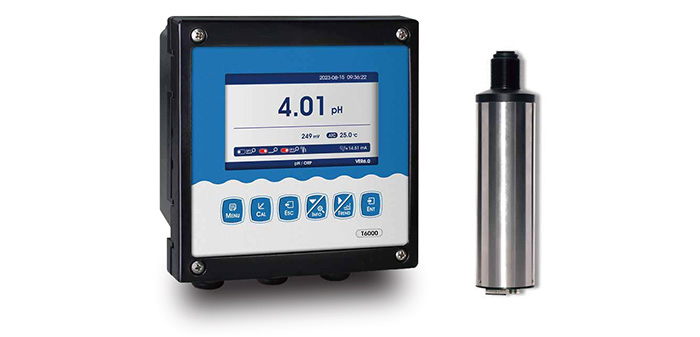
Technical Considerations for Integrating Liquid Analysis Sensors
Clean integration starts with solid planning. We focus on compatibility, reliability, and performance so the system behaves predictably in the real world. Addressing the details early saves time and expense later.
1. Choosing the Right Communication Protocols: RS485 Modbus RTU and 4-20mA
Pick the protocol that fits your architecture. RS485 Modbus RTU gives robust digital comms over long runs and supports many devices on the same line. The 4–20 mA loop is a proven analog workhorse that pairs well with legacy hardware and simple point-to-point paths. Many of our devices, including the PT6500 TDS Meter Controller and PCS3740PCD Conductivity Sensor, support both, so you can match the plant standard.
2. Ensuring Sensor Compatibility and Calibration for Optimal Performance
Match the sensor to the chemistry and the operating conditions, then keep it calibrated. Whether you choose automatic or manual routines, routine calibration protects measurement accuracy. Our sensors include multiple automatic calibration options to trim maintenance and deliver reliable readings over time.
3. Designing for Harsh Industrial Environments: IP Ratings and Material Selection
Harsh environments demand the right protection and materials. IP68 means a sensor is dust-tight and fully submersible, a must for many installs. We rely on PP, POM, and 316L stainless steel so sensors stand up to chemicals, temperature swings, and moisture for the long haul.
If you’re interested, check 《Submersible Level Transmitters: Key Specs to Check First》.
4. Data Logging, Trend Analysis, and Remote Monitoring Capabilities
Modern systems bank data for a reason. With logging, trend views, and remote access, teams can spot slow drifts, catch faults before they land, and respond to alarms without waiting for a walkdown. That reduces on-site checks and keeps the process one step ahead.
The Benefits of Partnering with Pokcenser Automation for Liquid Analysis Solutions
Choosing a partner matters as much as choosing the hardware. We back our products with real engineering support and a long view on uptime and quality.
1. Leveraging 10+ Years of Expertise in Industrial Process Control
We bring more than a decade of process control experience to the table. That background keeps our recommendations practical and plant-ready across oil and gas, water and wastewater, and chemical and petrochemical. We use what we have learned to tailor solutions that actually fit the job.
2. Custom OEM & ODM Solutions for Unique Application Requirements
Every application is its own puzzle, so we offer OEM and ODM buildouts. Our engineers work with your team to design and manufacture sensors and systems that meet your exact conditions and constraints. The result is performance that fits, and integration that feels native to your infrastructure.
3. Comprehensive Pre-sales and After-sales Support for Worry-Free Operation
From first scoping to steady-state operation, our 6-person support team stays with you. We help evaluate the application, size up options, and lock in a solution. After installation, we provide technical support, troubleshooting, and maintenance guidance so the system runs without drama.
4. Global Reach and Proven Reliability with 150,000+ Solutions Worldwide
With more than 150,000 solutions delivered in over 100 countries, the install base speaks for itself. Our products align with CE, ATEX, ISO, and RoHS certificates for quality and compliance. We aim for long-term relationships and lasting value in industrial automation.
Partner with Pokcenser Automation Today
Enhance your industrial processes with precise and reliable liquid analysis solutions. Contact Pokcenser Automation to discuss your specific requirements and discover how our expertise can optimize your operations. We offer customized solutions and dedicated support to ensure your success.
Email: in**@*******er.com
Phone: +86 181 7515 5326
FAQs
1. What are the primary benefits of integrating liquid analysis sensors into existing automation systems?
You get tighter control, better quality, lower operating cost, and improved safety. Real-time data lets the system adjust before waste piles up and helps you stay within environmental and industry limits. It also trims manual work and reduces human error, which boosts overall efficiency.
2. How do Pokcenser’s sensors ensure accuracy and reliability in challenging industrial environments?
They use durable materials like PP, POM, and 316L stainless steel to resist corrosion and harsh service. Many models carry IP68 for waterproofing and include automatic temperature compensation to stabilize readings. Built to international standards, they hold accuracy over the long term.
3. What communication standards do Pokcenser’s liquid analysis sensors support for automation integration?
Most models support RS485 Modbus RTU and 4–20 mA current output. Those standards connect cleanly with PLCs, DCS, and SCADA systems, so monitoring and control can be centralized without extra converters.
4. Can Pokcenser provide customized liquid analysis solutions for specific industrial applications?
Yes. Pokcenser Automation offers OEM and ODM customization. We work directly with your team to match application requirements, then design sensors and systems to your specifications for a precise fit in your setup.
5. What kind of after-sales support does Pokcenser Automation offer for its liquid analysis products?
We provide full pre-sales and post-sales support, including application review, solution selection, technical assistance, troubleshooting, and maintenance advice. Our team stays engaged across the product lifecycle to keep your operation running smoothly.

