 English
 Spanish
Submersible Pressure Level Sensors for Wastewater Solutions
Wastewater management lives or dies by measurement quality. After ten years building industrial process control systems at Pokcenser Automation, I’ve watched facilities struggle with level monitoring in conditions that destroy ordinary sensors within months. Our CE, ATEX, ISO, and RoHS certified submersible pressure level sensors exist because standard equipment simply fails in these environments. Getting level sensing right in wastewater applications changes everything downstream in your process control automation.
Why Wastewater Level Measurement Breaks Standard Sensors
Wastewater creates a perfect storm of conditions that attack measurement equipment from multiple angles. Corrosive media eats through standard sensor materials faster than most operators expect, leaving you with drift and eventual failure. Solids accumulate on diaphragms constantly in raw sewage and sludge applications, blocking measurement surfaces and demanding maintenance cycles that disrupt operations. Turbulent flows add noise to signals that makes stable readings nearly impossible without proper engineering.
| Challenge | Sensor Impact |
|---|---|
| Corrosive Media | Material degradation, sensor failure |
| Solids Buildup | Fouling, inaccurate readings, maintenance |
| Turbulent Flow | Signal noise, unstable measurements |
| Temperature Changes | Measurement drift, reduced accuracy |
| Hazardous Gases | Safety risks, specialized sensor requirements |
Treatment plants that ignore these realities end up cycling through sensors and fighting compliance issues. The right sensor selection matters more here than in almost any other industrial application.
For deeper guidance on sensor selection where explosive atmospheres exist, our piece on 《Safety in Hazardous Areas: Using Explosion-Proof Sensors》 covers the technical requirements.
How Submersible Pressure Sensors Handle Wastewater Conditions
Submersible pressure sensors work on hydrostatic principles. The liquid column above the sensor creates pressure proportional to level height. Simple physics, but execution in wastewater demands serious engineering.
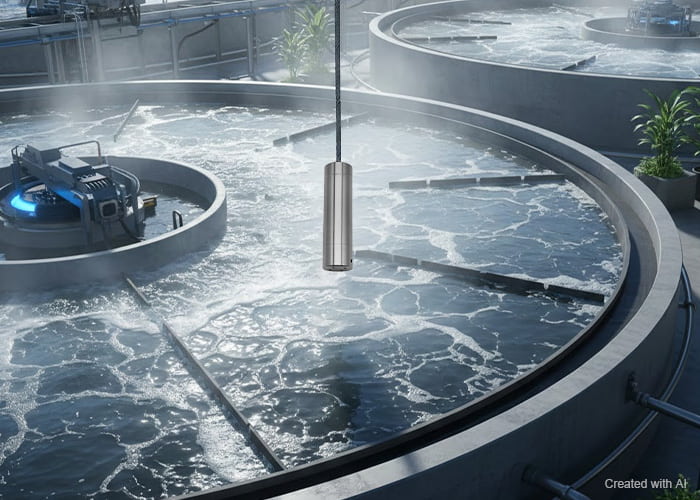
Our PWP412-T3 SDI-12 Hydrostatic Water Level and Temperature Transmitter uses all-stainless-steel construction with IP68 waterproofing because anything less fails in groundwater monitoring and urban water supply systems. The sensor body must resist corrosive media while the diaphragm stays clean enough to measure accurately. When these design elements work together, you get consistent data month after month. That reliability becomes the foundation for every process control decision downstream.
Maintaining Accuracy When Conditions Keep Changing
Dynamic wastewater environments test sensors constantly. Temperature swings cause thermal expansion and contraction that introduce measurement drift unless you compensate for it actively. Our sensors incorporate temperature compensation algorithms that adjust readings in real time.
Material selection matters just as much. SS316L stainless steel diaphragms resist the corrosive compounds that destroy lesser materials. Signal processing handles the noise from turbulent flows, filtering out interference while preserving actual level changes. This combination of physical robustness and intelligent processing delivers readings you can trust for control decisions.
Building Sensors That Survive Harsh Environments
IP68 ratings mean complete protection against water ingress and solid particles. Our submersible pressure sensors achieve this through careful sealing and housing design using SUS304 or SS316L stainless steel. These materials handle the aggressive chemistry found in wastewater streams without degrading.
Non-clogging features prevent solids from accumulating on measurement surfaces. When buildup happens anyway, sensor designs that tolerate some fouling without losing accuracy extend maintenance intervals significantly. These engineering choices add cost upfront but pay back through years of reliable operation in conditions that destroy cheaper alternatives.
Turning Level Data Into Treatment Plant Performance
Real-time level data transforms how treatment plants operate. Chemical dosing based on actual liquid levels instead of schedules or estimates reduces chemical consumption while improving treatment outcomes. You use what you need, when you need it.
Pump management changes completely with accurate level readings. Automated systems prevent overflows before they happen and stop pumps before they run dry. Pump lifespan extends. Energy consumption drops. SCADA integration gives operators visibility across the entire process, enabling faster response to anomalies and better long-term planning.
| Feature | Manual Control Benefits | Automated Control Benefits (with Sensors) |
|---|---|---|
| Chemical Dosing | Inconsistent, wasteful | Precise, optimized, cost-saving |
| Pump Management | Reactive, inefficient | Proactive, energy-saving, extended life |
| Overflow Prevention | High risk | Minimized risk, enhanced safety |
| Data Logging & Analysis | Labor-intensive, limited | Automatic, comprehensive, trend analysis |
| Operational Efficiency | Low | High, reduced manual intervention |
| Compliance | Challenging | Easier, consistent adherence |
What Better Data Actually Delivers
Accurate level measurement reduces manual intervention across plant operations. Staff spend less time checking levels and adjusting equipment, freeing them for work that requires human judgment. Energy costs drop when pumps run only when needed, at speeds matched to actual conditions.
Overflow prevention protects both the environment and your budget. Regulatory fines for discharge violations can dwarf the cost of proper instrumentation. Plants running on good data hit compliance targets consistently instead of scrambling to explain exceedances.
Matching Sensors to Your Specific Application
Sensor selection starts with understanding what you’re measuring. Raw sewage behaves differently than treated effluent or thickened sludge. Measurement range requirements vary by tank geometry and process design.
Media characteristics drive material selection. Corrosivity, viscosity, and solids content all influence which sensor construction survives your specific conditions. Temperature ranges and turbulence patterns matter for accuracy specifications. Hazardous area classifications determine whether you need ATEX certified explosion-proof sensors.
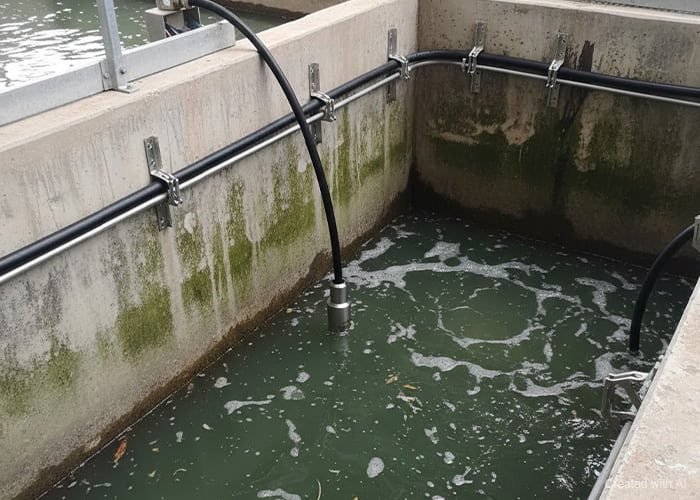
The PWP412-T3 handles many demanding applications with its all-stainless-steel construction and IP68 rating. Other applications need different solutions. We work through application details with clients to match sensor specifications to actual operating conditions rather than selling standard products into situations where they’ll struggle.
What Pokcenser Brings to Wastewater Applications
Pokcenser Automation Technology Company Limited has spent over a decade focused on industrial process control. Our CE, ATEX, ISO, and RoHS certifications reflect commitment to quality and compliance standards that matter in regulated industries.
Our product range spans flow meters, level sensors, pressure transmitters, temperature sensors, and water analysis instruments. These products serve oil and gas, water and wastewater, chemical and petrochemical, and food processing applications across more than 100 countries. Over 150,000 solutions delivered gives us perspective on what works in real installations.
A six-person pre-sales and after-sales team handles everything from initial application evaluation through solution recommendations and ongoing support. We build relationships that last because we deliver equipment that performs.
Start a Conversation About Your Level Sensing Challenges
Ten years of building wastewater level sensing solutions has taught us that every application has its own complications. Our certified submersible pressure level sensors handle the conditions that break standard equipment, and our team knows how to match specifications to real-world requirements.
150,000+ solutions worldwide reflects what happens when sensors actually work in the field. Your wastewater treatment operations deserve instrumentation that delivers accurate data year after year.
Reach out to discuss your specific challenges. Our pre-sales team can evaluate your application and recommend solutions that fit your facility’s needs and budget.
Phone: +86 181 7515 5326 | Email: in**@*******er.com
Frequently Asked Questions About Wastewater Level Sensors
How do submersible pressure sensors ensure accuracy in wastewater?
Our submersible pressure level sensors achieve high accuracy through temperature compensation that adjusts for thermal effects in real time, SS316L diaphragm materials that resist corrosive media, and signal processing that filters turbulence-induced noise. These features work together to deliver stable readings in conditions that cause drift and errors in less robust sensors.
What are the key challenges of level sensing in harsh wastewater environments?
Corrosive chemicals attack sensor materials. Abrasive solids and sludge foul measurement surfaces. Turbulent flows create signal noise. These factors combine to cause premature sensor failure and inaccurate readings in standard equipment. Our sensors use chemically resistant materials, non-clogging designs, and durable construction specifically to handle these conditions over extended service life.
How does sensor technology contribute to operational efficiency in wastewater treatment?
Accurate real-time level data enables automated pump control that prevents overflows and dry-running while reducing energy consumption. Chemical dosing becomes precise rather than estimated. Manual checking and adjustment tasks decrease. Integration with control systems gives operators visibility for faster response to process changes. The result is lower operating costs, extended equipment life, and consistent compliance performance.

