 English
 Spanish
TDS Sensors for Industrial Water Quality Monitoring A Deep Dive
Water quality makes or breaks industrial operations. When dissolved solids creep up in your process water, you start seeing the effects everywhere—scaling on heat exchangers, corrosion eating through pipes, product batches that don’t quite meet spec. TDS monitoring isn’t glamorous work, but it’s the kind of thing that separates plants running smoothly from those constantly fighting fires. After ten years helping facilities get their water chemistry under control, we’ve learned that the plants investing in proper TDS measurement rarely regret it.
What Total Dissolved Solids Actually Mean for Your Operations
Total Dissolved Solids represent everything dissolved in your water that you can’t see—minerals, salts, metals, organic compounds. The number itself tells you how much stuff is floating around in ionic form. In practical terms, high TDS means your water is carrying a lot of passengers, and those passengers cause problems.
Cooling towers are a good example. When TDS climbs, minerals start precipitating out and coating your heat transfer surfaces. Suddenly your cooling efficiency drops, energy costs rise, and you’re scheduling unplanned maintenance. Boiler systems face similar issues, though the consequences tend toward corrosion and increased blowdown frequency rather than just scaling.
Regulatory requirements add another layer. Most discharge permits specify TDS limits, and exceeding them means fines or worse. The relationship between TDS and conductivity gives us a practical measurement approach—dissolved ions conduct electricity, so measuring conductivity provides an indirect but reliable TDS reading.
| Common Industrial Contaminants | TDS Impact | Associated Risks |
|---|---|---|
| Calcium, Magnesium salts | High | Scaling, reduced heat exchange |
| Chlorides, Sulfates | Moderate | Corrosion, material degradation |
| Organic matter | Variable | Fouling, biological growth |
| Heavy metals | Low to High | Toxicity, regulatory non-compliance |
How TDS Sensors Actually Work
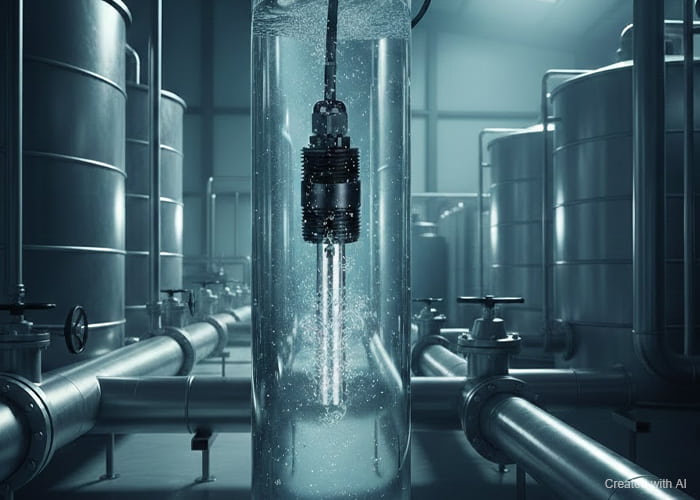
The measurement principle is straightforward. Dissolved ions in water conduct electrical current, and more ions mean higher conductivity. TDS sensors exploit this relationship by measuring how easily current flows through your water sample, then converting that reading to a TDS value.
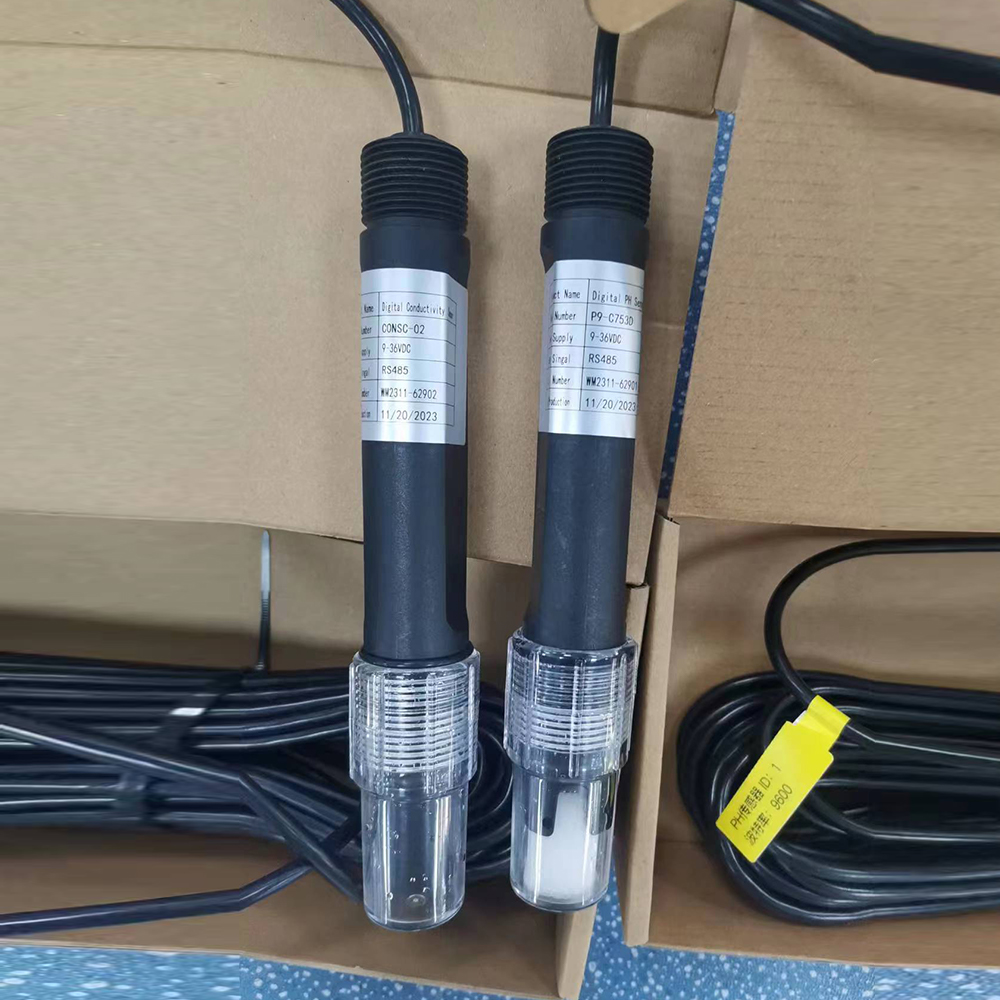
Electrode design matters more than you might expect. The PCS3740PCD Digital Conductivity TDS Salinity Sensor uses a 2 or 4-electrode configuration specifically to reduce interference from ion cloud effects that can throw off readings. Temperature compensation is built in because conductivity naturally increases as water warms up—without correction, your readings would drift throughout the day as process temperatures fluctuate.
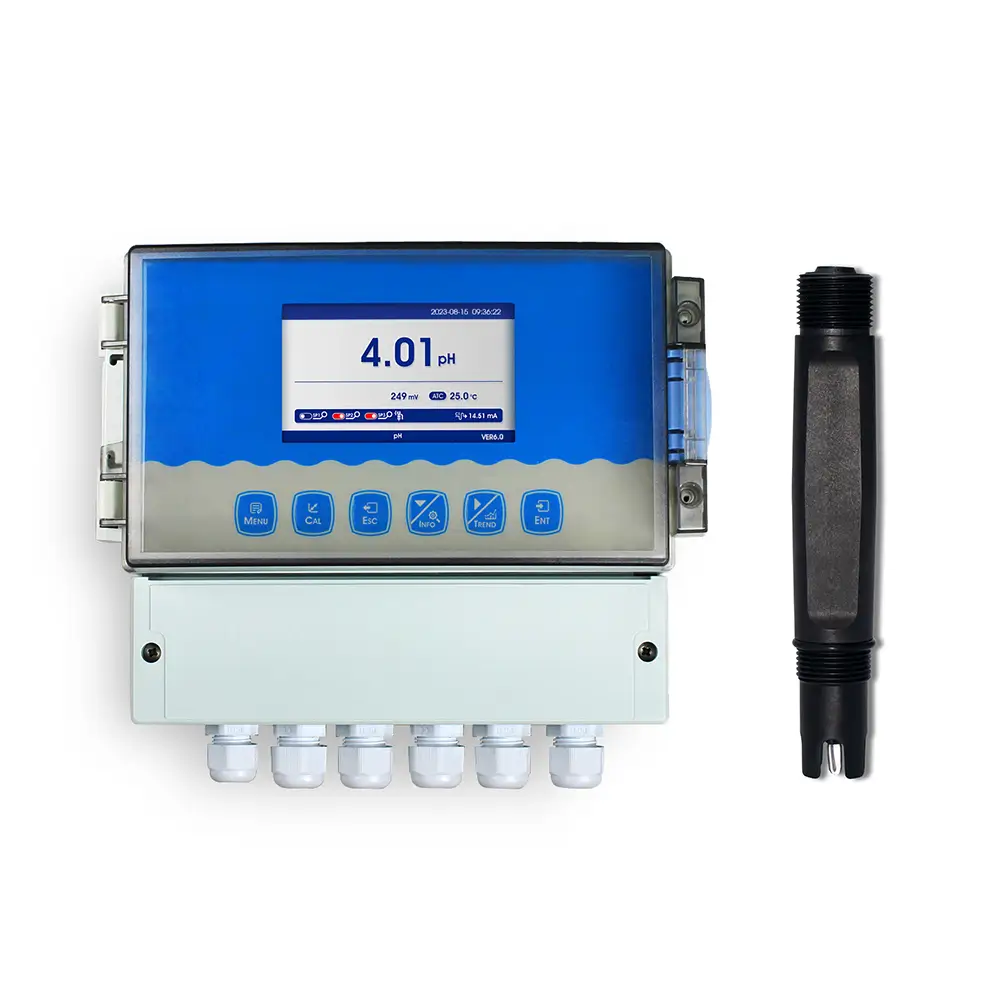
Calibration keeps everything honest. The PT6500 Online TDS Meter Controller includes multiple automatic calibration functions, which cuts down on maintenance time while ensuring your readings stay accurate. These sensors feed continuous data into your control systems, giving operators the information they need to catch problems before they become expensive.
PT6500 Online TDS Meter Controller
Where TDS Monitoring Proves Its Value
Different industries face different water challenges, but TDS measurement shows up across nearly all of them.
Water and wastewater treatment plants rely on TDS data to optimize membrane systems, reverse osmosis units, and deionization processes. The PT6500 controller works well for environmental monitoring applications, including river and lake water quality assessment where regulatory compliance drives measurement requirements.
Oil and gas operations use TDS monitoring to protect pipelines and processing equipment from scaling and corrosion. The stakes are high—a corroded pipeline section can mean production shutdowns and expensive repairs. Chemical processing facilities need precise TDS control because dissolved solids can affect reaction kinetics and contaminate final products.
Our sensors handle harsh environments, supporting everything from electroplating operations to food processing lines where water purity directly affects product quality.
For more detailed information on treatment system optimization, see our guide on 《Optimizing Industrial Water Treatment with Advanced TDS Monitoring》.
Getting More From Your Water Treatment Investment
Real-time TDS data changes how you can manage water treatment. Instead of running chemical dosing on fixed schedules, operators can adjust based on actual conditions. This typically means using less chemicals while maintaining better water quality—a combination that improves both economics and environmental performance.
The PT6500 controller’s data logging and trend display capabilities support predictive maintenance approaches. When you can see TDS trending upward over days or weeks, you can schedule maintenance before something fails rather than scrambling to fix problems after they’ve already caused damage.
How do TDS sensors improve industrial water treatment efficiency?
TDS sensors provide continuous, accurate dissolved solids data that enables precise process control. Operators can optimize chemical dosing and filtration timing based on actual water conditions rather than assumptions. Early detection of rising TDS levels allows intervention before scaling or corrosion develops, reducing both maintenance costs and resource consumption.
Matching Sensors to Your Specific Situation
Sensor selection requires thinking through your actual operating conditions. Temperature range, pressure exposure, measurement accuracy requirements, and chemical compatibility all factor into the decision.
Corrosive media demand appropriate materials. The PCS3523 TDS Electrode uses titanium wetted parts specifically for aggressive chemical environments where standard materials would degrade quickly. The PCS3740PCD sensor offers broad measurement ranges covering conductivity, TDS, and salinity, making it suitable for applications where water chemistry varies significantly.
Communication protocols matter for integration. RS485 Modbus RTU is standard for industrial control system connections. Physical installation requirements—whether you need submersible mounting or threaded connections—also influence which sensor fits your application.
PCS3740PCD sensor
What are the key considerations for selecting a TDS sensor for specific industrial applications?
Start with measurement range requirements—conductivity ranges up to 500 ms/cm cover most industrial applications. Operating temperature and pressure must fall within sensor specifications. Material compatibility is critical for longevity; titanium alloy handles corrosive environments that would destroy standard electrodes. Accuracy requirements, output signal compatibility, and physical mounting constraints round out the evaluation criteria.
What Happens When TDS Gets Away From You
Uncontrolled TDS creates cascading problems. Scale deposits reduce heat transfer efficiency, forcing equipment to work harder and consume more energy. The deposits also restrict flow and create hot spots that accelerate material degradation.
Corrosion attacks equipment from the inside. Pipes thin out, fittings weaken, and eventually something fails. The failure itself is expensive, but the unplanned downtime often costs more than the repair.
Product quality suffers in industries requiring high-purity water. Semiconductor manufacturing, pharmaceutical production, and food processing all depend on water meeting strict specifications. A TDS excursion can mean scrapped batches and customer complaints.
What is the impact of high TDS levels on industrial equipment and processes?
High TDS accelerates both scaling and corrosion, degrading equipment performance and shortening service life. Maintenance frequency increases, and unexpected failures become more likely. Product quality can suffer when water purity drops below process requirements, potentially triggering regulatory issues alongside operational problems.
Working With Pokcenser Automation
Pokcenser Automation Technology Company Limited has spent over a decade focused on industrial process control instrumentation. Our TDS sensors carry CE, ATEX, ISO, and RoHS certifications and operate in oil and gas facilities, water treatment plants, chemical processing operations, and food production lines across more than 100 countries.
We’ve delivered over 150,000 solutions, supported by a dedicated pre-sales and after-sales team that handles everything from initial application evaluation through implementation and ongoing support. Whether you need standard products or customized solutions, we work with you to match sensor capabilities to your specific requirements.
Reach us at +86 181 7515 5326 or in**@*******er.com to discuss your water quality monitoring needs.
Frequently Asked Questions
What distinguishes Pokcenser Automation’s TDS sensors in complex industrial environments?
Our sensors are built for demanding conditions, using materials and designs that maintain accuracy even in harsh environments. Advanced calibration stability means readings stay reliable over time. Global certifications and extensive field experience across diverse industries inform our product development and application support.
How does real-time TDS monitoring benefit industrial water treatment systems?
Continuous monitoring catches water quality changes as they happen, allowing immediate process adjustments. This proactive approach prevents scaling and corrosion from developing, optimizes chemical usage, and extends equipment service life. The alternative—periodic grab samples—misses transient events that can cause significant damage.
Can Pokcenser Automation provide customized TDS sensor solutions for unique industrial challenges?
Yes. Our OEM and ODM capabilities allow us to develop sensors tailored to specific application requirements. Engineering teams work directly with clients to understand their measurement challenges and design solutions that integrate properly with existing systems while delivering the performance their processes demand.

