 English
 Spanish
The Essential Guide to Differential Pressure Transmitters for HVAC & Cleanrooms
In today’s demanding HVAC and cleanroom environments, maintaining precise differential pressure control isn’t just a technical requirement—it’s a critical factor that impacts energy efficiency, air quality, regulatory compliance, and operational costs. Differential pressure transmitters serve as the essential monitoring instruments that ensure these systems operate within specified parameters, protecting both equipment and the environments they serve.
Whether you’re managing a pharmaceutical cleanroom that must meet stringent ISO 14644 standards or optimizing a commercial HVAC system for energy efficiency, understanding how differential pressure sensors work and how to properly implement them can make the difference between a compliant, efficient operation and costly system failures.
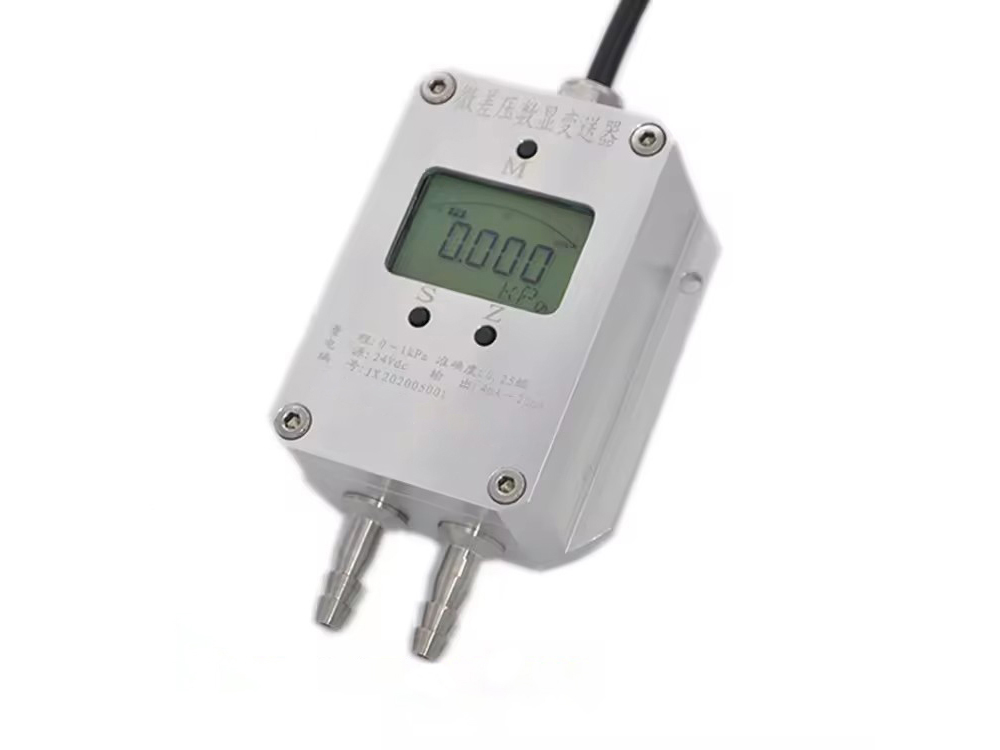
Digital differential pressure transmitter used for HVAC and cleanroom pressure monitoring.
Differential Pressure Transmitters: How They Work
A differential pressure transmitter (also called a DP transmitter or pressure differential sensor) is a precision instrument designed to measure the difference in pressure between two points in a system. Unlike absolute or gauge pressure sensors that measure against a single reference point, these devices specifically monitor the pressure differential, making them ideal for applications where relative pressure matters more than absolute values.
The basic operating principle involves two pressure ports connected to sensing elements within the transmitter. When pressure differs between these ports, the sensing mechanism—typically a diaphragm or capacitive sensor—detects the variance and converts it into an electrical signal. Modern pressure transducers output standardized signals such as 4-20mA, HART protocol, or digital communications like Modbus, allowing seamless integration with building automation systems and control networks.
This capability makes differential pressure monitoring indispensable for HVAC filter monitoring, cleanroom pressurization control, and air handler performance verification.
HVAC Applications: Optimizing System Performance and Energy Efficiency
In HVAC systems, pressure transmitters serve multiple critical functions that directly impact operational efficiency and equipment longevity. The most common application is filter condition monitoring. As air filters accumulate dust and particulates, the pressure drop across the filter increases. By installing a differential pressure sensor across the filter bank, facility managers receive real-time data on filter loading, enabling condition-based maintenance rather than time-based replacement schedules.
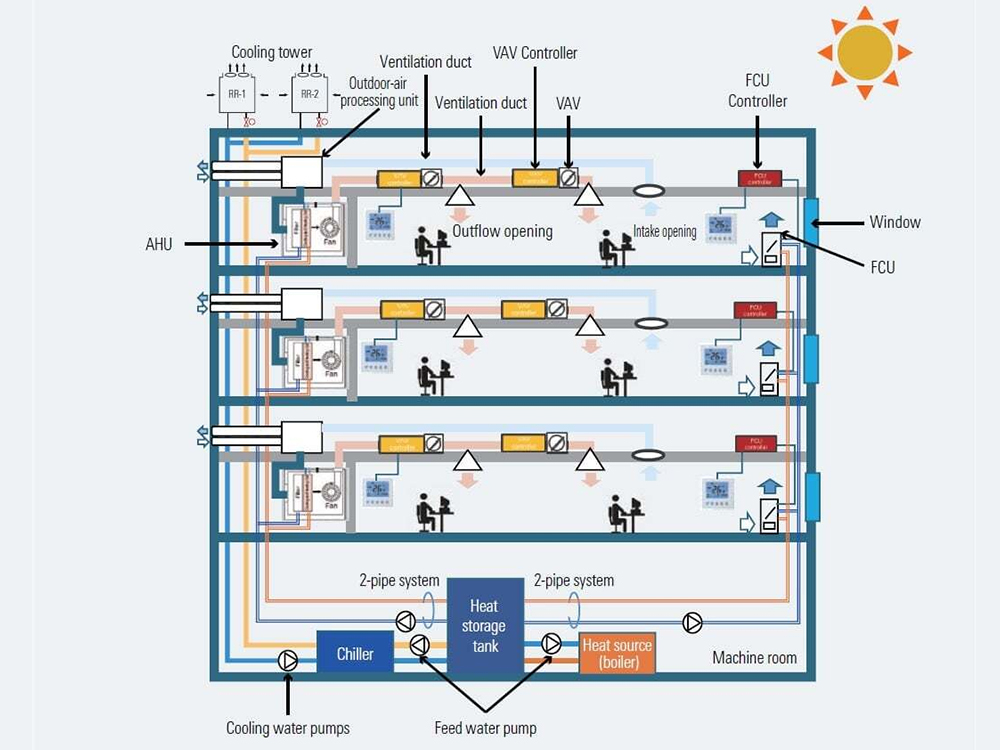
Diagram of HVAC system airflow and differential pressure zones used for filter and room pressure monitoring.
This air pressure monitor approach prevents premature filter replacement (saving costs) while avoiding over-loaded filters that reduce air quality and increase energy consumption. Studies show that clogged filters can increase fan energy consumption by 15-30%, making proper monitoring a significant contributor to energy efficiency.
Beyond filter monitoring, differential pressure transmitters enable precise air flow balancing across duct systems, ensuring proper ventilation rates and comfort levels throughout buildings. Integration with building automation systems allows for dynamic pressure control, optimizing system performance while minimizing energy waste.
Are your HVAC filters costing you more than necessary? Contact our team to learn how properly implemented differential pressure monitoring can reduce your energy bills.
Cleanroom Pressure Control: Meeting Critical Compliance Standards
For pharmaceutical manufacturing, medical device production, semiconductor fabrication, and research laboratories, maintaining precise cleanroom differential pressure isn’t optional—it’s a regulatory requirement. Cleanrooms must maintain specific pressure differentials relative to adjacent spaces to prevent contamination migration and ensure product quality and personnel safety.
ISO 14644 standards and Good Manufacturing Practice (GMP) regulations mandate that cleanrooms maintain positive pressure (typically 5-20 Pa) relative to less clean areas to prevent unfiltered air infiltration. Conversely, negative pressure isolation rooms must maintain lower pressure than surroundings to contain hazardous materials or pathogens.
Cleanroom monitoring systems equipped with high-accuracy differential pressure transmitters provide continuous verification of these critical parameters. Modern systems offer alarm capabilities that immediately alert operators when pressure differentials fall outside acceptable ranges, enabling rapid corrective action before contamination events occur or regulatory violations happen.
The precision requirements for cleanroom pressure requirements ISO 14644 compliance typically demand transmitters with accuracy within ±1-2% of reading and response times under 2 seconds, ensuring the system can detect and respond to pressure changes quickly enough to maintain control.
Key Selection Criteria: Choosing the Right Differential Pressure Transmitter
Selecting an appropriate building pressure sensor requires careful consideration of several technical specifications and operational requirements. Accuracy is paramount—most HVAC applications perform well with ±2% accuracy, while critical cleanroom applications may require ±0.5% or better. The pressure range must match your application; typical HVAC filter monitoring uses 0-250 Pa ranges, while cleanroom applications might require 0-500 Pa or higher.
Response time matters significantly in dynamic environments. Cleanrooms with frequent door openings need fast-responding sensors (under 1 second) to maintain control, while static HVAC filter monitoring can use slower devices. Communication protocol compatibility ensures your transmitter integrates with existing control systems—whether that’s analog 4-20mA signals, digital HART, BACnet, or Modbus protocols.
Material selection affects longevity and performance. Stainless steel wetted components resist corrosion in humid environments, while IP65 or higher enclosure ratings protect electronics from dust and moisture. Consider temperature compensation features for installations in unconditioned spaces where ambient temperature varies significantly.
Not sure which specifications matter most for your application? Contact us Now!
Installation Best Practices: Ensuring Accurate and Reliable Measurements
Proper installation is as critical as selecting the right device. Common mistakes include mounting transmitters in locations subject to vibration, temperature extremes, or where tubing runs create moisture traps. For HVAC system pressure monitoring solutions, install transmitters at eye level for easy reading and maintenance, ensuring both pressure ports are accessible.
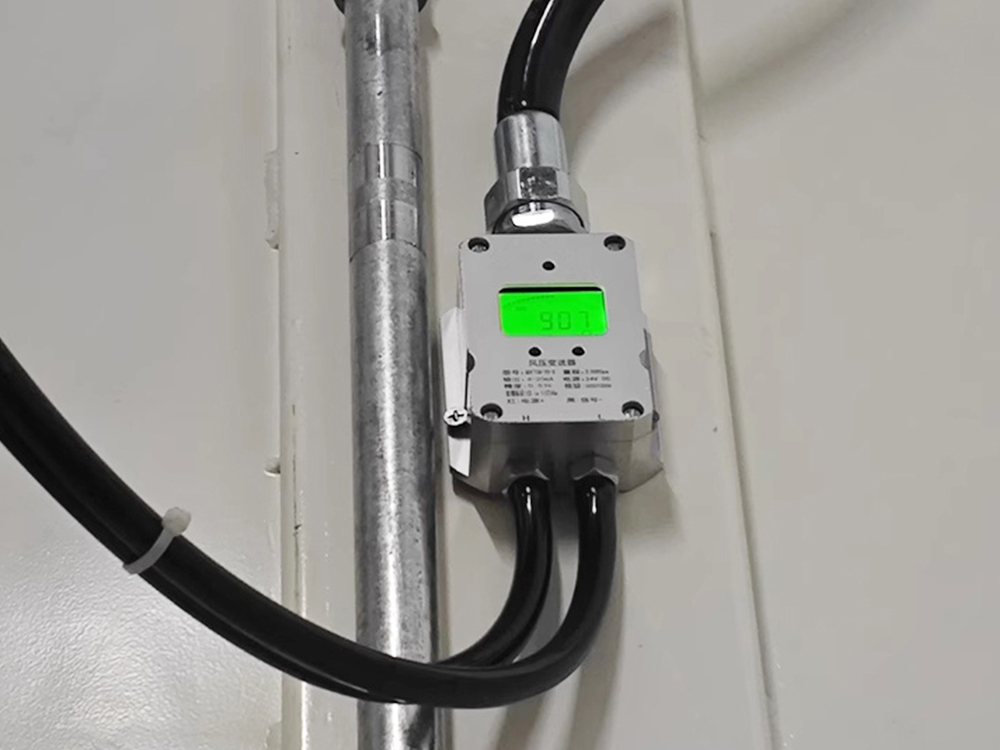
Installed differential pressure transmitter monitoring HVAC filter and duct conditions.
Pressure tubing should be kept as short as practical, with gentle bends rather than sharp angles that could create measurement errors. For applications involving humid air, install moisture traps or slope tubing to prevent water accumulation that could block pressure ports or damage sensing elements. Many experienced technicians install small drip legs at low points in tubing runs to collect condensation.
Zero calibration should be performed with both pressure ports open to atmosphere, ensuring the transmitter reads zero when no differential exists. Regular calibration verification—typically annually for HVAC applications and semi-annually for critical cleanroom systems—maintains accuracy over time.
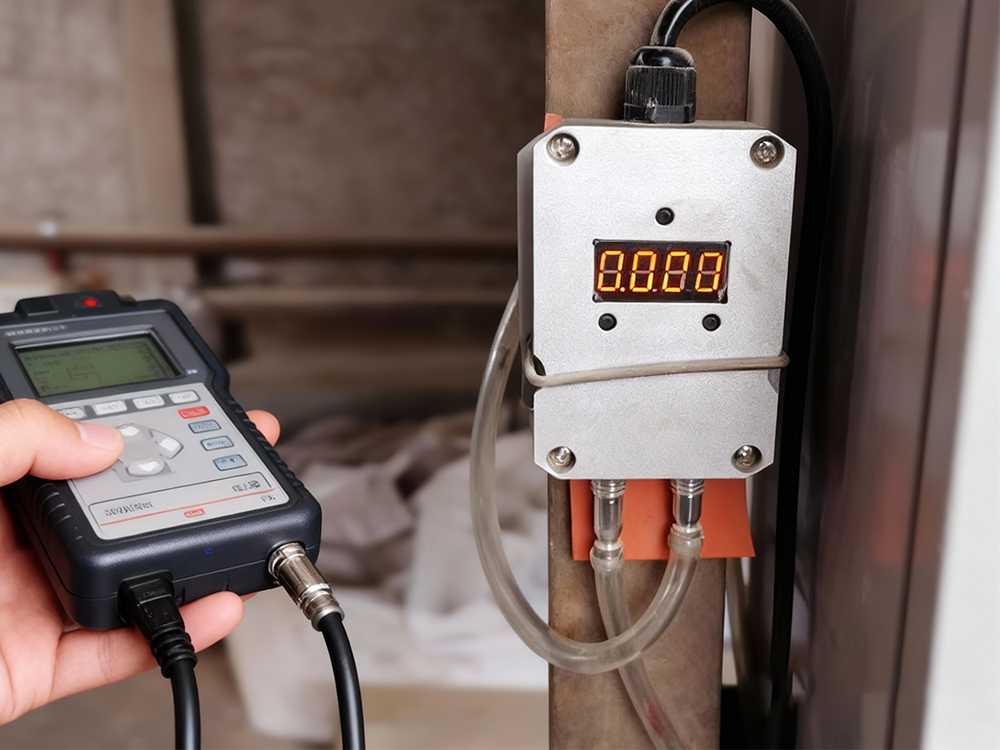
Technician performing field calibration to ensure accurate differential pressure measurement.
Why Differential Pressure Monitoring Pays Off?
Implementing comprehensive air pressure differential sensor systems delivers measurable returns. Filter monitoring alone typically generates 15-30% energy savings by preventing over-loaded filters while extending filter life by 20-40% through optimized replacement timing. For a mid-sized commercial building, this translates to thousands of dollars annually in combined energy and maintenance savings.
In cleanroom environments, the compliance assurance provided by continuous pressure monitoring prevents costly production shutdowns, batch rejections, and regulatory penalties. A single contamination event in pharmaceutical manufacturing can cost hundreds of thousands in lost product and remediation, making reliable cleanroom compliance monitoring systems an essential risk mitigation investment.
Predictive maintenance enabled by continuous monitoring reduces unexpected equipment failures by identifying developing problems before they cause system shutdowns. This proactive approach minimizes emergency repair costs and extends overall equipment lifespan.
Frequently Asked Questions
Q: How often should differential pressure transmitters be calibrated?
A: For HVAC applications, annual calibration verification is typically sufficient. Critical cleanroom applications should verify calibration every 6 months. However, always follow your specific regulatory requirements and manufacturer recommendations.
Q: What’s the difference between a differential pressure transmitter and a pressure switch?
A: A transmitter provides continuous analog or digital output proportional to the measured pressure difference, enabling precise monitoring and control. A pressure switch is a simpler device that triggers an on/off signal when pressure exceeds a preset threshold. Transmitters offer more information and flexibility but cost more.
Q: Can one differential pressure transmitter monitor multiple filters?
A: No, each filter bank or monitored point requires a dedicated transmitter since the device measures the pressure difference between two specific points. However, multiple transmitters can connect to a single monitoring system or building automation network.
Q: What causes drift in differential pressure readings over time?
A: Common causes include sensing element degradation, temperature effects, moisture infiltration, or physical damage. Quality transmitters with temperature compensation and proper environmental protection minimize drift. Regular calibration verification detects and corrects drift before it affects system performance.
Q: Are wireless differential pressure transmitters suitable for cleanroom applications?
A: While wireless technology has advanced significantly, critical cleanroom applications typically still use wired connections for reliability and to avoid potential electromagnetic interference. Wireless solutions work well for less-critical HVAC monitoring where occasional signal loss is acceptable.
Precision Monitoring for Optimal Performance
Differential pressure transmitters represent a small investment that delivers significant returns in energy efficiency, equipment protection, and regulatory compliance. Whether you’re optimizing HVAC system performance or maintaining critical cleanroom environments, selecting and properly implementing quality pressure monitoring instruments ensures your systems operate reliably within specifications.
As building automation and Industry 4.0 technologies advance, modern differential pressure transmitters increasingly offer smart features like self-diagnostics, predictive maintenance alerts, and seamless integration with IoT platforms—making precision pressure monitoring more accessible and valuable than ever.
Ready to upgrade your pressure monitoring system? Contact our technical team today for a free consultation and customized solution recommendation for your specific application.

