 English
 Spanish
Transducer vs. Transmitter: What’s the Key Difference?
In industrial automation and process control, the terms “transducer” and “transmitter” are frequently used, often interchangeably. However, understanding the difference between transducer and transmitter is crucial for selecting the right instrumentation for your measurement applications. While both devices play essential roles in converting and transmitting measurement data, they serve distinct functions and possess unique characteristics that make them suitable for different scenarios.
This comprehensive guide explores what is a transducer, what is a transmitter, and the critical distinctions that will help you make informed decisions for your industrial measurement needs.
What is a Transducer?
A transducer is a device that converts one form of energy into another form of energy. In industrial measurement applications, transducers typically convert physical parameters such as pressure, temperature, flow, or level into electrical signals. The term “transducer” derives from the Latin words “trans” (across) and “ducere” (to lead), literally meaning “to lead across” from one energy form to another.
The fundamental principle behind a measurement transducer involves sensing a physical phenomenon and producing a proportional electrical output. This output can be in various forms, including voltage, current, resistance, or frequency changes. For example, a pressure transducer converts mechanical pressure into an electrical signal, while a temperature transducer converts thermal energy into a voltage or resistance change.
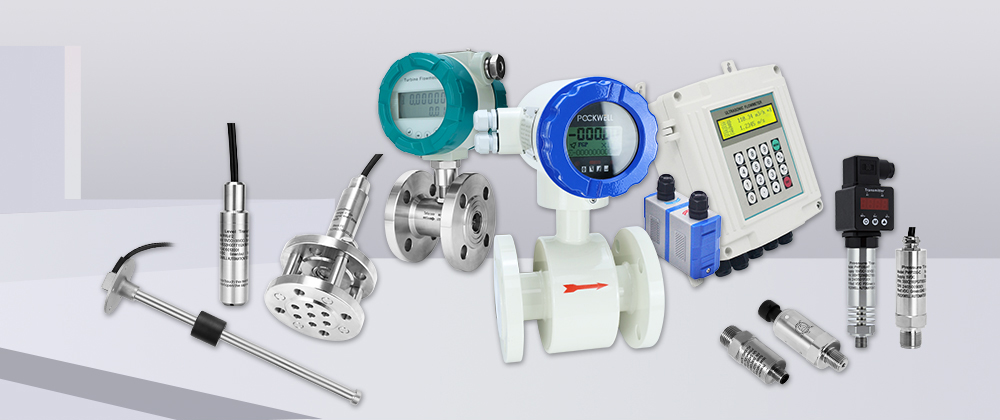
Types of Transducers
Transducers come in numerous varieties based on their operating principles and applications:
- Active transducers generate their own electrical output without requiring external power (e.g., thermocouples, piezoelectric sensors)
- Passive transducers require external power to produce output signals (e.g., resistance temperature detectors, strain gauges)
- Analog transducers provide continuous signal output proportional to the measured variable
- Digital transducers produce discrete digital signals representing measurement values
Common transducer applications include pressure measurement in hydraulic systems, temperature sensing in manufacturing processes, vibration monitoring in machinery, and displacement measurement in automation equipment.
What is a Transmitter?
A transmitter is a more sophisticated device that not only converts physical parameters into electrical signals but also conditions, amplifies, and transmits these signals in standardized formats suitable for long-distance transmission and integration with control systems. An industrial transmitter essentially combines a sensing element (often a transducer) with signal conditioning circuitry and transmission capabilities.
The primary function of a process transmitter extends beyond simple energy conversion. It processes the raw sensor signal, compensates for environmental factors, linearizes the output, and transmits the conditioned signal in industry-standard formats such as 4-20mA current loops, HART protocol, or digital fieldbus communications.
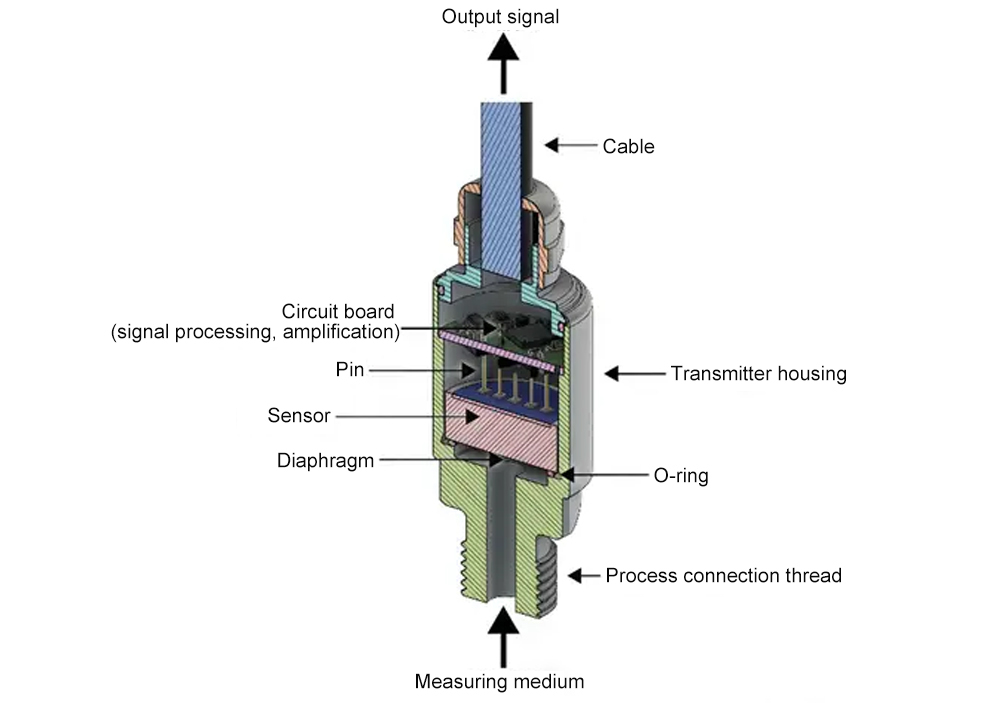
Types of Transmitters
Process transmitters are categorized based on their output signals and communication protocols:
- Analog transmitters output continuous 4-20mA or 0-10V signals
- Digital transmitters utilize protocols like HART, Foundation Fieldbus, or Profibus
- Smart transmitters offer advanced diagnostics, configuration capabilities, and multi-variable measurements
- Wireless transmitters eliminate wiring requirements through radio frequency or other wireless technologies
Transmitters find widespread use in process industries including oil and gas, chemical processing, water treatment, pharmaceutical manufacturing, and power generation, where reliable signal transmission over long distances is essential.
Key Differences Between Transducers and Transmitters
Understanding the transducer transmitter difference is essential for proper instrumentation selection. Here are the fundamental distinctions:
Function and Purpose
The most significant difference lies in their functional scope. A sensor transducer performs basic energy conversion from physical parameters to electrical signals. In contrast, a transmitter incorporates a sensing element plus additional circuitry for signal conditioning, amplification, and standardized transmission. Think of a transducer as the “sensing component” and a transmitter as a “complete measurement system.”
Signal Output Characteristics
Transducers typically produce low-level, raw electrical signals such as millivolts or small resistance changes. These signals are often susceptible to electrical noise and may degrade over distance. Transmitters, however, output standardized, conditioned signals (commonly 4-20mA current loops) that resist noise interference and maintain signal integrity over long cable runs, sometimes exceeding 1000 feet.
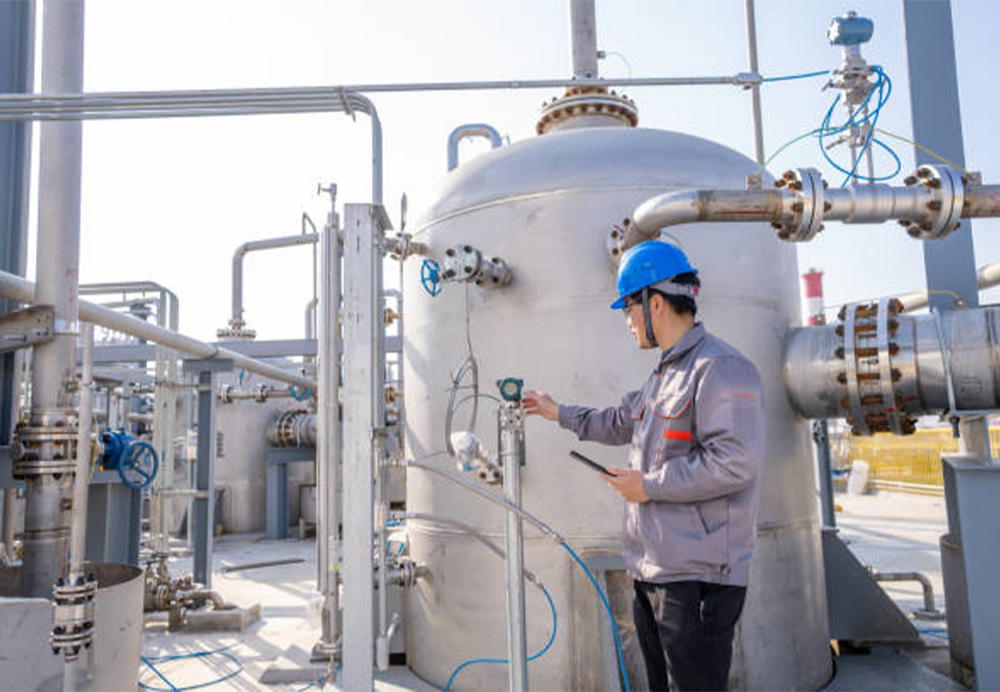
Power Requirements
Many transducers, particularly active types, can operate without external power or require minimal power. Transmitters consistently require external power for their signal conditioning and transmission circuitry, typically supplied through two-wire loops or separate power connections.
Complexity and Integration
Transducers are relatively simple devices focused on energy conversion. Transmitters represent more complex instruments featuring microprocessors, memory, diagnostics, and communication capabilities. Modern smart transmitters offer configuration options, self-diagnostics, and integration with asset management systems.
Cost Considerations
Due to their simpler construction, transducers generally cost less than transmitters. However, the total system cost must account for additional equipment needed when using transducers, including separate signal conditioners, amplifiers, and isolation devices.
Ready to optimize your measurement systems? [Explore our comprehensive range of industrial transducers and transmitters designed for accuracy and reliability.]
When to Use Transducers vs. Transmitters
Selecting between a transducer and transmitter depends on several application-specific factors:
Choose Transducers When:
- Measurement points are located close to control or display equipment (typically under 20 feet)
- Budget constraints prioritize initial equipment costs
- Simple, direct signal conversion suffices without extensive signal conditioning
- Custom signal processing requirements demand flexibility
- Space limitations favor compact sensing elements
Choose Transmitters When:
- Long-distance signal transmission is necessary (over 20 feet)
- Harsh industrial environments require robust signal integrity
- Standardized outputs (4-20mA, HART, fieldbus) are required for system integration
- Advanced diagnostics and configuration capabilities add value
- Loop-powered operation simplifies installation
Integration in Industrial Measurement Systems
In modern industrial automation, understanding how sensor transducer transmitter relationships work is crucial. Many sophisticated measurement systems actually incorporate both technologies working together. The transducer element performs the initial sensing and energy conversion, while the transmitter circuitry processes and transmits the resulting signals.
System designers must consider communication protocols, power distribution, cable specifications, electromagnetic compatibility, and calibration requirements when integrating these devices into measurement networks. Adherence to industry standards ensures compatibility, safety, and long-term reliability.
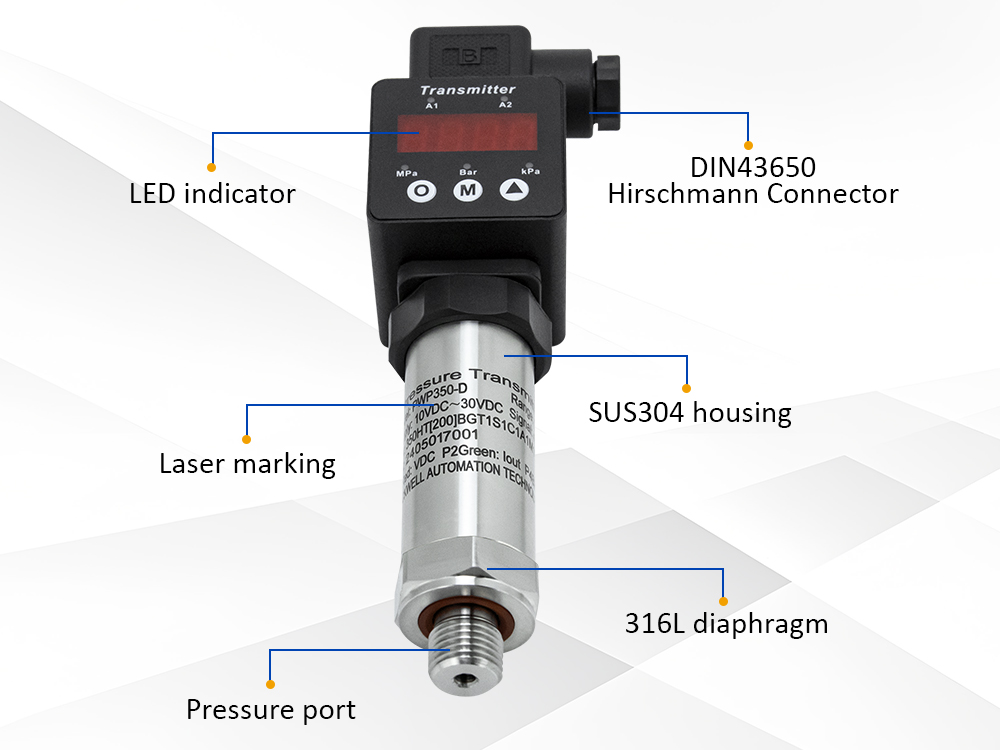
Selection Guide for Your Application
When evaluating whether you need a pressure transducer vs transmitter or temperature transducer vs transmitter, consider these critical factors:
Technical Specifications: Accuracy requirements, measurement range, response time, operating temperature range, pressure ratings, and output signal types must align with your application demands.
Environmental Conditions: Evaluate exposure to moisture, corrosive chemicals, vibration, electromagnetic interference, and extreme temperatures. Transmitters typically offer superior environmental protection.
Installation Requirements: Consider available mounting space, wiring infrastructure, power availability, and accessibility for maintenance and calibration.
Budget and Lifecycle Costs: While transducers may offer lower initial costs, transmitters can reduce total ownership costs through decreased wiring expenses, fewer support components, and enhanced diagnostics that minimize downtime.
Need expert guidance on selecting the right instrumentation? [Contact our technical team for personalized recommendations tailored to your specific measurement challenges.]
The distinction between transducers and transmitters extends beyond simple definitions. While a transducer performs fundamental energy conversion from physical parameters to electrical signals, a transmitter provides a complete measurement solution with signal conditioning, standardization, and robust transmission capabilities. Understanding this difference between transducer and transmitter enables you to select appropriate instrumentation that balances technical requirements, environmental conditions, and budget constraints.
Whether you’re measuring pressure, temperature, flow, or level, choosing between a transducer and transmitter significantly impacts measurement accuracy, system reliability, and long-term operational costs. By considering the factors outlined in this guide, you can make informed decisions that optimize your industrial measurement systems.
Frequently Asked Questions (FAQ)
Q: Can a transducer work without a transmitter?
A: Yes, transducers can function independently when measurement points are close to monitoring equipment and signal conditioning needs are minimal. However, for long-distance transmission or integration with control systems, a transmitter or separate signal conditioning equipment becomes necessary.
Q: Is a 4-20mA transmitter better than a voltage output transducer?
A: The 4-20mA transmitter offers superior noise immunity and signal integrity over long distances compared to voltage output transducers. Current loop signals are less affected by voltage drops, electrical interference, and cable resistance, making them preferred for industrial applications with extended cable runs.
Q: Can I replace a transducer with a transmitter?
A: Yes, you can typically replace a transducer with a transmitter for enhanced functionality, though you’ll need to ensure power availability and compatibility with existing systems. Transmitters generally offer improved performance but at higher initial cost.
Q: What’s the typical signal range for transducers vs. transmitters?
A: Transducers typically output millivolt-level signals (0-100mV) or small resistance changes. Transmitters standardize outputs to 4-20mA current loops, 0-10V voltage signals, or digital protocols, which are much more suitable for industrial environments and long-distance transmission.
Q: Do transmitters include built-in transducers?
A: Yes, most transmitters incorporate a sensing transducer element as part of their internal construction. The transmitter then adds signal conditioning, processing, and standardized output capabilities to the basic transducer function.
Q: Which requires more maintenance: transducers or transmitters?
A: Transmitters, despite being more complex, often require less maintenance due to built-in diagnostics and self-monitoring capabilities. Modern smart transmitters can alert operators to potential issues before failures occur, while basic transducers require external monitoring to detect problems.

