 English
 Spanish
Wireless Pressure Sensors in Industrial IoT: A Strategic Guide
Wireless pressure sensors have quietly become one of the more practical tools in modern industrial monitoring. They solve a straightforward problem: getting accurate pressure data from places where running cables would be expensive, dangerous, or simply impractical. The technology fits naturally into Industrial IoT setups, and the results show up in better uptime, fewer surprises, and maintenance teams that can actually plan ahead instead of constantly reacting.
How Wireless Pressure Sensors Fit Into Industrial IoT Architectures
The shift toward wireless pressure sensors in IIoT systems changes the economics of monitoring. Traditional wired installations require conduit runs, junction boxes, and significant labor hours. Wireless pressure sensors eliminate most of that infrastructure. A refinery monitoring tank farm pressures across a quarter-mile spread can deploy sensors in days rather than weeks.
The market reflects this shift. Industry projections put the global industrial wireless sensor market at $10.5 billion by 2027. That growth comes from practical demand, not hype. Plant managers need remote monitoring that actually works, and wireless pressure sensors deliver it without the installation headaches that made comprehensive monitoring cost-prohibitive in the past.
These sensors feed directly into existing control systems, providing the continuous data streams that process optimization requires. The information flows into SCADA platforms, historians, and analytics tools where it becomes actionable.
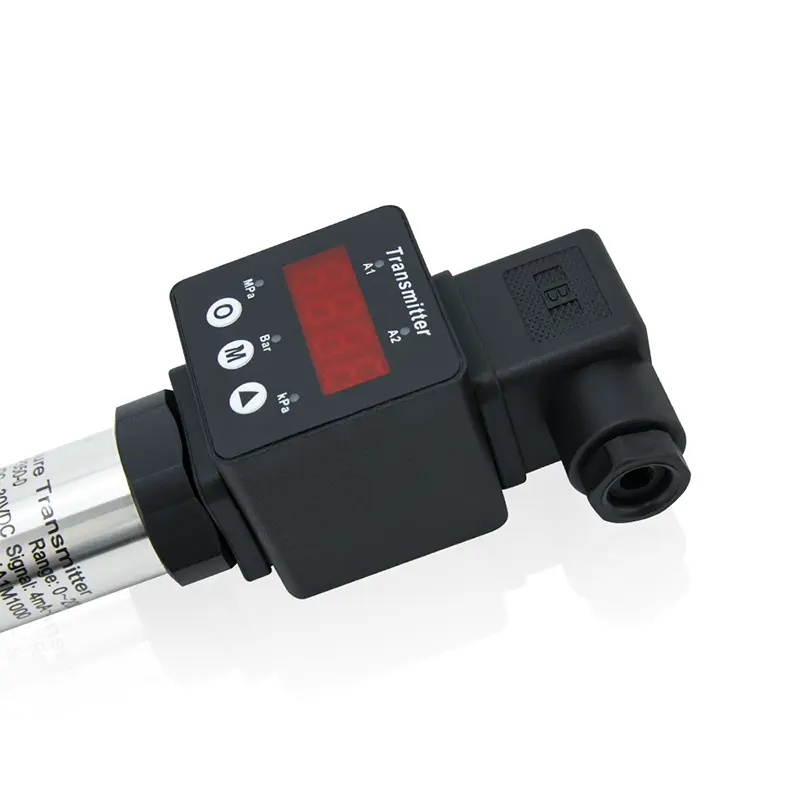
!PWP350-D Pressure Transmitter with Display-03
 ## What Makes Wireless Pressure Sensors Worth the Investment
The cost argument for wireless pressure sensors is compelling. Installation expenses can drop by 80% compared to wired alternatives. That number comes from eliminating trenching, conduit installation, and the labor hours required to pull cable through industrial environments.
Beyond installation savings, wireless pressure sensors create opportunities for monitoring points that never made economic sense before. A pump that runs intermittently in a remote location might not justify a $5,000 wired installation, but a $500 wireless sensor changes that calculation entirely.
The continuous data stream supports predictive maintenance in ways that periodic manual readings never could. Pressure trends become visible. Gradual changes that indicate developing problems show up in the data weeks before they would cause failures. Maintenance teams can schedule repairs during planned outages rather than responding to emergencies.
Safety Improvements That Matter
Real-time pressure data from wireless sensors enables faster response to abnormal conditions. In hazardous environments, this capability directly affects personnel safety. Operators see pressure excursions as they develop, not after the fact.
For facilities handling flammable or toxic materials, wireless pressure sensors provide monitoring coverage in areas where wired installations would require expensive explosion-proof conduit systems. The sensors themselves carry appropriate hazardous area ratings, but the elimination of extensive wiring simplifies compliance significantly.
For a deeper understanding of how sensor technology contributes to safer industrial environments, explore our article on 《Safety in Hazardous Areas: Using Explosion-Proof Sensors》.
Matching Wireless Pressure Sensors to Application Requirements
Selecting the right wireless pressure sensor involves more than checking a pressure range specification. Environmental conditions matter considerably. A sensor that performs well in a climate-controlled building may struggle in an outdoor installation exposed to temperature swings, vibration, and moisture.
Accuracy requirements vary by application. Process control loops often need 0.1% accuracy or better. Level monitoring applications might tolerate 0.5% without problems. Specifying tighter accuracy than necessary increases cost without providing value.
Power consumption determines how often batteries need replacement. In accessible locations, annual battery changes might be acceptable. For sensors mounted on tall tanks or in confined spaces, longer battery life reduces maintenance burden substantially.
Communication Protocol Selection
The wireless communication protocol shapes what’s possible with a sensor deployment. Each option involves tradeoffs.
LoRaWAN excels at long-range, low-power applications. Sensors can communicate over several kilometers while running on batteries for up to 10 years. The protocol suits geographically dispersed assets like pipeline monitoring or tank farms. Data rates are modest, but pressure readings don’t require high bandwidth.
Zigbee works well for shorter-range applications where mesh networking provides redundancy. Sensors relay data through neighboring devices, creating multiple communication paths. This resilience suits process areas with dense sensor populations.
Wi-Fi delivers higher data rates but consumes more power. Applications requiring frequent updates or integration with existing plant networks sometimes justify the power tradeoff.
| Protocol | Range | Power Consumption | Data Rate | Typical Applications |
|---|---|---|---|---|
| LoRaWAN | Long | Very Low | Low | Remote monitoring |
| Zigbee | Medium | Low | Medium | Local control |
| Wi-Fi | Short | High | High | High-bandwidth data |
Chemical plant deployments add complexity. Material compatibility with process fluids, explosion-proof ratings for classified areas, and electromagnetic interference from variable frequency drives all influence sensor selection.
Addressing Implementation Challenges
Wireless pressure sensor deployments face real obstacles. Cybersecurity concerns top the list for many organizations. Survey data shows 60% of industrial companies prioritize encryption and access control when evaluating IIoT devices. The concern is legitimate. Sensors that transmit process data create potential attack vectors that didn’t exist with isolated wired instruments.
Robust security implementations address these risks. Encrypted communications prevent eavesdropping. Strong authentication ensures only authorized systems receive sensor data. Network segmentation isolates sensor traffic from business systems.
Integration with existing infrastructure presents practical challenges. Legacy SCADA systems may require protocol converters or gateway devices. Historian databases need configuration to accept new data sources. Alarm management systems require updates to handle additional monitoring points.
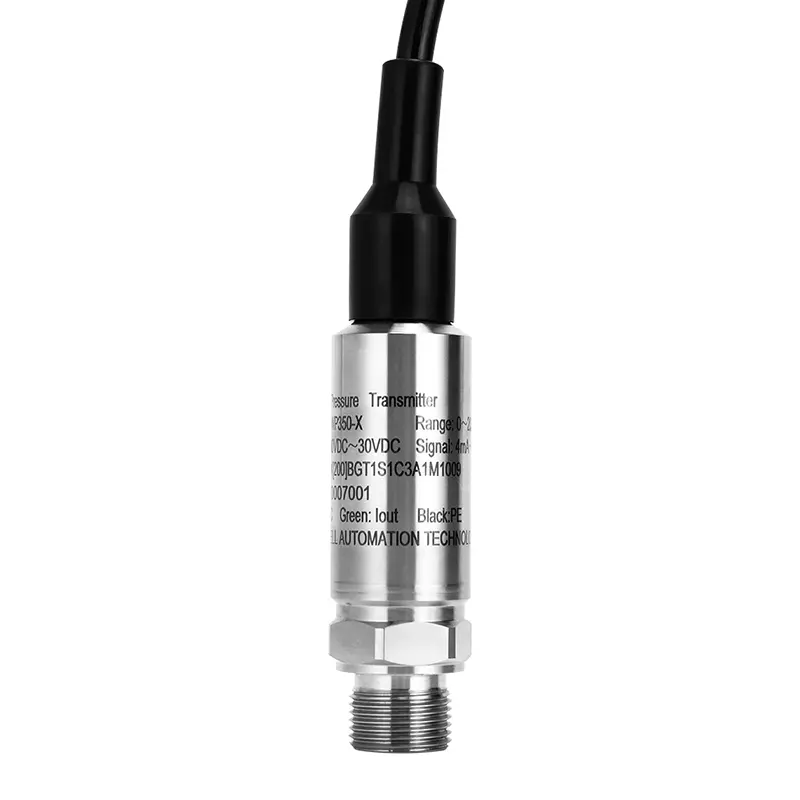
!PWP350-X Intrinsically Safe Pressure Transmitters with ATEX-02
 Radio frequency interference can degrade communication reliability in some environments. Site surveys before deployment identify potential problems. Antenna placement and channel selection often resolve interference issues without major changes.
Where Wireless Pressure Sensors Deliver Results
Oil and gas operations use wireless pressure sensors extensively for pipeline monitoring. The sensors provide continuous pressure data across hundreds of miles of infrastructure. Gradual pressure changes indicate developing leaks. Sudden drops trigger immediate investigation. This monitoring approach catches problems early, before small leaks become environmental incidents.
Water and wastewater utilities deploy wireless pressure sensors across distribution networks. Pump stations in remote locations report operating pressures continuously. Network pressure optimization becomes possible when operators can see conditions throughout the system rather than just at a few central points.
Chemical manufacturing relies on wireless pressure sensors for monitoring reaction vessels, storage tanks, and transfer systems. The sensors provide the data needed for process control while reducing the wiring complexity that makes instrumentation expensive in classified areas.
!PWF-U2000MCC Multi-channel Clamp-on Ultrasonic Flowmeter)
Pokcenser Automation has deployed over 150,000 sensing solutions globally across these industries. The applications share common requirements: reliable measurement, wireless communication, and integration with plant control systems.
Partner with Pokcenser Automation for Advanced Sensing Solutions
Pokcenser Automation Technology Company Limited provides wireless pressure sensing solutions backed by over a decade of field experience. Our products carry CE, ATEX, ISO, and RoHS certifications. A dedicated team of 6 pre-sales and after-sales specialists supports customers from initial application evaluation through ongoing operation.
Contact us at +86 181 7515 5326 or in**@*******er.com to discuss your monitoring requirements. We focus on delivering reliable, high-performance sensors that solve real operational problems.
What are the primary benefits of integrating wireless pressure sensors into existing industrial systems?
Wireless pressure sensors reduce installation costs significantly, often by 80% compared to wired alternatives. They enable monitoring in locations where cable runs would be impractical or prohibitively expensive. The continuous data stream supports predictive maintenance programs that catch developing problems before failures occur. For facilities with hazardous areas, wireless sensors simplify compliance by eliminating extensive explosion-proof conduit systems.
How do wireless pressure sensors ensure data security and reliability in Industrial IoT environments?
Security depends on implementation details. Effective wireless pressure sensor deployments use encrypted communications to prevent interception of process data. Strong authentication protocols ensure only authorized systems can access sensor information. Network architecture matters too. Segmenting sensor networks from business systems limits potential attack surfaces. Pokcenser Automation designs our solutions with these security requirements in mind, following established industrial cybersecurity practices.
What specific industries can most benefit from deploying wireless pressure sensors for process control?
Oil and gas operations benefit substantially from wireless pressure sensors for pipeline and wellhead monitoring across geographically dispersed assets. Water and wastewater utilities use them for distribution network pressure monitoring. Chemical and petrochemical facilities deploy wireless pressure sensors in classified areas where wired installations would require expensive explosion-proof infrastructure. Food and beverage processors use them for clean-in-place system monitoring and tank level applications. Each industry shares the need for reliable pressure data from locations where traditional wiring presents challenges.

