 English
 Spanish
EC Sensors for Industrial Liquid Monitoring: A Comprehensive Guide
Industrial processes demand precise control over liquid quality, where electrical conductivity (EC) serves as a vital parameter. EC sensors provide continuous, real-time data on dissolved solids, salinity, and overall ionic content. This information is crucial for maintaining process efficiency, ensuring product quality, and complying with environmental regulations. Our experience shows that reliable EC monitoring prevents costly downtime and optimizes resource usage.
Understanding the Critical Role of EC Sensors in Industrial Liquid Monitoring
1. The Importance of Electrical Conductivity in Industrial Processes
Electrical conductivity (EC) measures a solution’s ability to conduct electricity. This property directly correlates with the concentration of dissolved ions in the liquid. In industrial settings, EC monitoring is indispensable for several reasons. It provides immediate insights into water purity, chemical concentrations, and potential contamination. For instance, in boiler feedwater systems, high EC indicates excessive dissolved solids, which can lead to scaling and corrosion. Conversely, low EC in ultrapure water systems confirms proper deionization. Precise EC measurement ensures optimal process control and product consistency across various industries.
2. Challenges in Industrial Liquid Monitoring and How EC Sensors Address Them
Industrial liquid monitoring presents numerous challenges. Harsh operating environments, corrosive chemicals, high temperatures, and potential fouling can compromise sensor accuracy and lifespan. Traditional monitoring methods often involve manual sampling and laboratory analysis, which are time-consuming and prone to human error. These delays can lead to significant process deviations and costly rework.
EC sensors offer a robust solution to these challenges. Modern sensors feature durable materials like 316L stainless steel or graphite, providing excellent resistance to chemical attack and fouling. Their design often incorporates sophisticated temperature compensation mechanisms, ensuring accurate readings despite fluctuating process temperatures. Furthermore, digital EC sensors with RS485 Modbus output offer enhanced signal integrity and long-distance transmission, minimizing electrical interference. This digital communication facilitates seamless integration into industrial automation systems, enabling real-time data acquisition and automated process adjustments. Consequently, EC sensors significantly improve operational efficiency and reduce manual intervention.
Exploring Pokcenser’s Advanced EC Sensor Solutions for Diverse Applications
Pokcenser Automation specializes in providing high-precision sensors for industrial process control. Our EC sensor solutions are engineered for reliability and accuracy in demanding environments. We offer a range of products designed to meet diverse application needs, from water treatment to complex industrial processes.
1. Introducing the PCS3740PCD Digital Conductivity TDS Salinity Sensor
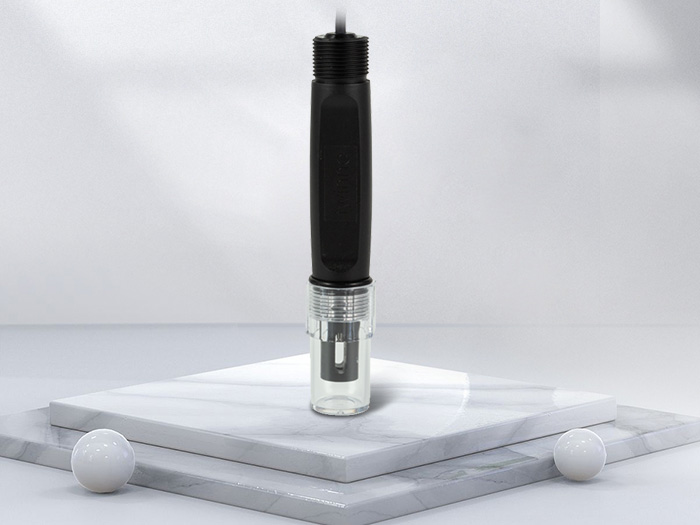
The PCS3740PCD is a versatile digital multi-parameter sensor. It accurately measures conductivity, Total Dissolved Solids (TDS), and salinity. This sensor is engineered for continuous online monitoring in various liquid applications. Its robust design ensures reliable performance in challenging conditions.
2. Key Features and Technical Specifications of the PCS3740PCD Sensor
The PCS3740PCD sensor integrates advanced features for superior performance. It utilizes a 2 or 4-electrode measurement design, effectively minimizing ion cloud interference. The wetted parts are constructed from 316L stainless steel or graphite, offering strong resistance to pollution and corrosion. This sensor provides broad measurement ranges: 0–500 mS/cm for conductivity, 0–250 g/L for TDS, and 0–700 ppt for salinity. A built-in NTC10K temperature sensor enables automatic temperature compensation, ensuring measurement accuracy across a 0–60 ℃ range. The PCS3740PCD features RS485 Modbus RTU output, facilitating robust digital communication and long transmission distances. Its IP68 waterproof rating allows for long-term submersion. Installation is flexible, supporting submerged or NPT 3/4″ threaded connections.
3. Applications of the PCS3740PCD in Water Treatment and Industrial Processes
The PCS3740PCD sensor is highly adaptable across numerous applications. It is essential for monitoring water quality in aquaculture, ensuring optimal conditions for aquatic life. In purified water and drinking water systems, it verifies water purity levels. The sensor also plays a critical role in industrial wastewater treatment, where it helps manage discharge quality. Furthermore, it is suitable for surface water monitoring and various water supply systems, providing crucial data for environmental compliance and resource management.
4. Overview of the PT6500 Online TDS Meter Controller
The PT6500 Online TDS Meter Controller is a high-precision instrument for continuous TDS monitoring. It features a full-color multi-line display and intuitive interface. This controller is designed for robust performance in industrial, environmental, and agricultural settings.
5. Advanced Functionalities and Benefits of the PT6500 Controller
The PT6500 controller offers sophisticated functionalities. It includes data logging and trend chart display for real-time analysis and historical data review. Three relay control switches allow configurable high/low limits and hysteresis control for automated process management. The controller supports both 4–20 mA current output and RS485 Modbus RTU communication, ensuring versatile integration options. Automatic or manual temperature compensation guarantees accurate TDS measurements. Password protection prevents unauthorized access and operational changes. Multiple automatic calibration functions simplify maintenance and ensure consistent accuracy.
6. Integrating the PT6500 with Other Pokcenser Sensors for Comprehensive Monitoring
The PT6500 controller integrates seamlessly with other Pokcenser sensors for comprehensive liquid monitoring. For example, it can connect with pH, ORP, or dissolved oxygen sensors to provide a complete water quality profile. This integrated approach allows operators to monitor multiple parameters simultaneously, enhancing process understanding and control. The RS485 Modbus RTU protocol ensures reliable data exchange between devices. This capability is particularly beneficial in complex industrial systems requiring multi-parameter analysis and coordinated control.
If you are interested in comprehensive liquid monitoring solutions, check out Flow Meter Selection: Turbine vs. Electromagnetic vs. Ultrasonic Flow Meters.
Advantages of Choosing Pokcenser EC Sensors for Reliable Performance
Pokcenser Automation has over a decade of experience in industrial process control. We are committed to delivering high-quality, reliable sensor solutions. Our EC sensors embody this commitment, offering distinct advantages for demanding industrial applications.
1. Ensuring Accuracy and Stability in Harsh Industrial Environments
Our EC sensors are built for resilience and precision. The PCS3740PCD, for instance, features a robust design with 316L stainless steel or graphite wetted parts. These materials resist corrosion and fouling, common issues in harsh industrial liquids. The sensor’s 2 or 4-electrode measurement design effectively mitigates ion cloud interference, ensuring stable and accurate readings. Furthermore, the IP68 waterproof rating guarantees reliable operation even under continuous submersion. This robust construction ensures long-term stability and minimal drift, reducing maintenance needs and operational costs.
2. Seamless Integration with Existing Industrial Automation Systems
Pokcenser EC sensors are designed for easy integration into existing industrial automation infrastructure. The PCS3740PCD and PT6500 both feature RS485 Modbus RTU output, a widely adopted industrial communication protocol. This digital output provides strong anti-interference capabilities and supports long transmission distances. The PT6500 controller further offers 4–20 mA current output and relay control switches, enabling direct connection to PLCs, SCADA systems, and other control devices. This flexibility simplifies system design and reduces implementation time, allowing for efficient data acquisition and automated process control.
3. The Value of Pokcenser’s 10+ Years of Expertise and Global Presence
Pokcenser Automation leverages over 10 years of specialized experience in industrial process control. We have a proven track record of delivering reliable solutions to clients in over 100 countries. Our expertise ensures that our EC sensors are not only technically advanced but also practical and robust for real-world industrial applications. We hold CE, ATEX, ISO, and RoHS certifications, reflecting our commitment to quality and safety standards. Our global presence and dedicated support teams ensure that clients receive expert assistance from application evaluation to after-sales service.
4. OEM & ODM Capabilities for Customized Industrial Solutions
We understand that industrial applications often require tailored solutions. Pokcenser Automation offers extensive OEM (Original Equipment Manufacturer) and ODM (Original Design Manufacturer) capabilities. We can customize our EC sensors and controllers to meet specific client requirements, including unique measurement ranges, material specifications, communication protocols, and form factors. Our engineering team works closely with clients to develop bespoke solutions that precisely fit their operational needs, ensuring optimal performance and seamless integration. This flexibility allows us to address complex challenges and deliver highly specialized products.
Selecting the Right EC Sensor for Your Specific Industrial Needs
Choosing the correct EC sensor is critical for accurate and reliable liquid monitoring. Several factors influence this decision, and careful consideration ensures optimal performance and longevity.
1. Factors to Consider When Choosing an EC Sensor
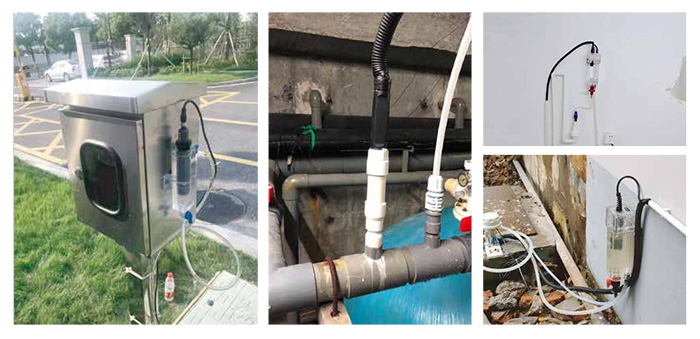
When selecting an EC sensor, consider the liquid’s properties. These include its conductivity range, temperature, pressure, and chemical composition. The operating environment also matters, particularly regarding potential fouling or corrosive elements. Evaluate the required accuracy and response time for your application. Consider the desired output signal (e.g., 4-20 mA, RS485 Modbus) and integration capabilities with existing control systems. Finally, assess the installation method (submerged, inline, or threaded) and maintenance requirements.
2. Matching Sensor Specifications to Application Requirements
Matching sensor specifications to application requirements is crucial. For high-conductivity liquids or those prone to fouling, sensors with 4-electrode designs and robust materials like graphite or 316L stainless steel are preferable. For applications requiring precise TDS or salinity measurements, ensure the sensor offers the necessary resolution and accuracy. Temperature compensation is vital for applications with fluctuating temperatures. For remote monitoring, sensors with RS485 Modbus output provide long-distance data transmission and strong anti-interference. Always verify the sensor’s pressure and temperature ratings align with your process conditions.
Here is a comparison of two Pokcenser EC sensor solutions:
| Feature | PCS3740PCD Digital Conductivity TDS Salinity Sensor | PT6500 Online TDS Meter Controller |
|---|---|---|
| Measurement Parameters | Conductivity, TDS, Salinity, Temperature | TDS, Temperature |
| Measurement Method | 2 or 4-electrode | Electrode-based (external sensor) |
| Wetted Parts Material | 316L Stainless Steel / Graphite | Depends on connected electrode |
| Conductivity Range | 0–500 mS/cm | Not directly measured by controller |
| TDS Range | 0–250 g/L | Continuous monitoring |
| Salinity Range | 0–700 ppt | Not directly measured by controller |
| Accuracy | ±1% F.S. | ±0.3 ℃ (temperature) |
| Temperature Comp. | NTC10K, Automatic | Automatic or Manual |
| Output Signal | RS485 Modbus RTU | 4–20 mA, RS485 Modbus RTU, Relay |
| Waterproof Rating | IP68 | IP65 (Controller) |
| Installation | Submerged or NPT 3/4″ threaded | Wall-mounted |
3. Maintenance and Calibration Best Practices for EC Sensors
Proper maintenance and calibration extend the lifespan and ensure the accuracy of EC sensors. Regularly clean the sensor electrodes to prevent fouling, which can cause inaccurate readings. Follow manufacturer guidelines for cleaning agents and procedures appropriate for the sensor material and process liquid. Calibrate sensors periodically using certified standard solutions. The frequency of calibration depends on the application’s demands and the sensor’s exposure to harsh conditions. For digital sensors like the PCS3740PCD, calibration can often be performed via software, simplifying the process. Always store sensors according to manufacturer recommendations to prevent damage.
For more information on sensor maintenance, you can read Submersible Level Transmitters: Key Specs to Check First.
Contact Us for Advanced EC Sensor Solutions
We invite you to connect with Pokcenser Automation for your industrial liquid monitoring needs. Our team of experts is ready to provide tailored solutions and technical support. We offer high-quality EC sensors and comprehensive automation systems designed for reliability and precision.
Email: in**@*******er.com
Phone: +86 181 7515 5326
About the Author
Li Chengxuan is a senior industrial automation expert at Pokcenser Automation, specializing in the research and application of flow, level, pressure and temperature sensors and industrial process control solutions. With extensive experience in designing and implementing monitoring systems, Li ensures that Pokcenser’s offerings meet the highest standards of accuracy and reliability for diverse industrial applications. His expertise contributes significantly to optimizing industrial processes and enhancing operational efficiency worldwide.
FAQs
1. What is an EC sensor and why is it important for industrial liquid monitoring?
An EC sensor measures the electrical conductivity of a liquid, indicating the concentration of dissolved ions. This measurement is crucial in industrial monitoring for assessing water purity, detecting contaminants, and controlling chemical processes. Accurate EC data helps maintain product quality, prevent equipment damage from scaling or corrosion, and ensure compliance with environmental regulations.
2. How do Pokcenser’s EC sensors handle harsh industrial environments?
Pokcenser’s EC sensors, like the PCS3740PCD, are engineered with robust materials such as 316L stainless steel or graphite for wetted parts. These materials provide excellent resistance to corrosive chemicals and fouling. The sensors also feature an IP68 waterproof rating, ensuring reliable performance even under continuous submersion in challenging industrial liquids.
3. Can Pokcenser’s EC sensors be integrated with existing control systems?
Yes, Pokcenser’s EC sensors are designed for seamless integration. They typically offer RS485 Modbus RTU output, a standard industrial communication protocol. Our controllers, such as the PT6500, also provide 4–20 mA current output and relay control switches. These options allow direct connection to PLCs, SCADA systems, and other industrial automation platforms.
4. What is the difference between conductivity, TDS, and salinity measurements?
Conductivity measures the total ionic content in a solution, indicating its ability to conduct electricity. Total Dissolved Solids (TDS) quantifies the total mass of all dissolved inorganic and organic substances. Salinity specifically measures the concentration of dissolved salts. While related, they represent different aspects of liquid composition, with EC sensors often providing all three measurements through conversion algorithms.
5. Does Pokcenser offer customization for EC sensor solutions?
Yes, Pokcenser Automation provides comprehensive OEM and ODM services. We can customize EC sensors and controllers to meet specific client requirements. This includes adjusting measurement ranges, selecting specialized materials, implementing unique communication protocols, and adapting physical form factors. Our team collaborates closely with clients to develop bespoke solutions.

