 English
 Spanish
Enhancing Industrial Monitoring with LCD Temperature Transmitters
I have yet to see a plant run smoothly when temperature control slips, it touches product quality, energy spend, equipment life, and safety in one sweep. LCD temperature transmitters earn their keep by putting real-time numbers right where work happens, on site and in view, so operators can act without hesitation. We live in demanding environments, and our role is to help teams choose instruments that stay accurate, integrate cleanly, and stand up to the job.
Understanding the Critical Role of LCD Temperature Transmitters in Industrial Settings
1. The Importance of Accurate Temperature Monitoring in Industrial Processes
Precise temperature control sits at the core of reliable operations. In chemical processing, food and beverage, pharmaceuticals, and energy production, even small drifts can ripple into bigger problems, from off-spec batches and higher utility bills to equipment stress and safety incidents. In chemical reactions, temperature sets reaction rates and yields. In food processing, holding target temperatures keeps bacterial growth in check and protects consumers. When operators have steady, accurate temperature data, they can make sound decisions, tune processes, and avoid unplanned stops.
2. Key Features and Benefits of On-Site LCD Displays for Temperature Data
On-site LCD displays turn raw readings into decisions at the point of measurement. Clear, real-time visuals help the people on the floor and maintenance crews confirm what is happening without waiting on the control room. Benefits include:
- Instant Verification: Operators can confirm readings on the spot, which limits errors that can creep in during transmission or interpretation.
- Faster Troubleshooting: Immediate access shortens fault-finding, so issues are identified and addressed sooner.
- Enhanced Safety: Out-of-limit temperatures show up right away, giving teams time to respond before conditions escalate.
- Simplified Calibration: Local displays make calibration and checks more straightforward, which helps preserve accuracy.
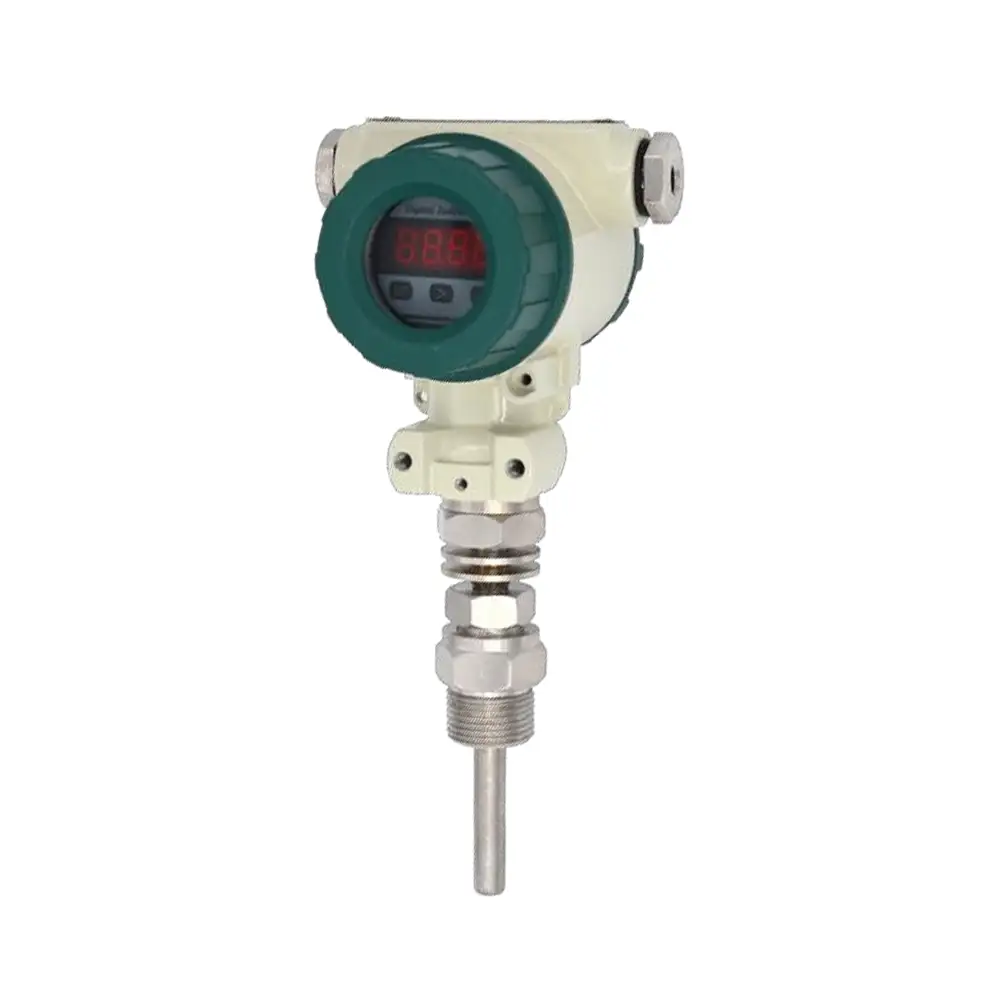
For example, our PWT4209 Industrial Temperature Sensor, the Temperature sensor with LCD display screen is an explosion proof temperature sensor for industrial applications.
3. How Temperature Transmitters Contribute to Operational Efficiency and Safety
Temperature transmitters are a backbone of automation, and they shape both efficiency and safety. By converting temperature measurements into standardized electrical signals (e.g., 4-20mA or RS485 Modbus RTU), they fit cleanly into control systems. This connectivity supports automatic adjustments, data logging, and predictive maintenance.
Operational Efficiency:
1. Process Optimization: Continuous, accurate feedback lets teams fine-tune controls, improving quality and limiting waste.
2. Energy Management: Finding and fixing temperature-related inefficiencies brings energy consumption down.
3. Extended Equipment Lifespan: Avoiding overheats or deep cold protects sensitive components from premature wear.
Safety:
1. Early Warning Systems: When temperatures cross limits, transmitters can trigger alarms or shut down equipment to prevent incidents.
2. Compliance: Accurate records support regulatory requirements in areas like pharmaceuticals and food processing.
3. Hazardous Area Monitoring: Specialized transmitters serve hazardous zones where flammable gases or dust may be present, and they do it safely.
Our work on robust sensors and controllers keeps plants efficient and secure.
Exploring the Technology Behind Advanced LCD Temperature Transmitters
1. Principles of Temperature Measurement and Sensor Types
Temperature measurement draws on several physical effects, each with its own strengths. Common sensor types include:
- Resistance Temperature Detectors (RTDs): Resistance changes with temperature. Platinum RTDs (Pt100, Pt1000) deliver high accuracy and stability over wide ranges.
- Thermocouples: A voltage appears at the junction of two dissimilar metals. These handle high temperatures and offer strong durability.
- Thermistors: Their resistance shifts significantly with small temperature changes, which is useful when high sensitivity is needed.
Selection depends on accuracy, range, response time, and conditions. For instance, the PT6500 Online TDS Meter Controller and PCS5530C Residual Chlorine Electrode and Meter use temperature sensors (NTC10K, PT100, PT1000) to apply accurate temperature compensation to their primary measurements.
2. Decoding LCD Technology for Clear and Instant Data Visualization
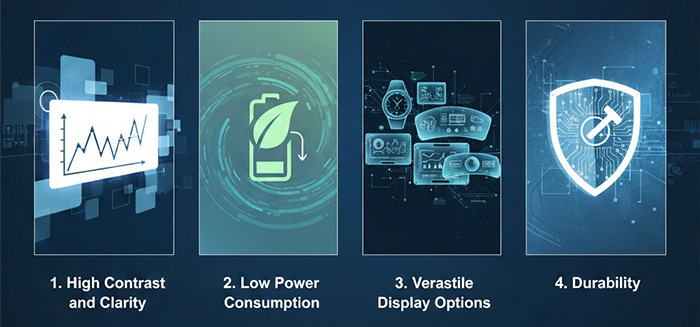
LCD technology makes on-site data readable and useful. In temperature transmitters, modern LCDs bring several advantages:
- High Contrast and Clarity: Digits and graphics are sharp and readable in varied lighting.
- Low Power Consumption: Energy-efficient operation suits battery or remote setups.
- Versatile Display Options: Multi-line or full-color screens can show multiple parameters, trend charts, and diagnostics at once.
- Durability: Industrial LCDs handle tough conditions, from temperature swings and vibration to dust.
3. Integration Capabilities: 4-20mA, RS485 Modbus RTU, and Other Communication Protocols
Modern LCD temperature transmitters are designed to communicate as part of larger systems.
- 4-20mA Current Output: This analog standard resists electrical noise and works over long runs. A 4mA signal marks the low end of the range, and 20mA marks the high end.
- RS485 Modbus RTU: This digital protocol supports multi-drop networks, strong data integrity, and richer exchanges like diagnostics and configuration. Many of our products, including the PT6500 Online TDS Meter Controller and PT4000 ORP Controller, support RS485 Modbus RTU.
- Other Protocols: Depending on the site, protocols such as HART, Foundation Fieldbus, or Profibus connect transmitters to DCS or PLCs.
These options ensure local display and plant-wide connectivity, so temperature data informs control and monitoring across the facility.
4. Ensuring Accuracy with Automatic Temperature Compensation and Calibration Functions
Accuracy is non-negotiable in temperature work. LCD temperature transmitters use features designed to keep measurements tight:
- Automatic Temperature Compensation (ATC): Parameters like pH or conductivity shift with temperature. ATC corrects for that based on the process temperature, which produces a truer reading of the target parameter. Our PT6500 Online TDS Meter Controller and PCS5530C Residual Chlorine Electrode and Meter both support automatic or manual temperature compensation.
- Calibration Functions: Routine calibration prevents drift from creeping in. Many transmitters include guided routines that walk users through each step, which helps ensure quality standards are met. Our PT6500 and PT4000 controllers include multiple automatic calibration functions.
These capabilities reduce manual tweaks and raise confidence in the data.
Selecting the Right LCD Temperature Transmitter for Specific Applications
1. Evaluating Environmental Factors: Temperature Range, Pressure, and Corrosive Media
Choosing an LCD temperature transmitter starts with the environment. Key points to consider:
- Temperature Range: Confirm the minimum and maximum process temperatures, and pick an operating range that comfortably covers both.
- Pressure: High-pressure services call for robust housings and appropriate process connections. Check the rating against your application.
- Corrosive Media: Probe and housing materials must match the media to prevent corrosion and maintain reliability. Our PCS3523 TDS Electrode uses titanium alloy wetted parts for anti-corrosive performance in aggressive environments.
- Vibration and Shock: Where mechanical stress is present, use transmitters built for durability and vibration resistance.
- Hazardous Areas: In zones with flammable gases or dust, intrinsically safe or explosion-proof options are required.
2. Matching Transmitter Specifications to Industry Requirements
Different industries ask for different things, and we tailor recommendations to fit:
- Pharmaceutical: High accuracy, traceability, and often sanitary connections are needed. Instruments with precise temperature compensation and calibration functions serve these environments well.
- Food and Beverage: Hygienic design, washdown-ready builds, and tough construction prevent contamination.
- Water and Wastewater Treatment: Long-term stability and submersible designs are important. Our PWP412-T3, a submersible pressure transmitter, also measures temperature with high accuracy.
- Oil and Gas: Instruments must tolerate extreme pressures and temperatures, often in hazardous locations.
- HVAC: Energy efficiency and tight climate control drive the need for reliable, cost-effective sensing.
Align the transmitter’s accuracy, response time, and communication protocols with the sector’s demands to get the best outcome.
3. Considerations for Installation, Maintenance, and Long-Term Reliability
Getting the most from LCD temperature transmitters requires forethought on setup and upkeep.
- Installation Method: Match connections to the process, whether threaded, flanged, or submersible. The PT6500 and PT4000 controllers are available in embedded and wall-mounted formats for flexibility.
- Accessibility: Leave room for checks, calibration, and repairs.
- Cable Length and Material: Choose cable lengths and jacketing that handle the environment and chemical exposure. Our PCS1753CD Plastic pH Sensor and PCS3523 TDS Electrode offer customizable cable lengths.
- Maintenance Schedule: Build a routine for cleaning, calibration, and sensor replacement based on manufacturer guidance and process criticality.
- Diagnostic Features: Self-diagnostics can surface issues early, which supports higher uptime.
- Modular Design: Modular components make repairs simpler and lower maintenance costs.
4. Pokcenser Automation’s Expertise in Temperature Monitoring Solutions
Pokcenser Automation brings more than a decade of experience as a sensor manufacturer and solution provider for industrial process control automation. We offer a wide range of instruments with advanced temperature monitoring capabilities. Products such as the PT6500 Online TDS Meter Controller and PT4000 ORP Controller include integrated temperature measurement and compensation for high accuracy across varied applications. We deliver robust, reliable solutions aligned to specific needs, backed by CE, ATEX, ISO, and RoHS certifications. Our pre-sales and after-sales teams support clients from application evaluation through ongoing maintenance, and that support extends worldwide.
Maximizing Performance and Longevity of Your LCD Temperature Transmitters
1. Best Practices for Installation and Configuration
Solid installation and configuration are the foundation for accurate, reliable operation.
- Follow Manufacturer Guidelines: Stick closely to the manual for performance and safety.
- Optimal Placement: Put the sensor where it reflects the true process temperature. Avoid dead zones and excessive turbulence.
- Secure Mounting: Mount firmly to limit vibration and mechanical stress that can shorten service life or skew readings.
- Proper Wiring: Use shielded cables and correct terminations to limit interference and protect signal integrity.
- Initial Calibration: Calibrate after installation to set a baseline and account for installation-specific effects.
- Parameter Settings: Set ranges, scaling, and alarms to match the process requirements.
2. Routine Maintenance and Troubleshooting Tips
A little discipline in maintenance keeps accuracy tight and extends service life.
- Regular Cleaning: Clean probes and displays, especially where fouling or particulates are common.
- Scheduled Re-calibration: Use certified references to correct drift at planned intervals. Our PT6500 and PT4000 controllers offer multiple automatic calibration functions.
- Visual Inspection: Check cables, connectors, and housings for wear, corrosion, or damage.
- Check Power Supply: Confirm stable power within the specified range.
- Monitor Diagnostic Alarms: Watch for diagnostic messages on the LCD or in the control system.
- Consult Documentation: Use the product manual for targeted troubleshooting steps.
3. The Impact of Robust Design and IP Ratings on Durability
Hardware choices matter when conditions are tough.
- Material Selection: Stainless steel like SUS304 or SS316L in PWP412-T3, or robust plastics like PP in PCS1753CD, resist corrosion and wear.
- IP Rating: IP65 protection, as on the PT6500, guards against dust and low-pressure water jets. IP68, as on the PWP412-T3, protects during continuous immersion.
- Shock and Vibration Resistance: Rugged internals and shock-absorbing features help maintain performance where vibration is present.
- Temperature Extremes: Components must be rated for all ambient and process conditions they will see to avoid early failures.
Selecting the right build and IP rating supports reliable operation and fewer replacements.
4. Leveraging Data Logging and Trend Analysis for Predictive Maintenance
Beyond real-time viewing, data logging turns monitoring into foresight.
- Historical Data Collection: Devices like the PT6500 Online TDS Meter Controller can store thousands of records over long periods.
- Trend Analysis: Reviewing temperature history highlights subtle shifts, anomalies, or gradual equipment changes.
- Predictive Maintenance: Early detection enables planned interventions before failures, cutting downtime and repair spend.
- Process Optimization: Long-term patterns point to improvements that lift efficiency and resource use.
- Compliance and Auditing: Stored data supports regulatory checks and internal audits.
This approach raises reliability while controlling costs.
Partner with Pokcenser Automation for Superior Temperature Monitoring
Choosing the right LCD temperature transmitter touches efficiency, safety, and cost. At Pokcenser Automation, we combine over a decade of field experience with strong quality and support. Our sensors and controllers, many with integrated temperature measurement and clear LCD displays, are built for the demands of industrial service.
Let our team help you sort the details. We provide full support, from early application evaluation through after-sales service, so you land on solutions that fit.
Contact us today to discuss your specific needs:
Phone: +86 181 7515 5326
Email: in**@*******er.com
FAQs
1. What is an LCD Temperature Transmitter and how does it work?
An LCD temperature transmitter measures temperature and converts it to a standardized output signal, while also showing a local reading on an integrated Liquid Crystal Display. The sensor element (e.g., RTD or thermocouple) detects temperature, the transmitter processes and displays it, and the value is sent to a control system via analog (e.g., 4-20mA) or digital (e.g., RS485 Modbus RTU) signals.
2. Why is on-site temperature monitoring with an LCD display important for industrial processes?
On-site LCD monitoring gives operators and technicians immediate, visual feedback at the measurement point. That quick access enables rapid verification, faster troubleshooting, and a quicker response to critical excursions, which strengthens safety and efficiency.
3. What communication protocols do modern LCD Temperature Transmitters support?
Modern LCD temperature transmitters commonly support 4-20mA current output for robust analog signaling over long distances, and RS485 Modbus RTU for digital communication, including multi-device networking and enhanced data exchange with PLCs and DCS.
4. How do I choose the correct temperature range and accuracy for my application?
Define the minimum and maximum process temperatures and add a safety margin. For accuracy, match the required tolerance to the impact of error on quality or safety, bearing in mind that higher accuracy can raise cost. Consider process stability and how measurement uncertainty will affect outcomes.
5. What are the advantages of using Pokcenser Automation’s temperature monitoring solutions?
Pokcenser Automation provides robust, accurate solutions backed by over a decade of experience and certifications such as CE, ATEX, ISO, and RoHS. Our products offer integrated temperature compensation, clear LCD displays, and versatile communication options (4-20mA, RS485 Modbus RTU). We support projects end to end with pre-sales and after-sales service, delivering tailored solutions and long-term reliability across industries.

