 Inglés
 Español
Differential Pressure Transmitter Applications in Industrial Automation
Differential pressure transmitters are among the most versatile instruments used in industrial automation. From measuring liquid levels in closed tanks to monitoring filter conditions and calculating flow rates, differential pressure technology plays a critical role in process control across numerous industries.
Whether operating a chemical plant, water treatment facility, food processing line, HVAC system, or oil & gas installation, understanding how differential pressure transmitters work can help improve efficiency, reduce maintenance costs, and increase operational reliability.
In this guide, we’ll explore the most common differential pressure transmitter applications and explain why Pokcenser differential pressure solutions are trusted by industrial users worldwide.
What Is a Differential Pressure Transmitter?
A differential pressure (DP) transmitter measures the difference between two pressure points.
Instead of measuring a single pressure value, the transmitter continuously calculates the pressure difference between:
- High-pressure side (HP)
- Low-pressure side (LP)
The resulting differential pressure can then be used to determine:
- Liquid level
- Flow rate
- Filter condition
- Airflow
- Pump performance
Because of its flexibility, DP technology remains one of the most widely used measurement methods in industrial automation.
How Does a Differential Pressure Transmitter Work?
The transmitter contains a sensing element that detects the pressure difference between two process connections.
When the pressure changes, the sensor converts the differential pressure into an electrical signal such as:
- 4-20 mA
- HART Communication
- RS485 Modbus
This signal is then transmitted to:
- PLC systems
- DCS systems
- SCADA platforms
- Controllers and indicators
Real-time data enables operators to monitor and optimize process performance.
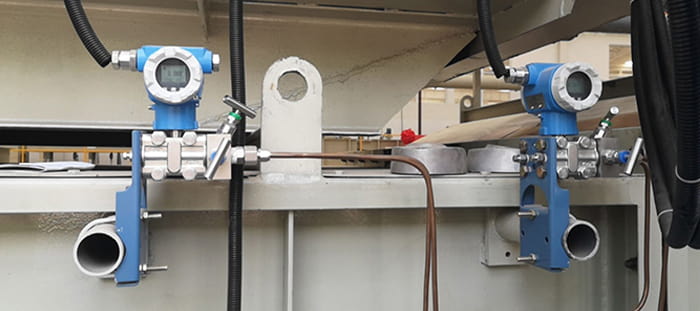
Recommended Product: PWP3051DP Smart Differential Pressure Transmitter
The PWP3051DP is designed for demanding industrial applications requiring high accuracy and long-term stability.
Características principales
- Monocrystalline silicon sensor technology
- Gran precisión de medición
- Excellent long-term stability
- HART communication support
- Wide pressure range options
- Strong anti-interference capability
Typical Industries
- Petróleo y gas
- Tratamiento químico
- Tratamiento del agua
- Generación de energía
- Fabricación de alimentos y bebidas
Recommended Product: PWP301 Differential Pressure Transmitter
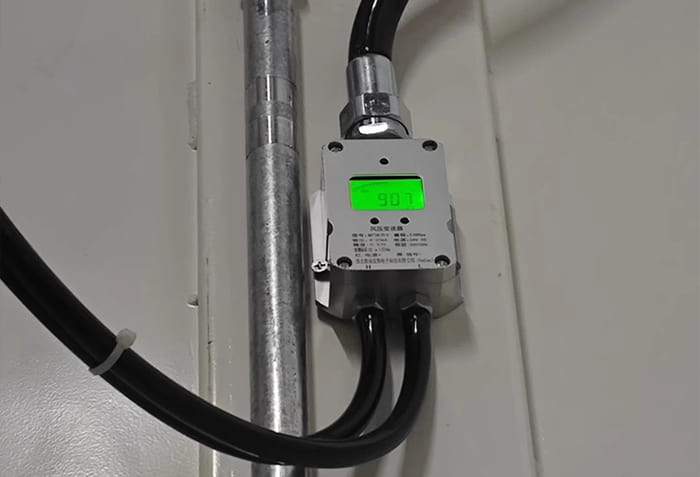
The PWP301 provides a reliable and cost-effective solution for general industrial applications.
Características principales
- Stable measurement performance
- Compact design
- Múltiples opciones de salida
- Fácil instalación
- Industrial-grade durability
Aplicaciones típicas
- Sistemas de calefacción, ventilación y aire acondicionado
- Air handling units
- Filtration systems
- Water treatment plants
- Industrial process monitoring
Application 1: Tank Level Measurement
One of the most common uses of a differential pressure transmitter is measuring liquid levels in closed tanks.
Why Use DP Level Measurement?
In pressurized vessels, conventional level sensors may be difficult to install or may provide unreliable measurements.
A differential pressure transmitter measures:
Tank Bottom Pressure − Tank Vapor Pressure = Liquid Head Pressure
This method provides accurate level measurement regardless of tank pressure changes.
Aplicaciones típicas
- Chemical storage tanks
- LPG tanks
- Process vessels
- Pressurized reactors
Application 2: Filter Monitoring
Filters gradually become clogged as contaminants accumulate.
A differential pressure transmitter can measure the pressure drop across the filter.
Benefits
- Mantenimiento predictivo
- Reducción del tiempo de inactividad
- Lower maintenance costs
- Improved process efficiency
As differential pressure increases, operators know the filter requires cleaning or replacement.
Aplicaciones típicas
- Water treatment filters
- Air filtration systems
- Industrial process filtration
- Sistemas de calefacción, ventilación y aire acondicionado
Application 3: Flow Measurement Using Orifice Plates
Differential pressure transmitters are widely used with primary flow elements such as:
- Orifice plates
- Venturi tubes
- Flow nozzles
As fluid passes through a restriction, a pressure drop is created.
The differential pressure is used to calculate flow rate.
Ventajas
- Proven technology
- Suitable for high-pressure systems
- Reliable performance
- Widely accepted industrial standard
Common Industries
- Petróleo y gas
- Steam systems
- Tratamiento químico
- Generación de energía
Application 4: Pump Performance Monitoring
Differential pressure measurement can help evaluate pump operation.
Operators can monitor:
- Pump efficiency
- Condiciones de flujo
- Blockages
- Equipment wear
Unexpected pressure changes may indicate developing mechanical problems.
Application 5: HVAC Airflow Monitoring
In HVAC systems, differential pressure transmitters help monitor:
- Air duct pressure
- Filter conditions
- Fan performance
- Clean room pressure
Accurate pressure monitoring helps improve energy efficiency and indoor air quality.
Typical Facilities
- Commercial buildings
- Hospitals
- Pharmaceutical plants
- Data centers
Application 6: Water Treatment Processes
Water treatment facilities rely heavily on differential pressure measurement.
Applications include:
- Membrane filtration monitoring
- Pump station monitoring
- Pipeline pressure management
- Filter condition monitoring
Reliable DP measurement helps reduce maintenance costs while improving operational efficiency.
Why Differential Pressure Technology Remains Popular
Despite the availability of newer measurement technologies, differential pressure transmitters continue to offer several advantages:
Proven Reliability
Used successfully across industries for decades.
Alta precisión
Modern smart transmitters provide excellent measurement performance.
Versatility
A single technology can measure:
- Presión
- Flujo
- Nivel
- Filter condition
Easy Integration
Compatible with modern PLC, DCS, and SCADA systems.
¿Por qué elegir Pokcenser?
Pokcenser has over 10 years of experience in industrial automation and instrumentation.
Our products serve customers in more than 100 countries worldwide.
What We Offer
- CE, ISO, ATEX, and RoHS certified products
- Asistencia OEM y ODM
- Professional application engineering
- Fast technical assistance
- Precios de fábrica competitivos
- Complete process automation solutions
Preguntas frecuentes
Q1: What is the difference between a pressure transmitter and a differential pressure transmitter?
A standard pressure transmitter measures one pressure point, while a differential pressure transmitter measures the difference between two pressure points.
Q2: Can a differential pressure transmitter measure tank level?
Yes. DP transmitters are commonly used for level measurement in pressurized and closed tanks.
Q3: Which differential pressure transmitter is best for high-accuracy applications?
The PWP3051DP Smart Monocrystalline Silicon Differential Pressure Transmitter offers excellent accuracy and stability.
Q4: Can DP transmitters be used in HVAC systems?
Yes. They are widely used for airflow monitoring, filter monitoring, and clean room pressure control.
Q5: Are Pokcenser DP transmitters compatible with PLC systems?
Yes. Models support industrial outputs such as 4-20mA, HART, and other communication options depending on configuration.
