 English
 Spanish
How to Choose the Best Level Sensor for Your Application?
A Practical Buying Guide for Industrial Liquid & Tank Level Measurement
Choosing the right level sensor is more than just selecting a device that measures liquid height. The correct sensor can improve production efficiency, reduce maintenance costs, prevent downtime, and ensure long-term operational reliability.
Whether you are monitoring water tanks, fuel storage, chemical containers, slurry systems, or wastewater treatment processes, selecting the right level measurement solution is critical.
At Pokcenser, we provide industrial-grade level measurement solutions for global OEMs, distributors, and industrial automation projects. This guide will help you choose the most suitable level sensor based on your actual application requirements.
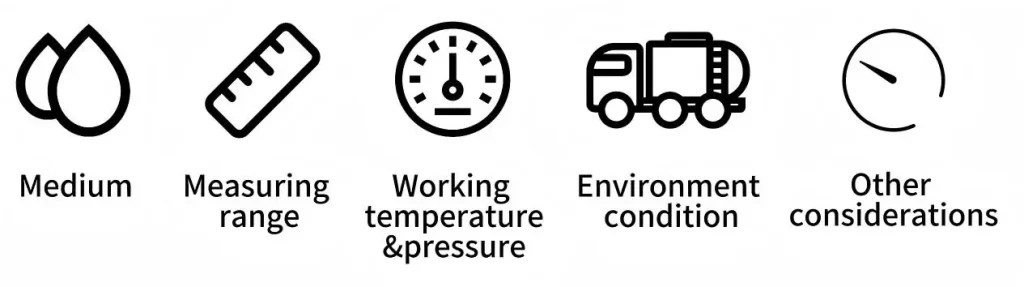
1. Understand the Medium You Need to Measure
The first and most important factor is the type of material inside the tank or container.
Liquid, Slurry, or Solid?
Different media require different sensing technologies.
| Medium Type | Recommended Sensor Type | Typical Applications |
| Clean Liquids | Ultrasonic / Hydrostatic / Float | Water tanks, reservoirs |
| Corrosive Liquids | PTFE / Ceramic Sensors | Chemical tanks |
| Fuel & Oil | Radar / Capacitive | Diesel tanks, fuel trucks |
| Slurry & Wastewater | Radar / Ultrasonic | Sewage treatment |
| Powders & Solids | Radar / Vibrating Fork | Silos, grain storage |
For example:
- Water applications often use ultrasonic level sensors for non-contact measurement.
- Fuel storage systems usually require explosion-proof radar or capacitive sensors.
- Corrosive chemicals need sensors made from stainless steel, ceramic, or PTFE materials.
Pokcenser offers multiple industrial level sensing technologies suitable for harsh environments and demanding industrial applications.
2. Determine the Required Measuring Range
Before selecting a sensor, determine the full measuring distance required.
Key Questions:
- What is the minimum liquid level?
- What is the maximum tank height?
- Do you need continuous monitoring or only high/low alarms?
Continuous vs Point Level Detection
Continuous Level Measurement
Provides real-time liquid level data and is ideal for:
- Water treatment
- Industrial process automation
- Remote tank monitoring
Point Level Detection
Triggers an alarm or switch at a specific level and is commonly used for:
- Overflow protection
- Pump control
- Safety alarms
For deep tanks or outdoor applications, radar and ultrasonic level sensors are usually preferred because they support long-distance measurement with high stability.
3. Consider Temperature and Pressure Conditions
Industrial environments can be extremely challenging. Temperature and pressure directly affect sensor performance and lifespan.
Temperature Considerations
Applications involving:
- Steam
- Hot oil
- Boilers
- Chemical processing
may require high-temperature-resistant sensors.
Pressure Requirements
Pressurized tanks require sensors designed specifically for:
- High-pressure environments
- Vacuum systems
- Sealed tanks
Choosing a sensor without proper pressure resistance may lead to inaccurate readings or equipment failure.
4. Evaluate the Installation Environment
The installation location is another critical factor.
Common Installation Environments
Outdoor Water Tanks
Sensors should be:
- Waterproof
- UV resistant
- Weatherproof
Fuel Trucks & Oil Tanks
Sensors often require:
- Explosion-proof certification
- Anti-vibration design
- Fuel compatibility
Wastewater & Industrial Plants
Sensors should withstand:
- Humidity
- Foam
- Dust
- Corrosion
Pokcenser industrial level sensors are designed for stable operation in demanding industrial environments worldwide.
5. Accuracy Requirements Matter
Not all applications require the same level of precision.
High-Accuracy Applications
Industries such as:
- Fuel monitoring
- Chemical dosing
- Pharmaceutical production
often require extremely precise measurement.
Examples:
- Fuel level sensor with 0.1% accuracy
- 4–20mA level sensor with 0.5% accuracy
Standard Industrial Monitoring
General water tank monitoring may not require ultra-high precision, helping reduce overall system cost.
Choosing the right accuracy level helps balance budget and performance.
6. Choose the Right Output Signal
Modern industrial systems require compatible communication protocols.
Common Output Options
- 4–20mA
- RS485
- Modbus
- HART Protocol
- Relay Output
For example:
- A water level sensor with HART protocol is ideal for smart industrial automation systems.
- RS485 and Modbus are commonly used for remote monitoring and IoT integration.
Pokcenser supports multiple industrial communication outputs for easy integration into PLC and SCADA systems.
7. Do You Need a Display or Remote Monitoring?
Some applications require local visualization, while others prioritize remote management.
Integrated Display Advantages
- Real-time onsite monitoring
- Easier maintenance
- Faster troubleshooting
Remote Monitoring Advantages
- Centralized control
- Reduced labor cost
- Smart factory integration
Wireless and IoT-compatible level sensors are becoming increasingly popular in modern industrial automation projects.
8. Budget vs Long-Term Reliability
Low-cost sensors may save money initially but can lead to:
- Frequent maintenance
- Downtime
- Shorter lifespan
- Inaccurate measurements
A high-quality industrial level sensor provides:
- Better long-term stability
- Lower maintenance costs
- Improved operational safety
Choosing a reliable supplier is just as important as choosing the sensor itself.
Recommended Level Sensor Selection Guide
| Application | Recommended Technology |
| Water Tank | Ultrasonic Level Sensor |
| Fuel Storage | Radar Level Sensor |
| Chemical Tank | PTFE/Ceramic Pressure Sensor |
| Wastewater | Non-contact Ultrasonic |
| High Temperature Liquid | Radar Level Sensor |
| Powder/Silo | Radar or Vibrating Fork |
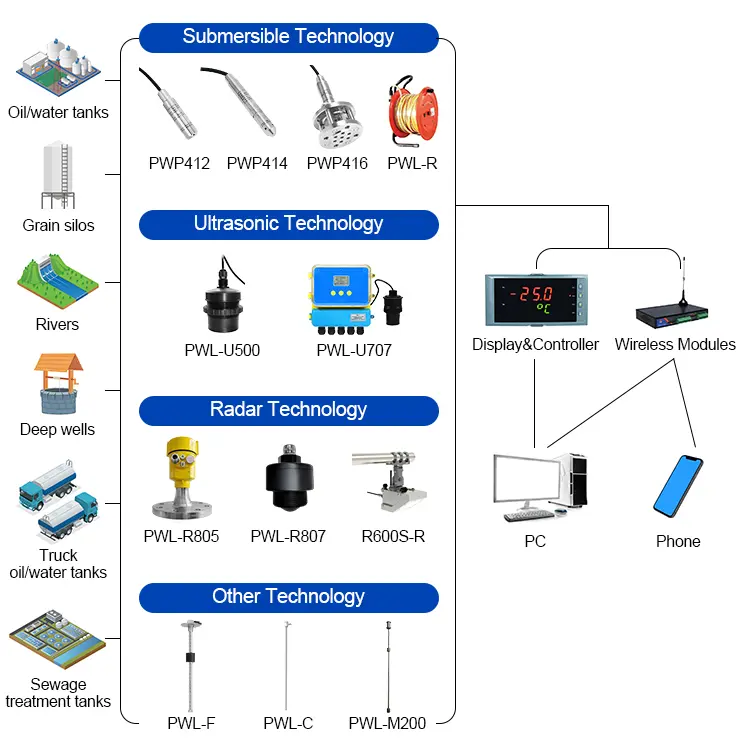
You can explore more industrial level measurement products here:
Pokcenser Level Sensors
Why Choose Pokcenser Level Sensors?
At Pokcenser, we focus on providing reliable industrial measurement solutions for global customers.
Our Advantages
- Industrial-grade quality
- Multiple output protocols available
- OEM & customization support
- Stable performance in harsh environments
- Fast technical support
- Competitive factory pricing
Our level sensors are widely used in:
- Water treatment
- Oil & gas
- Agriculture
- Chemical processing
- Industrial automation
- Tank monitoring systems
FAQ
What is the best level sensor for water tanks?
Ultrasonic level sensors are one of the most popular choices for water tank monitoring because they provide non-contact measurement and require minimal maintenance.
Which level sensor is best for fuel tanks?
Radar level sensors are commonly used for fuel tanks because they offer stable measurement and work well in harsh environments.
What output signals are commonly used in industrial level sensors?
The most common outputs include 4–20mA, RS485, Modbus, and HART protocol.
How do I choose between radar and ultrasonic level sensors?
Radar sensors perform better in environments with steam, dust, foam, or temperature fluctuations, while ultrasonic sensors are often more cost-effective for standard liquid measurement.
Can level sensors be customized?
Yes. Many industrial projects require customized cable length, output protocol, installation type, or measuring range.
Selecting the best level sensor requires evaluating:
- Media type
- Measuring range
- Accuracy
- Temperature & pressure
- Installation environment
- Signal output
- Budget
The right solution can improve operational efficiency, reduce maintenance costs, and increase system reliability.
If you are looking for reliable industrial level measurement solutions, Pokcenser provides a wide range of level sensors for water, fuel, chemical, and industrial applications.
Explore more solutions here:
Pokcenser Official Website
