 English
 Spanish
Long-Term Maintenance Cost Comparison for Industrial Flow Meters
Too often, the sticker price of a flow meter grabs attention while long-term operational expenses decide the real outcome. At Pokcenser Automation, we have seen how a clear view of total cost of ownership keeps operations sustainable and budgets steady. Our aim is to map these costs plainly so clients can make informed choices and optimize their investment across the full lifespan of their equipment.
Understanding the Total Cost of Ownership for Flow Meters
1. Beyond Initial Purchase: Why Long-Term Costs Matter
The initial price tag of a flow meter represents only a fraction of its true cost. Over its operational lifespan, maintenance, calibration, repairs, and potential downtime significantly contribute to the total cost of ownership (TCO). Ignoring these long-term expenses can lead to unexpected budget overruns and operational inefficiencies. We emphasize evaluating TCO to ensure a thorough financial assessment.
2. Key Factors Influencing Flow Meter Lifespan and Performance
Several critical factors dictate a flow meter’s longevity and performance. These include the operating environment, fluid characteristics, material compatibility, and the quality of installation and ongoing maintenance. Understanding these elements helps predict future costs and ensures optimal meter selection. Proper initial selection and consistent care extend the meter’s service life.
Comparing Maintenance Costs Across Different Flow Meter Technologies
Different flow meter technologies present varying maintenance profiles and associated costs. We will examine common types to highlight their specific maintenance considerations.
1. Plastic Tube Flow Meters: Durability and Replacement Costs
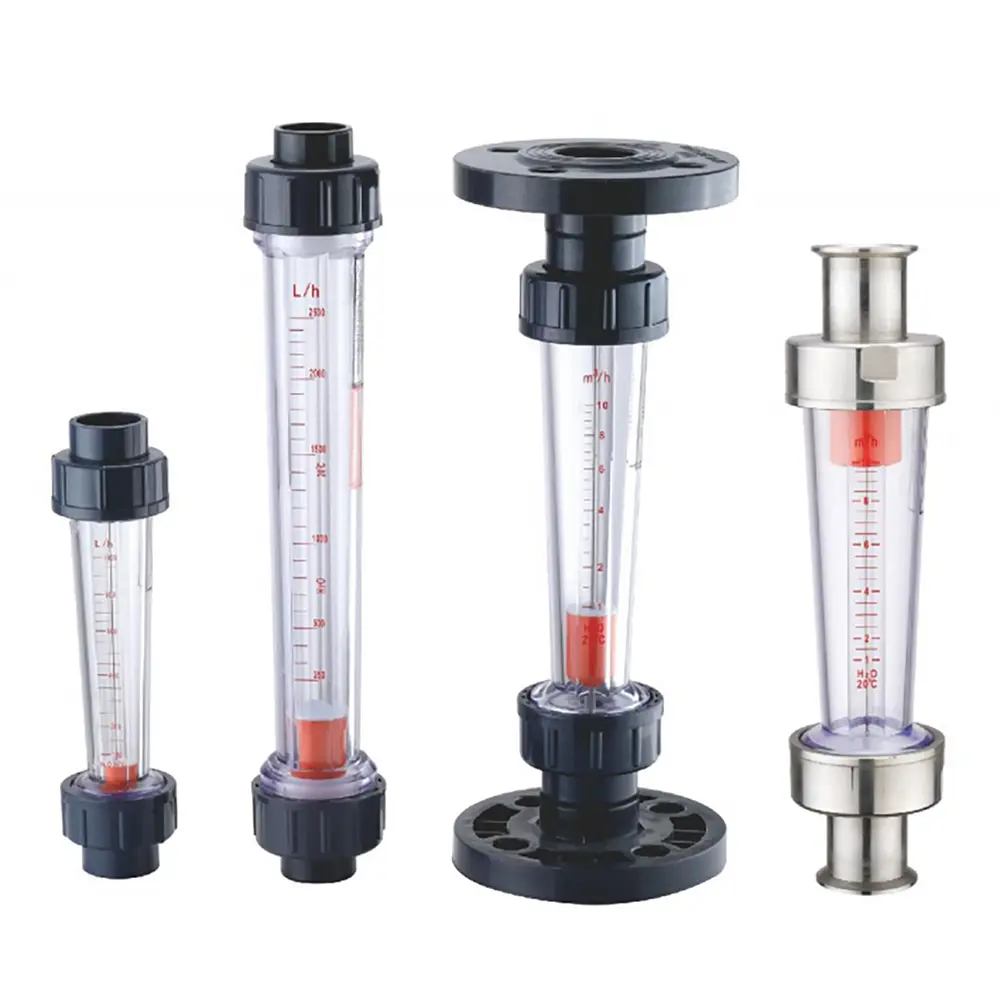
Plastic tube flow meters, such as the LZS Series, are generally inexpensive and corrosion-resistant. They are lightweight and unbreakable, offering a long lifespan in non-demanding applications. However, their plastic construction limits their use in high-temperature or high-pressure environments. In most cases, maintenance involves simple visual inspections and full unit replacement if damaged or worn. Repairing individual components is often not cost-effective.
| Feature | LZS Series Plastic Tube Flowmeter |
|---|---|
| Tube Material | AS or PC |
| Max. Pressure | 6 bar |
| Temperature Range | 0–60 ℃ |
| Accuracy | ±4% |
| Advantages | Lightweight, unbreakable, corrosion-resistant, easy visual reading |
| Maintenance | Low cost, typically replacement of entire unit |
2. Metal Tube Flow Meters: Robustness Versus Specialized Repairs
Metal tube flow meters, like the LZ Metal Tube Flow Meter, offer superior durability in harsh conditions. They withstand high temperatures, high pressures, and corrosive media. Their all-metal construction supports long-term reliability. Repairs can be more complex and costly, often requiring specialized tools and expertise. Component replacement is possible, but parts may be more expensive than for plastic alternatives.
3. Clamp-on Ultrasonic Flow Meters: Non-Invasive Benefits and Sensor Longevity
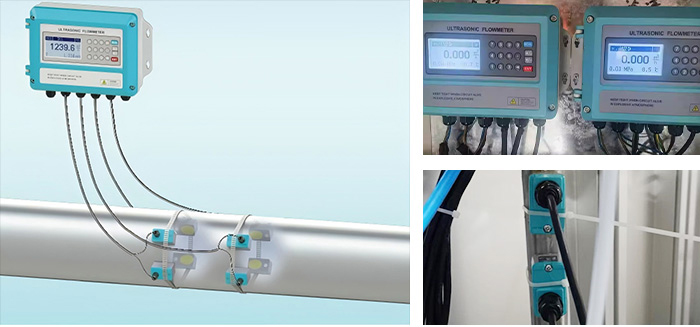
Clamp-on Ultrasonic Flow Meters, such as the PWF-U2000MCC, are non-invasive, meaning they attach to the outside of the pipe. This design eliminates contact with the fluid, significantly reducing wear and tear from corrosive or abrasive media. Maintenance is minimal, focusing on transducer integrity and proper coupling. Sensor longevity is generally high due to the lack of direct contact.
4. Insertion Ultrasonic Flow Meters: Installation and Calibration Considerations
Insertion Ultrasonic Flow Meters, like the PWF-U2000MCI, are partially invasive. They require penetration into the pipe for sensor placement. While installation can be more involved than clamp-on types, many models allow insertion without shutting down the process. Regular calibration and inspection of the inserted sensors are key to maintain accuracy and prevent fouling. The cost of specialized insertion tools and potential process downtime for sensor replacement contribute to maintenance expenses.
5. Small Pipe Clamp-on Ultrasonic Flow Meters: Simplicity and Accessibility
Small Pipe Clamp-on Ultrasonic Flow Meters, such as the PWF-U1000, provide non-invasive measurement for smaller diameter pipes. Their compact design supports quick installation and accessibility. Maintenance is similar to larger clamp-on units, focusing on external sensor condition and coupling. These meters offer a cost-effective solution for applications where pipe modification is undesirable.
Critical Factors Affecting Flow Meter Maintenance Expenses
Maintenance costs are influenced by several interconnected factors. Understanding these helps in predicting and mitigating future expenses.
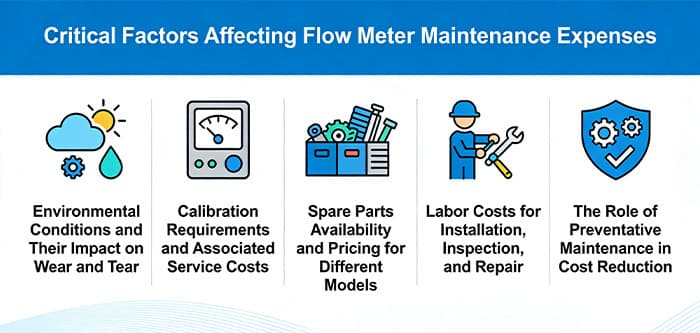
1. Environmental Conditions and Their Impact on Wear and Tear
Harsh environmental conditions, including extreme temperatures, humidity, vibration, and exposure to corrosive atmospheres, accelerate wear and tear on flow meters. For example, meters in outdoor settings might require more frequent inspections and protective measures. Selecting meters with appropriate IP ratings and robust construction for the specific environment is key.
2. Calibration Requirements and Associated Service Costs
All flow meters require periodic calibration to maintain accuracy. The frequency and cost of calibration vary significantly by meter type and application. Some meters, like those used in critical processes, demand more frequent, high-precision calibration, which incurs higher service fees. Less critical applications might tolerate longer calibration intervals.
3. Spare Parts Availability and Pricing for Different Models
The availability and cost of spare parts directly impact maintenance expenses. Proprietary components or specialized parts for older or less common models can be expensive and difficult to source, leading to extended downtime. We recommend considering the long-term availability and pricing of spare parts during the procurement phase.
4. Labor Costs for Installation, Inspection, and Repair
Labor costs constitute a significant portion of maintenance expenses. Complex installations, specialized repair procedures, or frequent inspections require skilled technicians, increasing labor expenditure. Non-invasive technologies often reduce installation and inspection labor significantly.
5. The Role of Preventative Maintenance in Cost Reduction
Implementing a robust preventative maintenance schedule can dramatically reduce long-term costs. Regular checks, cleaning, and minor adjustments prevent major failures and extend the lifespan of the equipment. This proactive approach minimizes unexpected downtime and costly emergency repairs.
Strategies for Minimizing Long-Term Flow Meter Maintenance Costs
Optimizing TCO requires strategic planning and execution. We recommend several key strategies to minimize flow meter maintenance costs.
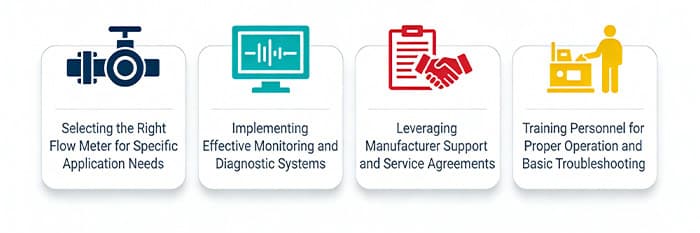
1. Selecting the Right Flow Meter for Specific Application Needs
Choosing the correct flow meter technology for the application is the most critical step in minimizing long-term costs. Factors like fluid type, temperature, pressure, accuracy requirements, and environmental conditions must align with the meter’s specifications. For instance, using a robust metal tube flow meter in a highly corrosive environment will likely yield lower long-term costs than a plastic alternative, despite a higher initial investment.
2. Implementing Effective Monitoring and Diagnostic Systems
Advanced monitoring and diagnostic systems can detect anomalies early, allowing for proactive maintenance rather than reactive repairs. These systems provide real-time data on meter performance and health, enabling scheduled interventions before critical failures occur. This approach minimizes downtime and extends equipment life.
3. Leveraging Manufacturer Support and Service Agreements
Manufacturers often offer full support and service agreements. These can include scheduled maintenance, calibration services, and access to genuine spare parts. Partnering with a reliable manufacturer like Pokcenser Automation ensures access to expert knowledge and efficient service, reducing unexpected costs.
4. Training Personnel for Proper Operation and Basic Troubleshooting
Well-trained personnel can operate flow meters correctly and perform basic troubleshooting, preventing many common issues. This reduces the reliance on external technicians for minor problems, saving both time and money. Continuous training programs are a worthwhile investment.
Contact Pokcenser Automation Today
Optimizing the long-term maintenance costs of your industrial flow meters is key for operational efficiency and profitability. At Pokcenser Automation, we provide high-quality flow meters and comprehensive support to help you achieve the lowest total cost of ownership. Our team of experts is ready to assist you in selecting the ideal solutions for your specific needs and ensuring their reliable operation. Contact us today to discuss your requirements.
Phone: +86 181 7515 5326
Email: in**@*******er.com
FAQs
1. What is the most common cause of flow meter failure?
The most common cause of flow meter failure is often improper selection for the application, leading to issues like corrosion, erosion, or cavitation. Additionally, lack of regular maintenance, incorrect installation, and exposure to harsh operating conditions can significantly contribute to premature failure. Regular inspections and adherence to manufacturer guidelines are necessary.
2. How often should industrial flow meters be calibrated?
The calibration frequency for industrial flow meters depends on several factors, including the required accuracy, the stability of the process, and regulatory requirements. Critical applications may require annual or bi-annual calibration, while less demanding uses might extend to every 2-5 years. We recommend consulting manufacturer specifications and process criticality.
3. Are non-invasive flow meters always cheaper to maintain?
Non-invasive flow meters, such as clamp-on ultrasonic types, often have lower maintenance costs due to their external installation. They avoid direct contact with the process fluid, reducing wear from corrosion or abrasion. However, their initial purchase cost can be higher, and performance might be affected by pipe material or fluid composition.
4. What role does material compatibility play in maintenance costs?
Material compatibility is crucial for minimizing maintenance costs, especially in corrosive or high-temperature applications. Using materials incompatible with the process fluid leads to rapid degradation, requiring frequent repairs or replacements. Proper material selection ensures longer lifespan and reduces the need for expensive interventions.
5. Can environmental factors significantly increase maintenance expenses?
Yes, environmental factors such as extreme temperatures, humidity, vibration, and exposure to dust or corrosive gases can significantly increase maintenance expenses. These conditions accelerate component degradation, leading to more frequent failures and the need for specialized, protective enclosures or more robust meter designs.

