 English
 Spanish
Magnetic vs. Capacitive Level Sensors: A Comprehensive Industrial Comparison
Choosing the right level sensor can make a production line feel steady and predictable, the kind of reliability people quietly appreciate when everything just works. Different technologies shine in different conditions, so the trick is matching principles to reality. Here, we sort out how magnetic and capacitive level sensors work, what that means in the field, and how to pick confidently for your application.
Understanding the Fundamentals of Level Measurement in Industrial Applications
Level measurement underpins plant safety, production efficiency, and the prevention of spills or equipment damage. Accurate level detection matters across chemical processing, water treatment, and food and beverage manufacturing. The sensor you select must align with the medium and the operating environment. Temperature, pressure, corrosiveness, and the presence of solids or foam all influence performance. Knowing where each technology excels and where it struggles sets up a reliable implementation.
How Magnetic Level Sensors Operate: Principles and Key Characteristics
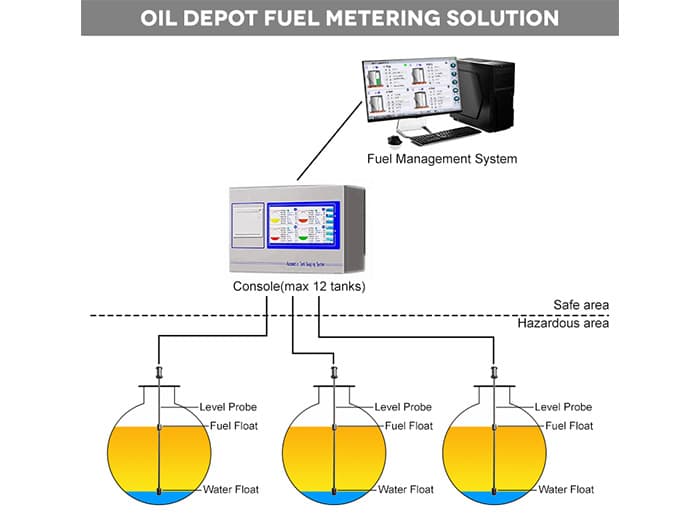
Magnetic level sensors rely on magnetic force to detect liquid levels. In a common design, the magnetic float level sensor, a float containing a magnet travels along a guide tube as the liquid level moves. Reed switches or Hall effect sensors inside the tube register the magnet’s position, producing either continuous or point level output. Another approach, the magnetostrictive level sensor, pairs a magnetic float with a waveguide to produce a precise position signal, delivering high accuracy and repeatability.
Magnetic sensors perform well with harsh chemicals, high temperatures, or high pressures, especially when direct contact with sensitive electronics is undesirable or impractical. Robust constructions often use materials like stainless steel for durability in corrosive environments. They are less influenced by variations in a liquid’s dielectric constant, so they cover a wide mix of liquids, including oils and fuels. Possible issues include float sticking when the liquid carries heavy particulate loads or has very high viscosity. Correct installation and periodic maintenance keep performance consistent.
Pokcenser Automation offers various magnetic level sensing solutions. For example, our magnetostrictive level sensors provide high precision for continuous level measurement. These sensors are ideal for applications requiring fine resolution and long-term stability. If you’re interested, check 《How do Magnetostrictive Sensors Work?》.
Exploring Capacitive Level Sensors: Working Mechanism and Distinctive Features
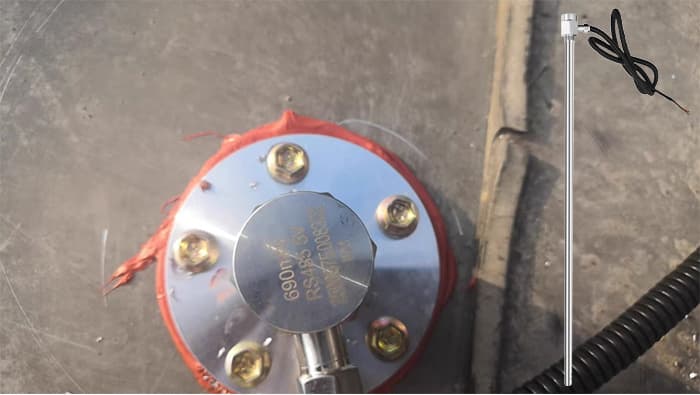
Capacitive level sensors determine level by tracking changes in capacitance. A probe acts as one plate of a capacitor, while the tank wall or a reference electrode serves as the other. As the liquid level shifts, the portion of the probe covered by the medium changes, altering capacitance. Electronics convert that change into a level-proportional signal. These sensors are versatile and can detect both liquid and solid levels.
Capacitive sensors suit non-conductive liquids such as oils, solvents, and granular materials. Their solid-state, non-mechanical design cuts down on moving parts and maintenance compared with some alternatives. Flush-mount or rod-type forms help reduce build-up, which is useful with sticky or viscous media. Sensitivity to dielectric constant means changes in the medium, temperature swings, or coating on the probe can influence readings, so periodic calibration or advanced compensation may be needed.
Pokcenser Automation provides advanced capacitive level sensors like the PWL-C, designed for precision and reliability in diverse industrial settings. These sensors are especially useful in applications where hygiene is critical, such as food and Pharmaceutical industries. If you’re interested, check 《Capacitive Level Sensors: Principles & Best Use Cases》.
Direct Comparison: Magnetic vs. Capacitive Level Sensors Across Critical Criteria
When selecting between magnetic and capacitive level sensors, several critical criteria guide the decision. We have compiled a table to highlight their differences across key operational aspects.
| Feature | Magnetic Level Sensors | Capacitive Level Sensors |
|---|---|---|
| Measurement Principle | Magnetic float activates reed switches or Hall effect sensors; magnetostrictive technology uses magnetic float and waveguide. | Changes in capacitance due to varying immersion of a probe in the medium. |
| Media Type | Suitable for most liquids, including harsh chemicals, oils, and fuels. Less affected by dielectric constant. | Best for non-conductive liquids (oils, solvents) and granular solids. Sensitive to dielectric constant. |
| Accuracy | High accuracy and repeatability, especially magnetostrictive types. | High accuracy, but can be affected by dielectric constant variations. |
| Temperature Range | Wide operating temperature range, often up to 400°C. | Moderate operating temperature range, typically up to 200°C. |
| Pressure Range | High pressure resistance (up to 100 bar or more). | Moderate pressure resistance, depends on probe design. |
| Corrosive Media | Excellent resistance with appropriate material selection (e.g., stainless steel). | Good resistance with appropriate probe materials (e.g., PTFE coated). |
| Viscous/Sticky Media | Can be affected by float sticking; requires careful selection and maintenance. | Less prone to sticking with flush-mount designs, but coating can affect accuracy. |
| Installation | Top, side, or bottom mounting; requires access for float movement. | Top, side, or bottom mounting; probe can be rigid or flexible. |
| Maintenance | Periodic cleaning of float and guide tube; mechanical wear checks. | Less mechanical maintenance; may require recalibration for dielectric changes or coating. |
| Cost | Generally moderate to high, depending on material and technology. | Generally moderate, can be lower for basic models. |
Magnetic sensors, such as those used in our LZ Metal Tube Flow Meter, offer robust performance in extreme conditions, while capacitive sensors, like our PWL-C, provide a non-contact solution for specific liquid types. The best choice comes from weighing these factors against your application’s demands.
Selecting the Right Level Sensor for Your Application: Practical Considerations and Pokcenser’s Expertise
Choosing the correct level sensor drives process efficiency and operational safety. We consider several practical factors when recommending solutions to our clients. First, evaluate the physical and chemical properties of the medium. Is it conductive or non-conductive? Is it corrosive, viscous, or prone to foaming or coating? These characteristics define material compatibility and the appropriate measurement principle. For instance, highly corrosive liquids may call for PTFE-coated probes.
Second, assess the operating conditions. Think through temperature, pressure, and the potential for vibration or external interference. Some sensors handle extremes better than others, while certain designs prefer a stable environment. Third, specify the required accuracy and response time. High-stakes processes need tighter precision and faster updates. Finally, account for installation constraints and maintenance. Available space, mounting options, and ease of calibration all influence lifecycle cost.
At Pokcenser Automation, we leverage over a decade of experience to provide tailored solutions. Our team assists clients in evaluating their unique application needs, ensuring the selection of the most suitable and reliable level sensors. We offer a broad range of products, including advanced ultrasonic level sensors and robust submersible level transmitters, designed for various industrial demands. We are proud that 150,000+ solutions are provided to our clients in 100+ countries.
FAQ
What are the primary factors to consider when choosing between magnetic and capacitive level sensors?
Key factors include the type of media (conductive/non-conductive, corrosive), temperature and pressure conditions, accuracy requirements, installation space, budget, and the presence of foam or build-up. Magnetic sensors are generally robust for harsh liquids, while capacitive sensors excel with non-conductive media and can detect interface levels.
Can magnetic level sensors be used for highly viscous or corrosive liquids?
Yes, magnetic level sensors, particularly those with robust material construction like stainless steel or specialized plastics, are well-suited for highly viscous and corrosive liquids. Their non-contact or float-based design minimizes direct exposure of sensitive components, enhancing durability in challenging environments. Pokcenser’s experience in chemical and oil & gas industries demonstrates this capability.
Are capacitive level sensors affected by changes in temperature or pressure?
Capacitive level sensors can be affected by temperature changes, as the dielectric constant of the measured medium can vary with temperature. Modern capacitive sensors often include built-in temperature compensation to mitigate these effects. Pressure generally has less direct impact unless it significantly alters the density or dielectric properties of the medium. For precise applications, choosing sensors with advanced compensation features is a smart move.
What maintenance is typically required for magnetic and capacitive level sensors?
Maintenance for magnetic level sensors usually involves periodic cleaning of the float and guide tube, especially in applications with sticky or scaling media, and checking for mechanical wear. Capacitive sensors, being solid-state, often require less physical maintenance but may need occasional recalibration, particularly if the dielectric properties of the medium change or if significant build-up occurs on the probe. Both types benefit from regular checks of electrical connections and output signals.
Optimize Your Process with Pokcenser Automation
Ready to optimize your industrial process with the right level sensor? Contact Pokcenser Automation today for expert consultation and customized solutions tailored to your specific application needs. Our 10+ years of experience and dedicated support team ensure smooth integration and long-term reliability. Email us at in**@*******er.com or call +86 181 7515 5326.

