 English
 Spanish
Mastering Pressure Sensor Installation: A Comprehensive Guide
When pressure data is right, operations run smooth and everyone sleeps better. When it’s wrong, you feel it fast in the control room and out on the floor. After years of installing and troubleshooting transmitters across plants, we have learned that picking the right sensor and mounting it the right way has a direct, visible impact on safety, efficiency, and uptime. What follows is the same playbook we use to choose, install, and maintain pressure sensors so they deliver accurate numbers and a long service life.
Understanding the Fundamentals of Pressure Sensor Technology
1. Defining Pressure Sensors and Their Core Functionality
Pressure sensors measure the force a fluid, liquid or gas, applies per unit area, then turn that into an electrical signal such as 4-20 mA, 0-10V, or a digital output like RS485 Modbus. The control system uses this signal for monitoring, analysis, or automated action. Inside the device, a sensing element flexes under pressure, and that mechanical change becomes an electrical change. For example, Piezoresistive Pressure Sensors utilize changes in electrical resistance due to mechanical stress.
2. Exploring the Diverse Types of Pressure Sensors Available
The industrial landscape includes multiple pressure sensor types, each suited to specific applications and environments. Getting the distinctions right pays off during installation and operation.
Here is a comparison of common pressure sensor types:
| Sensor Type | Principle of Operation | Typical Applications | Advantages | Considerations |
|---|---|---|---|---|
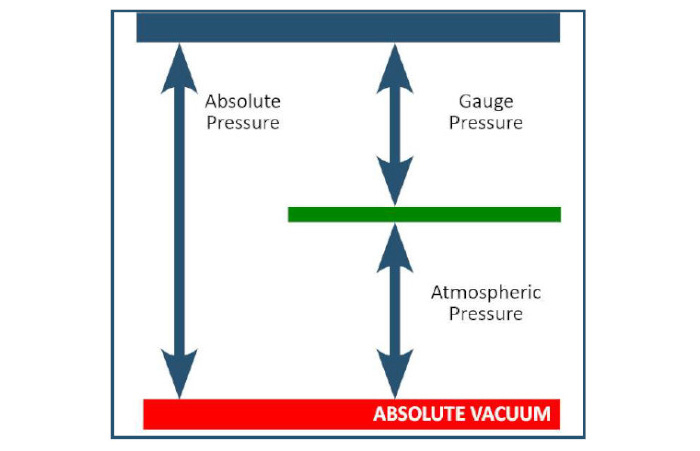
| Absolute Pressure Sensor | Measures pressure relative to a perfect vacuum. | Vacuum systems, altimeters, barometric pressure measurement. | Unaffected by atmospheric pressure changes. | Requires a stable vacuum reference. |
| Gauge Pressure Sensor | Measures pressure relative to ambient atmospheric pressure. | Tire pressure, hydraulic systems, most industrial process pressures. | Simple, cost-effective for relative measurements. | Readings fluctuate with atmospheric pressure. |
| Differential Pressure Sensor | Measures the difference between two pressure points. | Flow measurement (using orifice plates), level measurement in sealed tanks, filter monitoring. | Highly accurate for difference measurements. | Requires two pressure connections. |
| Sealed Gauge Pressure Sensor | Measures pressure relative to a sealed internal reference pressure (often atmospheric pressure at sea level). | High-altitude applications where atmospheric pressure varies significantly. | More stable than gauge sensors in varying altitudes. | Internal reference can drift over time. |
| Hydrostatic Pressure Sensor | Measures the pressure exerted by a column of liquid to determine level. | Tank level measurement, well depth, reservoir monitoring. | Ideal for liquid level, robust for submersion. | Density of liquid affects readings, temperature compensation may be needed. |
| Piezoresistive Pressure Sensors | Utilizes the change in electrical resistance of a material under mechanical strain. | General industrial pressure, OEM applications, Medical devices | High sensitivity, good linearity, wide temperature range. | Can be affected by temperature changes without compensation. |
| Ceramic Pressure Sensors | Employs ceramic diaphragm deformation to measure pressure. | Corrosive media, high-temperature applications. | Excellent chemical resistance, high stability. | More brittle than metal diaphragms. |
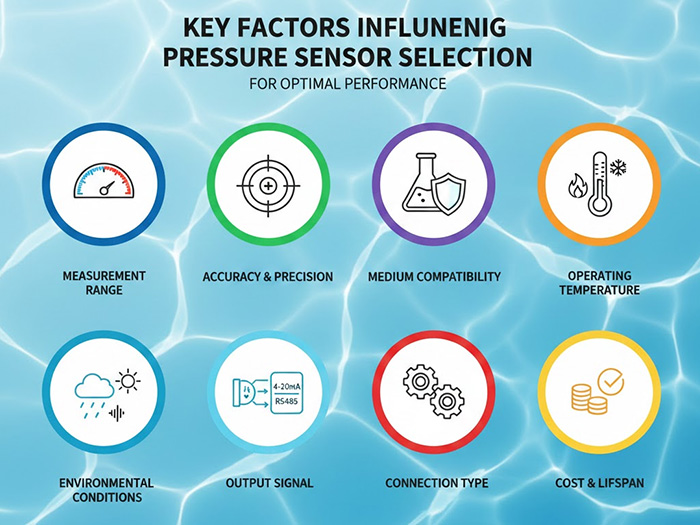
3. Key Factors Influencing Pressure Sensor Selection for Optimal Performance
Choosing the right sensor starts with a clear definition of the job it needs to do. Here is the short list we walk through on every project:
- Measurement Range: Define the minimum and maximum pressures the sensor must accurately measure.
- Accuracy and Precision: Determine the required level of measurement fidelity for the application.
- Process Medium Compatibility: Ensure the sensor’s wetted materials resist corrosion or degradation from the measured fluid. This is particularly crucial in the Chemical Tanks and chemical processing industries.
- Operating Temperature: Verify the sensor’s operational temperature limits align with process conditions.
- Environmental Conditions: Assess ambient temperature, humidity, vibration, and potential exposure to hazardous area sensors.
- Output Signal: Match the sensor’s output (e.g., 4-20mA, RS485) with the control system’s input requirements.
- Connection Type: Select appropriate process connections (threaded, flanged, sanitary) and electrical connections.
- Cost and Lifespan: Balance initial investment with long-term reliability and maintenance costs.
Essential Preparations Before Installing Any Pressure Sensor
Good installations begin before a wrench ever touches a fitting. Over our 10+ years in industrial automation, these preparations have consistently prevented rework and downtime for our clients.
1. Conducting a Thorough Site Assessment and Environmental Analysis
Before installation, a careful site walk helps spot pitfalls early and nail sensor placement.
- Evaluate Process Conditions: Confirm pressure, temperature, and fluid characteristics.
- Inspect Installation Point: Verify the mechanical integrity of the pipe or vessel.
- Assess Environmental Factors: Check for excessive vibration, extreme temperatures, or electromagnetic interference.
- Identify Safety Hazards: Recognize any chemical, electrical, or physical risks.
- Plan Accessibility: Ensure the sensor is accessible for maintenance and calibration.
2. Gathering Necessary Tools and Safety Equipment for Installation
Showing up with the right kit keeps the job safe and on schedule.
- Tools: Wrenches, torque wrenches, wire strippers, multimeters, and calibration equipment.
- Personal Protective Equipment (PPE): Safety glasses, gloves, hard hats, and flame-retardant clothing, especially when dealing with hazardous area sensors.
- Lockout/Tagout Gear: Essential for safely de-energizing equipment.
- Documentation: Sensor manual, wiring diagrams, and safety data sheets (SDS) for process fluids.
3. Understanding Electrical Requirements and Signal Integration for Sensors
Clean power and clean signals are half the battle. Get these right upfront and you avoid a lot of chasing noise later.
- Power Supply: Confirm the available power matches the sensor’s requirements (e.g., 24 VDC).
- Wiring: Use appropriate shielded cables to minimize electrical noise and interference.
- Grounding: Ensure proper grounding to protect against electrical surges and enhance signal integrity.
- Signal Type: Understand the sensor’s output (e.g., 4-20mA, RS485 Modbus) and configure the control system accordingly.
- Cable Length: Adhere to maximum cable length specifications to prevent signal degradation.
Step-by-Step Installation Procedures for Common Pressure Sensor Types
Sensor type dictates the details. The steps below reflect the practices that keep leaks, drift, and downtime off the logbook.
1. Installing Absolute Pressure Sensors for Vacuum and Sealed Systems
Absolute pressure sensors measure pressure relative to a perfect vacuum, making them ideal for vacuum applications or sealed systems where atmospheric pressure fluctuations are irrelevant.
- Prepare the Connection Point: Clean the threaded port or flange surface thoroughly.
- Apply Thread Sealant: Use an appropriate sealant (e.g., PTFE tape or paste) on threaded connections.
- Mount the Sensor: Carefully thread the sensor into the port or attach it to the flange, ensuring a tight seal.
- Tighten Securely: Use a wrench to tighten the sensor to the manufacturer’s recommended torque.
- Connect Electrical Wiring: Follow the wiring diagram to connect power and signal lines.
- Verify Integrity: Check for leaks in vacuum systems or proper sealing in sealed systems.
2. Mounting Gauge Pressure Sensors for Atmospheric Reference Applications
Gauge pressure sensors measure pressure relative to the surrounding atmospheric pressure. They are widely used in hydraulic systems, pneumatic systems, and general industrial applications.
- Isolate the System: Shut down and depressurize the system before installation.
- Prepare the Port: Clean the connection point and ensure it is free of debris.
- Apply Sealant: Use thread sealant on the sensor’s process connection.
- Install the Sensor: Thread the sensor into the pressure port.
- Secure Connection: Tighten the sensor firmly, but do not overtighten.
- Connect Wiring: Follow the wiring diagram for electrical connections.
- Restore Pressure: Slowly repressurize the system and check for leaks.
3. Integrating Differential Pressure Sensors for Flow and Level Measurement
Differential Pressure Meters measure the pressure difference between two points, commonly used for flow measurement across an orifice plate or liquid level in a closed tank.
- Identify High and Low-Pressure Taps: Locate the correct taps on the process line or vessel.
- Install Impulse Lines: Connect impulse lines from the taps to the sensor, ensuring equal length and slope for liquid applications to prevent measurement errors.
- Mount Manifold (if applicable): Install a 3-valve or 5-valve manifold between the impulse lines and the sensor for isolation and calibration.
- Connect Sensor: Attach the differential pressure sensor to the manifold or directly to the impulse lines.
- Wire Electrically: Follow the manufacturer’s instructions for power and signal wiring.
- Purge Impulse Lines: For liquid applications, purge air from the lines; for gas, purge condensate.
- Calibrate Zero and Span: Perform initial calibration according to the process requirements.
Ensuring Accuracy and Reliability Through Proper Post-Installation Practices
Installation gets you started. The following habits keep readings tight and devices healthy for the long run.
1. Performing Initial Calibration and Verification of Sensor Readings
Calibration keeps the output aligned with reality across the specified range.
- Zero Adjustment: Perform a zero adjustment with no pressure applied or at a known reference pressure.
- Span Adjustment: Apply a known maximum pressure and adjust the sensor’s span to match the output.
- Multi-point Calibration: For enhanced accuracy, calibrate at several points across the measurement range.
- Document Readings: Record all calibration data for future reference and compliance.
2. Implementing Effective Wiring and Shielding Techniques
Noise is the enemy of clean data. A few practical wiring choices prevent most headaches.
- Use Shielded Cables: Employ shielded cables for signal transmission, especially in environments with high electromagnetic interference.
- Ground Shield Properly: Ground the cable shield at one end, typically at the control system, to prevent ground loops.
- Separate Signal and Power Cables: Route signal cables away from high-voltage power lines to reduce inductive interference.
- Secure Connections: Ensure all electrical connections are tight and protected from moisture and corrosion.
3. Establishing a Regular Maintenance and Troubleshooting Schedule
A light, consistent maintenance routine pays back in uptime and measurement stability.
- Routine Inspections: Periodically check for physical damage, corrosion, or loose connections.
- Cleaning: Clean process connections and sensing elements as needed, especially in applications with fouling media.
- Recalibration: Recalibrate sensors at regular intervals, or as dictated by process criticality and environmental conditions.
- Software/Firmware Updates: Apply necessary updates to intelligent sensors or transmitters.
- Troubleshooting: Address any erratic readings or communication issues promptly by consulting the sensor manual or contacting technical support.
Expert Insights from Pokcenser Automation Technology
1. Leveraging 10+ Years of Industrial Automation Experience
Pokcenser Automation has over 10 years of dedicated experience in industrial process control automation. We specialize in the research, development, and application of a wide range of sensors, including flow meters, level sensors, pressure transmitters, and temperature sensors. Our expertise ensures that we provide robust and reliable solutions tailored to diverse industrial needs. We are proud that 150,000+ solutions are provided to our clients in 100+ countries.
2. The Importance of Comprehensive Pre-Sales and After-Sales Support
We believe that exceptional customer support is as crucial as product quality. Our 6-person pre-sales and after-sales team offers end-to-end assistance, from initial application evaluation to recommending suitable solutions and providing ongoing after-sales support. This one-stop, worry-free service ensures our clients achieve optimal performance and satisfaction.
3. Custom Solutions and OEM/ODM Capabilities for Unique Applications
Understanding that every industrial application has unique requirements, Pokcenser Automation offers custom solutions and OEM/ODM capabilities. We collaborate closely with clients to design and manufacture sensors that precisely meet their specifications, ensuring seamless integration and superior performance in specialized environments.
Partner with Pokcenser Automation for Reliable Pressure Sensing Solutions
Accurate pressure measurement in industrial settings takes careful planning, correct installation, and steady maintenance. At Pokcenser Automation, we combine over a decade of industry expertise with an emphasis on quality and customer support. Whether you need standard pressure sensors or custom OEM solutions, our team is ready to assist you. Contact us today to discuss your specific requirements and discover how our advanced sensing technologies can enhance your operational efficiency and safety.
Phone: +86 181 7515 5326
Email: in**@*******er.com
FAQs
1. What are the most common mistakes to avoid during pressure sensor installation?
Common mistakes include incorrect sensor orientation, overtightening connections that damage the sensor or threads, inadequate cable shielding that invites interference, neglecting proper grounding, and skipping initial calibration. Any of these issues can degrade accuracy and shorten sensor life.
2. How often should pressure sensors be recalibrated after installation?
Recalibration intervals depend on application criticality, operating conditions, and sensor specifications. As a starting point, plan for every 6-12 months. Harsher environments or mission-critical measurements may warrant shorter intervals.
3. Can a single pressure sensor type be used for all industrial applications?
No. Application details such as process medium, temperature, pressure range, and accuracy requirements determine the best sensor type. For instance, a gauge pressure sensor is not suitable for vacuum measurements.
4. What role does temperature play in pressure sensor accuracy and installation?
Temperature affects accuracy through thermal drift. During installation, verify the sensor’s operating temperature range against both process and ambient conditions. Many modern sensors include temperature compensation mechanisms.
5. How do I choose between an absolute and a gauge pressure sensor?
Choose an absolute pressure sensor when measuring pressure relative to a perfect vacuum, such as in sealed systems or for barometric readings. Pick a gauge pressure sensor when measuring pressure relative to the surrounding atmospheric pressure, common in hydraulic or pneumatic systems.

