 English
 Spanish
Non-Contact Level Sensors: Safe & Precise for Hazardous Areas
Measuring liquid and solid levels in hazardous environments demands more than accuracy; it calls for a safety-first mindset shaped by real constraints. We address the risks of contact-based methods, outline safer non-contact options like radar, ultrasonic, and guided wave radar, and map them to the realities of explosive atmospheres and regulatory frameworks such as ATEX and IECEx. Selection and installation are covered with practical factors that matter in the field, followed by maintenance approaches that preserve uptime. We close with our certified offerings, customization capabilities, and direct support channels for hazardous area applications.
Addressing the Critical Challenges of Level Measurement in Hazardous Environments
This section examines the dangers and complexities of monitoring materials where explosions, fires, or toxic releases are possible, and why solutions must balance safety with accuracy. It reviews the risks of traditional contact-based methods and introduces non-contact measurement as a safer path.
1.1 The Inherent Dangers of Hazardous Locations
Hazardous locations contain flammable gases, vapors, liquids, combustible dusts, or ignitable fibers. These substances present risks of explosions or fires. Any equipment in these areas must avoid introducing ignition sources. Instrumentation is governed by strict regulations in such environments.
1.2 Limitations of Traditional Contact-Based Level Measurement
Contact-based sensors physically touch the medium being measured. This can cause corrosion, buildup, and mechanical wear. In hazardous substances, a compromised sensor may leak or spark, leading to catastrophic failures. Maintenance becomes risky and complex as a result.
1.3 The Imperative for Enhanced Safety and Reliability
Enhanced safety and reliability are non-negotiable in hazardous environments. Non-contact measurement systems reduce direct exposure to dangerous materials. They lower maintenance demands and support continuous operation. This protects personnel and reduces environmental risk.
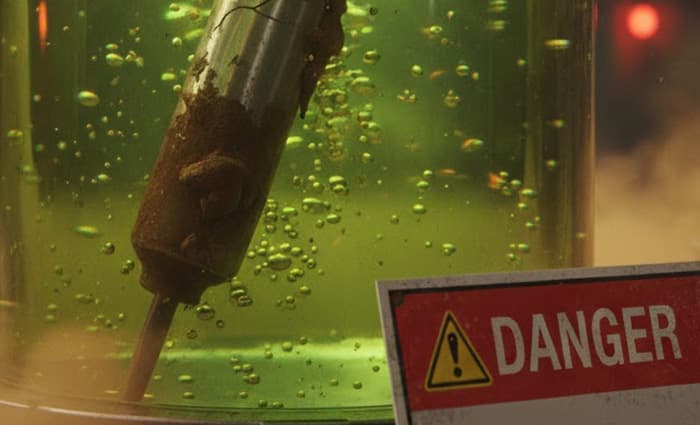
Unveiling Non-Contact Level Sensor Technologies for Safety-Critical Applications
We review non-contact level sensing technologies, including radar, ultrasonic, and guided wave radar. Their operating principles, strengths, and limits are detailed for use under stringent safety protocols. Suitability is compared across hazardous materials and process conditions.
2.1 Radar Level Sensors: Precision in Extreme Conditions
Radar level sensors emit microwaves that reflect off the material surface, using time-of-flight to calculate distance. They perform in extreme temperatures, pressures, and vacuum. Dust, foam, and vapor have minimal impact. Radar delivers high accuracy and reliability for critical applications.
If you’re interested, check 《Radar vs. Ultrasonic Level Sensors: A Selection Guide》.
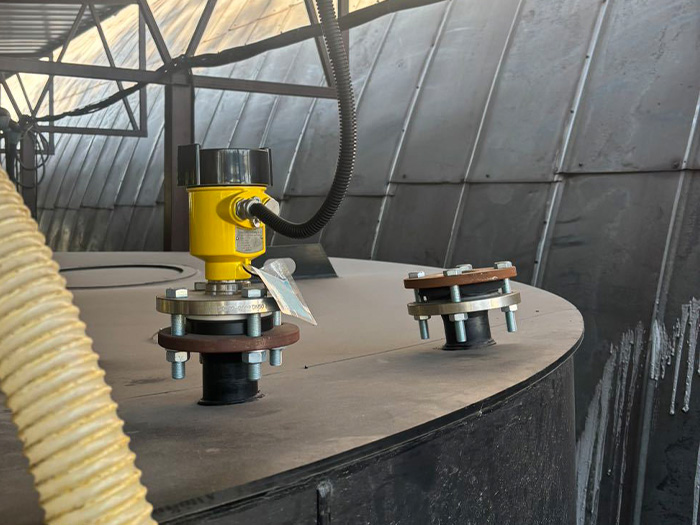
2.2 Ultrasonic Level Sensors: Versatility for Diverse Media
Ultrasonic sensors emit sound waves to measure distances. They suit liquids and solids when the required accuracy is moderate. Temperature changes, foam, or heavy vapor can affect performance. We recommend careful evaluation of process conditions for optimal results.
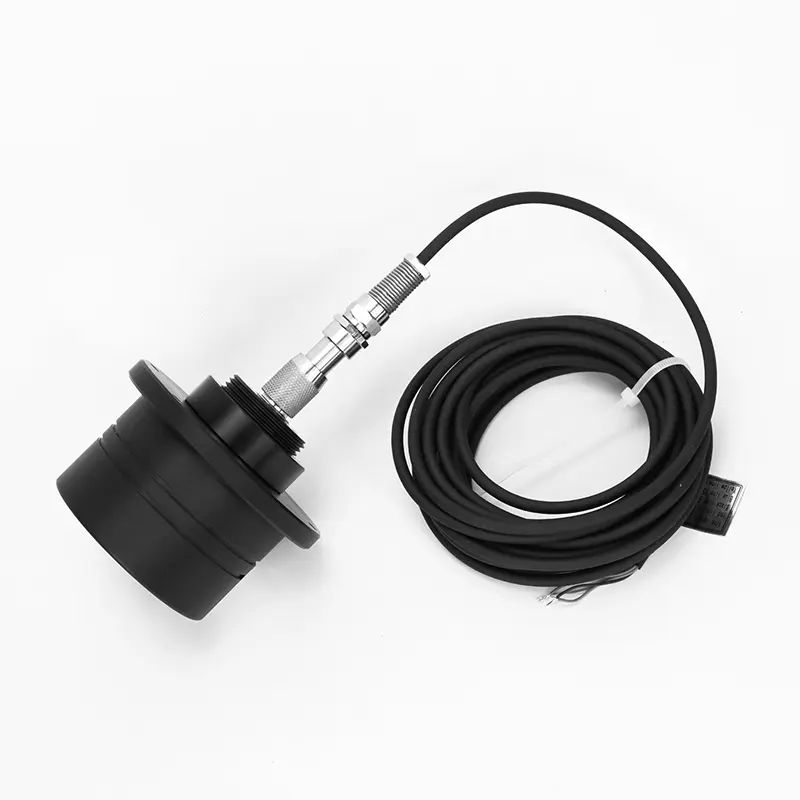
2.3 Guided Wave Radar: Overcoming Challenging Process Conditions
Guided wave radar sensors send microwave pulses along a probe. This ensures reliable measurement despite turbulence or varying dielectric constants. They work well in small tanks or those with internal obstructions. The technology is robust for complex applications.
Navigating Safety Standards and Certifications for Hazardous Area Deployment
We cover regulatory frameworks and certifications such as ATEX, IECEx, and intrinsic safety principles that govern equipment in hazardous environments. These standards support safe operation of non-contact level sensors and help prevent catastrophic incidents. Compliance is treated as a baseline requirement for selection and implementation.
3.1 Understanding ATEX and IECEx Directives
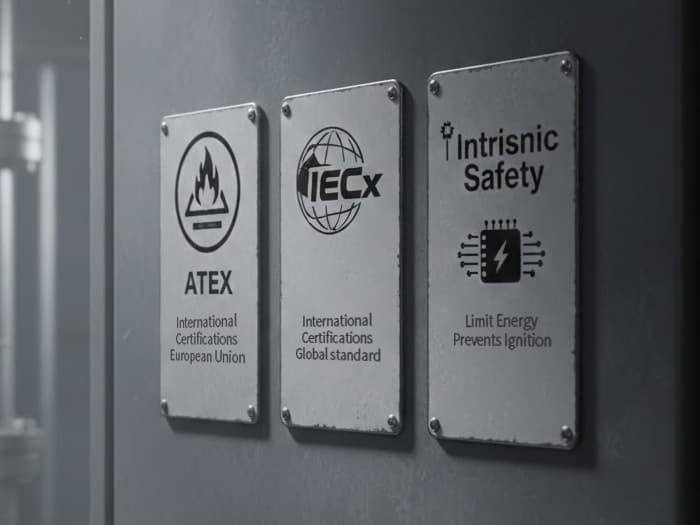
ATEX and IECEx are international certifications for equipment used in potentially explosive atmospheres. ATEX applies within the European Union, while IECEx is a global standard. Compliance confirms adherence to rigorous safety requirements. This reduces explosion risks.
3.2 Principles of Intrinsic Safety and Explosion Protection
Intrinsic safety limits electrical and thermal energy to prevent ignition. This protection method is central for hazardous area sensors. Other methods include flameproof enclosures and increased safety designs. Each method targets specific hazard types.
If you’re interested, check 《Safety in Hazardous Areas: Using Explosion-Proof Sensors》.
3.3 Ensuring Regulatory Compliance and Operational Integrity
Selecting certified equipment is required for regulatory compliance and operational integrity. We verify all our products meet relevant safety standards. This supports reliable performance in hazardous environments.
Strategic Selection and Implementation of Non-Contact Sensors for Optimal Performance
This section outlines how to choose a non-contact level sensor for specific hazardous applications. It weighs process conditions, material properties, installation constraints, and overall cost-effectiveness. The aim is successful deployment and long-term reliability.
4.1 Key Considerations for Sensor Selection
Consider the medium’s properties, temperature, and pressure ranges. Define the required accuracy and response time. Assess the installation environment and available power supply.
| Feature / Model | Radar Level Sensors | Ultrasonic Level Sensors | Guided Wave Radar |
|---|---|---|---|
| Measurement Principle | Microwaves (Time-of-Flight) | Sound Waves (Time-of-Flight) | Microwaves (Guided by Probe) |
| Hazardous Conditions | High temperature, pressure, vacuum | Moderate conditions | Turbulence, foam, varying dielectric |
| Accuracy | High | Moderate | High |
| Affected by | Minimal | Temperature, foam, vapor | Minimal |
| Installation | Top-mounted | Top-mounted | Top-mounted, side-mounted |
4.2 Installation Best Practices in Hazardous Zones
Correct installation underpins safety and performance. Follow manufacturer guidance and local regulations. Ensure proper wiring and grounding. Use certified personnel for work in hazardous areas.
4.3 Maximizing Reliability and Minimizing Maintenance
Regular calibration and preventative maintenance extend sensor service life. Non-contact sensors usually need less maintenance. This reduces personnel exposure to hazardous conditions. Remote monitoring further improves safety and efficiency.
Pokcenser Automation’s Commitment to Safe and Reliable Level Measurement Solutions
Pokcenser Automation Technology Company Limited provides extensive expertise in industrial process control. We have over 10 years of experience. Our products hold CE, ATEX, ISO, and RoHS certificates. We deliver high-quality, safe, and customized non-contact level sensor solutions for various hazardous areas. Our dedicated 6-person pre-sales and after-sales team supports clients from application evaluation to post-sales service. We aim to create value for clients worldwide through long-term cooperation.
Discover Your Ideal Solution
Discover how Pokcenser Automation’s certified non-contact level sensors can enhance safety and efficiency in your hazardous area operations. Contact our expert team today for a tailored solution and experience our one-stop, worry-free service.
Email: in**@*******er.com
Phone: +86 181 7515 5326
FAQs
1. What makes an area ‘hazardous’ for level sensor deployment?
An area is classified as hazardous if it contains flammable gases, vapors, liquids, combustible dusts, or ignitable fibers in concentrations sufficient to cause explosions or fires. This classification dictates the type of equipment permitted to ensure safety.
2. How do non-contact level sensors ensure safety in explosive atmospheres?
Non-contact level sensors operate without physical interaction with the process medium. This removes potential ignition sources like sparks or heat from moving parts. Many models are also certified as explosion-proof sensors or intrinsically safe, further reducing risk.
3. What are the main differences between radar and ultrasonic sensors for hazardous applications?
Radar level sensors use microwaves, which are less affected by process conditions like temperature, pressure, and vapor. Ultrasonic sensors use sound waves, which can be attenuated by foam, dust, or significant temperature variations. Radar is generally more robust in challenging environments.
4. Which certifications should I look for when selecting a level sensor for a hazardous area?
Look for certifications like ATEX (for Europe) and IECEx (international). These confirm the sensor meets specific safety standards for use in explosive atmospheres. Intrinsic safety (Ex i) is a common protection method.
5. Can Pokcenser Automation provide customized non-contact level sensor solutions for unique hazardous environments?
Yes, Pokcenser Automation offers OEM and ODM services. Our team evaluates specific application requirements and designs customized non-contact level sensor solutions. We ensure compliance with relevant safety standards and optimal performance.

