 English
 Spanish
Online Dissolved Oxygen Monitoring in Aquaculture: Improving Fish Health and Production Efficiency
Dissolved oxygen (DO) is one of the most important water quality parameters in aquaculture. Whether raising fish, shrimp, crabs, or other aquatic species, maintaining adequate oxygen levels directly affects growth rates, feed conversion efficiency, disease resistance, and survival rates.
Low dissolved oxygen can quickly lead to stress, reduced feeding activity, disease outbreaks, and even mass mortality events. As aquaculture operations become larger and more intensive, manual water testing is no longer sufficient.
Modern fish farms increasingly rely on online dissolved oxygen monitoring systems to provide real-time water quality data and support intelligent aeration management.
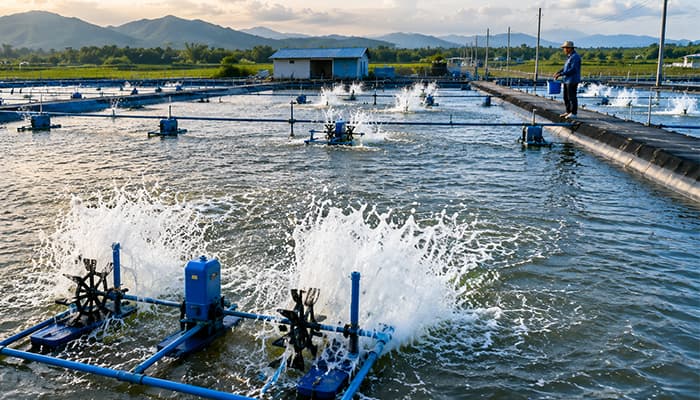
Why Dissolved Oxygen Is Critical in Aquaculture
Aquatic organisms require dissolved oxygen to survive.
Unlike terrestrial animals that obtain oxygen directly from the air, fish and shrimp depend entirely on oxygen dissolved in water.
Fish Growth and Feed Conversion
Adequate oxygen levels help:
- Improve growth rates
- Increase feed utilization efficiency
- Reduce feed waste
- Improve production yields
Disease Prevention
Low oxygen conditions often weaken immune systems and increase disease susceptibility.
Water Quality Stability
Proper dissolved oxygen levels help maintain a healthy aquatic ecosystem and support beneficial biological activity.
Reduced Mortality Risk
Continuous monitoring helps prevent sudden oxygen depletion events that can cause significant stock losses.
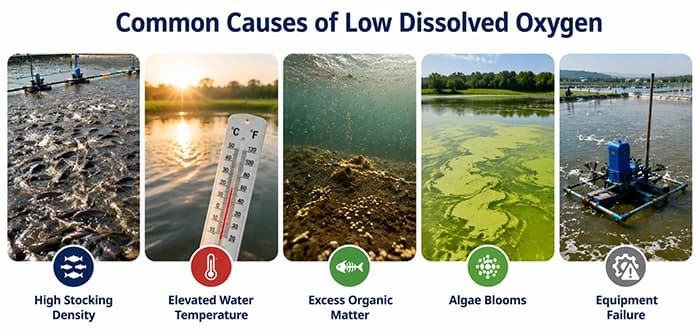
Common Causes of Low Dissolved Oxygen
Aquaculture ponds and tanks experience oxygen fluctuations throughout the day.
High Stocking Density
More fish means higher oxygen consumption.
Elevated Water Temperature
Warm water holds less dissolved oxygen.
Excess Organic Matter
Feed residues and waste increase oxygen demand during decomposition.
Algae Blooms
During nighttime, algae consume oxygen and can cause rapid oxygen drops.
Equipment Failure
Aerator failures can quickly create dangerous conditions.
Without continuous monitoring, operators may not detect these problems until fish behavior changes or losses occur.
Why Online DO Monitoring Is Better Than Manual Testing
Traditional handheld measurements provide only occasional snapshots of water conditions.
However, dissolved oxygen levels can change rapidly.
Online monitoring systems provide:
Real-Time Data
Continuous measurement allows immediate response to changing conditions.
Alarm Functions
Operators can receive alerts when oxygen levels fall below preset thresholds.
Automated Aeration Control
Monitoring systems can be integrated with aerators to improve efficiency.
Historical Data Analysis
Long-term trends help optimize farm management practices.
Recommended Product: PCS4760CD Digital Dissolved Oxygen Sensor (Optical)
Key Features
- Optical fluorescence technology
- Fast response time
- Low maintenance
- No electrolyte consumption
- Excellent long-term stability
- Suitable for continuous online monitoring
Typical Applications
- Fish farming
- Shrimp farming
- Aquaculture ponds
- RAS Systems
- Environmental Water Monitoring
Why Optical DO Sensors Are Becoming the Industry Standard
Compared with traditional membrane-based dissolved oxygen sensors, optical technology offers several advantages.
Reduced Maintenance
Traditional electrochemical sensors require:
- Electrolyte replacement
- Membrane replacement
- Frequent calibration
Optical sensors eliminate many of these requirements.
Improved Stability
Optical measurement is less affected by flow conditions and sensor aging.
Longer Service Life
Fewer consumable components mean reduced maintenance costs.
Faster Deployment
Installation and commissioning are typically simpler.
Typical Aquaculture Applications
Fish Farming Ponds
Continuous oxygen monitoring helps maintain optimal growing conditions.
Shrimp Farms
Shrimp are highly sensitive to oxygen fluctuations, especially during high-density cultivation.
Recirculating Aquaculture Systems (RAS)
RAS facilities rely heavily on precise water quality control.
Hatcheries
Young fish and larvae require stable oxygen conditions to maximize survival rates.
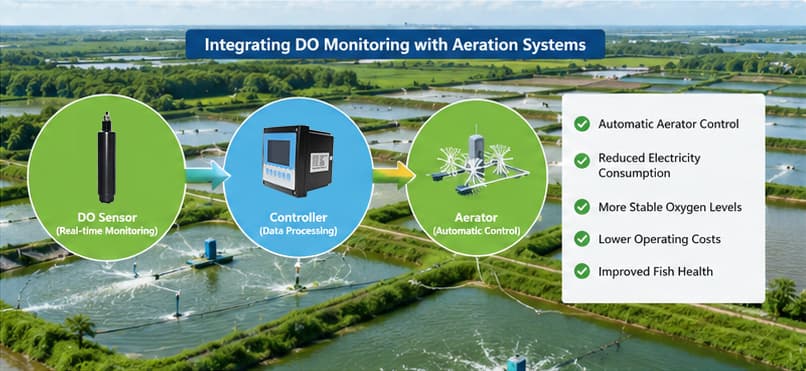
Integrating DO Monitoring with Aeration Systems
Many modern aquaculture facilities integrate dissolved oxygen sensors directly with aeration equipment.
Benefits Include
- Automatic aerator control
- Reduced electricity consumption
- More stable oxygen levels
- Lower operating costs
- Improved fish health
Instead of operating aerators continuously, operators can adjust aeration based on real-time oxygen demand.
Other Important Water Quality Parameters
While dissolved oxygen is critical, comprehensive water quality management should also include monitoring:
pH
pH influences fish health and biological activity.
Temperature
Temperature directly affects oxygen solubility and fish metabolism.
Conductivity
Conductivity helps assess overall water quality conditions.
Ammonia and Nitrogen Compounds
Excessive ammonia can become toxic to aquatic organisms.
Combining multiple sensors provides a more complete understanding of pond conditions.
Why Choose Pokcenser?
Pokcenser has more than 10 years of experience in industrial automation and water quality monitoring solutions.
Our products are used worldwide in:
- Aquaculture
- Water treatment
- Environmental monitoring
- Industrial process control
- Wastewater treatment
What We Offer
- CE certified products
- OEM & ODM support
- Professional technical consultation
- Fast engineering support
- Competitive factory-direct pricing
Water Quality Monitoring Solutions
Pokcenser provides a complete range of water quality monitoring instruments including:
- Dissolved Oxygen Sensors
- pH Sensors
- Conductivity Sensors
- ORP Sensors
- Multiparameter Water Quality Systems
Frequently Asked Questions
Q1: What dissolved oxygen level is recommended for fish farming?
Most fish species perform best when dissolved oxygen levels remain above 5 mg/L, although requirements vary by species.
Q2: Why is dissolved oxygen lower at night?
Aquatic plants and algae consume oxygen during nighttime respiration, causing oxygen levels to decrease.
Q3: What are the advantages of optical dissolved oxygen sensors?
Optical sensors provide lower maintenance, better stability, and longer service life compared with traditional electrochemical sensors.
Q4: Can dissolved oxygen sensors control aerators automatically?
Yes. Online monitoring systems can be integrated with aeration equipment for automatic control.
Q5: How often should dissolved oxygen be monitored?
For commercial aquaculture operations, continuous online monitoring is recommended.
