 English
 Spanish
Solving Industrial Water Treatment Challenges with Advanced pH Sensors
Industrial water treatment can turn costly when pH control slips. When it does, corrosion accelerates, chemicals get wasted, and regulatory limits become harder to meet. We see these pain points often and address them with reliable, precise pH monitoring that protects assets, tightens process control, and supports responsible discharge practices.
Understanding the Critical Pain Points in Industrial Water Treatment and pH Imbalance
Industrial facilities often face avoidable expenses when pH goes unmonitored or is poorly controlled. The fallout is more than inconvenience, with productivity, compliance, and profitability all impacted. Low pH speeds up corrosion in pipes and equipment, causing leaks, structural damage, and early failure that demands costly replacements. High pH drives scale buildup, cutting heat transfer efficiency and pushing up energy use. Both conditions mean more maintenance and downtime, disrupting production and inflating operating costs.
Chemical dosing suffers when pH data is unreliable. In the absence of accurate readings, operators tend to over-dose to compensate. That inflates chemical spend, creates excess sludge that needs paid disposal, and can introduce secondary pollution that complicates discharge permits and risks fines. It also undermines treatment consistency, which can threaten product quality in sectors like food and beverage or pharmaceuticals.
Regulatory compliance and environmental responsibility leave little room for error. Agencies set strict pH discharge limits to protect aquatic ecosystems. Missing those limits can trigger penalties, legal exposure, and reputational damage. Continuous, accurate pH monitoring shifts teams from reactive to proactive control, preventing excursions and maintaining verifiable records. The case for advanced pH sensing is clear if the goal is operational stability and accountable environmental performance.
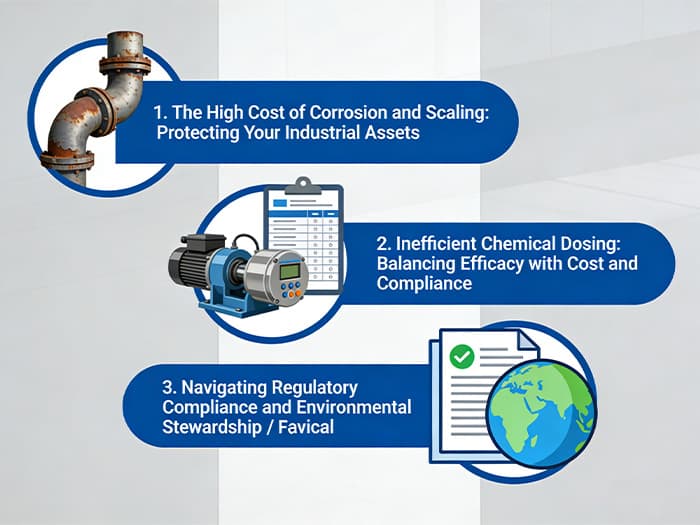
1. The High Cost of Corrosion and Scaling: Protecting Your Industrial Assets
Uncontrolled pH shortens the life of critical infrastructure. Acidic conditions (low pH) accelerate corrosion in metals, inviting leaks, loss of strength, and failure. Alkaline conditions (high pH) promote scale that insulates heat transfer surfaces and chokes flow. Assets like boilers, cooling towers, and piping all suffer, and the bill includes repairs, replacements, and production losses. Tight pH control is a direct path to asset protection and long-term operational resilience.
2. Inefficient Chemical Dosing: Balancing Efficacy with Cost and Compliance
Chemicals make up a significant share of water treatment spend. Without precise pH data, dosing becomes reactive or excessive, consuming more acids, bases, and additives than necessary. Over-dosing drives up procurement costs, adds waste streams, and can destabilize the process, making targets harder to hit. Accurate pH monitoring lets operators add the right amount at the right time, cutting cost, reducing waste, and improving treatment reliability.
3. Navigating Regulatory Compliance and Environmental Stewardship
Environmental rules require tight control of wastewater discharge parameters, including pH. Falling out of range can mean fines, legal complications, and reputational harm. Continuous, reliable pH monitoring provides the traceable data needed to demonstrate compliance and to adjust processes before limits are breached. Responsible pH management reduces environmental impact and aligns operations with sustainable practices.
Unlocking Operational Efficiency and Compliance: The Value of Reliable pH Monitoring Solutions
Accurate, continuous pH monitoring tackles key pain points in industrial water treatment. It optimizes chemical use by avoiding both under-dosing and over-dosing, lowering cost and waste. Real-time data helps maintain conditions that prevent equipment damage, extending the life of critical assets and stabilizing product quality. Consistent monitoring also supports adherence to environmental regulations and reduces non-compliance risk. With live visibility, teams can act early, tune processes, and correct deviations quickly. If you’re interested, check 《Solving Industrial Water Treatment Challenges with Advanced pH Sensors》.
1. Precision Dosing: Optimizing Chemical Consumption and Reducing Waste
When pH is measured continuously and accurately, dosing becomes exact. Operators can add chemicals only when needed and in the right amounts, avoiding the guesswork that leads to overuse. This cuts spend on acids and bases, reduces by-products, and streamlines the entire treatment train for financial and environmental gains.
2. Proactive Asset Protection: Extending Equipment Lifespan and Minimizing Downtime
Keeping pH within limits shields equipment from damage caused by acidic or alkaline extremes. Continuous monitoring flags deviations early, allowing fast corrective action. The result is less corrosion, less scaling, longer life for pumps, pipes, and vessels, and fewer unplanned outages. Plants run more reliably and productively.
3. Ensuring Consistent Product Quality and Regulatory Adherence
Process water quality often determines product outcomes. In food and beverage and pharmaceuticals, precise pH control is non-negotiable. Reliable monitoring helps maintain specifications and protects product integrity. At the same time, it provides defensible records for regulators, demonstrating compliance with discharge permits and industry standards.
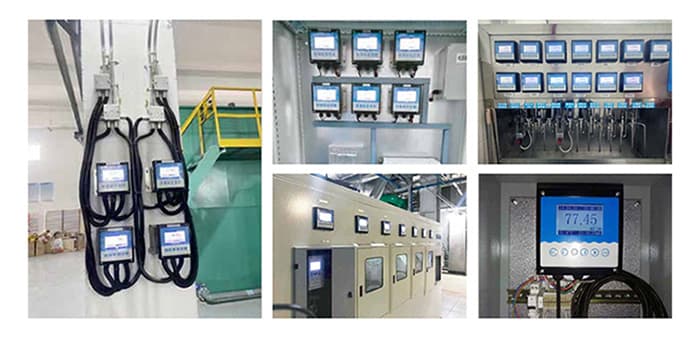
Pokcenser Automation’s Expertise: Delivering Tailored pH Sensor Solutions for Diverse Industries
Pokcenser Automation Technology Company Limited is a proven sensor manufacturer and solution provider with over 10 years in industrial process control automation. CE, ATEX, ISO, and RoHS certifications reflect alignment with international safety and quality standards. With more than 150,000 solutions delivered across 100+ countries, we support projects globally with dependable water analysis instruments for oil & gas, water & wastewater, chemical & petrochemical, and food applications.
We tailor solutions because every process is different. OEM&ODM capabilities allow custom sensors and systems that fit existing infrastructure and meet specific performance needs. A dedicated 6-person pre-sales and after-sales team delivers “one-stop worry-free services,” from early application evaluation and solution selection to ongoing support. The goal is long-term partnership and lasting value in industrial automation.
1. A Decade of Excellence: Certifications and Global Reach in Industrial Automation
For over a decade, Pokcenser Automation has driven industrial automation with consistent innovation and strict quality control. CE, ATEX, ISO, and RoHS certifications confirm focus on safety, environmental protection, and performance. This foundation supports a global presence with 150,000+ solutions in 100+ countries, establishing trust in process control projects worldwide.
2. Comprehensive Product Portfolio: Beyond Sensors to Integrated Water Analysis Solutions
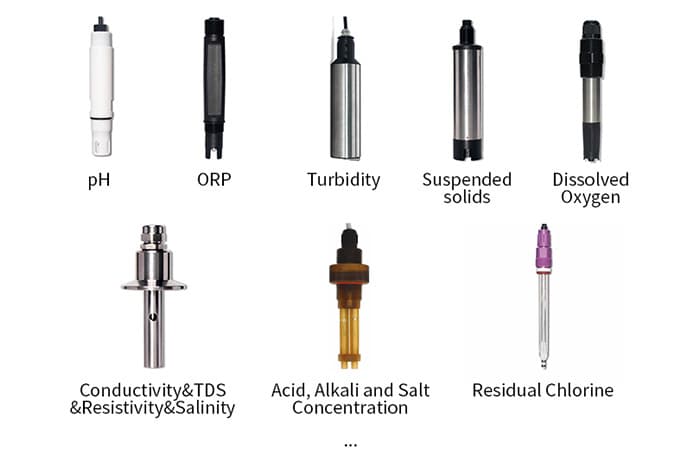
Our portfolio spans more than single sensors, covering integrated water analysis solutions. Instruments include pH sensors, ORP electrodes, and TDS meters for precise measurement and control. These tools support sectors that demand strict water quality management, from environmental sewage monitoring to drinking water systems. They deliver accurate, real-time data for effective process control and compliance.
3. The Pokcenser Advantage: Expert Support and Customization for Your Unique Needs
Our advantage combines advanced technology with attentive support. We collaborate closely to understand your constraints and engineer fit-for-purpose solutions. OEM&ODM services adapt products to unique requirements, while our 6-person pre-sales and after-sales team stays involved from first consultation through post-installation. Clients receive a complete, reliable solution, not just a device.
Selecting the Right pH Sensor: Key Considerations for Optimal Performance and Longevity
Selecting the right pH sensor is central to measurement accuracy and reliability in industrial water treatment. Match the sensor to process conditions with care. Temperature affects stability and life, and high pressure calls for robust construction. The liquid’s chemistry, including corrosives, sulfides, proteins, or abrasives, guides wetted materials and electrode choice. As an example, the PCS1753CD Plastic pH Sensor uses a PP body for chemical resistance, making it suitable for general industrial water and environmental sewage.
Define accuracy, response time, and maintenance needs upfront. Some processes require tighter precision, while others favor fast response. Installation method matters too, whether inline, immersion, or direct insertion, which affects sensor design and protection. Technology choice influences performance: glass electrodes, ISFET (Ion-Sensitive Field-Effect Transistor), and antimony electrodes each bring different strengths. Glass electrodes, as in the PCS1753CD, cover general-purpose use, while ISFET can be advantageous where robustness or fouling resistance is a priority. A careful fit to these parameters supports accurate measurements and longer service life.
| Feature | PCS1753CD Plastic pH Sensor | PT4000 ORP Controller | PCS2701C Plastic ORP Electrode | PCS2700CD Digital ORP Sensor |
|---|---|---|---|---|
| Measurement | pH | pH / ORP | ORP | ORP |
| Body Material | PP (Polypropylene) | – | PP (Polypropylene) | PP (Polypropylene) |
| Output | RS485 Modbus RTU | 4-20mA, RS485 Modbus | – | RS485 Modbus RTU |
| Temperature Comp. | NTC10K (0-50℃) | Auto/Manual (0-150℃) | NTC10K, etc. (0-80℃) | – (0-60℃) |
| Waterproof Rating | IP68 | IP65 | – | IP68 |
What is the typical lifespan of an industrial pH sensor in water treatment applications?
Service life depends on process severity (temperature, chemistry, fouling), maintenance practices, and sensor design. With regular calibration and cleaning, a quality glass electrode often lasts 6 months to 2 years. More robust designs or ISFET sensors can run longer. Routine inspection and planned replacement help maintain accuracy and prevent process upsets, aligning with Pokcenser’s focus on reliability.
How often should pH sensors be calibrated in an industrial water treatment plant?
Calibration intervals depend on accuracy needs, process stability, and application specifics. Critical or rapidly changing processes may require daily or weekly calibration, while stable operations may work with monthly or quarterly intervals. Follow the manufacturer’s guidance and refine the schedule based on observed drift and process requirements. Pokcenser’s team can assist in setting an appropriate plan.
Can pH sensors help in reducing chemical consumption in water treatment?
Yes. Continuous, precise pH monitoring enables accurate and timely dosing of acids or bases, avoiding over- and under-dosing. Plants see lower chemical consumption, reduced operating costs, and improved process efficiency. This addresses a core pain point for industrial facilities and supports Pokcenser’s value-creation mission.
Ready to optimize your industrial water treatment and ensure precise pH control?
Contact Pokcenser Automation today for a tailored solution. Our expert team is ready to evaluate your application and recommend the ideal pH sensors and water analysis instruments to meet your specific needs. Partner with us for long-term reliability and unparalleled support.
Email: in**@*******er.com
Phone: +86 181 7515 5326

