 English
 Spanish
Thermocouples for High Temperature Industrial Systems Precision
Getting temperature measurements right in high-heat industrial settings isn’t just about picking a sensor and hoping for the best. The wrong thermocouple choice, sloppy installation, or neglected maintenance can throw off your readings, compromise safety, and hurt product quality. What follows covers the working principles behind these sensors, the types that actually hold up under extreme conditions, and the practical steps that keep them performing accurately over time.
How High Temperature Thermocouples Actually Work
Thermocouples rely on the Seebeck effect. When two dissimilar metals or semiconductors sit at different temperatures, a voltage appears between them. That voltage tracks with the temperature difference, giving you a measurable signal.
At high temperatures, material selection gets serious. The metals need to hold their electrical and mechanical properties while enduring thermal stress and aggressive atmospheres. Oxidation, grain growth, and chemical attack all threaten accuracy over time. The voltage output feeds directly into process control systems, providing the real-time data operators need to keep things running safely and efficiently.
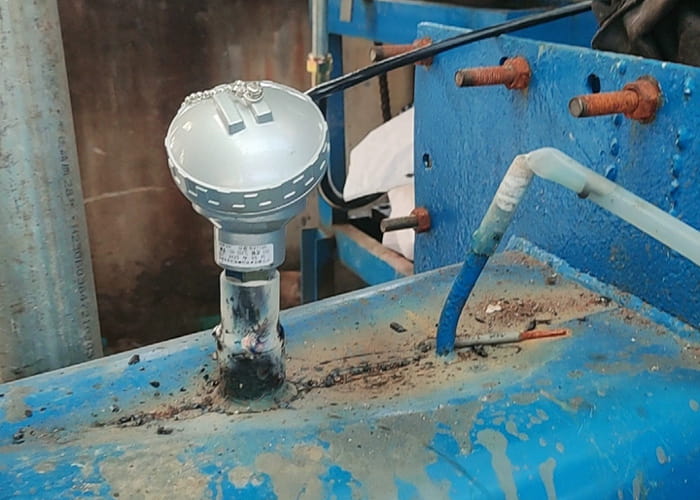
Thermocouple Types That Handle Extreme Industrial Heat
Not all thermocouples survive the same conditions. Matching the sensor to your temperature range and atmosphere makes the difference between reliable data and constant headaches.
Noble metal types like B, R, and S work well up to around 1700°C. Their stability and oxidation resistance justify the higher cost in demanding applications. Type C thermocouples, built from refractory metals, push even higher to 2300°C, though they need non-oxidizing environments to survive. Type K sensors, while popular and affordable, typically max out at lower high-temperature ranges and drift more readily under sustained heat.
Why Thermocouples Fail in Extreme Heat
Several failure patterns show up repeatedly in high-temperature service.
Thermoelectric material degradation happens gradually. Prolonged heat exposure changes the alloy composition, shifting calibration and introducing measurement errors that grow over time. Contamination from process chemicals or atmospheric impurities accelerates this drift. Even trace amounts of certain elements can alter the Seebeck coefficient enough to matter.
Thermal shock presents a different problem. Rapid temperature swings create mechanical stress that cracks sheaths and damages sensing elements. Once the protective barrier fails, degradation accelerates dramatically.
Installation and Protection That Actually Works
How you install and protect thermocouples determines how long they last and how accurately they measure.
Sheath material selection comes first. High-purity alumina handles many oxidizing environments well. Specialized alloys offer better mechanical strength in applications with vibration or pressure cycling. The sheath needs to resist both the process temperature and whatever chemical species are present.
Thermowell design matters just as much. Process fluid velocity creates drag forces that can stress or break sensors. Pressure ratings must exceed process conditions with appropriate safety margins. Chemical compatibility between the thermowell material and process media prevents corrosion that would eventually compromise the installation.
Mounting details often get overlooked. Insufficient immersion depth creates measurement errors from stem conduction. Poor vibration isolation leads to mechanical fatigue. Getting these basics right prevents a lot of unnecessary sensor replacements.
Surviving Corrosive Environments
Corrosive atmospheres add another layer of difficulty. Standard materials that work fine in clean, hot air fail quickly when acids, alkalis, or abrasive particles enter the picture.
Inconel and Hastelloy alloys resist many aggressive chemical environments. Ceramic coatings provide additional protection against erosion and chemical attack. The specific choice depends on what’s actually in your process stream.
Regular inspection catches problems early. Small signs of corrosion or material degradation, addressed promptly, prevent sudden failures that shut down production.
Keeping Thermocouples Accurate Over Time
High-temperature service causes drift. Accepting this reality and building calibration and maintenance into your operations keeps measurements trustworthy.
Calibration frequency depends on how critical the measurement is and how fast your specific sensors drift in your specific conditions. Some applications need monthly checks. Others can go a year between calibrations. Experience with your actual installation provides the best guidance.
Drift compensation sometimes involves mathematical corrections applied in the control system. More often, it means replacing sensors before they wander too far from specification.
Calibration Approaches That Work
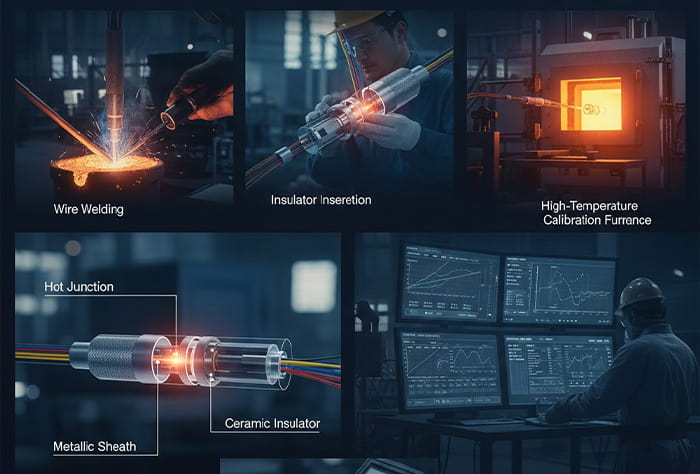
In situ calibration, performed with the sensor installed in its normal operating position, captures errors from thermal gradients and installation effects that laboratory calibration misses. This approach works well for critical measurements where you need the best possible accuracy.
Laboratory calibration against traceable reference thermocouples and precision furnaces establishes baseline accuracy. Comparing field measurements to laboratory results over time reveals how fast drift occurs in your specific application.
Good record-keeping matters more than most people realize. Tracking calibration history helps predict when sensors will need replacement and identifies installation locations that cause unusually rapid degradation.
Connecting Thermocouples to Process Control Systems
Temperature data only helps if it reaches the systems that can act on it. Integration with PLCs, DCS platforms, or SCADA systems enables the automated responses that keep processes running within specification.
Modern control systems can do more than simple setpoint control. Advanced algorithms analyze temperature trends for predictive maintenance, flagging sensors that show early signs of drift or failure. Process optimization routines use temperature data alongside other measurements to improve efficiency and product quality.
The communication path from sensor to control system needs attention too. Signal conditioning, proper grounding, and appropriate cable routing prevent noise and interference from corrupting measurements.
Frequently Asked Questions About High Temperature Thermocouples
What are the primary considerations when selecting thermocouples for extreme industrial heat?
Maximum operating temperature sets the first constraint. The atmosphere matters just as much: oxidizing, reducing, or corrosive conditions each demand different materials. Required accuracy determines whether you can use a less expensive Type K or need to invest in noble metal types. Sheath material must withstand both temperature and chemical exposure while maintaining sensor integrity through the expected service life.
How can I extend the lifespan of thermocouples in corrosive high temperature applications?
Protective sheaths made from corrosion-resistant alloys or ceramics provide the first line of defense. Thermowell design and material selection isolate the sensor from direct contact with aggressive media. Regular inspection catches early degradation before it causes measurement problems or sudden failures. Cleaning during scheduled maintenance removes deposits that accelerate corrosion.
What role do thermocouples play in achieving precise process control in industrial automation?
Thermocouples provide the real-time temperature data that control systems need to regulate heating, cooling, and other process variables. PLC and SCADA integration enables automated responses that keep operations within specified parameters. Without accurate temperature feedback, automated control becomes guesswork. The quality of temperature measurement directly affects how tightly you can control your process.
Are there specific calibration standards for high temperature thermocouples to ensure measurement accuracy?
NIST-traceable calibration ensures consistency with national and international measurement standards. Specific calibration procedures and acceptance criteria vary by industry and application criticality. Calibration intervals depend on how fast sensors drift in service and how much measurement uncertainty your process can tolerate. Documentation requirements often come from quality management systems or regulatory compliance needs.
Partner with Pokcenser for High-Temperature Sensing Solutions
Ensure unparalleled precision and reliability in your high-temperature industrial processes. Pokcenser Automation Technology Company Limited offers over a decade of expertise in advanced temperature sensing solutions, including custom OEM&ODM thermocouples. Our CE, ATEX, ISO, RoHS certified products, backed by a dedicated pre-sales and after-sales team, deliver worry-free, long-term value across oil & gas, chemical, and food industries. Contact us today for tailored solutions that elevate your industrial automation. Phone: +86 181 7515 5326 | Email: in**@*******er.com

