 English
 Spanish
Turbidity Sensors: Industrial Applications and Expert Buying Guide
Turbidity measurement sits at the heart of water quality control and industrial process optimization. Choosing the right sensor means understanding how different measurement principles work and what your specific application actually demands. A sensor that fits your process well makes a real difference in control accuracy and regulatory compliance. Here’s what you need to know about turbidity sensing technologies and how to make a smart purchasing decision.
How Turbidity Measurement Actually Works
Turbidity is simply the cloudiness in a fluid caused by suspended particles. Measuring it accurately matters across dozens of industries, and two main optical approaches dominate the field.
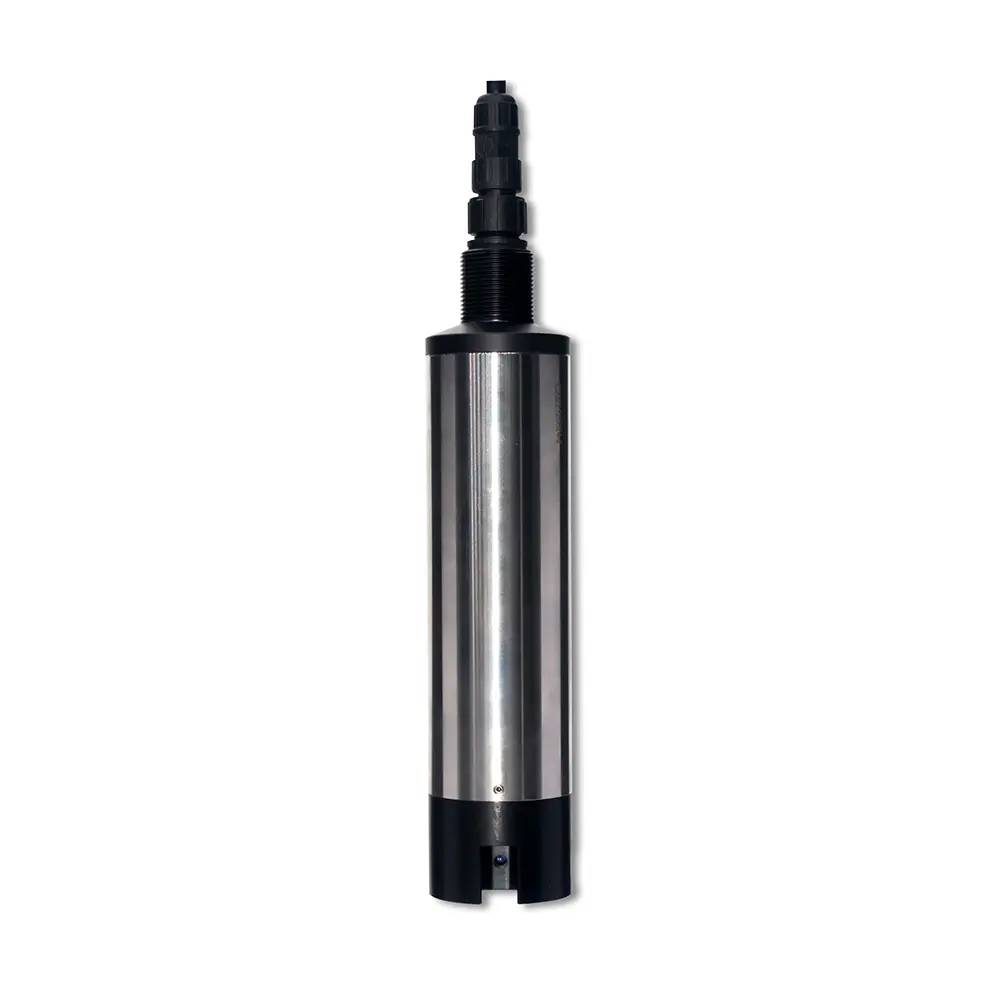
Nephelometric sensors detect scattered light, usually at a 90-degree angle from the light source. This method picks up low turbidity levels exceptionally well, which is why nephelometric sensors work best for clean water monitoring. The Pokcenser PCS7820D Digital Turbidity Sensor uses this 90° infrared approach, delivering high accuracy across a 0.01 to 400 NTU range. It handles drinking water treatment and environmental monitoring applications without breaking a sweat.
Transmissometric sensors take a different approach. They measure how much light intensity drops as it passes through a sample. This works better for higher turbidity levels and heavier suspended solids concentrations, where light scattering becomes less reliable as an indicator. Both methods can use either infrared or visible light sources. Infrared sensors tend to ignore sample color, which gives you more consistent readings when dealing with varied industrial effluents.
Some specialized applications turn to ultrasonic technology. These sensors infer particle concentration by analyzing how sound waves attenuate or scatter. The advantage? No optical path to foul up. The tradeoff is more complex data interpretation. Your choice comes down to the specific application, expected turbidity range, and what might interfere with your measurements.
| Technology | Measurement Principle | Best for | Advantages | Limitations |
|---|---|---|---|---|
| Nephelometric | Scattered light (90°) | Low turbidity | High sensitivity, less affected by color | Can saturate at high turbidity |
| Transmissometric | Attenuated transmitted light | High turbidity | Robust for dense samples | Affected by sample color, less sensitive |
| Ultrasonic | Sound wave attenuation | Opaque/Fouling media | No optical path to foul | Indirect measurement, complex interpretation |
Where Turbidity Sensors Prove Their Worth
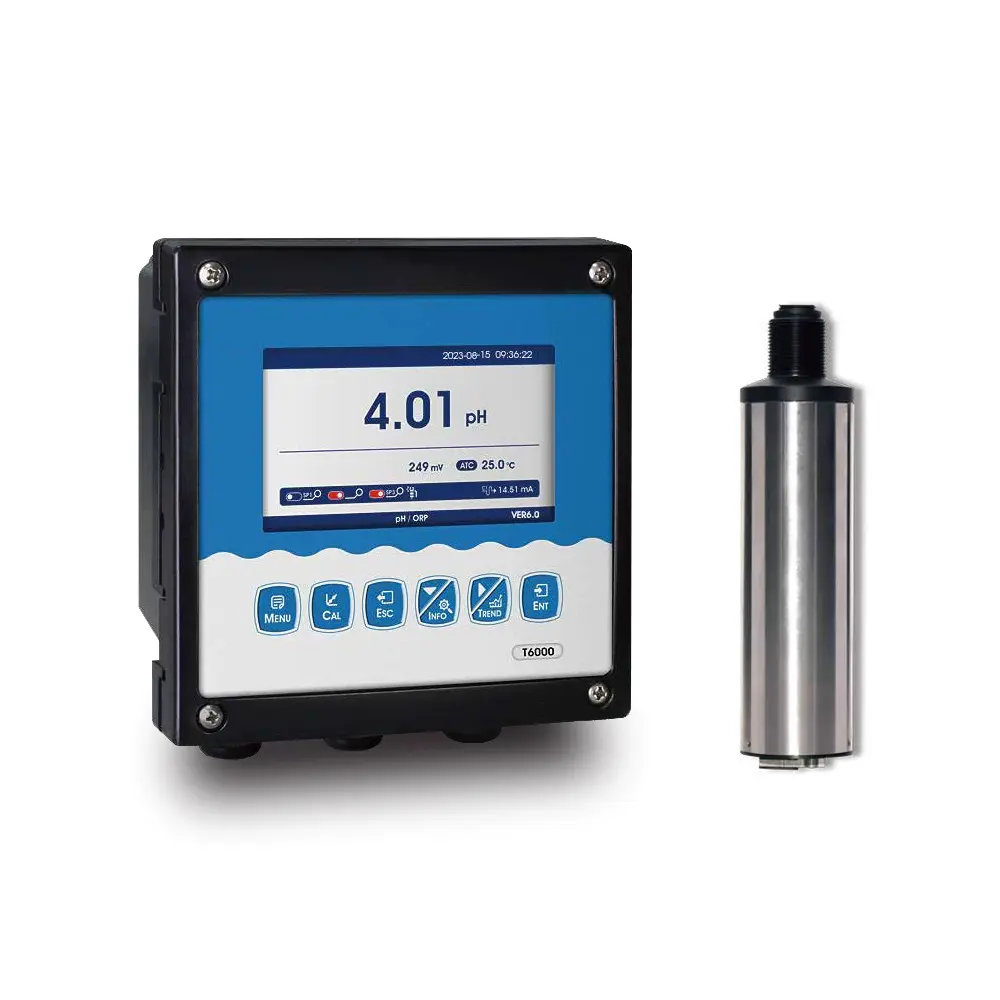
These sensors earn their keep across a surprisingly wide range of industrial settings. Water and wastewater treatment facilities depend on them heavily. In drinking water applications, continuous turbidity monitoring confirms that treated water meets regulatory standards before it reaches distribution. The PT6000 Online Turbidity Meter delivers 0.001 NTU resolution with data logging, which is exactly what critical monitoring applications need.
Wastewater plants use turbidity sensors to track sludge blanket levels in clarifiers. This data drives chemical dosing decisions and prevents solids from carrying over where they shouldn’t. Getting this right means more efficient solids separation and lower operating costs.
Chemical processing facilities monitor reaction completeness, filtration efficiency, and product purity through turbidity measurements. Consistent readings mean consistent product quality and fewer expensive deviations from spec.
Food and beverage operations rely on these sensors for juice clarification, beer filtration, and milk processing. Hitting the right turbidity targets affects taste, appearance, and how long products last on shelves.
Oil and gas operations monitor produced water quality before discharge or re-injection. This keeps them compliant with environmental regulations and protects downstream equipment from suspended solids damage. The range of applications really demonstrates how versatile accurate turbidity sensing has become.
What to Look for When Choosing a Sensor
Picking the right industrial turbidity sensor means weighing several technical and operational factors against each other.
Start with measurement range. The PCS7820D covers 0.01–400 NTU, while other sensors extend to 4000 NTU for denser samples. Match the sensor’s range to your actual process conditions. Going too narrow risks saturation; going too wide sacrifices sensitivity where you need it.
Accuracy requirements vary by application. Drinking water monitoring demands tight error margins, typically around ±5% F.S. or better. Industrial processes with wider tolerances can accept less precision.
Response time matters in dynamic processes. If your control system needs to react quickly, the sensor needs to keep pace. Slow response means delayed corrections and potential quality issues.
Material compatibility is non-negotiable. The sensor’s wetted parts have to survive whatever your process throws at them. Corrosion or degradation means premature failure and unreliable data.
Self-cleaning mechanisms pay for themselves in fouling environments. Wipers, air blasts, or ultrasonic cleaning systems keep optical surfaces clear and extend the time between manual maintenance.
Calibration requirements affect your ongoing workload. Check what standards you’ll need, whether single-point or multi-point calibration makes sense, and how often recalibration becomes necessary.
Communication protocols determine how easily the sensor integrates with your existing systems. Modbus RS485 and 4-20mA analog outputs are standard options. The PT6000 supports both, giving you flexibility in how you connect it to your process control architecture.
| Feature | Description | Importance |
|---|---|---|
| Measurement Range | 0.01–400 NTU (e.g., PCS7820D) to 4000 NTU | Ensures suitability for process concentration |
| Accuracy | Typically ±5% F.S. or better | Critical for compliance and quality control |
| Response Time | Fast response for real-time process adjustments | Essential for dynamic process control |
| Material Compatibility | POM + 316 stainless steel (e.g., PCS7820D) or other resistant materials | Prevents corrosion and extends sensor life |
| Self-Cleaning Mechanism | Wipers, air blasts, or ultrasonic cleaning | Reduces maintenance, prevents fouling |
| Communication Protocols | RS485 Modbus RTU, 4-20mA | Seamless integration with control systems |
Getting the Most From Your Sensor
Keeping turbidity sensors performing well and dealing with measurement headaches takes some attention. Fouling tops the list of problems. Particles build up on optical surfaces and throw off readings. Self-cleaning mechanisms help a lot here. Mechanical wipers or pressurized air and water jets knock most deposits loose. Regular inspection and cleaning schedules catch what automated systems miss.
Air bubbles cause their own trouble. They scatter light and make turbidity readings run high when they shouldn’t. Smart sensor placement, steady flow conditions, and de-bubbling chambers upstream can minimize this interference.
Sample color affects optical measurements, especially with visible light sensors. Infrared-based sensors largely ignore color variations, which makes them the better choice when your process stream changes color.
Calibration discipline keeps data trustworthy over time. Stick to manufacturer-specified procedures, use certified turbidity standards, and maintain a routine calibration schedule. Single-point calibration works for many applications, but multi-point calibration gives you better accuracy across a wider range.
Predictive maintenance based on historical trends and sensor diagnostics helps you catch problems before they affect operations. This approach extends sensor life and keeps your overall system running reliably.
Installation, Calibration, and Maintenance That Works
Where and how you install a turbidity sensor determines how well it performs. Position the sensor in a representative flow path. Avoid dead zones and areas where air bubbles collect. Make sure you can reach the sensor easily for inspection and maintenance. Submersible sensors need secure mounting to prevent movement and damage.
Calibration keeps measurements accurate as sensors age and conditions change. Follow manufacturer guidelines for how often to calibrate and what method to use. Certified turbidity standards are worth the investment. The PT6000 includes multiple automatic calibration functions that simplify this recurring task.
Preventative maintenance extends sensor life and prevents drift. Clean optical surfaces regularly. Check cable connections for damage or corrosion. Verify that self-cleaning mechanisms still work properly. A scheduled maintenance program reduces unplanned downtime and keeps your turbidity data reliable over the long haul.
Partner with Pokcenser Automation for Advanced Turbidity Sensing Solutions
Leverage Pokcenser Automation’s decade of expertise in industrial process control. Our CE, ATEX, ISO, and RoHS approved turbidity sensors are engineered for precision and reliability, backed by a dedicated 6-person pre-sales and after-sales team. From evaluating your unique application to recommending tailored solutions and providing worry-free support, we are committed to long-term partnerships that create value. Contact us today to discuss your industrial turbidity measurement needs and contribute to global industrial automation.
Phone: +86 181 7515 5326
Email: in**@*******er.com
Frequently Asked Questions About Turbidity Sensors
What are the key factors to consider when selecting a turbidity sensor for industrial use?
When selecting an industrial turbidity sensor, critical factors include the measurement range, required accuracy, response time, material compatibility with the sample, presence of self-cleaning mechanisms, ease of calibration, and integration capabilities with existing process control automation systems. Understanding your specific application’s demands is paramount for optimal selection.
How do different turbidity sensor technologies compare in terms of accuracy and maintenance?
Nephelometric sensors, often using infrared light, are highly accurate for low turbidity measurements and are common in drinking water quality monitoring. Transmissometric sensors are better for higher turbidity and suspended solids. Laser-based sensors offer superior precision across various ranges. Maintenance varies; some sensors feature self-cleaning wipers, reducing manual intervention, while others require regular manual cleaning and frequent calibration to maintain accuracy.
What are the common challenges in turbidity measurement and how can they be overcome?
Common challenges in turbidity measurement include sensor fouling, air bubbles in the sample, variations in sample color, and incorrect calibration. These can be overcome by selecting sensors with self-cleaning features, optimizing sample flow to minimize air entrapment, using color-compensated sensors, and adhering to rigorous, scheduled calibration procedures with appropriate turbidity standards. Proper installation is also key to reliable industrial process control.

