 English
 Spanish
Ultrasonic Flow Meter Calibration and Maintenance Excellence Guide
Getting accurate flow measurements in industrial settings is one of those things that sounds straightforward until you actually have to do it. Ultrasonic flow meters work well for non-invasive measurement, but their performance really comes down to how well you calibrate and maintain them. After working with these systems across countless installations, the pattern is clear: meters that get proper attention deliver reliable data for years, while neglected ones drift into territory that causes real problems downstream.
How Calibration Actually Works for Ultrasonic Flow Meters
Calibration comes down to comparing what your meter reads against a known reference and then adjusting until the two match. The goal is minimizing measurement deviations so your process data reflects reality. International calibration standards exist for good reason, and following them keeps your measurements defensible when compliance questions arise.
The PWF-U2000MCC Multi-channel Clamp-on Ultrasonic Flowmeter and PWF-U2000MCI Multi-channel Insertion Ultrasonic Flowmeter both need to meet tight precision requirements. The underlying physics determines everything. Transit-time meters measure how long ultrasonic signals take to travel upstream versus downstream through the fluid. That time difference tells you velocity. Doppler meters work differently, picking up frequency shifts from particles or bubbles bouncing the signal back. Both approaches demand precise timing and clean signal processing.
ISO standards and frameworks like ISO 17025 spell out what calibration labs need to demonstrate competence. ATEX certification matters when equipment operates where explosive atmospheres might develop. These certifications protect both safety and measurement integrity.
Finding the Right Calibration Schedule
How often you calibrate depends on what you’re measuring and how much accuracy matters. Critical processes where small errors cascade into big problems typically need annual or bi-annual calibration. The PWF-U1000 Small Pipe Clamp-on Ultrasonic Flowmeter, designed for smaller diameter applications, often sees varied conditions that warrant regular verification.
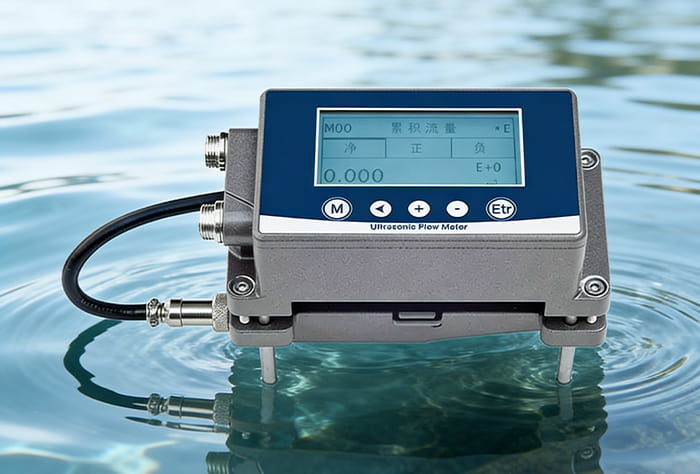
Fluid characteristics matter here. Temperature swings, pressure changes, and what’s actually flowing through the pipe all influence how quickly a meter drifts. Building a preventive maintenance schedule around these variables extends both accuracy and equipment life.
| Standard Body | Scope | Relevance to Flow Meters |
|---|---|---|
| ISO | General calibration competence | Laboratory qualification and procedure standards |
| ATEX | Explosive atmosphere equipment | Safety certification for hazardous environments |
| National Metrology Institutes | Traceable measurement standards | Reference standards for calibration verification |
Maintenance Approaches That Actually Extend Equipment Life
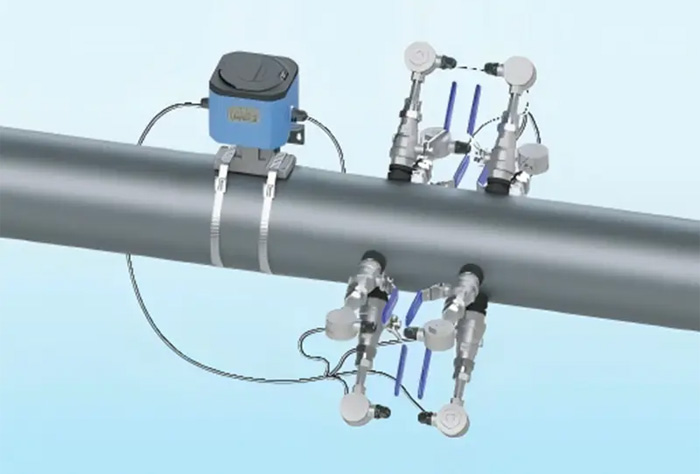
Good maintenance goes beyond checking boxes on a schedule. The real value comes from catching problems before they become failures. Transducers and cables need regular inspection for physical damage, corrosion, or wear. Clamp-on meters like the PWF-U2000MCC require attention to coupling gel application and transducer alignment. Insertion types need periodic cleaning to prevent fouling, especially in wastewater or chemical service.
Modern ultrasonic flow meters include diagnostic features that change how maintenance works. Self-diagnostics can flag developing issues before they affect measurements. Data logging and trend analysis reveal gradual performance changes that might otherwise go unnoticed. This shifts maintenance from reactive to predictive, scheduling work based on actual sensor condition rather than arbitrary intervals.
Environmental factors deserve attention too. Excessive vibration, temperature extremes, and chemical exposure accelerate degradation. Stable power and proper grounding reduce electrical interference that can compromise accuracy.
Problems That Commonly Affect Accuracy
Transducer fouling ranks among the most frequent issues. Deposits on transducer surfaces block signal transmission, particularly in fluids carrying particles or supporting biological growth. Air bubbles or entrained gases create similar problems, disrupting signals enough to cause erratic readings or complete signal loss.
Pipe wall buildup changes the game entirely. Scaling or corrosion alters internal diameter and acoustic properties, throwing off flow calculations. Installation errors compound these issues. Wrong transducer spacing, misalignment, or poor coupling between clamp-on transducers and pipe surfaces all introduce measurement errors.
Temperature changes affect sound velocity through the fluid. Without proper compensation, these variations show up as measurement errors. Electrical interference from nearby equipment or grounding problems can disrupt sensitive electronics. Regular maintenance, appropriate sensor selection, and adherence to calibration standards address most of these challenges.
Diagnostic Techniques for Troubleshooting Flow Meters
When a flow meter starts giving strange readings, systematic diagnosis saves time. Start with basics: verify power supply, check cable connections, look for visible damage. For ultrasonic meters, confirm transducer installation and coupling gel application. The PWF-U2000MCC and PWF-U2000MCI designs simplify these visual checks.
Fluid conditions often explain measurement problems. Excessive air bubbles or particulate matter interfere with ultrasonic signals. If process conditions are the culprit, upstream adjustments may help, or a different measurement technology might be more appropriate. Electromagnetic flow meters require sufficient fluid conductivity to function properly.
Internal diagnostics in modern meters display signal strength, signal-to-noise ratio, and other performance indicators. Low signal strength or high noise suggests fouling, misalignment, or transducer problems.
External test equipment becomes necessary when internal diagnostics don’t reveal the problem. Multimeters check electrical signals, oscilloscopes analyze ultrasonic waveforms, and portable calibrators verify readings independently. Periodic comparison against known references validates ongoing accuracy.
| Diagnostic Tool | Primary Function | Best Use Case |
|---|---|---|
| Internal diagnostics | Signal quality monitoring | First-line troubleshooting and trend analysis |
| Multimeter | Electrical signal verification | Cable and connection integrity checks |
| Oscilloscope | Waveform analysis | Detailed transducer signal investigation |
| Portable calibrator | Independent flow verification | Accuracy validation against reference |
Technology Integration for Better Performance
Smart sensor technology changes what’s possible with flow measurement. The PWF-U2000MCC and PWF-U2000MCI use industrial-grade ARM CPUs that handle real-time data processing, advanced diagnostics, and self-monitoring. Anomaly detection happens immediately, enabling proactive maintenance scheduling.
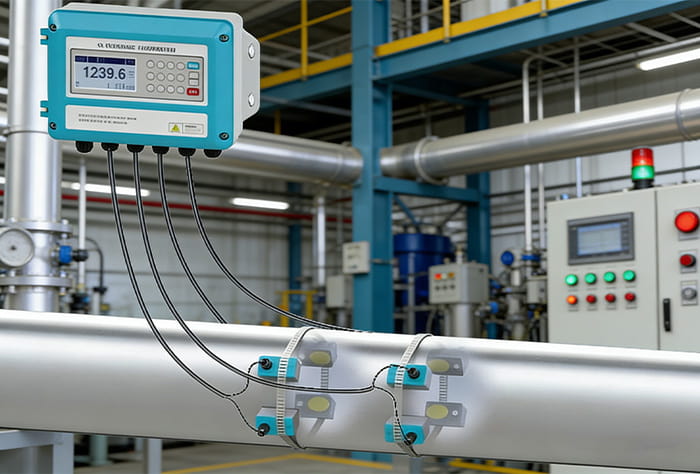
Data storage capabilities, like 32 MB for up to 20,000 records with trend displays, support data-driven maintenance decisions. Instead of fixed schedules, operators analyze historical performance to predict potential failures. RS485 Modbus RTU communication allows integration with SCADA and DCS systems for remote monitoring and centralized analysis.
Optional temperature and pressure measurement integration provides fuller understanding of fluid dynamics. PT100/PT1000 sensor connections enable heat and energy measurement for applications where energy management matters. These integrations move operations toward more intelligent process control.
What Pokcenser Automation Brings to Flow Measurement
Over 10 years of sensor manufacturing and solution development has produced more than 150,000 installations across 100+ countries. Flow meters, level sensors, pressure transmitters, temperature sensors, and water analysis instruments all carry CE, ATEX, ISO, and RoHS certifications.
OEM and ODM support allows customization for specific operational requirements. A dedicated pre-sales and after-sales team handles everything from initial application evaluation through ongoing support. The goal is long-term partnership rather than one-time transactions.
Start a Conversation About Your Flow Measurement Needs
Pokcenser Automation’s ultrasonic flow meters combine engineering precision with comprehensive support. Certified quality and global experience translate into reliable performance for demanding applications. Contact the team to discuss specific requirements and find the right solution for your process.
Email: in**@*******er.com | Phone: +86 181 7515 5326
Common Questions About Ultrasonic Flow Meter Management
How often should ultrasonic flow meters be calibrated for optimal performance?
Calibration frequency depends on application criticality, operating conditions, regulatory requirements, and manufacturer recommendations. Critical industrial processes typically benefit from annual or bi-annual calibration. The right schedule balances measurement accuracy against operational disruption, and the best approach considers your specific environment and process requirements.
What are the common issues affecting ultrasonic flow meter accuracy?
Transducer fouling, air bubbles in the fluid, pipe wall buildup, temperature fluctuations, and installation errors all affect accuracy. Regular preventive maintenance, appropriate sensor selection, and adherence to calibration standards address most of these issues. Diagnostic capabilities in modern meters help identify problems before they significantly impact measurements.
What advanced techniques improve ultrasonic flow meter lifespan?
Predictive maintenance using data analytics, self-diagnostic features, proper environmental controls, and manufacturer-recommended preventive maintenance all contribute to longer equipment life. Robust sensor design matters too, and certified flow meters built for industrial conditions tend to deliver reliable service over extended periods when properly maintained.

