 English
 Spanish
Using Pressure to Measure Liquid Level – Understanding Hydrostatic Level Measurement
Accurate liquid level measurement is critical across industries, from municipal water treatment to petrochemical storage facilities. While numerous technologies exist for level monitoring, pressure-based level measurement remains one of the most reliable, cost-effective, and versatile methods available. By leveraging the fundamental principle of hydrostatic pressure, pressure level sensors provide continuous, accurate measurement even in challenging industrial environments where other technologies may fail.
Understanding how hydrostatic pressure level transmitters work not only helps engineers select the right instrumentation but also optimizes system performance and troubleshooting capabilities. This article explores the physics, technology, and practical applications of using pressure to measure liquid level.
The Fundamental Physics: Hydrostatic Pressure Principles
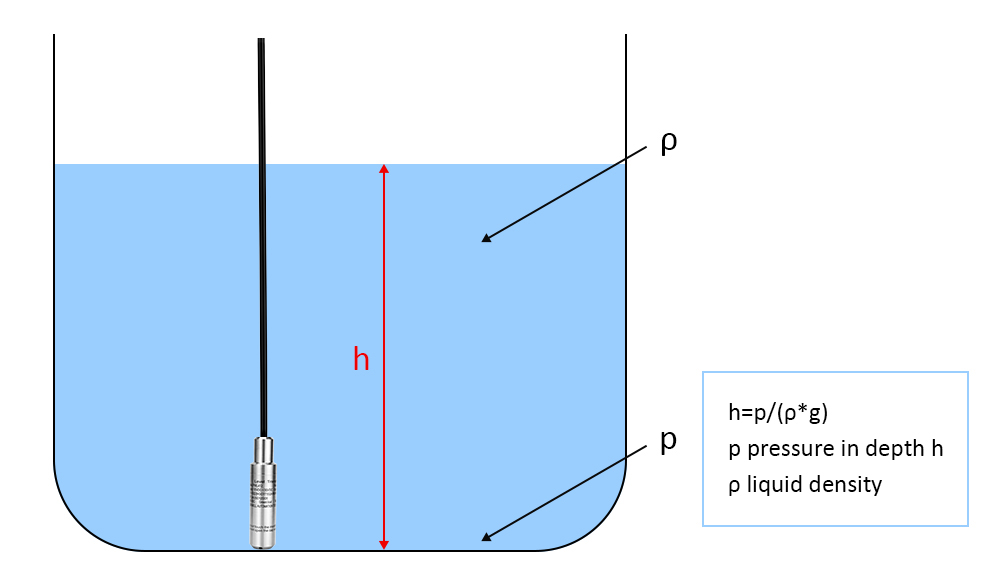
The foundation of pressure level measurement lies in a simple physical relationship: the pressure exerted by a liquid column is directly proportional to its height. This principle, known as hydrostatic pressure, is expressed by the equation:
P = ρ × g × h
Where:
- P = pressure at the measurement point
- ρ (rho) = liquid density
- g = gravitational acceleration (approximately 9.81 m/s²)
- h = liquid height above the measurement point
This relationship means that by measuring the pressure at the bottom of a tank or at a known depth, we can accurately calculate the liquid level above that point. A hydrostatic level sensor essentially converts pressure readings into level measurements using this fundamental equation.
The beauty of static pressure level measurement is its simplicity and reliability. Unlike technologies that measure from the top of a tank, pressure transducers for level measurement are not affected by tank geometry, surface turbulence, foam, or vapor above the liquid surface.
How Pressure-Based Level Measurement Works?
Hydrostatic pressure level transmitters operate by measuring the pressure exerted by the liquid column above the sensor installation point. In the simplest configuration, a submersible pressure transmitter is installed at the bottom of an open tank. The sensor measures the total pressure, which equals atmospheric pressure plus the hydrostatic pressure of the liquid column.
For open tanks exposed to atmosphere, the atmospheric pressure component can be ignored since it acts equally on both the liquid surface and the sensor, effectively canceling out. The sensor reads only the gauge pressure created by the liquid height, making pressure level gauges particularly accurate for open tank applications.
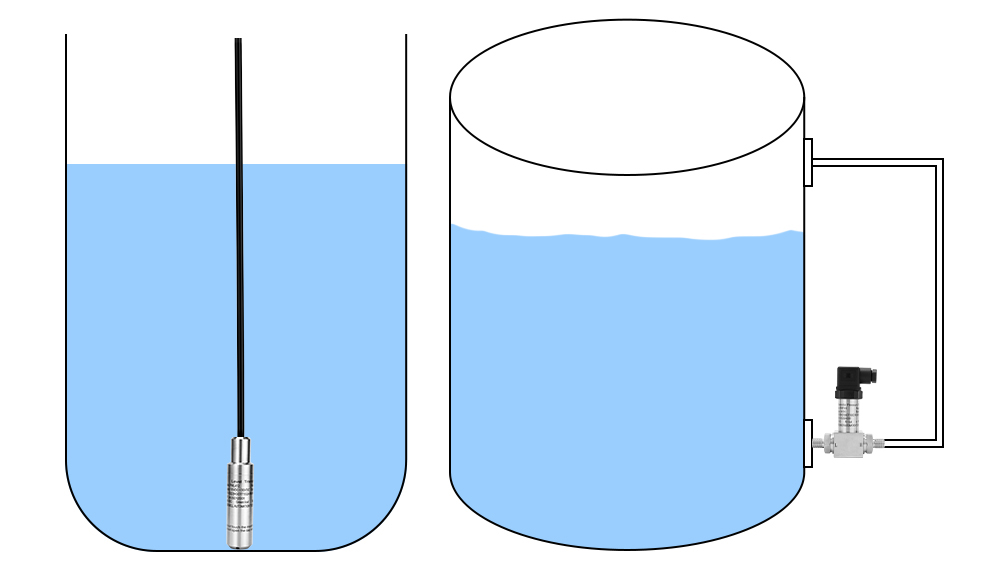
In closed or pressurized tanks, the situation is slightly more complex. A differential pressure level transmitter becomes necessary, with one pressure port connected to the bottom of the tank (measuring both liquid pressure and tank pressure) and the other connected to the vapor space above the liquid (measuring only tank pressure). By measuring the difference between these two pressures, the differential pressure level measurement system accurately determines liquid level regardless of tank pressure variations.
The pressure transducer for level measurement converts the measured pressure into an electrical signal—typically 4-20 mA, 0-10V, or digital protocols like HART, Modbus, or Profibus. Modern liquid level measurement systemsoften include built-in microprocessors that perform the pressure-to-level conversion automatically, accounting for liquid density and providing direct level readings.
Types of Pressure-Based Level Measurement Technologies
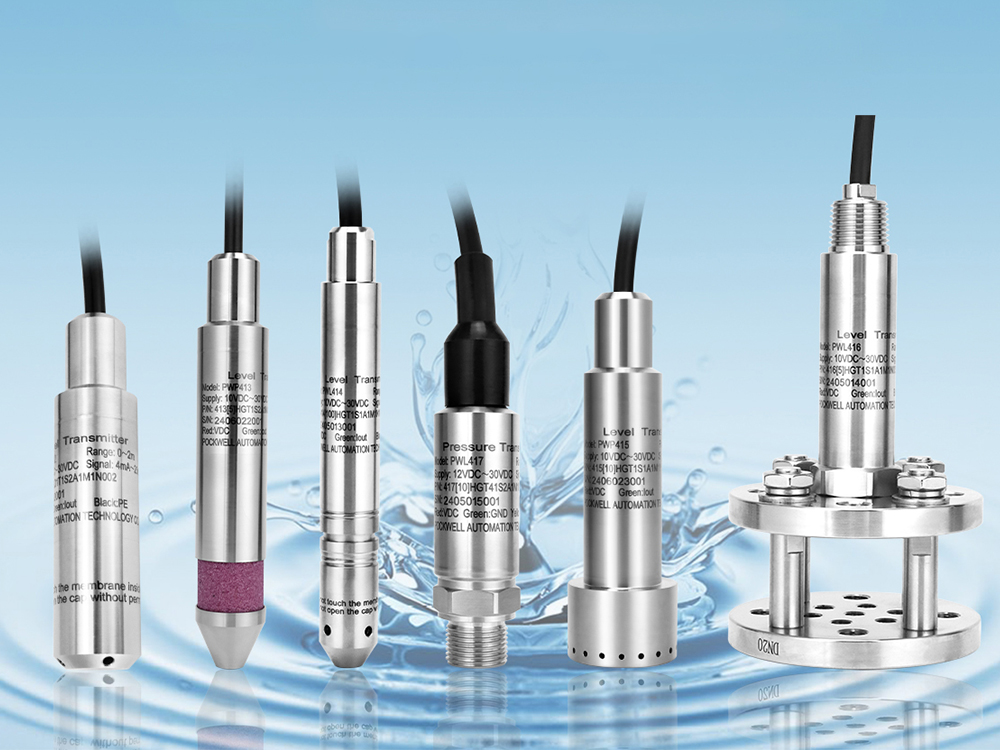
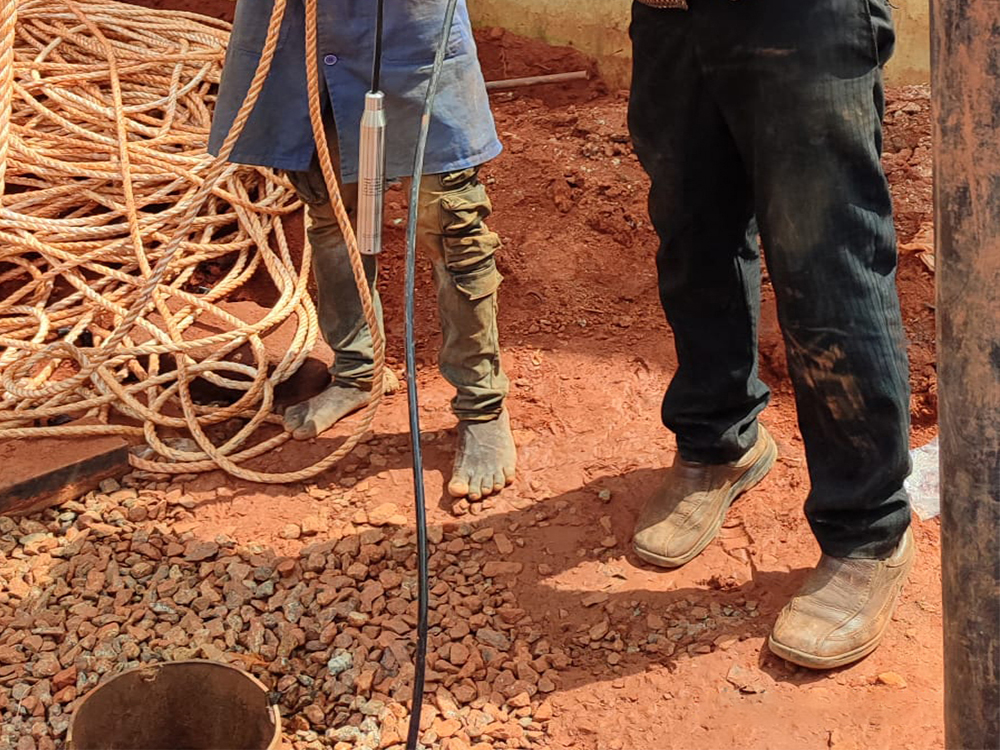
Submersible pressure transmitters are the most straightforward solution for liquid level pressure sensors. These rugged devices are designed to be fully immersed in the liquid, with the sensing element at the bottom of the probe. They’re ideal for wells, sumps, reservoirs, and open tanks. The cable connecting the transmitter to the control system often includes a vent tube that references atmospheric pressure, automatically compensating for barometric variations.
Differential pressure level transmitters are essential for hydrostatic tank gauging in closed vessels. By measuring the pressure difference between the bottom and top of the tank, these systems provide accurate level measurement regardless of process pressure or temperature variations in the vapor space. They’re commonly used in pressurized storage tanks, reactors, and distillation columns.
Flange-mounted hydrostatic level sensors offer another installation option, particularly useful when a submersible sensor cannot be used due to aggressive media or high temperatures. These sensors mount externally on the tank with process connections, keeping electronics away from harsh conditions while still measuring hydrostatic pressure accurately.
Bubbler level systems represent a variation of pressure-based level measurement where compressed air or inert gas is bubbled into the liquid through a dip tube. The back-pressure required to produce bubbles equals the hydrostatic pressure of the liquid above the tube outlet. While less common today, bubbler systems remain useful for measuring levels of highly corrosive or viscous liquids where direct sensor contact is undesirable.
Key Advantages of Hydrostatic Pressure Level Measurement
Pressure level measurement systems offer exceptional reliability with no moving parts to wear out or fail. Unlike mechanical float systems or ultrasonic sensors with transducers that can fail, hydrostatic level sensors use solid-state pressure sensing technology that operates continuously for years without maintenance.
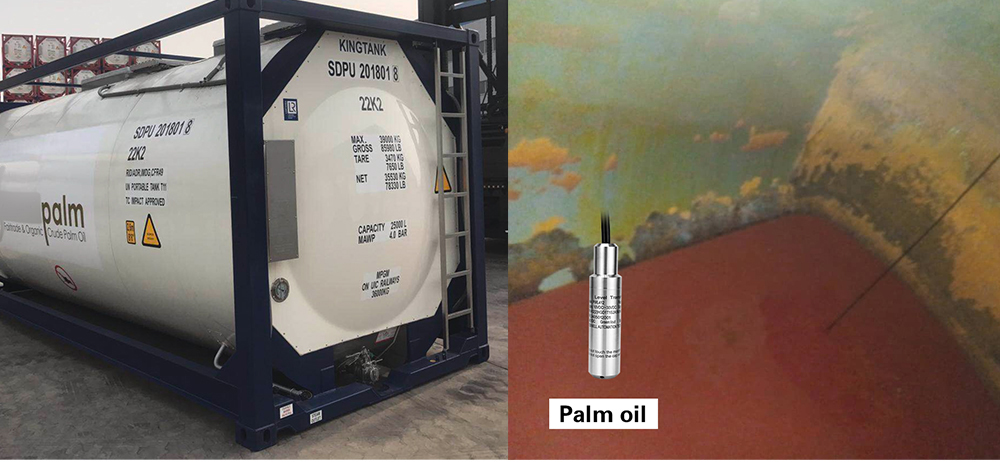
The technology excels in harsh environments where other measurement methods struggle. Submersible pressure transmitters function reliably in dirty water, wastewater, slurries, and chemically aggressive liquids. They’re unaffected by foam, vapor, dust, or surface turbulence that can interfere with non-contact technologies like radar or ultrasonic sensors.
Cost-effectiveness is another significant advantage. Pressure transducers for level measurement typically cost less than radar or magnetostrictive systems while providing comparable or superior accuracy for many applications. Installation is straightforward, often requiring only a threaded port or flange connection, and commissioning involves simple zero and span calibration.
Static pressure level measurement provides continuous level monitoring with excellent resolution and accuracy, typically ±0.1% to ±0.25% of full scale. This makes hydrostatic pressure level transmitters suitable for custody transfer, inventory management, and precise process control where accuracy directly impacts product quality or regulatory compliance.
Real-World Applications of Pressure-Based Level Monitoring
In water and wastewater treatment, submersible pressure transmitters monitor levels in clarifiers, equalization basins, wet wells, and storage tanks. Their ability to function reliably in dirty, turbulent conditions makes them the preferred choice for municipal applications. Hydrostatic level monitoring provides real-time data for pump control, overflow prevention, and process optimization.
The oil and gas industry relies heavily on pressure-based level measurement for custody transfer, lease automatic custody transfer (LACT) units, and storage tank monitoring. Hydrostatic tank gauging systems meet API standards for inventory accuracy, and differential pressure level transmitters handle the challenges of measuring levels in pressurized separators and treaters.
Chemical processing facilities use liquid level pressure sensors to monitor reactors, mixing tanks, and storage vessels containing corrosive or hazardous materials. The non-contact electronics of many pressure level gaugeskeep sensitive components away from aggressive media while maintaining measurement accuracy.
Food and beverage production employs sanitary hydrostatic level sensors with 3A and EHEDG certifications for monitoring ingredient tanks, fermentation vessels, and CIP (clean-in-place) systems. The hygienic design ensures product purity while providing accurate level measurement for batch control and inventory management.
Factors Affecting Measurement Accuracy
Liquid density is the most critical factor in pressure level measurement accuracy. Since the calculation P = ρgh depends directly on density, any density variation affects the level reading. Temperature changes, concentration variations, or mixing of different liquids can alter density. Advanced hydrostatic pressure level transmitters can accept density input or use temperature compensation to adjust readings automatically.
Temperature affects pressure transducers for level measurement in two ways: it changes liquid density and can impact sensor accuracy. Quality liquid level pressure sensors include temperature compensation for the sensing element, but density changes must still be accounted for separately, especially with liquids whose density varies significantly with temperature.
In closed tanks, vapor space pressure fluctuations can introduce errors if not properly compensated. This is why differential pressure level transmitters are essential for pressurized vessels—they automatically cancel out process pressure variations that would otherwise affect measurement accuracy.
Installation location matters significantly. Pressure level sensors must be installed at or below the lowest liquid level of interest, with proper consideration for sediment accumulation, turbulence near inlets, and adequate isolation from vibration sources that could affect readings.
Comparing Pressure-Based with Other Level Measurement Technologies
Hydrostatic level measurement offers significant advantages over ultrasonic sensors in applications with foam, dust, or vapor that can block acoustic waves. While ultrasonic sensors work well in clean, calm conditions, pressure level gauges perform reliably regardless of surface conditions or tank atmosphere.
Compared to radar level sensors, pressure-based level measurement provides better value for smaller tanks and applications where the extreme range or non-contact measurement of radar isn’t necessary. Submersible pressure transmitters also avoid the complex installation and commissioning sometimes required for radar systems.
Float-based level switches provide only point level detection, while hydrostatic pressure level transmitters deliver continuous measurement across the entire tank height. This makes pressure level measurement far more valuable for inventory management, process control, and leak detection.
Magnetostrictive level sensors offer excellent accuracy but at higher cost and with potential maintenance needs if the float becomes fouled. Static pressure level measurement provides comparable accuracy without moving parts, often making it the more reliable long-term choice.
Installation and Calibration Best Practices
Proper installation of pressure transducers for level measurement begins with selecting the correct mounting location. For submersible pressure transmitters, ensure the sensor sits at a stable level, protected from direct impact by inlet flows but not in areas where sediment accumulates. Use proper cable management to prevent strain on connections.
Zero and span calibration ensures accuracy across the measurement range. With the tank empty, set the zero point; with the tank at a known level (ideally full), set the span. Modern hydrostatic pressure level transmitters often support digital calibration through HART communicators or configuration software, simplifying this process.
Density compensation is critical for accuracy. Program the correct liquid density into the transmitter, or use automatic temperature compensation if density varies with temperature. Some advanced liquid level measurement systemssupport multiple density zones for stratified tanks or interface detection applications.
Regular maintenance of pressure level sensors involves inspecting process connections for leaks, checking vent tubes on submersible sensors for blockage, and verifying calibration periodically. Most hydrostatic level sensorsrequire minimal maintenance, but periodic verification ensures continued accuracy, especially in custody transfer applications.
Common Challenges and Solutions in Pressure-Based Level Measurement
Density variations challenge hydrostatic tank gauging accuracy, but solutions exist. Temperature-compensated density tables can be programmed into smart transmitters, or separate density meters can provide real-time correction. For applications with consistent temperature, simple density compensation based on temperature measurement often suffices.
Foam and turbulence at the liquid surface don’t affect pressure-based level measurement since measurement occurs at the bottom of the tank. This represents a key advantage over ultrasonic and radar technologies that must contend with surface conditions.
For vacuum or high-pressure applications, ensure the selected differential pressure level transmitter has appropriate pressure ratings. The low-pressure side connection to the vapor space must be properly designed to prevent liquid condensation that could affect measurement accuracy.
Corrosive or abrasive media require appropriate material selection. Submersible pressure transmitters are available with wetted materials ranging from stainless steel to exotic alloys like Hastelloy or titanium. Ceramic sensing diaphragms provide excellent abrasion resistance for slurries and abrasive liquids.
The Future of Hydrostatic Level Monitoring
Smart pressure level measurement technology is evolving rapidly. Modern hydrostatic pressure level transmittersincorporate advanced diagnostics that monitor sensor health, detect process anomalies, and predict maintenance needs before failures occur. These intelligent devices improve reliability while reducing maintenance costs.
Wireless liquid level pressure sensors eliminate installation costs associated with signal cabling. Battery-powered devices with ultra-low power consumption can operate for years, transmitting data via WirelessHART, LoRaWAN, or other industrial wireless protocols. This makes pressure-based level measurement practical for remote tanks, mobile equipment, and temporary installations.
IoT integration brings hydrostatic level monitoring into enterprise systems. Cloud-connected pressure level gauges enable remote monitoring from anywhere, automated reporting for compliance, and integration with inventory management, logistics, and predictive analytics systems. Real-time level data supports smarter decision-making across organizations.
Looking for reliable liquid level measurement solutions for your tanks, vessels, or process equipment? Our range of hydrostatic pressure level transmitters, submersible pressure sensors, and differential pressure level measurement systems delivers the accuracy and reliability your applications demand.
Contact our instrumentation specialists today to discuss your level measurement challenges, receive application support, or request quotes on pressure-based level measurement systems tailored to your specific needs.
FAQs About Using Pressure to Measure Liquid Level
How does pressure-based level measurement work?
Pressure level measurement works by measuring the hydrostatic pressure exerted by a liquid column. Since pressure is proportional to liquid height (P = ρgh), a pressure transducer at the bottom of a tank can accurately calculate level by measuring pressure.
What’s the difference between submersible and differential pressure level sensors?
Submersible pressure transmitters are fully immersed in the liquid and ideal for open tanks, while differential pressure level transmitters measure the pressure difference between tank bottom and top, making them suitable for closed or pressurized vessels.
How accurate is hydrostatic level measurement?
Hydrostatic pressure level transmitters typically provide accuracy of ±0.1% to ±0.25% of full scale, comparable to or better than most other level measurement technologies when properly installed and calibrated.
Can pressure sensors measure level in pressurized tanks?
Yes, differential pressure level transmitters are specifically designed for pressurized tanks. By measuring the pressure difference between the liquid and vapor space, they accurately determine level regardless of tank pressure.
Does liquid density affect pressure-based level measurement?
Yes, since the relationship is P = ρgh, density directly affects the measurement. However, modern hydrostatic level sensors can compensate for density variations through temperature correction or direct density input.
What are the advantages of pressure-based level measurement?
Key advantages include high reliability with no moving parts, excellent performance in harsh conditions, immunity to surface turbulence and foam, straightforward installation, cost-effectiveness, and continuous measurement with high accuracy.
How do you calibrate a pressure level transmitter?
Calibration involves setting zero with the tank empty and setting span at a known level (typically full). The liquid density must also be programmed into the transmitter for accurate pressure-to-level conversion.

