 English
 Spanish
Water Pressure Sensors for Industrial Pipelines: A Solutions Guide
Water Pressure Sensors for Industrial Pipeline Monitoring
Anyone who has dealt with a burst pipeline at 2 AM knows that pressure monitoring is not just about data collection. It is about preventing the kind of catastrophic failure that shuts down operations, floods facilities, and triggers emergency response protocols. Water pressure sensors sit at the heart of industrial pipeline monitoring, translating physical forces into actionable information that keeps systems running safely. After more than a decade working in industrial process control, Pokcenser Automation has seen firsthand how the right sensor selection and installation practices separate reliable operations from costly disasters.
Why Accurate Water Pressure Monitoring Matters for Pipeline Integrity
Pipeline systems operate under constant stress. Pressure fluctuations, thermal expansion, and flow variations create conditions that can degrade infrastructure over time or cause sudden failures. When water pressure sensors deliver inaccurate readings, operators lose visibility into these conditions. The consequences extend beyond equipment damage.
Uncontrolled pressure leads to pipeline bursts that contaminate surrounding environments and trigger regulatory investigations. Facilities face production shutdowns while repair crews work around the clock. Insurance claims pile up alongside regulatory fines. The financial impact of a single major incident often exceeds the cost of comprehensive monitoring systems by orders of magnitude.
Effective pressure management catches problems early. A gradual pressure drop might indicate a developing leak before it becomes a rupture. Abnormal pressure spikes can signal valve malfunctions or blockages that need immediate attention. Water pressure sensors functioning as preventative maintenance tools allow operators to schedule repairs during planned downtime rather than responding to emergencies.
Energy optimization represents another significant benefit. Pumping systems consume enormous amounts of electricity, and maintaining optimal pressure reduces unnecessary energy expenditure. Facilities that implement robust pressure monitoring typically see measurable reductions in operating costs within the first year.
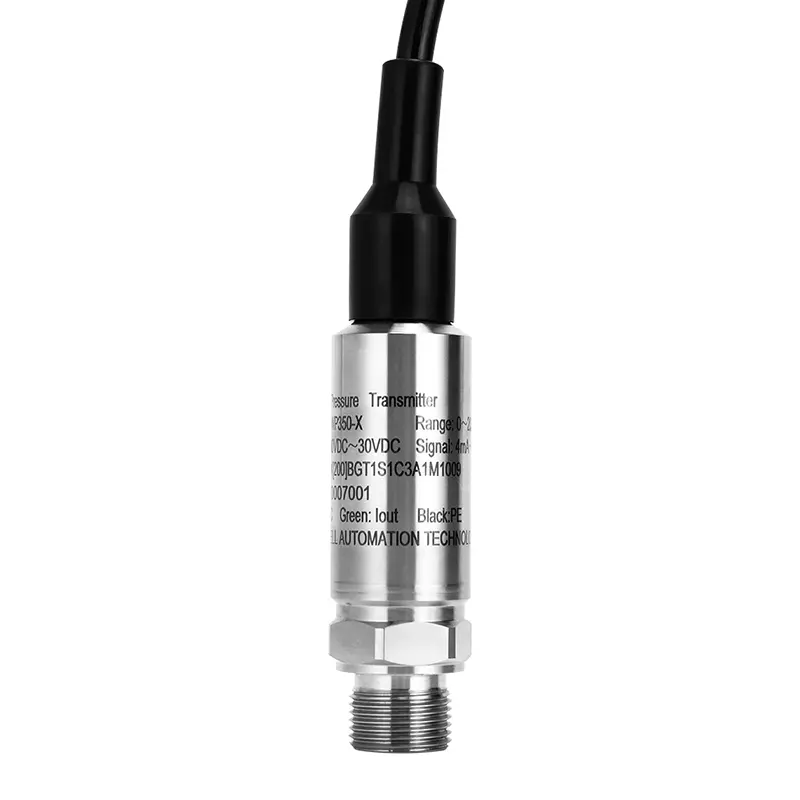
Matching Water Pressure Sensors to Specific Industrial Applications
The diversity of industrial applications means that no single water pressure sensor design works everywhere. A sensor performing flawlessly in a clean water distribution system might fail within weeks when exposed to aggressive chemicals or extreme temperatures. Understanding the operating environment is essential before selecting any monitoring equipment.
Media characteristics drive many selection decisions. Clean water applications can use standard stainless steel diaphragms, but wastewater treatment facilities deal with suspended solids, biological matter, and chemical additives that attack conventional materials. Corrosive media applications demand specialized alloys or protective coatings that resist chemical attack.
Temperature considerations affect both sensor accuracy and longevity. Standard water pressure sensors typically operate reliably up to 85°C, but many industrial processes involve heated water or steam that exceeds these limits. High-temperature applications require sensors designed with appropriate thermal compensation and materials that maintain structural integrity under sustained heat exposure.
Environmental factors beyond the measured medium also matter. Outdoor installations face temperature swings, humidity, and potential physical damage. Hazardous area classifications require intrinsically safe designs that cannot generate sparks or sufficient heat to ignite flammable atmospheres.
| Sensor Type | Key Feature | Ideal Application |
|---|---|---|
| Piezoresistive Pressure Sensors | High accuracy, robust | General industrial, oil & gas pipeline pressure |
| Ceramic Pressure Sensors | Chemical resistance, stability | Corrosive media, chemical processing pressure control |
| PWP350-D Pressure Transmitter with Display-03 | Local display, easy reading | On-site monitoring, immediate feedback |
| PWP3051P Intelligent Monocrystalline Silicon Pressure Transmitter-01 | High precision, smart features | Advanced process control, critical measurements |
| PWP124 High Temperature Melt Pressure Sensor & Transducer-01 | High temperature capability | High-temperature water applications |
Selecting Water Pressure Sensors for Corrosive Pipeline Environments
Corrosive industrial pipelines present some of the most demanding conditions for pressure monitoring equipment. The wrong material choice leads to rapid sensor degradation, measurement drift, and eventual failure. Chemical compatibility must be verified for every component that contacts the process medium.
316L stainless steel serves as the baseline material for many industrial water pressure sensors. Its chromium and molybdenum content provides good resistance to chlorides and many organic acids. However, concentrated acids, high-chloride environments, and certain chemical combinations overwhelm standard stainless steel within months.
For aggressive chemical environments, Hastelloy alloys offer superior protection. Hastelloy C-276 resists oxidizing and reducing acids, chloride-induced stress corrosion cracking, and pitting in harsh chemical mixtures. The material cost is higher, but sensor replacement frequency drops dramatically in applications where standard materials fail.
Ceramic pressure sensing elements provide another option for corrosive applications. Alumina ceramic resists most acids and bases while maintaining excellent long-term stability. The ceramic diaphragm eliminates metal-to-fluid contact entirely, removing corrosion concerns for many challenging media types.
Pokcenser Automation manufactures water pressure sensors with various wetted materials to match specific chemical environments. All products carry CE, ATEX, and RoHS certifications, confirming compliance with international safety and environmental standards.
Smart Technologies Transforming Industrial Pressure Monitoring
The integration of digital communication and processing capabilities has fundamentally changed what water pressure sensors can accomplish. Traditional analog sensors output a simple 4-20mA signal proportional to pressure. Smart transmitters add bidirectional communication, self-diagnostics, and configuration flexibility that analog devices cannot match.
RS485 Modbus RTU communication allows multiple water pressure sensors to share a single cable run back to control systems. Each sensor has a unique address, enabling centralized monitoring of dozens or hundreds of measurement points. This reduces wiring costs and simplifies system architecture for large installations.
Remote monitoring capabilities extend visibility beyond the control room. Cloud-connected sensors transmit data to web-based dashboards accessible from anywhere with internet access. Maintenance teams can check system status from mobile devices, receiving alerts when readings exceed normal parameters.
The data generated by smart water pressure sensors supports predictive maintenance strategies. Rather than replacing sensors on fixed schedules regardless of condition, operators can track performance trends and intervene only when degradation becomes apparent. This approach reduces unnecessary maintenance while catching developing problems before they cause failures.
Industrial Internet of Things integration connects pressure monitoring to broader facility automation systems. Pressure data feeds into process optimization algorithms that adjust pump speeds, valve positions, and other parameters automatically. The result is tighter process control with less manual intervention.
Choosing Water Pressure Sensors for High-Temperature Applications
High-temperature water applications challenge both the sensing element and the electronics within pressure transmitters. Elevated temperatures accelerate material degradation, cause measurement drift, and can permanently damage sensitive components if design limits are exceeded.
The first consideration is the maximum process temperature the sensor will encounter. Continuous exposure differs from brief temperature excursions, and sensor specifications typically list both limits. Operating consistently near the upper temperature limit shortens sensor lifespan even when specifications are technically met.
Diaphragm seal arrangements isolate the pressure sensing element from hot process media. A capillary tube filled with temperature-stable fill fluid transmits pressure to the sensor while keeping the electronics at a safe distance from the heat source. This configuration allows standard sensor electronics to monitor processes far exceeding their direct temperature ratings.
Material selection for high-temperature service requires attention to thermal expansion coefficients. Mismatched materials in the sensor assembly can create stresses during temperature cycling that eventually cause seal failures or diaphragm damage. Quality water pressure sensors use material combinations tested for thermal compatibility.
Temperature compensation algorithms correct for the effects of heat on sensor output. Even with appropriate materials, temperature changes affect the electrical characteristics of sensing elements. Digital compensation applies corrections based on measured temperature, maintaining accuracy across the operating range.
Pokcenser Automation provides technical support for high-temperature applications, helping clients select appropriate sensor configurations and installation approaches for their specific conditions.
Installation and Calibration Practices That Ensure Reliable Measurements
Even the best water pressure sensors deliver poor results when installed incorrectly. Installation location, orientation, and connection methods all affect measurement accuracy. Taking time to follow proper procedures during initial setup prevents ongoing problems throughout the sensor’s service life.
Mounting location should minimize exposure to vibration, temperature extremes, and potential physical damage. Sensors mounted on pumps or near rotating equipment experience constant vibration that can loosen connections and accelerate wear. Relocating the sensor to a nearby pipe section often solves vibration-related issues.
Process connections require careful attention to avoid trapped air or debris. Air pockets in the sensing line cause erratic readings and slow response to pressure changes. Impulse tubing should slope continuously toward the process connection, allowing air bubbles to escape naturally. For applications where air entrainment is unavoidable, venting valves at high points in the sensing line provide a means to purge accumulated air.
Electrical connections must be secure and protected from moisture intrusion. Loose terminal connections create intermittent signals that are difficult to troubleshoot. Cable glands should be properly tightened and oriented to prevent water from running down cables into junction boxes.
Calibration establishes the relationship between actual pressure and sensor output. Factory calibration provides a starting point, but installation conditions and process characteristics may require adjustment. Comparing sensor readings against a reference standard identifies any offset or span errors that need correction.
Ongoing calibration verification catches drift before it affects process control decisions. The appropriate interval depends on application criticality and operating conditions. Critical safety applications might require monthly verification, while less demanding applications can extend to annual checks. Documenting calibration results creates a history that reveals gradual degradation trends.
Pokcenser Automation supports customers throughout the sensor lifecycle, from initial application evaluation through installation guidance and ongoing calibration assistance.
Advantages of Smart Pressure Transmitters in Water System Operations
Smart pressure transmitters deliver capabilities that justify their higher initial cost through operational improvements and reduced long-term expenses. The intelligence built into these devices transforms them from simple measurement tools into active participants in system optimization.
Real-time data availability enables precise process control that analog sensors cannot support. Control systems receive continuous pressure updates and can make immediate adjustments to maintain optimal conditions. This responsiveness improves product quality in manufacturing applications and reduces energy consumption in pumping systems.
Remote diagnostics eliminate many service calls by allowing technicians to evaluate sensor status without traveling to the installation site. Configuration changes, troubleshooting, and performance verification can happen from the control room or even from off-site locations. When physical intervention is necessary, technicians arrive prepared with the right tools and replacement parts.
Predictive maintenance capabilities identify developing problems before they cause failures. Smart water pressure sensors track internal parameters that indicate sensor health, alerting operators when performance begins degrading. Scheduling replacement during planned maintenance windows avoids the production losses and emergency response costs associated with unexpected failures.
Integration with plant information systems creates opportunities for data-driven optimization. Historical pressure data combined with production records, energy consumption, and other operational metrics reveals correlations that suggest improvement opportunities. Facilities that leverage this data consistently outperform those relying on periodic manual analysis.
Working with Pokcenser Automation for Industrial Pressure Monitoring Solutions
Pokcenser Automation Technology Company Limited has spent more than a decade developing and manufacturing water pressure sensors for industrial applications worldwide. Our products monitor pipelines in over 100 countries, with more than 150,000 solutions deployed across oil and gas, water treatment, chemical processing, and general industrial sectors.
Technical expertise distinguishes our approach from simple product sales. Our engineering team evaluates each application to recommend appropriate sensor technologies, materials, and configurations. This consultative process ensures customers receive solutions matched to their specific requirements rather than generic products that may underperform.
Certification compliance demonstrates our commitment to quality and safety. Pokcenser water pressure sensors carry CE, ATEX, ISO, and RoHS certifications, meeting international standards for performance, safety in hazardous environments, and environmental responsibility.
OEM and ODM capabilities allow us to develop customized solutions for customers with unique requirements. Whether modifying existing designs or creating entirely new products, our engineering and manufacturing teams work collaboratively with customers to deliver exactly what their applications demand.
Contact our team to discuss your industrial pipeline monitoring requirements. We provide comprehensive support from initial consultation through installation and ongoing service.
Phone: +86 181 7515 5326
Email: in**@*******er.com
Frequently Asked Questions About Industrial Water Pressure Sensors
How often should industrial water pressure sensors be calibrated?
Calibration frequency depends on how critical accurate pressure readings are to your operation and how harsh the operating environment is. Most industrial applications perform well with annual calibration verification. High-precision processes or safety-critical measurements may need quarterly or monthly checks. Sensors operating in extreme temperatures, corrosive environments, or high-vibration locations tend to drift faster and benefit from more frequent verification. Tracking calibration results over time reveals whether your current schedule is appropriate or needs adjustment.
Can water pressure sensors detect leaks in industrial pipelines?
Water pressure sensors contribute significantly to leak detection when integrated into monitoring systems designed for that purpose. A sudden pressure drop at a single sensor suggests a major leak or rupture nearby. Gradual pressure decline across multiple sensors often indicates smaller leaks accumulating over time. Comparing pressure readings at different pipeline locations can help localize leak sources. Smart pressure transmitters connected to analytics platforms can identify subtle patterns that human operators might miss, catching small leaks before they become major problems.
What certifications matter for water pressure sensors in hazardous industrial environments?
Hazardous area installations require sensors certified for the specific classification of the environment. ATEX certification applies to equipment used in potentially explosive atmospheres within Europe and is widely recognized internationally. IECEx provides a global certification framework accepted in many countries outside Europe. CE marking confirms compliance with European safety directives. The specific certification requirements depend on the hazardous area classification, which considers the type of hazardous material present, how often it might be present, and in what concentrations. Pokcenser Automation water pressure sensors carry ATEX and CE certifications for applications requiring these approvals.

