 English
 Spanish
Why Use a 4-20mA Signal for Immersion Transmitters?
In industrial process control and monitoring, reliable signal transmission is as critical as accurate measurement itself. While modern digital communication protocols offer sophisticated features, the 4-20mA signal remains the dominant standard for immersion transmitters and other field instruments. This proven technology has powered industrial automation for over 50 years, and understanding why it continues to thrive—especially in challenging applications like submersible transmitters—reveals fundamental principles that make it irreplaceable in many scenarios.
For engineers specifying immersion transmitters for water treatment, oil and gas wells, chemical processing, or environmental monitoring, the 4-20mA current loop offers unique advantages that newer technologies struggle to match in harsh, remote, or hazardous environments.
Understanding the 4-20mA Signal Standard
The 4-20mA signal is an analog current loop where 4 milliamps represents the minimum measurement value (0% of range) and 20 milliamps represents the maximum value (100% of range). This current loop standard was established in the 1950s and has become the universal language of industrial instrumentation.
Why 4-20mA rather than 0-20mA? The 4mA “live zero” provides critical functionality. A reading of 4mA confirms the transmitter is powered and functioning, while a reading of 0mA immediately indicates a problem—broken wire, power failure, or instrument malfunction. This built-in fault detection is invaluable for submersible transmitters in remote or inaccessible locations.
The fundamental difference between current signals and voltage signals explains much of the 4-20mA standard’s success. Current remains constant throughout a circuit regardless of resistance, while voltage drops across resistance. In a 4-20mA transmitter, the signal doesn’t degrade over long cable runs or through connectors with contact resistance—15mA at the transmitter arrives as 15mA at the control room, whether the cable is 10 meters or 1000 meters long.
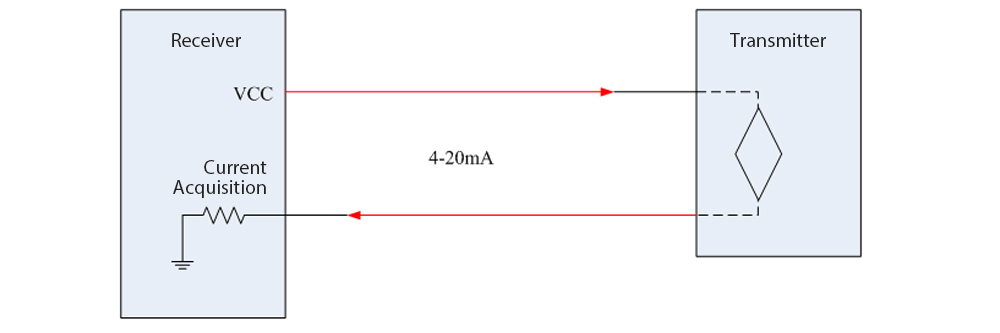
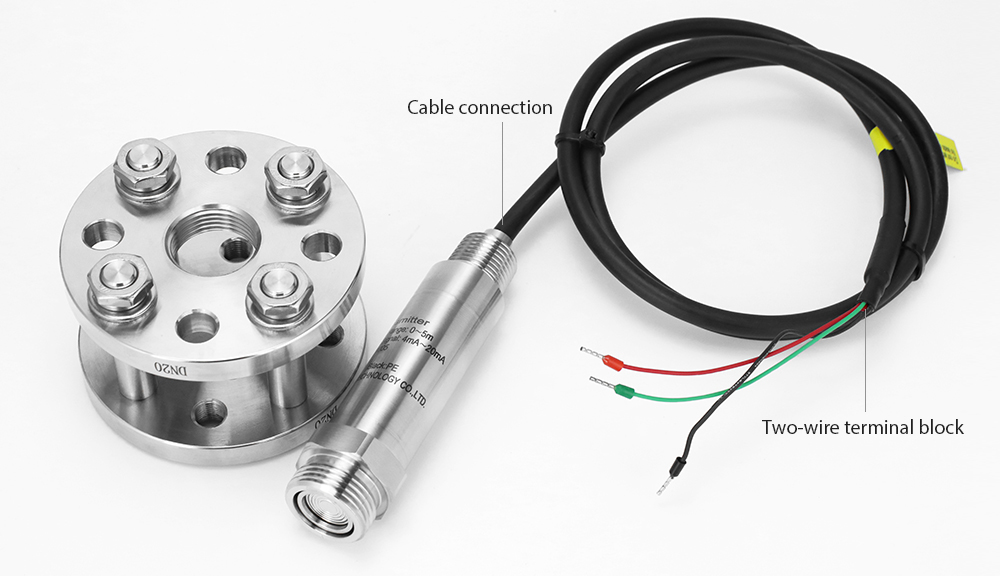
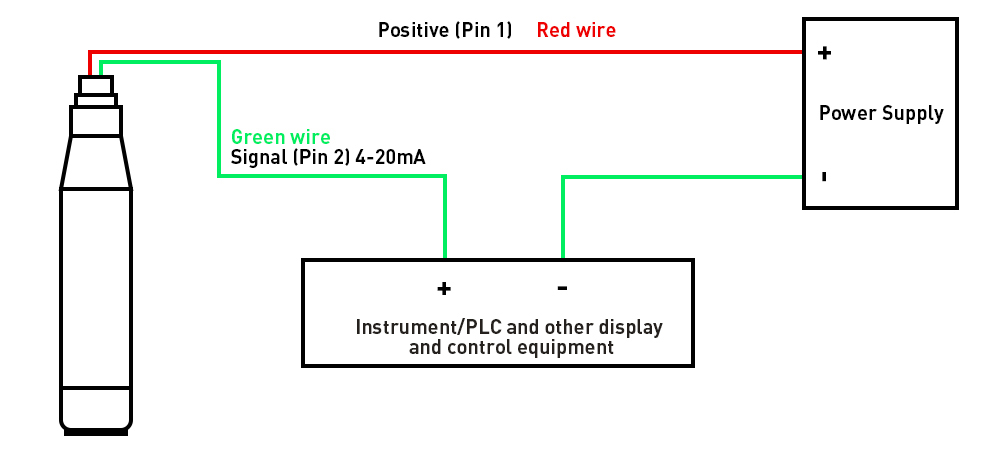
Most 4-20mA transmitters use two-wire configuration, where the same pair of wires provides both power to the instrument and signal transmission back to the control system. This loop-powered transmitter design dramatically simplifies installation compared to four-wire systems requiring separate power and signal cables.
Core Advantages of 4-20mA Signals
Noise immunity represents perhaps the greatest advantage of 4-20mA current loop technology. Electrical noise—from motors, VFDs, welding equipment, or radio transmitters—induces voltage in nearby cables but struggles to affect current. For immersion transmitters operating in electrically noisy industrial environments or running cables through cable trays alongside power lines, this immunity ensures clean, reliable signals.
Long-distance transmission without signal degradation makes 4-20mA signals ideal for submersible transmitters in deep wells, remote monitoring stations, or large treatment plants. Unlike 0-10V voltage signals that degrade with distance, current signals maintain integrity over cable runs exceeding 1000 meters when properly designed. The signal at the receiving end accurately represents the measurement regardless of cable length.
Built-in fault detection through the live zero concept means maintenance personnel immediately recognize problems. A 4-20mA transmitter reading below 3.8mA or above 20.5mA indicates a fault condition. Many smart transmitters use sub-range values (below 4mA) and over-range values (above 20mA) to communicate specific diagnostic information, extending the basic fault detection capability.
Intrinsic safety for hazardous areas is straightforward with 4-20mA current loops. The low energy levels involved (typically less than 1 watt) mean properly designed circuits cannot ignite flammable atmospheres. For immersion transmitters in oil and gas applications or chemical storage tanks, 4-20mA sensors simplify intrinsically safe system design compared to higher-power alternatives.
Universal standardization ensures 4-20mA transmitters from any manufacturer interface seamlessly with any control system. This interoperability eliminates vendor lock-in, simplifies spare parts management, and provides flexibility in system design and upgrades. Every PLC, DCS, and SCADA system includes 4-20mA input capability as standard.
Why 4-20mA is Perfect for Immersion Transmitter Applications
Immersion transmitters face unique challenges that make 4-20mA signals particularly advantageous. Submerged in liquids—sometimes corrosive, often pressurized, frequently in remote locations—these instruments must transmit reliable data through long cables in harsh conditions where maintenance access is difficult.
The robust nature of current loop signaling ensures submersible transmitters maintain signal integrity despite moisture ingress in junction boxes, corrosion on connectors, or degraded cable insulation. Small increases in circuit resistance that would destroy a voltage signal barely affect a 4-20mA current signal, providing a substantial safety margin against environmental degradation.
Cable length flexibility means submersible transmitters can be deployed at virtually any depth without signal boosters or repeaters. Whether monitoring groundwater levels 10 meters deep or measuring pressure in oil wells thousands of meters down, the 4-20mA signal reaches the surface without loss.
Simplified installation in wet environments is achieved through the two-wire transmitter design. A single waterproof cable with two conductors provides both power and signal, minimizing potential leak paths and simplifying gland design. For immersion transmitters in water treatment plants, chemical tanks, or marine applications, this simplicity translates to better reliability and easier maintenance.
Explosion-proof installations in hazardous classified areas benefit from the inherent safety of 4-20mA current loops. In oil and gas wells, petrochemical facilities, and similar environments where submersible transmitters operate in potentially explosive atmospheres, the low energy levels of 4-20mA sensors simplify compliance with intrinsic safety requirements.
How 4-20mA Current Loops Work in Practice
The operating principle of a 4-20mA transmitter begins with the power supply—typically 24VDC—connected in series with the transmitter and a load resistor (usually 250Ω) at the receiving end. The loop-powered transmitter regulates current flow based on the measured parameter, drawing between 4 and 20 milliamps from the loop.
Inside the transmitter, the sensor element (pressure diaphragm, temperature element, or level probe) produces a signal that electronics convert to a proportional current output. Advanced analog signal transmitters include microprocessors that linearize the sensor response, apply temperature compensation, and perform diagnostic functions while maintaining the simple 4-20mA output.
At the receiving end, the load resistor converts current back to voltage for measurement. A 250Ω resistor produces 1-5VDC from a 4-20mA signal—a convenient range for analog-to-digital converters in PLCs and control systems. This resistor voltage drop must be accounted for in loop power budget calculations.
Power budget design ensures adequate voltage remains for the transmitter after accounting for cable resistance and load resistance. The formula is simple: Supply Voltage ≥ Transmitter Voltage + (Loop Current × Total Resistance). For immersion transmitters with long cables, proper power budget calculation prevents malfunction at high signal values where current (and voltage drop) is maximum.
Real-World Applications of 4-20mA Immersion Transmitters
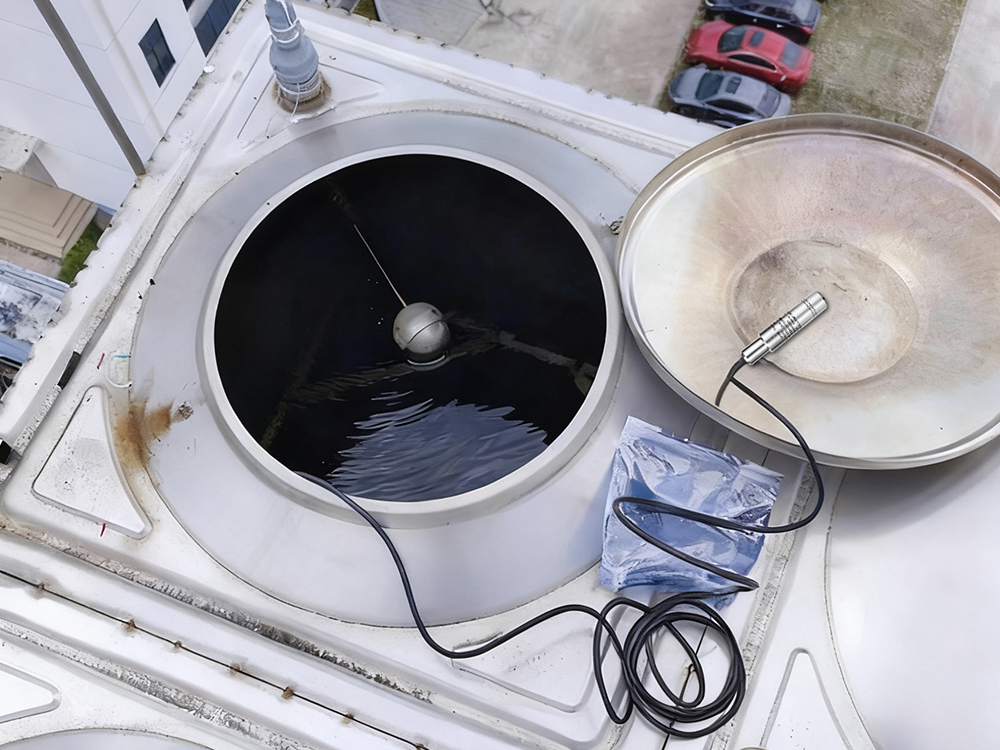
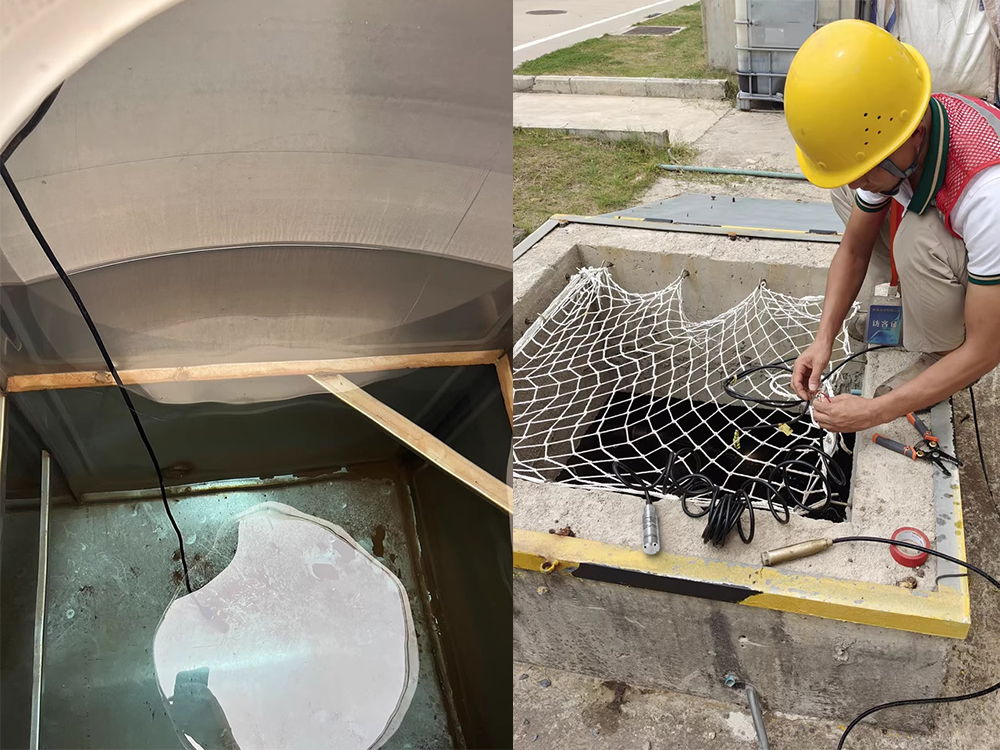
Water and wastewater treatment facilities extensively use 4-20mA submersible transmitters for level measurement in clarifiers, wet wells, and storage tanks. The combination of submersible installation, long cable runs, and electrically noisy environments makes 4-20mA current loops the logical choice for reliable operation.
Oil and gas production depends on 4-20mA pressure transmitters for downhole measurements in production and injection wells. These submersible transmitters operate thousands of meters underground, transmitting pressure and temperature data through armored cables to surface control systems. The noise immunity and long-distance capability of 4-20mA signals are essential in these demanding applications.
Chemical processing plants deploy 4-20mA level transmitters in tanks containing corrosive or hazardous materials. The intrinsic safety advantages and proven reliability of 4-20mA sensors make them preferred for these critical measurements where safety and accuracy are paramount.
Environmental monitoring systems use submersible transmitters with 4-20mA outputs to track water levels and quality parameters in rivers, lakes, and groundwater wells. Remote locations, harsh weather, and intermittent maintenance access make the robust 4-20mA current loop technology ideal for these applications.
Comparing 4-20mA with Alternative Signal Types
Voltage signals like 0-10V offer simpler receiver circuits but suffer fatal disadvantages for immersion transmitters. Voltage drops across cable resistance and connector contact resistance cause measurement errors. A 1-volt drop that’s insignificant in a 4-20mA current loop represents 10% error in a 0-10V system. Additionally, voltage signals are far more susceptible to electrical noise.
Digital communication protocols like Modbus, PROFIBUS, or Foundation Fieldbus provide rich data including diagnostics and configuration capabilities. However, they require more complex electronics, consume more power, and often need additional infrastructure like segment protectors or terminators. For simple immersion transmitterapplications requiring only process measurement, the added complexity and cost often aren’t justified.
Wireless transmitters eliminate cables entirely, offering compelling advantages for temporary installations or retrofit applications. However, batteries require periodic replacement, radio reliability can be affected by obstacles and interference, and wireless technologies generally aren’t suitable for submerged installations. 4-20mA submersible transmitters remain the practical choice for permanent underwater installations.
HART protocol provides the best of both worlds—maintaining the 4-20mA analog signal for process control while adding digital communication for configuration and diagnostics. This hybrid approach allows 4-20mA transmitters to gain smart capabilities without sacrificing the reliability advantages of current loop signaling.
Design Considerations for 4-20mA Immersion Systems
Loop resistance calculation determines maximum cable length for 4-20mA transmitters. The total resistance includes cable resistance (both conductors), load resistor resistance, and any additional series resistance from barriers or isolators. Most transmitters specify maximum loop resistance, typically 250-1000Ω depending on supply voltage and transmitter design.
Cable selection for submersible transmitters must consider both electrical and mechanical requirements. Use twisted pair conductors to reduce noise pickup, with appropriate insulation rating for the environment. For long runs, larger conductor gauge (smaller AWG number) reduces resistance. Armored or jacketed cables protect against mechanical damage.
Grounding and shielding practices significantly affect noise immunity. Connect cable shield to ground at one point only (typically at the receiver end) to prevent ground loops. For immersion transmitters in electrically noisy environments, use shielded twisted pair cable with proper grounding.
Multiple transmitters can share a power supply but each requires its own 4-20mA loop to the control system. When multiple submersible transmitters operate in proximity, route cables separately when possible to minimize crosstalk, and use shielded cables if interference is a concern.
HART: Enhancing 4-20mA with Digital Intelligence
HART (Highway Addressable Remote Transducer) protocol superimposes digital communication on the 4-20mA analog signal without interfering with it. This allows 4-20mA transmitters with HART capability to maintain traditional analog control while providing access to configuration parameters, diagnostics, and additional measurement data through digital communication.
For immersion transmitters, HART enables remote configuration of parameters like range, damping, and units without physical access to the submerged instrument. Diagnostic data including sensor temperature, supply voltage, and error flags help maintenance personnel troubleshoot problems before they affect process control.
HART-enabled submersible transmitters provide secondary measurements alongside the primary 4-20mA signal. A pressure transmitter might output pressure on the analog loop while making temperature data available via HART. This multi-variable capability adds value without requiring additional wiring.
Installation and Troubleshooting Best Practices
Proper wiring of 4-20mA transmitters follows standard practices: red wire to positive terminal, black to negative (or common), with polarity critical for correct operation. Use appropriate wire nuts or terminal blocks rated for the environment, and apply dielectric grease to underwater connectors on submersible transmitters.
Loop testing before commissioning verifies correct operation. Disconnect the transmitter, insert a precision current source in its place, and verify the receiver displays correct values at 4mA, 12mA, and 20mA. This isolates any wiring or receiver issues before troubleshooting the transmitter itself.
Common problems with 4-20mA signals include intermittent readings (often loose connections), readings stuck at maximum or minimum (wiring shorts or opens), and noisy signals (poor grounding or EMI). For immersion transmitters, moisture in junction boxes frequently causes problems—ensure all enclosures maintain proper IP ratings.
The Future of 4-20mA Technology
Rather than being replaced, 4-20mA signals are evolving. Modern smart transmitters combine proven analog current loop reliability with digital enhancements through protocols like HART or WirelessHART. This hybrid approach preserves the advantages that make 4-20mA ideal for immersion transmitters while adding capabilities that improve maintenance and operation.
Industrial IoT initiatives increasingly leverage 4-20mA transmitters as edge devices, using gateways to convert analog signals to Ethernet or wireless protocols for cloud connectivity. This architecture maintains field-level reliability while enabling advanced analytics and remote monitoring.
The simplicity, reliability, and proven track record of 4-20mA current loops ensure this technology will remain the backbone of industrial process control for decades to come, particularly for challenging applications like submersible transmitters where robustness and reliability are non-negotiable.
Specifying reliable 4-20mA immersion transmitters for your water treatment, oil and gas, or industrial monitoring applications? Our range of submersible transmitters with 4-20mA output delivers the accuracy, reliability, and long-term performance your critical measurements demand. With loop-powered designs, HART communication options, and proven durability in the harshest environments, we provide complete solutions backed by expert application support.
Contact our technical team today for application consultation, product selection assistance, or to request specifications and quotes for 4-20mA transmitters optimized for your specific requirements.
FAQs About 4-20mA Signals and Immersion Transmitters
Q: Why is 4-20mA used instead of 0-20mA?
A: The 4-20mA signal uses 4mA as “live zero” to enable fault detection. A reading of 0mA immediately indicates a circuit problem (broken wire, power failure, or transmitter fault), while 4mA confirms the system is functioning with minimum reading.
Q: How far can a 4-20mA signal travel?
A: 4-20mA current loops can reliably transmit over 1000+ meters when properly designed. Maximum distance depends on cable resistance, power supply voltage, transmitter requirements, and load resistance. Calculate total loop resistance to ensure adequate voltage remains for the transmitter.
Q: What is the advantage of 4-20mA over 0-10V signals?
A: Current signals are immune to voltage drops from cable resistance and provide far superior noise immunity compared to voltage signals. For immersion transmitters with long cable runs in electrically noisy environments, 4-20mA delivers reliable measurements where voltage signals would fail.
Q: What is a two-wire transmitter?
A: A two-wire transmitter (or loop-powered transmitter) receives its operating power from the same two wires that carry the 4-20mA signal back to the control system. This simplifies installation compared to four-wire transmitters requiring separate power connections.
Q: Can multiple 4-20mA transmitters share the same cable?
A: No, each 4-20mA transmitter requires its own dedicated loop circuit. However, multiple transmitters can share a common power supply, with each having its own signal loop to the receiver.
Q: What is HART protocol?
A: HART protocol adds digital communication capability to 4-20mA transmitters without affecting the analog signal. It enables remote configuration, diagnostics, and access to additional measurement data while maintaining the reliable 4-20mA signal for process control.
Q: How do you troubleshoot a 4-20mA signal?
A: Start by measuring current with a multimeter in series with the loop. Verify reading matches expected value based on process conditions. Check for proper power supply voltage, measure loop resistance, inspect connections for corrosion or looseness, and verify correct wiring polarity.
Q: What is the typical power supply voltage for 4-20mA transmitters?
A: Most 4-20mA transmitters operate on 24VDC, though supply voltage typically ranges from 12-36VDC. The power supply must provide sufficient voltage to overcome cable resistance, load resistance, and transmitter voltage drop while maintaining regulation.

