 English
 Spanish
Wireless Temperature Sensors: Remote Control for Industrial Efficiency
Industrial processes live and die by temperature control. Get it wrong, and you’re looking at equipment failures, product defects, or worse. For years, wired sensors handled the job, but anyone who’s dealt with cable runs through a sprawling facility knows the headaches involved. Wireless temperature sensors have changed the equation entirely, making remote monitoring practical in places where running cables was never realistic.
Why Remote Temperature Monitoring Matters for Industrial Operations
Real-time temperature data does more than satisfy curiosity. When a bearing starts running hot or a reactor vessel drifts outside spec, catching it early means the difference between a scheduled repair and an unplanned shutdown. The financial math is straightforward: continuous monitoring cuts downtime and trims energy bills by keeping processes within optimal ranges. Safety improves too, especially in spots where sending someone to check a gauge creates unnecessary risk.
Pokcenser Automation has spent over a decade building industrial temperature monitoring solutions that deliver accurate readings without the installation nightmares. Our wireless temperature sensors feed directly into control systems, giving operators the data they need to make informed decisions.
What Makes Wireless Temperature Sensors Worth the Switch
The case for wireless temperature sensors comes down to practical advantages that show up immediately during installation and persist through years of operation.
Cable elimination is the obvious win. Running conduit through an existing plant costs time and money, and every penetration through a wall or floor creates a potential maintenance headache. Wireless temperature sensors go where they’re needed without rerouting anything.
Hazardous locations present an even stronger argument. In areas classified for explosive atmospheres, minimizing electrical connections reduces risk. Our ATEX certified temperature sensors meet the requirements for these demanding environments while maintaining the flexibility that wireless monitoring provides.
Scalability matters too. Adding sensors to a wired network often means pulling new cables and updating junction boxes. With wireless temperature sensors, expansion is straightforward.
| Feature | Wired Sensors | Wireless Temperature Sensors |
|---|---|---|
| Installation Cost | High (cabling, labor) | Low (minimal cabling) |
| Installation Time | Long | Short |
| Flexibility | Limited | High (repositionable) |
| Maintenance | High (cable wear, routing) | Lower (battery replacement) |
| Scalability | Complex | Simple |
Pokcenser holds CE, ISO, and RoHS certifications alongside our ATEX approvals, reflecting the quality standards our customers expect from industrial-grade equipment.
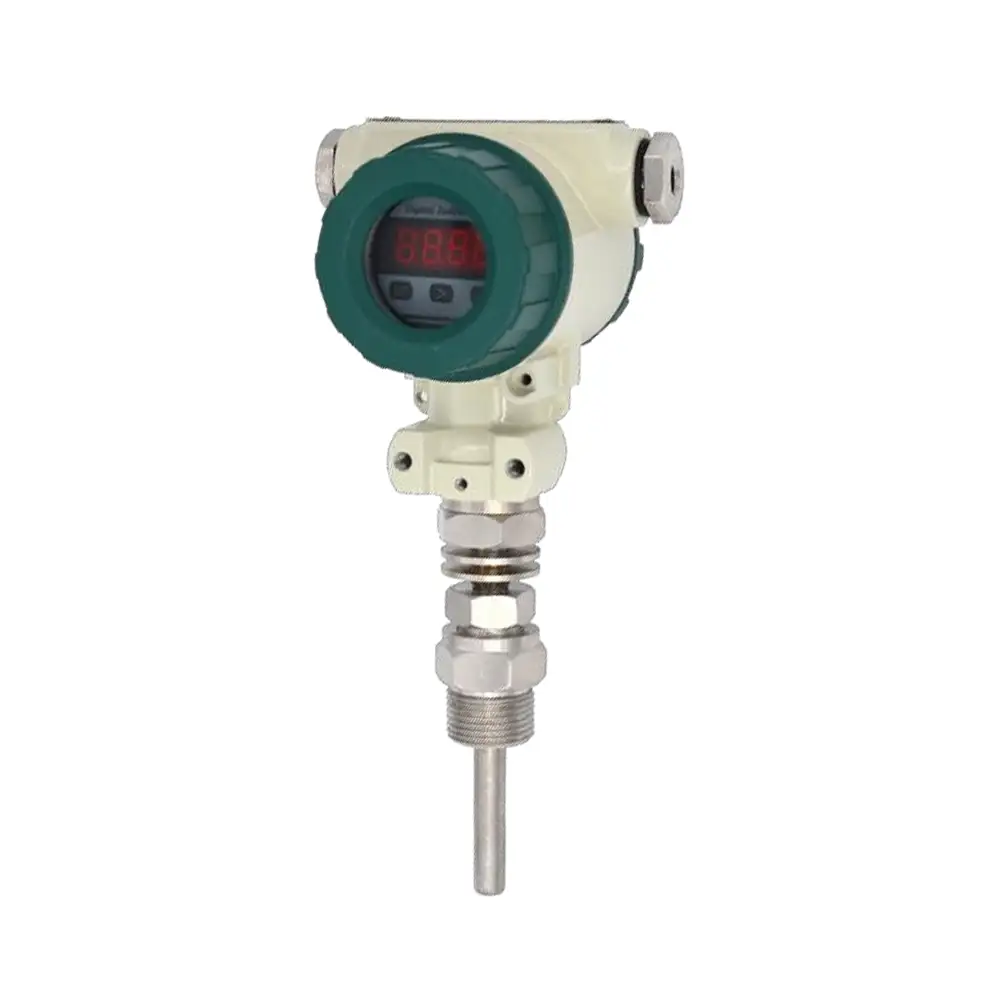
How Wireless Temperature Sensors Support Remote Industrial Control
The value of wireless temperature sensors extends beyond simple measurement. Continuous temperature tracking enables predictive maintenance by revealing gradual changes that signal developing problems. A motor running slightly warmer than usual might have months of life left, but that trend line tells maintenance crews where to focus attention.
Energy management benefits from the same data. Heating and cooling systems optimized around actual temperatures rather than fixed schedules consume less power. Safety protocols gain teeth when temperature limits trigger automatic alerts instead of relying on periodic manual checks.
Getting Wireless Temperature Sensors Talking to Your Control System
Integration concerns stop many projects before they start, but the technical barriers are lower than most people assume. Wireless temperature sensors communicate through gateways that translate their signals into standard industrial protocols. Modbus and OPC UA cover most installations, meaning existing SCADA or DCS platforms accept the data without major software changes.
Pokcenser’s engineering team handles the application evaluation and recommends configurations that work with what’s already in place. Our pre-sales and after-sales support covers the full lifecycle, from initial planning through ongoing operation.
The Technical Side of Wireless Sensor Integration
Gateways serve as the bridge between wireless temperature sensors and plant networks. Battery-powered sensors transmit readings to these gateways, which then format the data for whatever protocol the control system expects. Configuration involves mapping sensor addresses to database tags and setting up alarm thresholds.
The practical result is temperature data appearing in operator displays alongside readings from wired instruments, with no visible difference in how the information gets used.
Matching Wireless Temperature Sensors to Application Requirements
Sensor selection starts with the basics: what temperature range matters, how accurate the readings need to be, and what conditions the sensor will face. RTD elements offer excellent stability for moderate temperatures, while thermocouples handle extreme heat better.
Environmental factors narrow the options further. IP ratings indicate protection against dust and water. Material compatibility determines whether a sensor housing will survive exposure to process chemicals. For explosive atmospheres, ATEX certification isn’t optional.
Pokcenser’s OEM and ODM capabilities mean we can adapt standard designs to unusual requirements. With over 150,000 solutions delivered globally, we’ve encountered most of the challenges industrial environments can present.
Choosing Wireless Temperature Sensors for Tough Conditions
Harsh environments demand careful attention to construction details. Corrosive atmospheres attack standard housings, so material selection matters. High IP ratings protect against washdowns and outdoor exposure. Battery performance degrades in extreme cold, affecting transmission intervals and overall sensor life.
ATEX certified wireless temperature sensors address the specific requirements of hazardous area classifications, combining intrinsic safety with the practical benefits of wireless monitoring.
Where Wireless Temperature Sensors Have Made a Difference
Oil and gas operations use wireless temperature sensors to monitor equipment spread across large facilities where cable runs would be impractical. Continuous data from pumps, compressors, and heat exchangers supports both safety programs and maintenance planning.
Water and wastewater treatment plants rely on temperature monitoring for biological process control. Wireless sensors simplify installation in wet environments where cable protection adds significant cost.
Chemical manufacturing presents some of the most demanding conditions for any instrumentation. Wireless temperature sensors provide the data needed to maintain reaction conditions without the vulnerability of cable connections to corrosive atmospheres.
What’s Coming for Wireless Temperature Sensor Technology
Development continues on several fronts. Analytics platforms are getting better at extracting useful patterns from temperature data, moving beyond simple threshold alarms toward genuine predictive capability. Edge computing pushes some of that processing closer to the sensors themselves, reducing network traffic and response times.
Battery technology improvements extend service intervals, addressing one of the practical concerns about wireless sensors. Pokcenser’s ongoing development work focuses on these advances, building sensors that deliver more value with less maintenance attention.
Working with Pokcenser on Your Temperature Monitoring Needs
Wireless temperature sensors from Pokcenser Automation bring over a decade of industrial process control experience to your facility. Our certified quality, dedicated support team, and OEM/ODM flexibility mean solutions designed around your actual requirements rather than generic offerings.
Reach out at in**@*******er.com or +86 181 7515 5326 for an application evaluation. We’ll work through the technical details and recommend a wireless temperature sensor configuration that fits your operation.
Common Questions About Wireless Temperature Sensors
What is the typical battery life of industrial wireless temperature sensors?
Battery life depends on how often sensors transmit and the environmental conditions they face. Pokcenser’s wireless temperature sensors typically operate for several years between battery changes when configured for standard industrial monitoring intervals. Extreme temperatures or very frequent transmission schedules will shorten that span.
Are wireless temperature sensors secure for critical industrial applications?
Modern wireless temperature sensors use encryption and authentication protocols that meet industrial security requirements. Pokcenser’s designs incorporate these protections as standard features, ensuring data integrity and preventing unauthorized access to sensor networks.
How accurate are wireless temperature sensors compared to traditional wired sensors?
Accuracy depends primarily on the sensing element and signal conditioning, not the transmission method. Wireless temperature sensors using quality RTD or thermocouple elements achieve the same precision as their wired equivalents. Pokcenser’s sensors carry CE, ATEX, and ISO certifications that verify their measurement performance meets industrial standards.

