 English
 Spanish
7 Main Flow Meter Types Explained: How to Choose the Right One for Your Application
Why Choosing the Right Flow Meter Matters
In modern industrial processes, accurate flow measurement is critical for efficiency, cost control, and process stability. Whether you’re in water treatment, oil & gas, chemical processing, or energy management, selecting the right flow meter directly impacts operational performance.
With so many options available, understanding the differences between flow meter types can help you make a smarter investment.
At Pokcenser, we provide reliable and high-performance flow measurement solutions designed for diverse industrial applications worldwide.
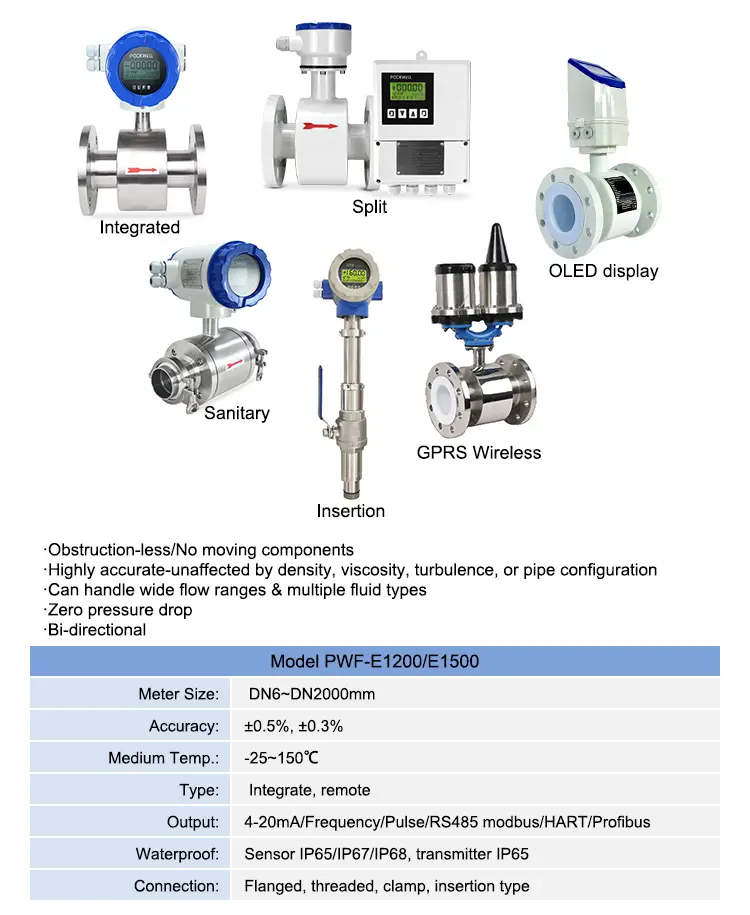
1. Electromagnetic Flow Meter
Electromagnetic flow meters operate based on Faraday’s Law of Electromagnetic Induction, making them ideal for measuring conductive liquids.
Key Benefits:
- High accuracy and stability
- Excellent corrosion resistance
- No moving parts → low maintenance
Typical Applications:
- Water and wastewater treatment
- Chemical processing
- Food & beverage industries
Best for: Conductive liquids like water, acids, and slurries
Not suitable for: Gas, steam, or non-conductive liquids
2. Ultrasonic Flow Meter
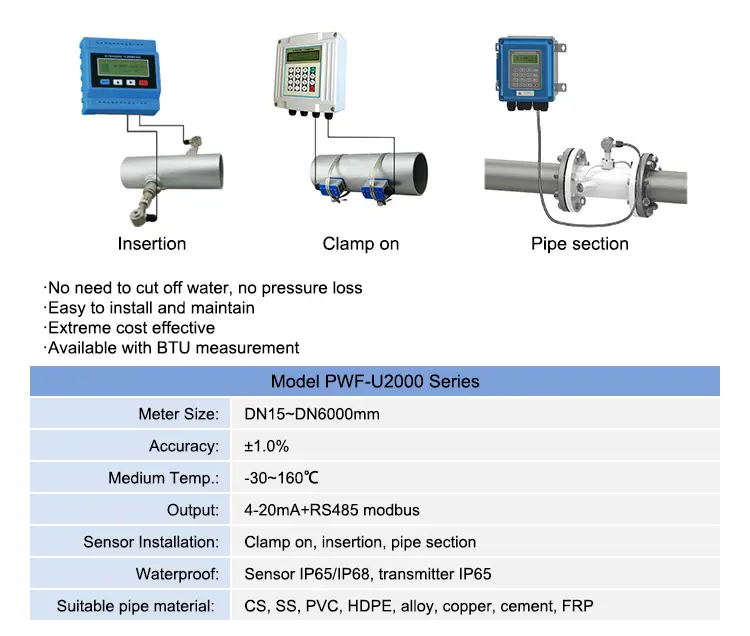
Ultrasonic flow meters measure flow using sound wave transit time differences, enabling non-contact measurement.
Key Benefits:
- No pipe cutting (clamp-on installation)
- Suitable for liquids, gases, and steam
- Minimal pressure loss
Applications:
- HVAC systems
- Energy monitoring
- Industrial water systems
Clamp on ultrasonic flow meters with display are especially popular for retrofit projects and energy-saving monitoring.
3. Liquid Turbine Flow Meter
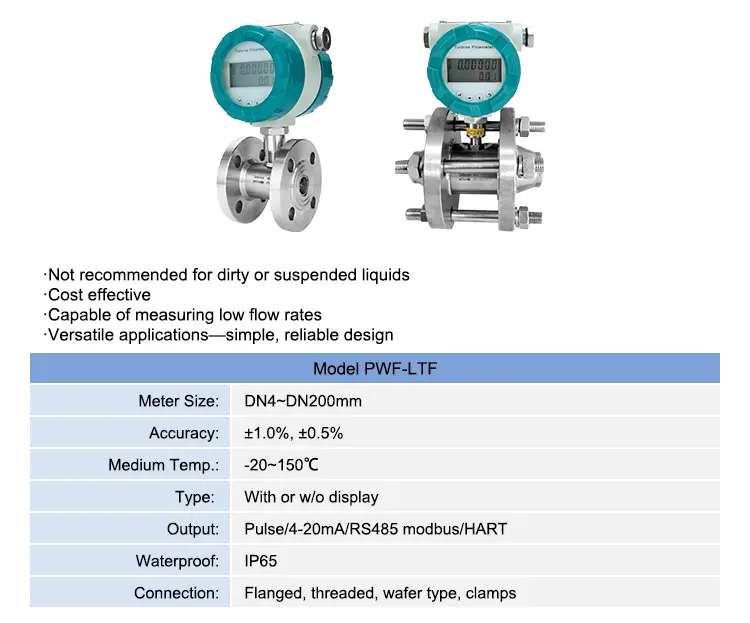
Turbine flow meters use a rotating turbine to measure fluid velocity and calculate flow rate.
Key Benefits:
- High precision and repeatability
- Compact and lightweight
- Fast response time
Applications:
- Petroleum and fuel measurement
- Chemical liquids
- Industrial batching systems
Digital turbine flow meter with RS485 are ideal for automated control systems.
4. Gas Vortex Flow Meter
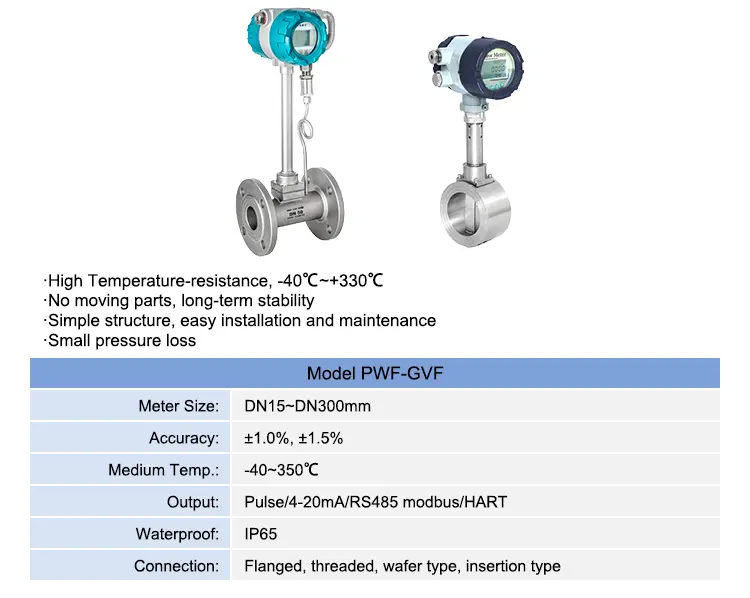
Based on the Karman vortex street principle, vortex flow meters are widely used for gas and steam measurement.
Key Benefits:
- Wide measurement range
- High reliability
- Low pressure loss
Applications:
- Steam flow monitoring
- Compressed air systems
- Power plants and heating systems
Digital air gas flow meters with display are commonly used in energy management and industrial gas monitoring.
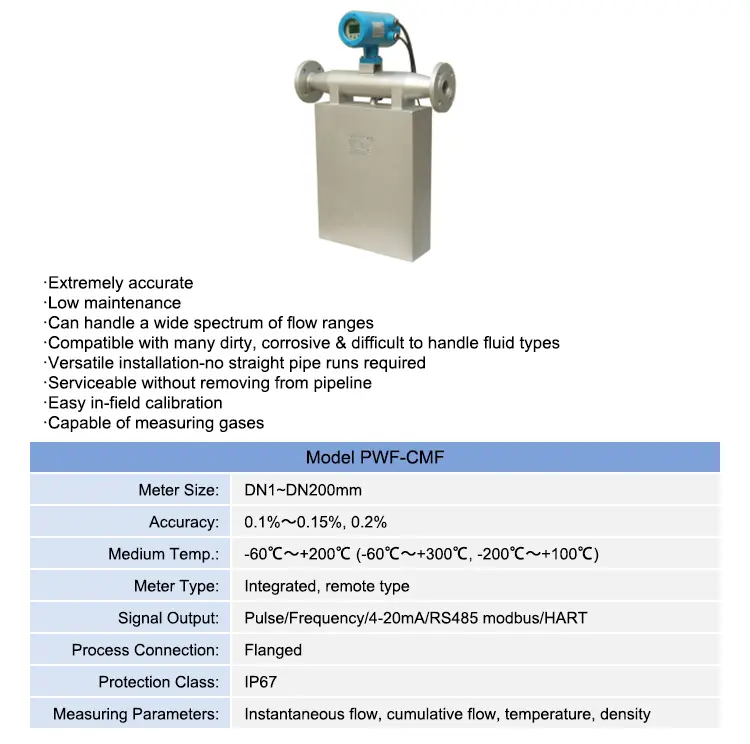
5. Coriolis Mass Flow Meter
Coriolis flow meters directly measure mass flow rate using the Coriolis effect, offering unmatched accuracy.
Key Benefits:
- Direct mass measurement
- High precision (ideal for critical processes)
- Measures density and temperature
Applications:
- Chemical dosing
- Oil & gas custody transfer
- Precision filling systems
Best for: High-value or high-precision processes
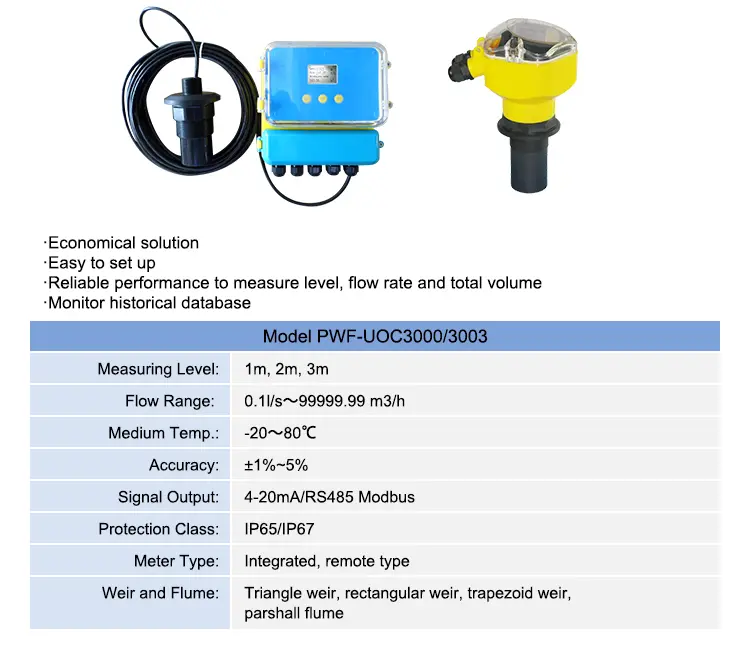
6. Ultrasonic Open Channel Flow Meter
Designed for open channels, this type measures flow based on liquid level and velocity.
Key Benefits:
- Non-contact measurement
- Easy installation
- Suitable for large-scale monitoring
Applications:
- Wastewater treatment plants
- Irrigation systems
- Environmental monitoring
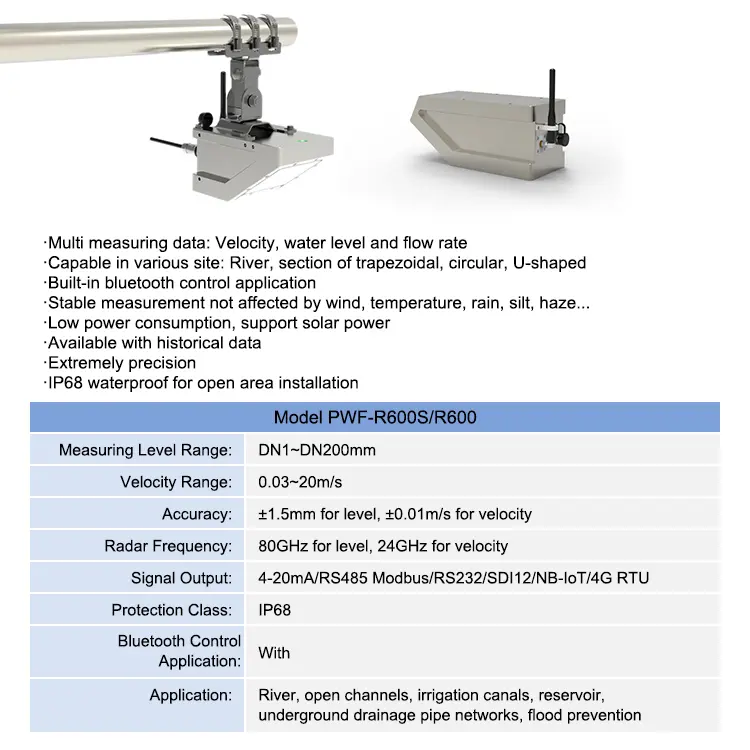
7. Radar Flow Meter
Radar flow meters use microwave signals to measure flow velocity and level in challenging environments.
Key Benefits:
- Works in harsh conditions
- Non-contact and low maintenance
- Long measurement range
Applications:
- Flood monitoring
- River and canal flow measurement
- Environmental and water management
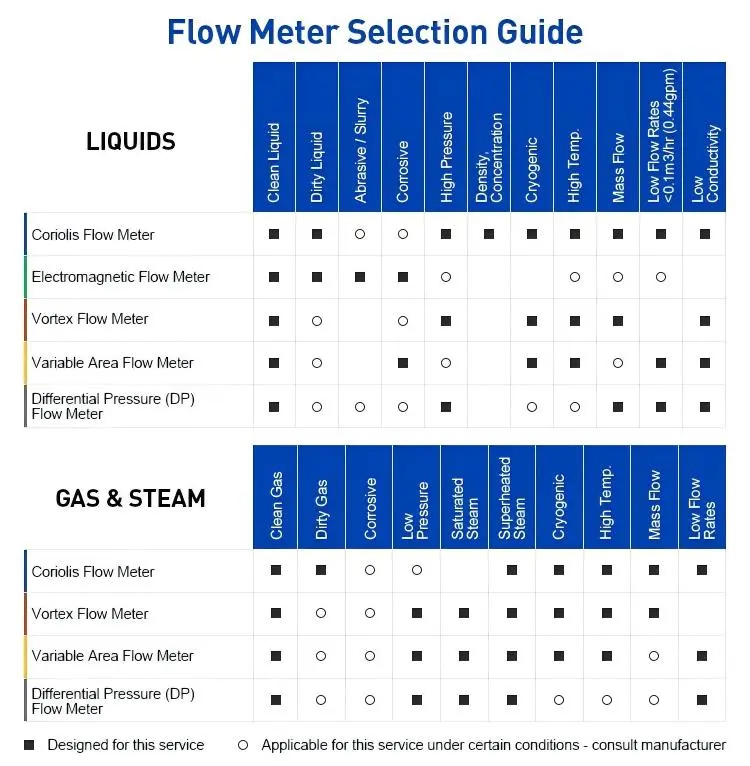
How to Choose the Right Flow Meter
Selecting the right flow meter depends on several critical factors:
- Fluid type: Liquid, gas, or steam
- Conductivity: Required for electromagnetic meters
- Accuracy requirements: High precision vs. general monitoring
- Installation conditions: Inline vs. clamp-on
- Budget and maintenance needs
At Pokcenser, we help customers worldwide choose the most suitable flow meter for their specific application, ensuring reliability, accuracy, and long-term performance.
Why Choose Pokcenser Flow Meters?
- ✅ Wide range of industrial flow measurement solutions
- ✅ High accuracy and stable performance
- ✅ Customization for different industries
- ✅ Competitive pricing for global markets
- ✅ Professional technical support
Understanding the different types of flow meters is essential for selecting the right solution for your industrial needs. Each type offers unique advantages depending on the application.
If you’re looking for reliable, high-performance flow measurement solutions, Pokcenser provides a comprehensive range of products tailored to global industrial demands.
FAQ
Q1. What is the most accurate type of flow meter?
A: Coriolis mass flow meters are generally the most accurate, as they measure mass flow directly rather than volumetric flow.
Q2. Which flow meter is best for water measurement?
A: Electromagnetic and ultrasonic flow meters are ideal for water applications due to their accuracy and low maintenance.
Q3. Can ultrasonic flow meters measure gas?
A: Yes, certain ultrasonic flow meters are designed for gas measurement, depending on the model and application.
Q4. What is the difference between mass flow and volumetric flow?
A: Mass flow measures the actual mass of fluid, while volumetric flow measures the volume. Mass flow is more accurate for process control.
Q5. How do I choose the right flow meter for my system?
A: You should consider fluid type, pipe size, accuracy requirements, installation conditions, and budget. Consulting with experts like Pokcenser can simplify the selection process.
