 English
 Spanish
Pressure Transmitter Types & Applications: How to Choose the Right Sensor for Your Industry
Pressure exists in almost every industrial process—from water pipelines to chemical plants. Choosing the right pressure transmitter is not just about measurement; it directly impacts system stability, safety, and efficiency.
At Pokcenser, we help global industries improve control accuracy with reliable and cost-effective pressure sensing solutions.
What Is a Pressure Transmitter?
A pressure transmitter is a device that converts pressure into a standardized electrical signal (such as 4–20mA or RS485 output), enabling real-time monitoring and automation control.
Basic Structure
A typical pressure transmitter consists of:
- Pressure-sensitive element (detects pressure changes)
- Signal processing unit (converts pressure into electrical signals)
Main Types of Pressure Transmitters
Understanding different types helps you select the right solution for your application.
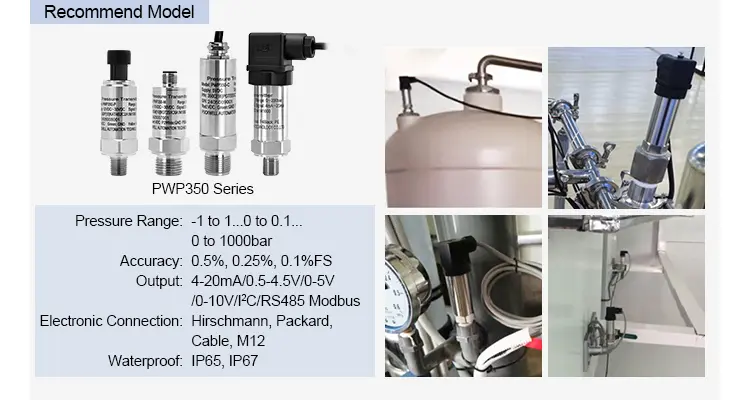
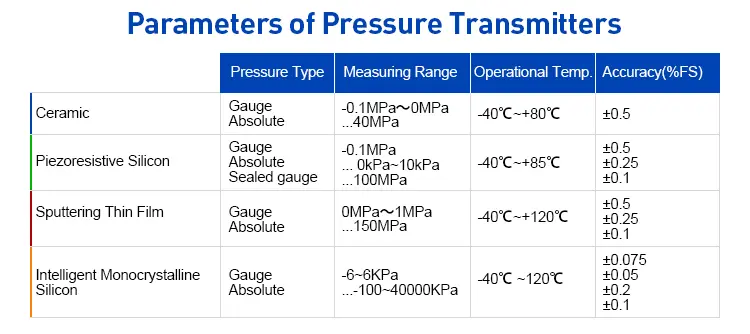
1. Diffused Silicon Pressure Transmitter (Most Popular Choice)
- High accuracy and good linearity
- Cost-effective for large-scale deployment
- Supports analog and RS485 communication
Best for:
Water systems, HVAC, industrial automation
This is the most widely used solution in the global market due to its balance of performance and cost.
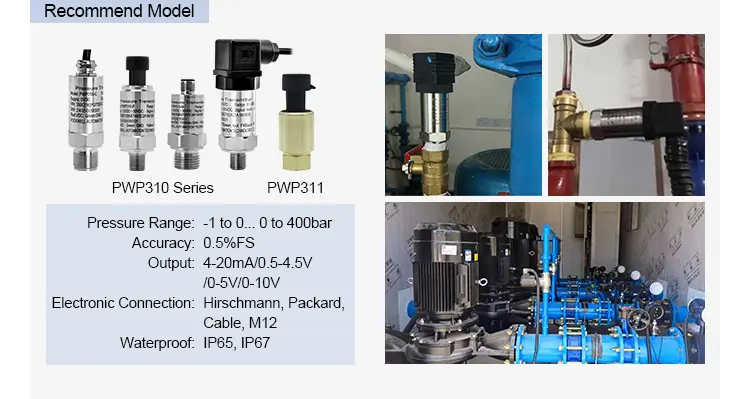
2. Ceramic Pressure Transmitter (Corrosion-Resistant Solution)
- Excellent corrosion and wear resistance
- Wide temperature range (-40°C to 105°C)
- Strong signal output and long-term stability
Best for:
Water treatment, oil, air systems
Especially suitable for harsh and chemically aggressive environments.
3. Sputtered Thin Film Pressure Transmitter (High Durability)
- No moving parts → strong vibration resistance
- High reliability in extreme environments
- Advanced thin-film technology
Best for:
Heavy industry, machinery, high-vibration environments
4. Capacitive Pressure Transmitter (High Sensitivity)
- Low power consumption
- Fast dynamic response
- Good environmental adaptability
Best for:
Low-pressure and dynamic measurement applications
5. Sapphire High-Temperature Pressure Transmitter (Extreme Conditions)
- Exceptional thermal stability
- Minimal temperature drift
- High reliability under extreme conditions
Best for:
High-temperature and high-precision industries
Industry Applications of Pressure Transmitters
Pressure sensors are essential across a wide range of industries:
General Applications
- Water treatment systems
- Chemical processing
- Mining & energy
- Shipbuilding
- Industrial automation
Specialized Applications
- HVAC & refrigeration
- Agricultural irrigation
- Compressed air systems
- High-temperature environments
- Hazardous areas (explosion-proof zones)
- Sanitary applications (food & pharma)
How to Choose the Right Pressure Transmitter
When selecting a pressure sensor, consider:
- Pressure range
- Medium type (corrosive, gas, liquid)
- Temperature conditions
- Output signal (4–20mA, RS485, etc.)
- Installation environment (vibration, explosion risk, etc.)
For most industrial uses, diffused silicon pressure transmitters offer the best cost-performance ratio.
Why Choose Pokcenser Pressure Transmitters?
- Stable performance in harsh environments
- Multiple sensor technologies available
- Customizable outputs (analog / RS485)
- Competitive pricing for global B2B buyers
Pokcenser products are widely used in water treatment, industrial automation, and energy sectors worldwide.
FAQ
Q1. What is the most commonly used pressure transmitter?
A: The diffused silicon pressure transmitter is the most widely used due to its affordability and accuracy.
Q2. What output signals do pressure transmitters provide?
A: Common outputs include 4–20mA, 0–10V, and RS485 digital communication.
Q3. Can pressure transmitters be used in high-temperature environments?
A: Yes, sapphire pressure transmitters are designed for extreme temperature conditions.
Q4. How do I choose the right pressure sensor?
A: You should evaluate pressure range, medium, temperature, and required output signal.
