 English
 Spanish
How a Chemical Plant Improved Solvent Dosing Accuracy with the Pokcenser PWF-LTF Liquid Turbine Flow Meter
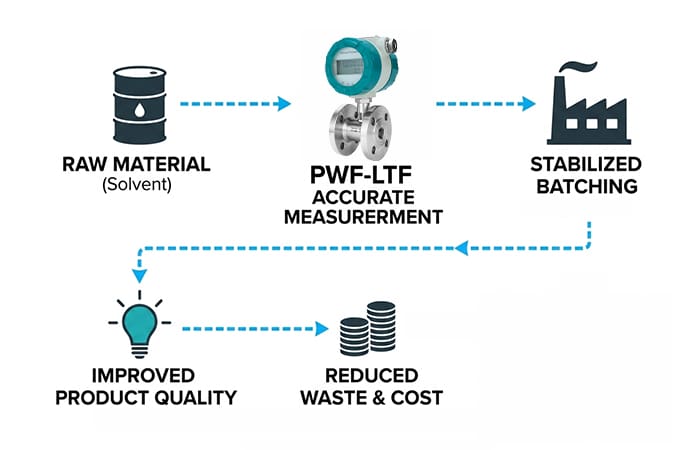
In chemical processing, even a small flow measurement error can lead to raw material waste, inconsistent product quality, and rising operational costs. One solvent blending plant in Southeast Asia faced exactly this challenge when measuring low-viscosity industrial solvents in its dosing system.
After replacing an outdated mechanical meter with the Pokcenser PWF-LTF Liquid Turbine Flow Meter, the customer significantly improved flow measurement accuracy, stabilized batching performance, and reduced maintenance downtime.
This case study explains the application scenario, installation process, and why turbine flow meters remain one of the best solutions for clean liquid measurement in chemical industries.
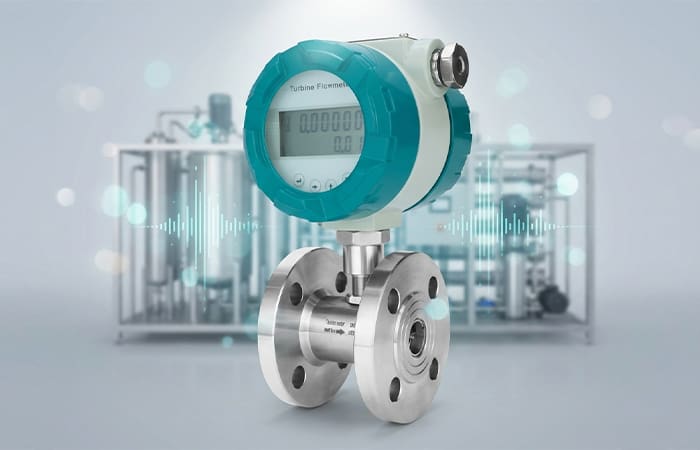
Customer Background
The customer is a mid-sized chemical manufacturer producing industrial cleaning agents and solvent-based coatings. Their production line required continuous monitoring of:
- Ethanol
- IPA (Isopropyl Alcohol)
- Low-viscosity chemical solvents
- Blending additives
The factory originally used a traditional paddle-type flow meter, but encountered several problems:
- Unstable readings during low flow operation
- Slow response during dosing control
- Frequent maintenance caused by rotor wear
- Inaccurate batching leading to material waste
Because solvent dosing directly affects final product consistency, the customer needed a more accurate and reliable liquid flow measurement solution.
Why the Customer Chose the Pokcenser PWF-LTF Liquid Turbine Flow Meter
The customer selected the PWF-LTF Liquid Turbine Flow Meter from Pokcenser due to its suitability for clean, low-viscosity liquids commonly used in chemical production.
According to Pokcenser’s product information, turbine flow meters offer:
- High accuracy and repeatability
- Fast response time
- Compact structure
- Low pressure loss
- Pulse and digital output options for PLC integration
The engineering team also appreciated the stainless steel construction and compatibility with industrial automation systems.
Application Details
Medium
Industrial solvent (IPA and ethanol mixture)
Pipe Size
DN25 stainless steel pipeline
Flow Range
1.5–12 m³/h
Output Signal
4–20mA + pulse output
Installation Environment
Indoor chemical dosing skid
Communication
Connected to PLC for batching automation
Installation Process
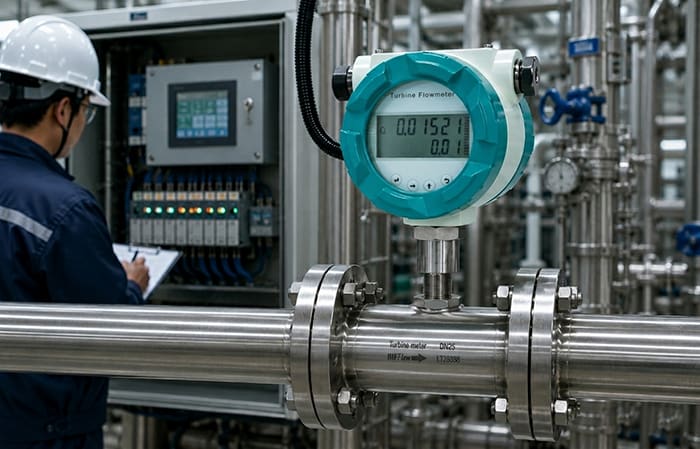
To ensure optimal performance, the customer followed proper turbine flow meter installation guidelines:
- Installed sufficient straight pipe length upstream and downstream
- Avoided strong vibration sources
- Ensured the liquid remained clean and free from large particles
- Mounted the flow meter horizontally to maintain stable rotor movement
Turbine flow meters are known for excellent accuracy with clean, low-viscosity liquids, but proper pipe conditions are important for stable performance.
Measurable Results After Installation
After replacing the old meter with the Pokcenser PWF-LTF, the customer reported major improvements within the first production cycle.
1. Improved Batching Accuracy
The turbine flow meter provided stable and repeatable measurements, helping reduce solvent dosing deviations.
Result:
- Product consistency improved
- Less raw material waste
- Reduced operator adjustment
2. Faster System Response
Because turbine meters respond quickly to flow changes, the PLC control system achieved more precise dosing timing.
Result:
- Improved automation efficiency
- Better process control
3. Reduced Maintenance Costs
Compared with the previous mechanical device, the Pokcenser flow meter required less maintenance and fewer recalibrations.
Result:
- Reduced downtime
- Lower maintenance labor costs
4. Easier Integration with Existing Control Systems
The pulse and 4–20mA outputs integrated smoothly into the plant’s existing PLC monitoring platform.
Why Turbine Flow Meters Are Ideal for Chemical Solvents
Turbine flow meters are widely used for:
- Petroleum products
- Solvents
- Chemical liquids
- Water treatment
- Fuel transfer
- Industrial batching systems
Their working principle is based on rotor speed being proportional to liquid velocity, enabling highly accurate volumetric flow measurement.
For clean and low-viscosity liquids, turbine flow meters offer several advantages:
| Feature | Benefit |
| High accuracy | Better dosing and batching |
| Fast response | Real-time process control |
| Compact design | Easy installation |
| Pulse output | PLC and automation compatible |
| Stainless steel body | Corrosion resistance |
Recommended Pokcenser Product
For chemical solvent measurement and industrial liquid flow monitoring, Pokcenser recommends:
PWF-LTF Liquid Turbine Flow Meter
Suitable for:
- Chemical industry
- Petroleum processing
- Municipal automation
- Fuel monitoring
- Industrial liquid measurement
Key features include:
- High measurement accuracy
- Excellent repeatability
- Fast signal response
- Digital output support
- Durable stainless steel construction
Pokcenser also provides customized flow measurement solutions for different pressure, temperature, and pipeline requirements.
How to Select the Right Liquid Turbine Flow Meter
Before selecting a turbine flow meter, engineers should consider:
- Liquid viscosity
- Flow range
- Pipe diameter
- Operating pressure
- Temperature conditions
- Output signal requirements
- Installation environment
Turbine flow meters perform best with clean, low-viscosity liquids and stable flow conditions.
FAQ
What liquids can the PWF-LTF turbine flow meter measure?
It is suitable for clean, low-viscosity liquids such as water, solvents, alcohol, fuel, and light chemicals.
Is the PWF-LTF suitable for corrosive chemicals?
Yes. Depending on the medium, Pokcenser can provide suitable material configurations such as SUS304 or SUS316 stainless steel.
Can the turbine flow meter connect to PLC systems?
Yes. The meter supports outputs such as pulse, 4–20mA, and digital communication options for industrial automation.
Is the PWF-LTF suitable for high-accuracy batching systems?
Yes. Turbine flow meters are widely used in batching and dosing applications because of their fast response and high repeatability.
What industries commonly use turbine flow meters?
Common industries include:
- Chemical processing
- Oil & gas
- Water treatment
- Food & beverage
- Pharmaceutical manufacturing
- Fuel management
