 English
 Spanish
How to Select the Right Flow Meter
Choosing the right flow meter is critical for ensuring measurement accuracy, improving operational efficiency, and reducing long-term costs. At Pokcenser, we help global clients select the most suitable flow measurement solutions for various industrial applications.
This step-by-step guide will walk you through everything you need to know.
Define the measurement purpose and requirements
Before selecting a flow meter, you must clearly understand your application.
Determine the measurement object:
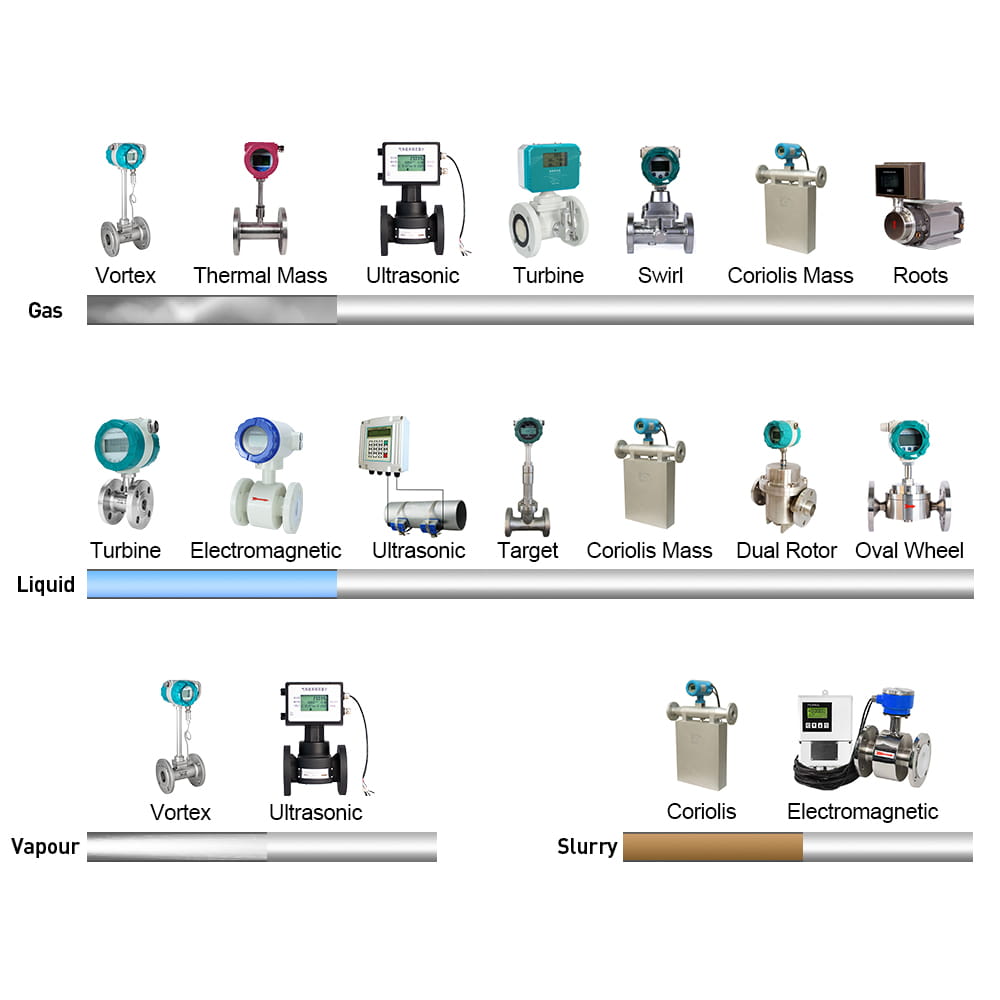
Identify the type of fluid to be measured, whether it is liquid, gas, or steam, as well as its specific composition and properties, such as corrosiveness, conductivity, and viscosity. The different properties of fluids have a significant impact on flow meter selection. For example, electromagnetic flow meters are suitable for measuring conductive liquids, while Coriolis mass flow meters can measure high-viscosity fluids.
Define the measurement range:
Determine the required flow range, including maximum and minimum flow rates. The selected flow meter’s measurement range should cover the actual flow rate range, and strive to keep the normal flow rate between 30% and 70% of the flow meter’s full scale to ensure measurement accuracy. For example, if the maximum flow rate is 100 m³/h and the minimum flow rate is 10 m³/h for water flow, a flow meter with an appropriate range should be selected.
Determine the measurement accuracy requirements:
Determine the required measurement accuracy based on the specific process requirements and measurement purpose. Generally speaking, for applications like trade settlement and high-precision experiments that require high accuracy, flow meters with an accuracy of ±0.5% or higher, such as turbine flow meters, may be suitable. For process monitoring applications with less stringent accuracy requirements, flow meters with an accuracy of ±2% to ±5%, such as vortex flow meters, may be sufficient.
Consider Installation Conditions
Pipe Size:
Select a flow meter of appropriate diameter based on the inner diameter of the pipe where the flow meter will be installed. Generally, the flow meter’s diameter should match the pipe’s diameter. However, in some special cases, a flow meter with a reduced or expanded diameter may be selected to meet measurement accuracy or other requirements. For example, in large-diameter pipes, a flow meter one size smaller than the pipe’s diameter can be selected to improve measurement accuracy, and appropriate reducers can be installed before and after.
Installation Space:
Consider the available space on site for the flow meter, including length, width, and height. Some flow meters, such as ultrasonic flow meters, require a large straight pipe section, while rota meters have certain height requirements for installation space. Ensure that the space on site can accommodate the installation requirements of the selected flow meter.
Installation Method:
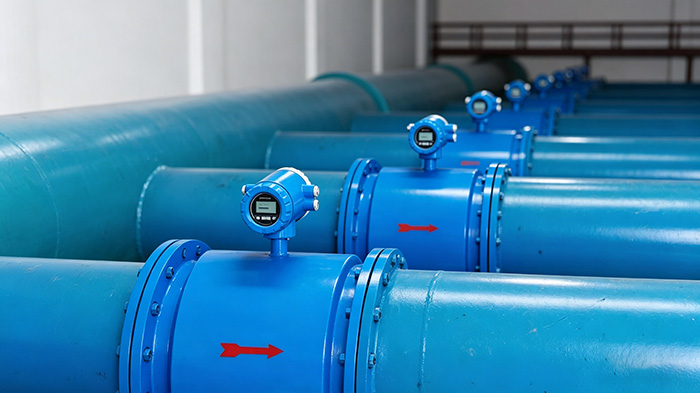
Determine the flow meter’s installation method based on the pipeline layout and process requirements, such as horizontal, vertical, or inclined. For example, electromagnetic flow meters generally require horizontal installation, ensuring that the measuring tube is filled with liquid. Vortex flow meters, on the other hand, have relatively loose installation requirements, but also require a straight pipe section.
Consider Environmental Factors
Temperature and Pressure:
Understand the fluid’s operating temperature and pressure range and select a flow meter that can withstand these conditions. For example, to measure high-temperature, high-pressure steam, a flow meter with high-temperature and high-pressure resistance is required. Orifice plate flow meters, for example, are specially designed for this purpose. For cryogenic fluids, consider whether the flow meter’s material will become brittle at low temperatures.
Humidity and Corrosion:
If the installation environment is subject to high humidity or corrosive gases, a flow meter with the appropriate protection level and corrosion resistance should be selected. For humid environments, a flow meter with a waterproof casing can be selected. For corrosive environments, such as in chemical plants, a flow meter made of corrosion-resistant materials, such as an electromagnetic flow meter with a PTFE liner, is recommended.
Electromagnetic Interference:
If there are strong electromagnetic interference sources on site, such as large motors and transformers, a flow meter with strong electromagnetic interference resistance should be selected, such as one that utilizes shielding technology and anti-interference circuitry, to ensure measurement accuracy and stability.
Consider Economics
Procurement Cost:
Different types of flow meters vary significantly in price. Consider the overall cost, provided that the measurement requirements are met. Generally speaking, positive displacement and Coriolis flow meters are relatively expensive, while differential pressure flow meters are relatively inexpensive. For example, in small businesses where water metering systems do not require extremely high accuracy, orifice plate flow meters can be a more affordable option.
Operating Cost:
This includes the flow meter’s energy consumption and maintenance costs. For example, electromagnetic flow meters have lower energy consumption, but require regular inspection of electrodes for contamination. Vortex flow meters, on the other hand, have no moving parts and relatively low maintenance costs, but may experience a decrease in measurement accuracy at low flow rates, leading to inaccurate measurements and increased operating costs.
Service Life:
Selecting a flow meter with a long service life can reduce long-term costs. Reliable flow meters made of high-quality materials, such as metal tube float flow meters, can last longer under normal operating conditions, reducing replacement frequency and overall costs.
Other Factors
Signal Output Method:
Based on the control system requirements, select a flow meter with an appropriate signal output method, such as 4-20mA analog, pulse, or digital (such as HART, Profibus, etc.). If the control system uses a DCS, the flow meter is generally required to have a digital signal output to facilitate communication with the system and data transmission.
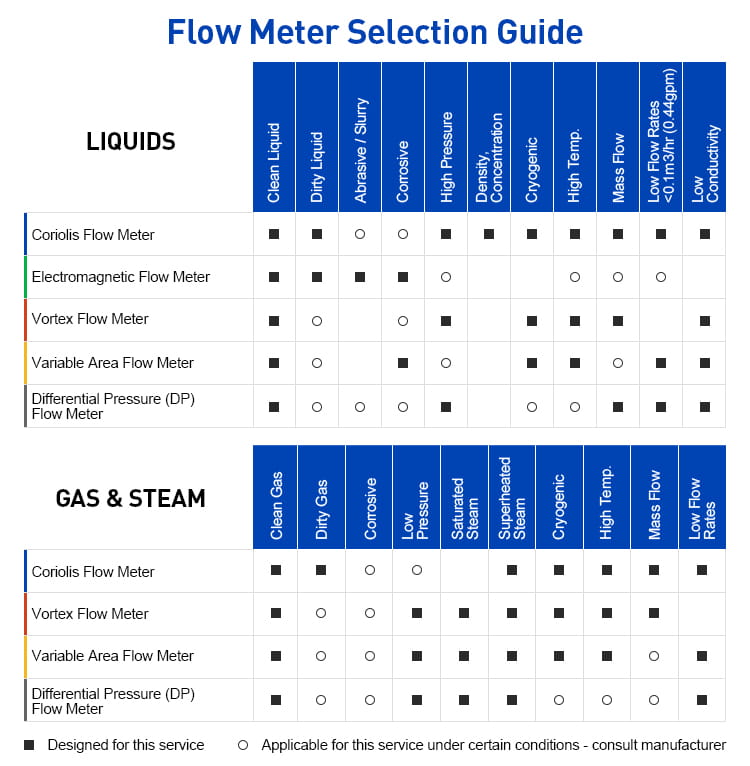
Finally, attached is a flow meter selection chart for your reference.
Why Choose Pokcenser?
- Wide range of flow meter solutions
- OEM & ODM support
- Global export experience
- Competitive pricing
- Technical selection support
Contact Pokcenser today to get a customized flow meter recommendation.
FAQ
Q1. What is the best flow meter for water?
A: Electromagnetic flow meters are ideal for conductive liquids like water due to their accuracy and low maintenance.
Q2. How do I choose the right flow meter size?
A: Match the meter size to your pipe diameter, but sometimes a smaller size improves accuracy with reducers.
Q3. Which flow meter is most accurate?
A: Coriolis mass flow meters offer the highest accuracy (up to ±0.1%).
Q4. What factors affect flow meter selection?
A: Key factors include fluid type, flow range, accuracy, installation conditions, and budget.
Q5. Can Pokcenser help with selection?
A: Yes, Pokcenser provides professional technical support and customized solutions for global clients.
