 English
 Spanish
Industrial Wireless IoT Sensor Integration Cases and Benefits
Industrial operations thrive on precision, speed, and timely insight—especially when every minute of downtime shows up on the balance sheet. We’ve seen firsthand how traditional wired systems, while dependable, can become a bottleneck: complex to install, costly to maintain, and stubbornly inflexible when processes evolve. Wireless IoT sensors change that calculus. They bring robust, real-time data acquisition and control without the cable drag. In our experience, when these technologies are integrated thoughtfully—not just sprinkled in—teams unlock real, measurable gains across diverse industries. I still think about a retrofit where weeks of conduit work were avoided with a one-day wireless pilot that paid for itself in the first quarter.
Understanding the Power of Industrial Wireless IoT Sensors
1. The Evolution of Industrial Monitoring and Control
Industrial monitoring has traveled a long road—from clipboards and pressure gauges to networked, intelligent systems. Early control depended on human observation and mechanical instruments, which introduced delays and the occasional inaccuracy. Wired electronic sensors raised the bar on precision and automation, but sprawling facilities and hazardous zones kept installation and upkeep complicated. Today, data-driven operations demand tools that are flexible, scalable, and cost-effective. This trajectory reflects a consistent push toward clearer visibility and higher efficiency across the plant.
2. Why Wireless IoT is Critical for Modern Industrial Operations
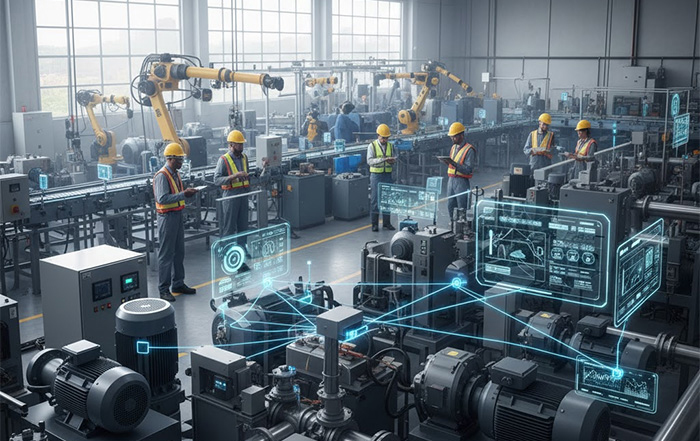
Wireless IoT sensors deliver the flexibility and scalability modern operations expect. By sidestepping cabling, they cut installation time and cost—especially valuable in remote or hard-to-reach areas. They also make it easy to deploy quickly, rearrange as needs change, and expand without heavy infrastructure work. Most importantly, they stream reliable real-time data for analytics and proactive maintenance. In practice, that means tighter process control, less downtime, and better overall productivity.
Key Benefits of Integrating Wireless IoT Sensors in Industry
1. Enhancing Operational Efficiency and Reducing Costs
When wireless IoT sensors feed live data on equipment and environment, teams can optimize in the moment. The result: smarter resource use, lower energy consumption, less waste, and smoother production. Add in the savings from simpler installs, fewer maintenance headaches, and reduced downtime, and the long-term cost curve bends favorably.
2. Improving Data Accuracy and Real-time Decision Making
High-quality measurements straight from the source make decisions faster and better. Continuous visibility into critical parameters helps prevent drifts that cause errors or unplanned stoppages. With real-time trend analysis, predictive analytics becomes practical—shifting maintenance from firefighting to foresight.
3. Boosting Safety and Mitigating Risks in Hazardous Environments
In hazardous areas, wireless IoT sensors keep people out of harm’s way by enabling remote visibility. They catch leaks, abnormal vibrations, or gas concentrations and can trigger instant alerts or safe shutdowns. That reduces risk and supports compliance. We offer robust solutions like explosion-proof sensors for these demanding applications.
4. Enabling Predictive Maintenance and Minimizing Downtime
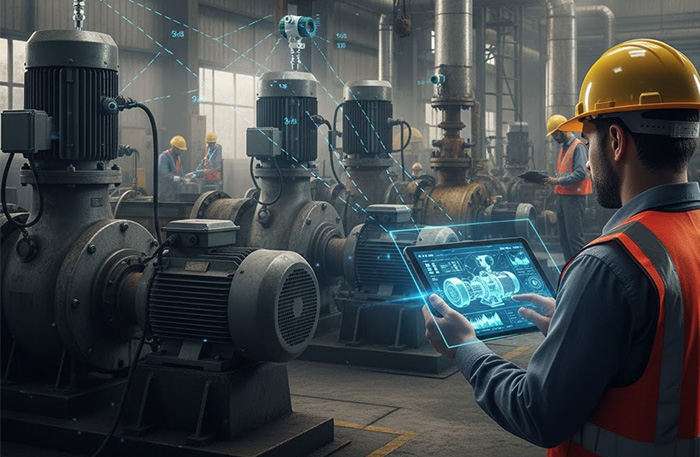
Predictive maintenance only works when the data is continuous and trustworthy. Wireless sensors monitor vibration, temperature, pressure, and other indicators, feeding advanced analytics that spot small anomalies before they turn into failures. You get longer asset life, fewer surprises, and maintenance windows that align with production. If you’re interested, check 《How do Magnetostrictive Sensors Work?》.
5. Achieving Scalability and Flexibility in Industrial Automation
Wireless networks scale naturally. Adding sensors or reconfiguring coverage is straightforward—ideal for evolving lines or facility expansions. This agility supports fast-moving manufacturing and smooth adoption of new technologies, keeping automation responsive and future-ready.

Real-World Applications of Industrial Wireless IoT Sensor Integration
1. Optimizing Water and Wastewater Treatment with Wireless Sensors
Water and wastewater treatment benefits enormously from continuous, distributed monitoring. Wireless sensors track pH, ORP, DO, TDS, and residual chlorine across large networks—helping fine-tune chemical dosing, flag contamination early, and optimize processes. Plants stay compliant and cut costs. For example, our PT6500 Online TDS Meter Controller and PCS5530C Residual Chlorine Electrode and Meter provide precise, continuous readings that underpin consistent water quality. For further insights, read 《Deep Well Monitoring with Submersible Pressure Transmitters》.
| Sensor Type | Key Parameters Monitored | Benefits of Wireless Integration | Relevant Pokcenser Products |
|---|---|---|---|
| TDS | Total Dissolved Solids | Optimize water quality, reduce chemical usage | PT6500 Online TDS Meter Controller |
| Residual Chlorine | Chlorine levels in water | Ensure disinfection, prevent over-dosing | PCS5530C Residual Chlorine Electrode and Meter |
| pH | Acidity/Alkalinity | Process control, environmental compliance | PCS1753CD Plastic pH Sensor |
| ORP | Oxidation-Reduction Potential | Water treatment efficiency, oxidant control | PT4000 ORP Controller, PCS2701C Plastic ORP Electrode |
| DO | Dissolved Oxygen | Aeration control, aquatic health | PCS4773D Digital Dissolved Oxygen Sensor (Diaphragm Electrode Method), PCS4760PD Digital Dissolved Oxygen Sensor (Optical) |
| Turbidity | Water clarity | Filtration monitoring, sediment detection | PCS7820D Digital Turbidity Sensor, PT6000 Online Turbidity Meter |
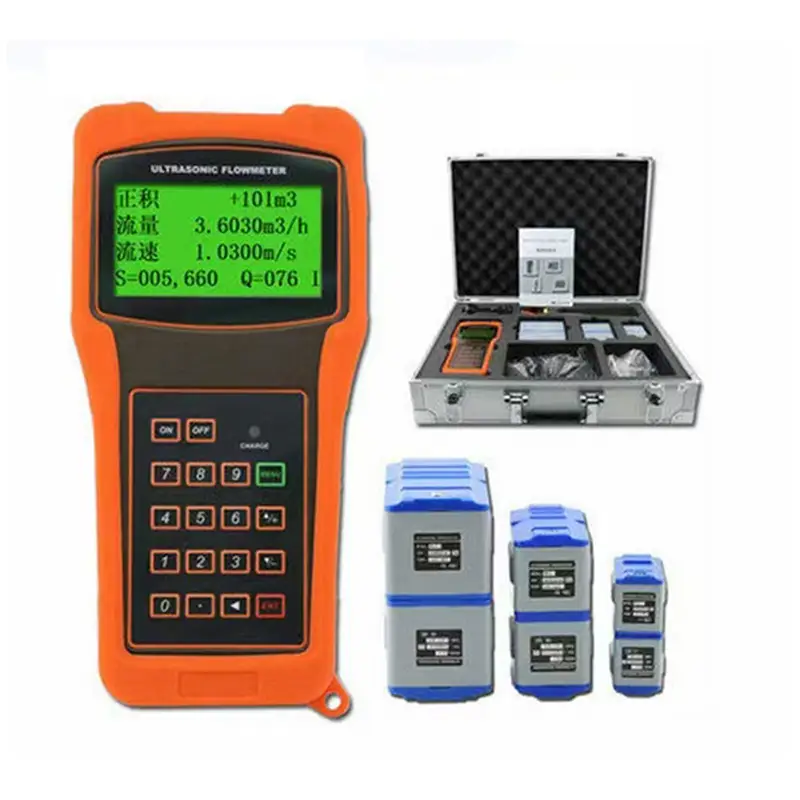
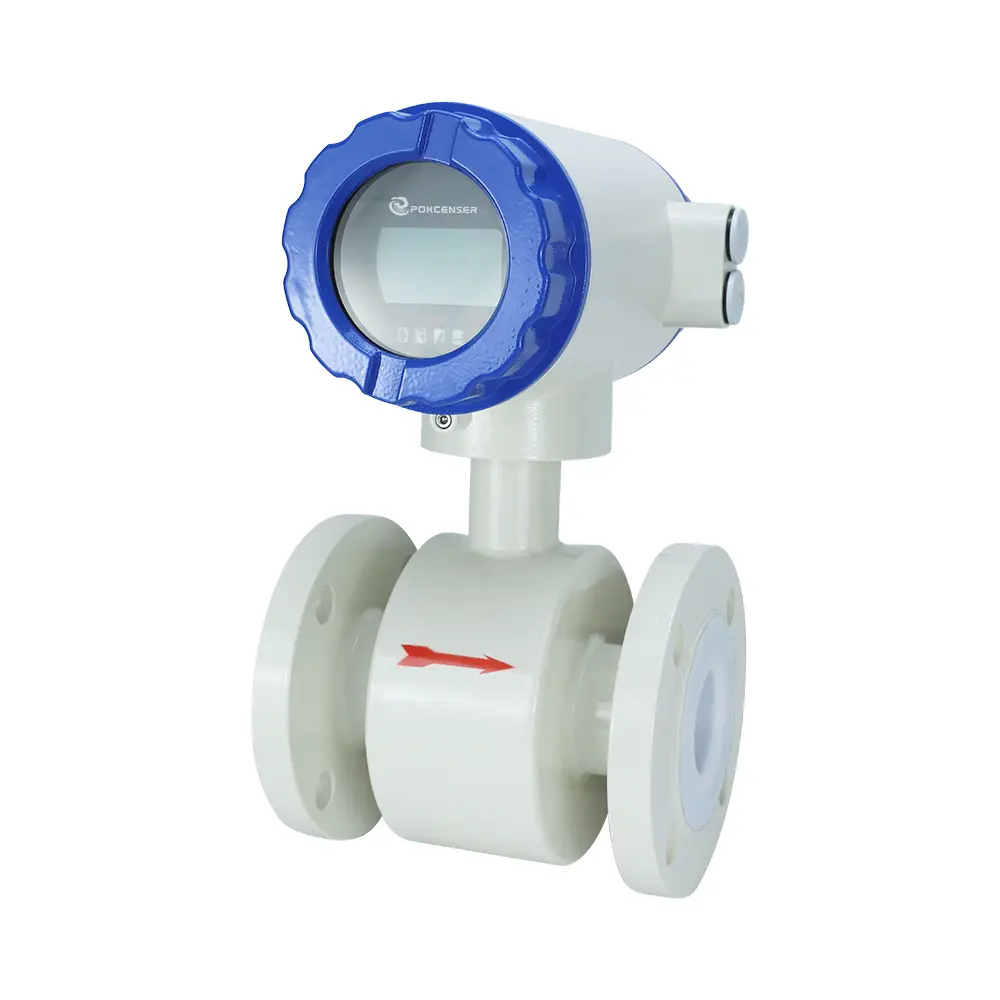
| Flow | Liquid/Gas flow rates | Resource management, leak detection | LZS Series Plastic Tube Flowmeter, LZ Metal Tube Flow Meter, PWF-U2000MCC Multi-channel Clamp-on Ultrasonic Flowmeter, PWF-U2000MCI Multi-channel Insertion Ultrasonic Flowmeter, PWF-U1000 Small Pipe Clamp-on Ultrasonic Flowmeter |
| Level | Liquid/Solid levels | Inventory management, overflow prevention | PWP412-T3 SDI-12 Hydrostatic Water Level and Temperature Transmitter, PWL-U201 Small Range Ultrasonic Level Transmitter, PWL-U202 Small Blind Spot Ultrasonic Level Transmitter |
2. Streamlining Oil & Gas Operations Through Remote Monitoring
Oil and gas assets often sit in remote, harsh locations where running cables just isn’t practical. Wireless IoT sensors step in to monitor pipelines, wellheads, and tanks—tracking pressure, temperature, flow, and leaks to protect integrity and prevent environmental harm. This reduces manual inspections, improves safety, and optimizes staffing. Our Piezoresistive Pressure Sensors and specialized flow meters are central to these deployments.
3. Enhancing Chemical and Petrochemical Process Control
In chemicals and petrochemicals, tight process control is non-negotiable. Wireless sensors watch critical points in reactors, distillation columns, and storage, measuring temperature, pressure, and concentrations. With immediate feedback, operators can stabilize reactions, improve yields, and reduce risk. Wireless setups also make compliance easier without tying up maintenance crews.
4. Advancing Food & Beverage Production with Smart Sensor Networks
Food and beverage facilities rely on precise environmental control and hygiene. Wireless sensors monitor cold storage temperatures, processing-area humidity, and fermentation pH so products stay within spec and spoilage is minimized. The quick setup and non-invasive nature of many wireless devices fit well in sanitary spaces.
5. Case Study: Integrating Wireless Level Sensors for Tank Farm Management
A major chemical manufacturer struggled with manual level checks across a large, corrosive tank farm; the wired system was costly and unreliable. We implemented a wireless network using ultrasonic level sensors (e.g., PWL-U201, PWL-U202) and submersible hydrostatic sensors (e.g., PWP412-T3), with real-time level and temperature data sent via LoRaWAN to a central system. The impact was immediate: 99% inventory accuracy, a 70% reduction in manual inspection costs, and zero overflow incidents. As a bonus, the same data enabled predictive maintenance for pumps and valves—further cutting unplanned downtime. Watching the first week’s dashboard stabilize was a satisfying moment for both the operations team and ours.
Overcoming Challenges in Wireless IoT Sensor Deployment
1. Ensuring Robust Connectivity and Network Reliability
Industrial sites are tough RF environments—EMI, concrete, steel, distance. To keep data flowing, we deploy protocols like LoRaWAN and 5G for range and penetration, and we plan networks carefully with signal surveys and redundancy. The goal is simple: resilience under real-world conditions.
2. Addressing Data Security and Privacy Concerns
Security is foundational. Industrial data leaks can disrupt operations or expose IP, so we use layered defenses: end-to-end encryption, strong authentication, and routine security audits. Our solutions align with international data protection standards to keep sensitive information locked down.
3. Simplifying Integration with Existing Industrial Systems
Bringing wireless into legacy environments can be tricky—older systems may use proprietary protocols or dated interfaces. We bridge that gap with support for RS485 Modbus RTU, 4-20mA outputs, and integration services from custom APIs to middleware. That way, you protect prior investments while gaining new capabilities.
4. Selecting the Right Sensors and Platforms for Specific Needs
Success starts with choosing the right hardware for the job. Requirements vary by application, environment, and accuracy needs: a chemical plant might prioritize corrosion-resistant pH/ORP sensors; a water treatment site may zero in on turbidity and TDS performance. We maintain a broad portfolio and provide expert guidance to match each use case.
The Future of Industrial Wireless IoT: Trends and Innovations
1. AI and Machine Learning Integration for Advanced Analytics
AI and ML are turning sensor streams into foresight. With models that spot patterns humans can’t, predictive maintenance becomes sharper, anomalies surface earlier, and processes self-optimize. The outcome: less downtime, higher efficiency, and a more stable operation.
2. Edge Computing for Faster Data Processing
Pushing compute to the edge reduces latency and bandwidth usage while improving privacy. Edge devices can filter, aggregate, and analyze on the spot—sending only what matters to the cloud. For mission-critical applications, that near-instant response is the difference between a close call and a clean save.
3. The Role of 5G in Industrial IoT Connectivity
5G brings ultra-low latency, high throughput, and massive device density—perfect for dense sensor grids and real-time control. Expect smoother AR-assisted maintenance, more reliable autonomy in industrial vehicles, and a new class of applications that simply weren’t feasible before.
4. Sustainable Practices and Energy Efficiency in Wireless Sensing
Sustainability is part of the brief now. Modern wireless sensors sip power, often running for years on a single battery—reducing maintenance and waste. When processes run tighter thanks to better data, energy and material usage drop too. That’s good for operations and the planet.
Partner with Pokcenser Automation for Advanced Industrial IoT Solutions
At Pokcenser Automation, we specialize in providing cutting-edge industrial wireless IoT sensor integration solutions. With over a decade of experience and a global presence in more than 100 countries, we offer a comprehensive range of high-quality sensors and control instruments. Our dedicated 6-person pre-sales and after-sales team ensures seamless support from initial application evaluation to post-installation service. Contact us today to discuss how our expertise can optimize your industrial processes, enhance efficiency, and ensure long-term reliability.
Phone: +86 181 7515 5326
Email: in**@*******er.com
FAQs
1. What are the primary advantages of wireless IoT sensors over traditional wired sensors in industrial settings?
Wireless sensors cut installation time and cost by eliminating extensive cabling. They’re easier to deploy in remote or hazardous areas, simplify expansion, and typically offer faster data acquisition with cleaner integration into modern digital platforms.
2. How can industrial businesses ensure data security when implementing wireless IoT sensor networks?
Use robust encryption, secure architectures, and strong authentication—then verify regularly with audits and standards compliance. We build these protections into our solutions to safeguard sensitive operational data.
3. What types of industrial processes benefit most from wireless IoT sensor integration?
Industries like oil & gas, Water and Wastewater Treatment, chemical, and food & beverage see major gains. These environments are often remote, hazardous, or complex—places where wired installs are impractical or overly expensive.
4. How does Pokcenser Automation support the integration of wireless IoT sensors?
We provide end-to-end support: solution design, high-quality sensors and instruments, and committed after-sales service. Our team collaborates closely to integrate with existing systems and deliver reliable performance.
5. What is the typical ROI for investing in industrial wireless IoT sensor solutions?
ROI varies by application, but most cases show quick payback from lower install and maintenance costs, higher efficiency, and less downtime. Improvements in safety and resource optimization accelerate returns further.

