 English
 Spanish
Ultrasonic Flow Meters for Advanced Remote Monitoring Solutions
Modern industrial operations demand precise control and real-time data, especially in remote or hazardous locations. Efficient monitoring of fluid dynamics is crucial for maintaining operational integrity and optimizing resource allocation. This need drives the adoption of advanced solutions like Ultrasonic Flow Meters for reliable remote observation.
Why Remote Flow Monitoring Matters Now More Than Ever
Industrial assets keep spreading out geographically while growing more complex internally. Oil and gas extraction, municipal water distribution, chemical processing—all of these require continuous, accurate data on fluid flow regardless of where the pipes actually run. Traditional monitoring methods often prove impractical or costly in these environments. Someone has to drive out there, take readings, drive back. The data gets stale before anyone can act on it.
Real-time data acquisition changes this equation entirely. Operators can make informed decisions promptly rather than reacting to problems that developed hours or days earlier. This capability ensures operational efficiency, minimizes downtime, and enhances remote asset management. Without reliable remote monitoring, organizations face significant challenges in optimizing performance and ensuring compliance.
How Ultrasonic Flow Measurement Actually Works
Ultrasonic Flow Meter technology provides a highly effective solution for remote flow measurement due to its non-invasive nature and inherent reliability. These meters operate by transmitting ultrasonic pulses into the fluid and measuring the time it takes for these pulses to return. This principle, known as transit-time measurement, allows for accurate flow rate determination without direct contact with the fluid. Doppler ultrasonic flow meters work slightly differently, analyzing frequency shifts instead.
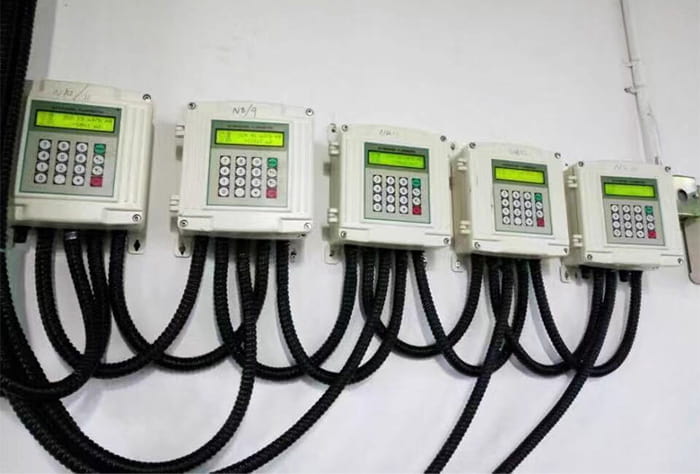
This non-invasive flow measurement capability is particularly advantageous in remote applications where process interruption for installation or maintenance is undesirable. Clamp-on ultrasonic meters, such as the PWF-U2000W Wall mount Ultrasonic Flow Meter, exemplify this benefit. You strap them onto existing pipelines and start collecting data.
What Makes These Meters So Accurate Over Time
Ultrasonic flow meters significantly enhance remote monitoring accuracy through several key features. Their drift-free operation ensures consistent measurements over extended periods, reducing the need for frequent recalibration in remote locations. Nobody wants to send a technician out to a desert pipeline every few weeks to recalibrate equipment.
These devices also offer a wide turndown ratio, accurately measuring flow across a broad range of velocities. Ultrasonic technology is largely insensitive to variations in fluid pressure and temperature, contributing to high accuracy in remote sensing. This stability is critical for maintaining remote data integrity and ensuring reliable sensor calibration without constant human intervention.
Getting Ultrasonic Flow Meters Talking to Your Systems
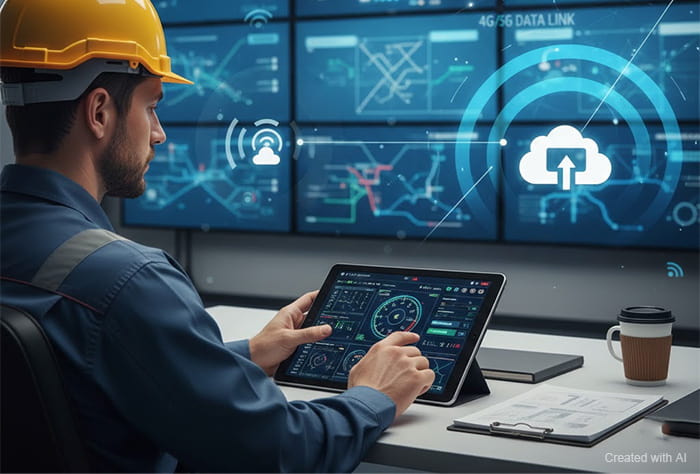
Seamless integration of Ultrasonic Flow Meters into remote monitoring systems is paramount for effective industrial process control. This involves leveraging various communication protocols and data transmission methods to ensure real-time data acquisition and accessibility. Wireless sensor networks, industrial IoT solutions, and SCADA integration are common approaches. Cloud-based monitoring platforms further enhance data accessibility, allowing operators to view and analyze flow data from any location. The PWF-U2000MCC and PWF-U2000MCI models support isolated RS485 serial interfaces with MODBUS protocol, facilitating robust data exchange.
| Communication Protocol | Range | Data Rate | Power Consumption | Typical Application |
|---|---|---|---|---|
| LoRaWAN | Long (km) | Low | Very Low | Remote IoT, battery-powered sensors |
| Cellular (4G/5G) | Long (global) | High | Moderate to High | High-bandwidth data, critical infrastructure |
| Satellite | Global | Moderate | High | Extremely remote areas without terrestrial networks |
| Wi-Fi | Short (m) | High | Moderate | Local area networking, high-density data |
| RS485 Modbus | Medium (km) | Moderate | Low | Industrial automation, wired networks |
This table illustrates how different communication technologies cater to specific remote monitoring needs.
The Real Business Case for Remote Ultrasonic Monitoring
Implementing remote ultrasonic flow monitoring offers substantial strategic advantages for industrial operations. These systems contribute to significant operational cost reduction by minimizing the need for on-site inspections and manual data collection. The math is straightforward: fewer truck rolls, fewer labor hours, fewer opportunities for human error.
Enhanced worker safety is another critical benefit. Personnel are not required to access hazardous or geographically challenging locations for routine checks. The continuous flow data enables predictive maintenance strategies, allowing for proactive intervention before equipment failures occur. This leads to reduced downtime and optimized asset performance. Robust remote monitoring provides accurate data for informed decision-making, improving overall resource management and ensuring environmental compliance.
Why Non-Invasive Measurement Changes Everything in Remote Settings
The non-invasive nature of ultrasonic flow measurement provides unique advantages in remote settings. Installation can occur without process shutdown, eliminating costly downtime. This also translates to reduced installation costs, as there is no need for pipe cutting or welding.
Non-intrusive flow sensors do not create a pressure drop in the pipeline, preserving energy efficiency. This technology is ideal for monitoring hazardous fluids without direct contact, ensuring pipeline integrity and enhancing safety in critical applications.
Where These Meters Make the Biggest Difference
Remote Ultrasonic Flow Meters are indispensable across diverse industrial sectors. In oil and gas flow measurement, they monitor pipelines in remote fields, ensuring efficient transport and leak detection. Water and wastewater management relies on these meters for distribution network monitoring, leak detection, and efficient resource allocation.
The chemical processing flow industry benefits from their non-invasive nature for handling corrosive or hazardous fluids. Power plant monitoring utilizes these devices for cooling water systems and fuel flow measurement, contributing to efficient and safe operations. The PWF-U2000MCC Multi-channel Clamp-on Ultrasonic Flowmeter and PWF-U2000MCI Multi-channel Insertion Ultrasonic Flowmeter are designed for such demanding applications.
Picking the Right Ultrasonic Flow Meter for Your Remote Site
Selecting the optimal Ultrasonic Flow Meter for remote deployment requires careful consideration of several factors. The sensor type depends on the application and pipe characteristics. Clamp-on meters like the PWF-U1000 Small Pipe Clamp-on Ultrasonic Flowmeter are ideal for non-invasive installation on existing pipes. Insertion types, such as the PWF-U2000MCI, offer high accuracy without process shutdown.
Communication options must align with existing infrastructure and data transmission needs. RS485 Modbus works well for wired industrial networks. LoRa, NB-IoT, or 4G serve sites without existing connectivity. Power requirements are critical for remote sites, often necessitating low-power devices, battery operation, or solar integration. Environmental resilience, such as IP65 or IP68 protection, is necessary for harsh conditions. Sensor longevity and fluid compatibility are also key for robust, custom flow solutions.
| Feature | Clamp-on Ultrasonic Flow Meter | Insertion Ultrasonic Flow Meter |
|---|---|---|
| Installation | Non-invasive, external clamp | Insertion into pipe via hot-tap |
| Downtime for Installation | None | Minimal (hot-tap) |
| Pipe Size Range | DN15-DN6000 (PWF-U1000, PWF-U2000MCC) | DN50-DN6000 (PWF-U2000MCI) |
| Fluid Compatibility | Wide range, non-conductive and conductive | Wide range, non-conductive and conductive |
| Accuracy | ±1% to ±0.5% | ±1% to ±0.5% |
| Maintenance | Low | Low |
Where Remote Ultrasonic Flow Monitoring Is Headed
The future of remote Ultrasonic Flow Meters is characterized by continuous innovation aimed at enhancing intelligence, efficiency, and autonomy. Significant advancements in AI and machine learning analytics are already appearing in newer systems. These technologies enable more sophisticated predictive maintenance capabilities, anomaly detection, and real-time process optimization.
Enhanced power harvesting solutions are extending battery life and reducing maintenance cycles for sustainable monitoring solutions in ultra-remote locations. Solar, kinetic, and thermal energy integration all show promise. Miniaturization of smart sensor technology will broaden application possibilities, allowing for deployment in smaller spaces and more diverse industrial automation scenarios. These trends will further solidify the role of ultrasonic flow meters as critical components in advanced industrial automation.
Frequently Asked Questions About Remote Ultrasonic Flow Monitoring
What makes ultrasonic flow meters ideal for remote monitoring applications?
Ultrasonic Flow Meters are exceptionally suited for remote monitoring due to their non-invasive nature, allowing for installation without process shutdown. They offer high accuracy, minimal maintenance requirements, and robust performance in harsh environments, making them reliable for long-term, unattended operation in distant locations. Their ability to measure flow without direct contact with the fluid also reduces wear and tear, further enhancing their suitability for remote sites.
Can existing pipelines be retrofitted with remote ultrasonic flow monitoring systems?
Yes, a significant advantage of clamp-on ultrasonic flow meters is their ease of retrofit onto existing pipelines without any need for pipe cutting or welding. This non-intrusive installation minimizes downtime and costs, making them an excellent choice for upgrading current systems to include advanced remote monitoring capabilities. Pokcenser Automation offers solutions designed for seamless integration into diverse industrial infrastructures.
How is data transmitted from remote ultrasonic flow meters to a central monitoring station?
Data from remote Ultrasonic Flow Meters is typically transmitted using various wireless communication technologies, including cellular (2G/3G/4G/5G), LoRaWAN, satellite, or Wi-Fi, depending on the site’s connectivity and range requirements. These systems often integrate with industrial IoT platforms or SCADA systems, allowing for real-time data visualization, analysis, and alerts at a central monitoring station or via cloud-based dashboards. Pokcenser Automation provides robust data transmission options to ensure reliable remote monitoring.
What are the power requirements for ultrasonic flow meters used in remote locations?
For remote locations, power efficiency is critical. Many Ultrasonic Flow Meters designed for remote monitoring are low-power devices, often powered by long-life batteries, solar panels, or a combination of both. Advanced models incorporate energy-harvesting technologies to extend operational life. Pokcenser Automation focuses on developing solutions that minimize power consumption while maintaining high performance, ensuring extended, maintenance-free operation in isolated environments.
Partner with Pokcenser for Advanced Flow Monitoring
Pokcenser Automation Technology Company Limited brings over a decade of expertise and 150,000+ solutions delivered globally. The company specializes in advanced Ultrasonic Flow Meters tailored for the most demanding remote monitoring challenges. CE, ATEX, ISO, and RoHS approved products combined with dedicated pre-sales and after-sales support ensure a worry-free, long-term partnership. Contact us today to evaluate your application and discover a customized solution that creates lasting value for your industrial automation needs. Email: in**@*******er.com | Phone: +86 181 7515 5326

