 English
 Spanish
Ultrasonic Flow Meters for Water Utilities Strategic Solutions
Getting water where it needs to go while keeping track of every drop sounds straightforward until you’re managing hundreds of kilometers of aging pipes, pressure zones that behave differently at 3 AM than at noon, and regulators asking for documentation you didn’t know existed. Flow measurement sits at the center of all of it. The meters themselves have gotten remarkably capable over the past decade, but the real shift is in how utilities can now use that data to catch problems before they become emergencies.
Advanced Flow Measurement Changes How Utilities Operate
Water utilities everywhere are dealing with the same basic math problem: demand keeps climbing, infrastructure keeps aging, and budgets don’t stretch the way they used to. Accurate flow measurement turns out to be one of the few tools that actually helps with all three at once. When you know exactly how much water moves through each section of your network, you can spot losses, justify capital improvements, and prove to ratepayers that their money is being spent wisely.
Ultrasonic flow meters have become the go-to choice for a lot of these applications because they don’t require cutting into pipes or shutting down service. The technology measures flow by tracking how sound waves travel through moving water. At Pokcenser Automation Technology Company Limited, we’ve spent over ten years refining these instruments for industrial process control, and the water sector has turned out to be one of the most demanding environments we serve. Pipes that have been in the ground for decades, variable water quality, installations in tight spaces or flooded vaults. All of it matters when you’re trying to get reliable numbers.
Precision Measurement for Water Distribution Networks
Distribution networks present some of the trickiest measurement challenges. Custody transfer points need accuracy that holds up to audits. Non-revenue water detection requires catching differences that might only be a few percentage points of total flow. Both applications punish meters that drift or struggle with low-flow conditions.
Our PWF-U2000MCC Multi-channel Clamp-on Ultrasonic Flowmeter delivers ±0.5% FS accuracy in two-channel and four-channel configurations. That level of precision matters when you’re trying to reconcile billing data or figure out whether a district metered area is losing water underground or through meter inaccuracies. The clamp-on design means installation happens without touching the water supply. No permits for line cuts, no disinfection procedures, no anxious calls from customers wondering why their pressure dropped.
Operational Efficiency Gains from Real-Time Data
The shift from periodic manual readings to continuous monitoring changes how utilities think about their systems. Instead of discovering a main break when someone calls about a flooded street, operators can watch flow patterns and catch anomalies while they’re still small.
The PWF-U2000MCI Multi-channel Insertion Ultrasonic Flowmeter gives utilities this kind of visibility. Unusual flow spikes at 2 AM might indicate a leak that’s been running for hours. Gradual increases in a particular zone could suggest a valve that’s not seating properly. Catching these patterns early keeps repair costs down and prevents the kind of service disruptions that generate complaints and newspaper coverage.
Pump scheduling benefits too. When you can see actual demand in real time rather than working from historical averages, you can run pumps more efficiently and reduce energy costs. For utilities where electricity is one of the largest operating expenses, the savings add up quickly.
Smart Water Networks and Non-Revenue Water Management
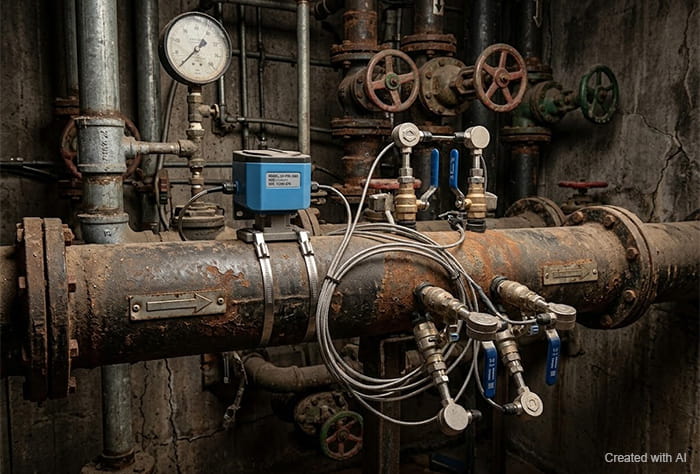
The phrase “smart water network” gets used loosely, but the core idea is sound: connect enough sensors, collect enough data, and you can manage infrastructure proactively rather than reactively. Ultrasonic flow meters are one of the foundational elements because they provide the flow data that everything else builds on.
Non-revenue water remains one of the most frustrating problems in the industry. Water that’s treated, pumped, and distributed but never generates revenue because it leaks out, gets stolen, or passes through meters that under-register. Global averages suggest NRW rates around 30%, though some utilities do much better and others much worse.
Accurate flow measurement at zone boundaries lets utilities calculate water balances and narrow down where losses are occurring. Our PWF-U2000MCC and PWF-U2000MCI meters integrate with the digital platforms that make this analysis possible. The data feeds into SCADA systems, analytics packages, and the increasingly sophisticated software that utilities use to model their networks.
Wastewater Treatment and Environmental Compliance
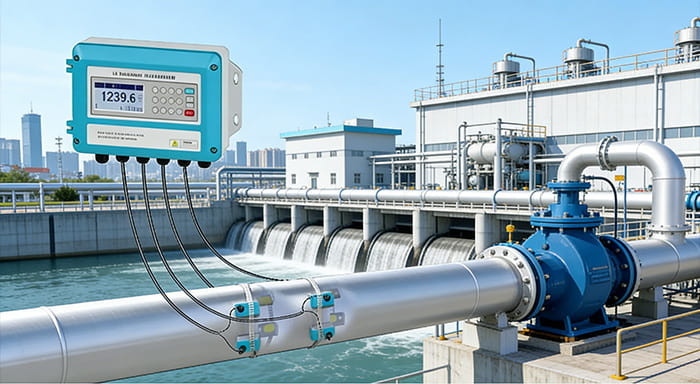
Wastewater presents different challenges than potable water distribution, but accurate flow measurement matters just as much. Treatment plants need to know influent and effluent volumes for process control and regulatory reporting. Discharge permits typically specify maximum flows and pollutant loads, and exceeding them brings fines and enforcement actions.
The conditions inside wastewater systems test equipment in ways that clean water doesn’t. Solids, grease, variable temperatures, and corrosive atmospheres all take their toll on instruments. Ultrasonic meters handle these environments better than many alternatives because the sensors don’t contact the flow directly in clamp-on configurations, and even insertion designs minimize exposure to the worst conditions.
Process optimization depends on knowing what’s coming into the plant and how it’s moving through treatment stages. Chemical dosing, aeration timing, and sludge handling all work better when operators have reliable flow data to work with.
Installation Flexibility and Long-Term Reliability
Practical considerations often determine which meter technology a utility chooses. The theoretical accuracy of a particular design matters less if installation requires a two-week shutdown of a major transmission main.
The PWF-U1000 Small Pipe Clamp-on Ultrasonic Flowmeter can go on a pipe in a few hours without cutting, welding, or draining. For utilities that need to add measurement points to an existing system, this flexibility is often the deciding factor. No contamination risk, no pressure testing after installation, no coordination with customers about service interruptions.
Long-term reliability matters too. Meters installed in vaults, pump stations, and treatment plants need to keep working through temperature swings, humidity, and occasional flooding. Our designs account for these conditions. No moving parts means nothing to wear out from continuous operation. Robust enclosures protect electronics from the environments where water infrastructure actually exists.
Why Non-Invasive Measurement Makes Sense for Distribution Systems
The advantages of non-invasive ultrasonic measurement stack up across multiple dimensions. Zero pressure drop means the meter doesn’t affect system hydraulics. No penetration of the pipe wall eliminates leak paths and contamination risks. Installation without shutdown keeps water flowing to customers.
These benefits translate to lower total cost of ownership even when the initial equipment price is higher than simpler alternatives. Reduced installation labor, no ongoing maintenance of moving parts, and extended service life all contribute to the calculation.
| Feature | Ultrasonic Flow Meters (Pokcenser) | Traditional Flow Meters (General) |
|---|---|---|
| Installation | Non-invasive (clamp-on/insertion) | Invasive (in-line cutting) |
| Pressure Drop | Zero | Variable, can be significant |
| Maintenance | Minimal, no moving parts | Higher, due to moving parts |
| Accuracy | High (±0.5% FS – ±1% FS) | Moderate to high |
| System Downtime | None during installation | Required for installation |
| Contamination Risk | Low | Higher |
For utilities weighing different meter technologies, the comparison often comes down to application specifics. Our guide on 《Flow Meter Selection: Turbine vs. Electromagnetic vs. Ultrasonic Flow Meters》 walks through the tradeoffs in more detail.
Future-Proofing Water Infrastructure with Advanced Technology
Water infrastructure built today will still be operating decades from now. The meters and sensors installed as part of current projects need to support not just today’s requirements but whatever comes next.
Integration with IoT platforms and analytics systems is already standard practice at progressive utilities. The next wave involves AI-driven predictive maintenance and digital twins that model entire networks in real time. Ultrasonic flow meters that output standard protocols and support remote configuration fit into these architectures more easily than older technologies designed for standalone operation.
Pokcenser Automation Technology Company Limited builds instruments with this evolution in mind. The utilities we work with are preparing for regulatory requirements that don’t exist yet, customer expectations that keep rising, and climate impacts that make water management more challenging every year. Our job is to provide measurement technology that supports whatever strategies they develop to meet those challenges.
Frequently Asked Questions About Ultrasonic Flow Meters
How do ultrasonic flow meters improve water utility operational efficiency?
The improvement comes from having accurate, continuous data instead of periodic estimates. Utilities can identify leaks faster, schedule pumps based on actual demand rather than conservative assumptions, and reduce non-revenue water by understanding exactly where losses occur. The precision of modern ultrasonic meters supports all of these applications. Our instruments are designed specifically to deliver the reliability that makes this kind of operational improvement possible.
What are the key benefits of non-invasive ultrasonic flow measurement for water distribution?
Clamp-on installation without cutting pipes is the most obvious benefit. Beyond that, zero pressure drop preserves system efficiency, no moving parts means minimal maintenance, and no contact with the water eliminates corrosion and contamination concerns. These factors combine to deliver reliable long-term performance with lower total cost of ownership than technologies that require more invasive installation or ongoing maintenance.
How do ultrasonic flow meters contribute to smart water management and leak detection?
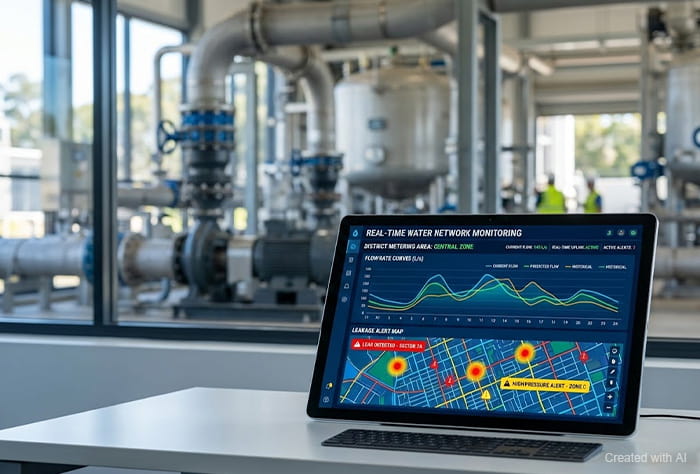
Smart water management depends on accurate data from distributed sensors, and flow meters are among the most valuable data sources. Ultrasonic meters detect subtle changes in flow patterns that indicate developing leaks, unauthorized connections, or equipment problems. This information feeds into analytics platforms that help utilities respond before small issues become large ones. The result is reduced water loss and more resilient infrastructure.
Partner with Pokcenser for Advanced Water Management
Pokcenser Automation Technology Company Limited brings over a decade of industrial process control expertise to water utility applications. Our Ultrasonic Flow Meters carry CE, ATEX, ISO, and RoHS approvals. We’ve delivered more than 150,000 solutions to customers in over 100 countries, with dedicated support before and after the sale. If you’re working on flow measurement challenges in your water system, we’d welcome the conversation. Phone: +86 181 7515 5326 | Email: in**@*******er.com

