 English
 Spanish
How to Choose the Right Pressure Transmitter for Steam and High-Temperature Applications
Pressure monitoring is critical in industrial systems operating under high temperatures. Applications such as steam generation, industrial boilers, thermal oil circulation systems, food sterilization equipment, and chemical reactors all rely on accurate pressure measurements to ensure safe and efficient operation.
However, not all pressure transmitters are designed to withstand elevated temperatures. Choosing the wrong instrument can result in measurement drift, shortened service life, increased maintenance costs, and unexpected downtime.
In this guide, we’ll explain how to select the right pressure transmitter for high-temperature applications and introduce several Pokcenser solutions widely used in demanding industrial environments.
Why High Temperatures Create Challenges for Pressure Measurement
When process temperatures rise, pressure transmitters are exposed to conditions that can affect both accuracy and durability.
Common challenges include:
- Excessive heat transfer to the sensing element
- Sensor drift caused by thermal expansion
- Damage to seals and diaphragms
- Reduced electronics lifespan
- Increased maintenance frequency
For steam systems and thermal processes, selecting a pressure transmitter designed for harsh environments is essential.
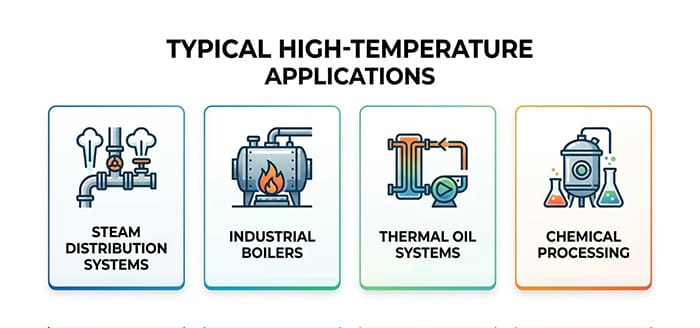
Typical High-Temperature Applications
Steam Distribution Systems
Steam is widely used in:
- Food processing plants
- Pharmaceutical manufacturing
- Textile factories
- Power generation facilities
Steam temperatures often exceed 120°C to 180°C, requiring proper transmitter protection.
Industrial Boilers
Boilers require continuous pressure monitoring to ensure:
- Safe operation
- Stable steam output
- Regulatory compliance
Thermal Oil Systems
Thermal oil heating systems frequently operate above 200°C.
Pressure monitoring helps prevent equipment damage and process interruptions.
Chemical Processing
Many reactors and process vessels operate under both high temperature and high pressure conditions.
Reliable pressure measurement is crucial for process control.
Key Factors to Consider When Selecting a Pressure Transmitter
1. Process Temperature
Always verify:
- Normal operating temperature
- Maximum temperature
- Possible temperature spikes
High-temperature processes may require cooling accessories such as siphons or cooling elements.
2. Pressure Range
Selecting the correct pressure range improves measurement accuracy.
Typical examples include:
| Application | Typical Range |
| Steam Lines | 0–10 bar |
| Industrial Boilers | 0–25 bar |
| Thermal Oil Systems | 0–40 bar |
| Chemical Reactors | Customized |
Avoid oversized ranges whenever possible.
3. Environmental Conditions
Consider:
- Outdoor installation
- Humidity
- Vibration
- Hazardous areas
For explosive environments, ATEX-certified transmitters are recommended.
4. Process Connection Type
Different industries require different process connections:
- Threaded connection
- Flange connection
- Tri-Clamp sanitary connection
Proper selection improves reliability and simplifies installation.
Recommended Product for Industrial High-Temperature Applications
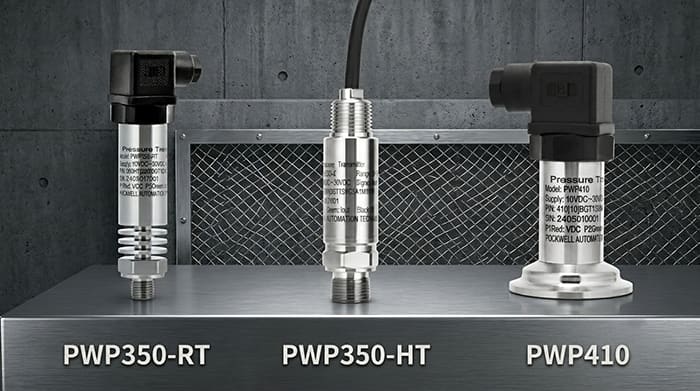
PWP350-HT High Temperature Pressure Transmitter
The PWP350-HT is designed for industrial pressure monitoring in high-temperature applications.
Key Features
- Stainless steel construction
- High accuracy
- Wide pressure ranges
- Tolerant max 500℃
- Excellent long-term stability
Typical Applications
- Food processing
- Water, steam, boiler
- Steel manufacturing
- Chemical industry
- Oil & Gas
Recommended Product for Hazardous Locations
PWP350-X ATEX Pressure Transmitter
For oil & gas facilities and hazardous industrial environments, the PWP350-X provides enhanced safety protection.
Advantages
- ATEX certified
- Intrinsically safe design
- Suitable for explosive atmospheres
- High reliability in harsh environments
- Industrial-grade construction
Typical Applications
- Oil storage terminals
- Petrochemical plants
- Gas distribution systems
- Hazardous processing facilities
Recommended Product for Food and Beverage Applications
PWP410 Hygienic Pressure Transmitter
Food and beverage facilities often require pressure monitoring under elevated temperatures during sterilization and CIP cleaning processes.
The PWP410 is specifically designed for hygienic applications.
Key Features
- Tri-Clamp sanitary connection
- Flush diaphragm design
- Suitable for CIP and SIP processes
- Easy cleaning
- High measurement accuracy
Typical Applications
- Dairy production
- Beverage processing
- Pharmaceutical manufacturing
- Food processing lines
Best Practices for Steam Pressure Measurement
Use a Siphon Tube
A siphon tube protects the transmitter by creating a condensate barrier between the steam and sensing element.
Benefits include:
- Lower sensor temperature
- Improved stability
- Extended transmitter lifespan
Install Away from Direct Heat Sources
Avoid mounting transmitters directly next to:
- Boiler walls
- Furnaces
- High-temperature pipelines
Proper installation reduces thermal stress.
Schedule Regular Calibration
Periodic calibration ensures long-term measurement accuracy, especially in high-temperature environments.
Why Choose Pokcenser?
Pokcenser has more than 10 years of experience in industrial process automation and instrumentation.
Our pressure measurement solutions are trusted by customers in over 100 countries.
What We Offer
- CE, ISO, ATEX, and RoHS certified products
- OEM & ODM support
- Professional application engineering
- Fast technical assistance
- Competitive factory pricing
- One-stop industrial automation solutions
Frequently Asked Questions
Q1: Can a standard pressure transmitter be installed directly on a steam pipe?
Direct installation is generally not recommended. A siphon tube should be used to reduce heat transfer.
Q2: Which pressure transmitter is suitable for hazardous areas?
The PWP350-X ATEX Pressure Transmitter is designed for explosive and hazardous environments.
Q3: Which transmitter is recommended for food processing applications?
The PWP410 Hygienic Pressure Transmitter is ideal for sanitary applications involving CIP and SIP processes.
Q4: What output signals are available?
Most Pokcenser pressure transmitters support industrial outputs such as 4-20mA and RS485 depending on the model.
Q5: Can Pokcenser provide customized solutions?
Yes. Pokcenser supports OEM, ODM, and application-specific customization.
