 English
 Spanish
River Water Level Monitoring Solutions Using Radar Sensors
As climate change increases the frequency of extreme weather events, governments, municipalities, and environmental agencies are investing heavily in river monitoring and flood warning systems.
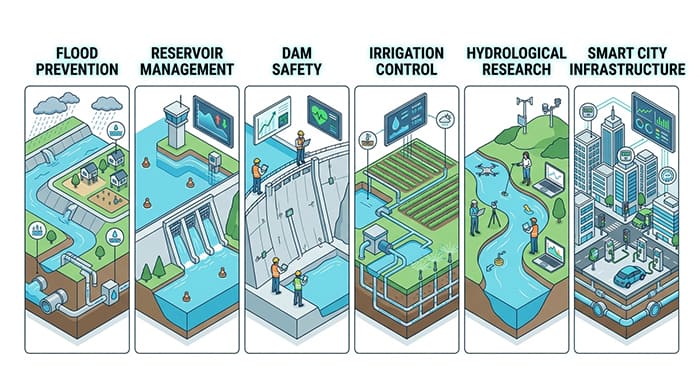
Accurate water level monitoring plays a crucial role in:
- Flood prevention
- Reservoir management
- Dam safety
- Irrigation control
- Hydrological research
- Smart city infrastructure
Traditional measurement methods often require direct contact with water and can suffer from fouling, corrosion, or maintenance issues. Today, radar water level sensors have become the preferred technology for modern hydrological monitoring systems due to their accuracy, reliability, and maintenance-free operation.
In this article, we’ll explain how radar water level monitoring works and why Pokcenser radar solutions are widely used in rivers, dams, lakes, and flood control projects.
Why River Water Level Monitoring Is Important
Water level data is essential for decision-makers responsible for managing water resources.
Accurate measurements help operators:
✔ Predict flood risks
✔ Monitor reservoir capacity
✔ Manage irrigation systems
✔ Protect infrastructure
✔ Improve emergency response planning
✔ Optimize water resource allocation
Without reliable level data, flood events can cause severe economic losses and safety risks.
Challenges of River and Open Water Monitoring
Unlike enclosed tanks, rivers and reservoirs present unique measurement challenges.
Extreme Weather Conditions
Monitoring equipment must withstand:
- Heavy rain
- Strong winds
- Snow and ice
- High humidity
Long-Term Outdoor Exposure
Sensors may operate continuously for years in:
- Remote locations
- Unattended installations
- Harsh environmental conditions
Variable Water Surfaces
Water surfaces may be affected by:
- Waves
- Flow turbulence
- Floating debris
Difficult Maintenance Access
Many monitoring stations are installed in locations where regular maintenance is expensive and time-consuming.
Because of these challenges, reliability becomes a top priority.
Why Radar Technology Is Ideal for Water Level Monitoring
Radar sensors measure the distance between the sensor and the water surface using microwave signals.
Unlike float sensors or submerged transmitters, radar technology performs measurements without touching the water.
This offers significant advantages for outdoor hydrological applications.
Key Benefits
✔ Non-contact measurement
✔ High accuracy
✔ No sensor fouling
✔ No corrosion issues
✔ Minimal maintenance
✔ Excellent long-term stability
✔ Reliable operation during floods
✔ Suitable for remote monitoring systems
Modern radar sensors can continue operating even under heavy rain, fog, and fluctuating temperatures. Radar technology is widely adopted for rivers, dams, lakes, and open channels because of its resistance to environmental interference.
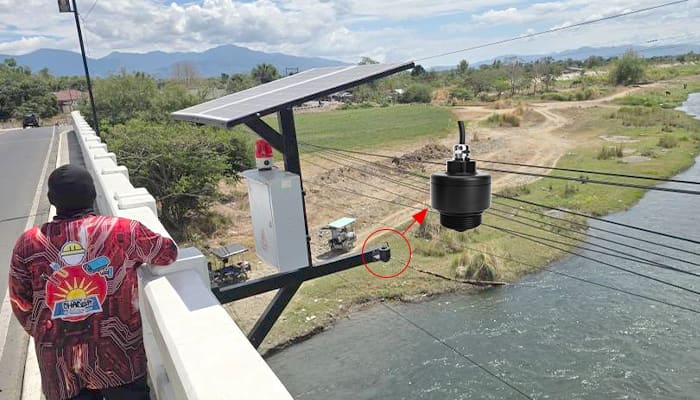
Recommended Product: Pokcenser PWL-R807 Radar Water Level Meter
The PWL-R807 is specifically designed for river and open-water monitoring applications.
Key Features
- 76-81GHz FMCW radar technology
- Measuring range up to 65 meters
- IP68 protection rating
- ±1mm accuracy
- RS485 Modbus RTU communication
- Compact lens antenna design
- Excellent anti-interference performance
Typical Applications
- Rivers
- Lakes
- Reservoirs
- Dams
- Open channels
- Underground drainage systems
The sensor’s 6° beam angle helps reduce interference from nearby structures and improves measurement reliability in challenging installation environments.
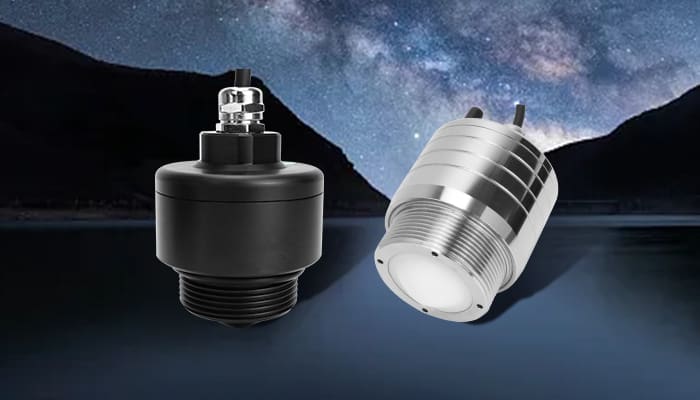
Alternative Solution: Pokcenser PWL-R808 Radar Water Level Sensor
For projects requiring analog outputs and easier system integration, the PWL-R808 is an excellent choice.
Advantages
- 4-20mA output
- HART communication
- Optional Bluetooth configuration
- IP68 waterproof design
- Suitable for remote telemetry systems
The PWL-R808 supports both industrial automation systems and hydrological monitoring networks.
Typical Applications
Flood Warning Systems
Radar sensors continuously monitor river levels and transmit data to control centers.
When water levels exceed predefined thresholds, automatic alerts can be generated.
Reservoir Management
Operators use water level data to:
- Optimize storage capacity
- Control water release
- Improve drought management
Urban Flood Prevention
Many cities install radar water level sensors in:
- Drainage canals
- Stormwater systems
- Underground pipe networks
Real-time monitoring helps reduce urban flooding risks.
Dam Safety Monitoring
Continuous water level measurement provides critical information for safe dam operation.
Why Radar Is Better Than Traditional Water Level Sensors
| Feature | Radar Sensor | Float Sensor | Submersible Sensor |
| Non-contact Measurement | Yes | No | No |
| Corrosion Resistance | Excellent | Moderate | Moderate |
| Maintenance Requirement | Very Low | Medium | High |
| Flood Reliability | Excellent | Moderate | Good |
| Fouling Risk | None | High | High |
| Outdoor Durability | Excellent | Moderate | Good |
For long-term outdoor monitoring projects, radar technology often provides the lowest total ownership cost.
Why Choose Pokcenser?
Pokcenser has over 10 years of experience in industrial automation and level measurement technologies.
Today, Pokcenser solutions are deployed in more than 100 countries across industries including:
- Water & wastewater
- Environmental monitoring
- Flood control
- Oil & gas
- Chemical processing
What You Get
✔ CE, ISO, ATEX, RoHS certified products
✔ OEM & ODM support
✔ Professional engineering consultation
✔ Fast technical support
✔ Factory-direct pricing
✔ Customized monitoring solutions
Pokcenser’s radar level sensor portfolio includes dedicated solutions for rivers, reservoirs, tanks, corrosive liquids, and industrial process applications.
Frequently Asked Questions
Q1: Can radar sensors measure water levels during heavy rain?
Yes. Radar technology is highly resistant to weather-related interference and is widely used in outdoor hydrological monitoring systems.
Q2: How accurate is a radar water level sensor?
The Pokcenser PWL-R807 and PWL-R808 provide measurement accuracy up to ±1mm under suitable installation conditions.
Q3: Do radar sensors require contact with water?
No. Radar sensors perform non-contact measurements, eliminating fouling and corrosion issues.
Q4: Are radar sensors suitable for flood monitoring?
Yes. Radar technology is one of the most reliable solutions for real-time flood monitoring and early warning systems.
Q5: Which output protocols are available?
Pokcenser radar water level sensors support RS485 Modbus RTU, 4-20mA, and HART communication depending on the model.
